GovTech software that every citizen can use
Permits and licences, agency case management, public records requests, citizen portals, grants, field inspections and incident dispatch. Accessible, auditable and built around the law each agency works under.
What GovTech software has to get right
Public services have users who cannot choose another provider, so the software has to work for everyone: on an old phone, with a screen reader, in a second language. Accessibility is a legal duty, not a nice-to-have.
Agencies also answer to the public for every decision. The systems below keep a full record of who did what, apply statutory deadlines automatically, and separate what can be published from what must stay private.
Problems we are asked to fix
The problems teams bring to us, the system that fixes each one and the builds that did it.
Permitting and licensing
Permit applications are paper-based and slow.
Online applications with fees, plan review by several departments in parallel and status the applicant can see.
Agency case management
Agencies track cases across email and spreadsheets.
One record per case, with evidence, deadlines and decisions logged, and reports built from the same data.
Information rights platform
Freedom of information requests miss statutory deadlines.
Requests logged with their legal deadline, exemptions recorded, and redaction before release.
Citizen services portal
Citizen portals fail WCAG accessibility.
A portal built to WCAG 2.1 AA from the start, on the national digital identity, in every official language.
Grants management
Grant programmes run on spreadsheets.
Applications, peer assessment with conflict-of-interest checks, awards and payments in one system.
Inspection field app
Inspectors fill in paper forms in the field.
A field app that works offline, with results checked against the rules before they are published.
Incident reporting and dispatch
Incident reports reach dispatch slowly.
Reports from the public or the field go straight to a dispatch board, with crews or volunteers called out from it.
10 kinds of GovTech system we have built
Each one links the product build behind it, counted from our case studies.
- Aljibe - Open data dashboard
- Almojarife - Tax collection portal
- Brolga - Agency case management
- Cuadrilla - Incident reporting & dispatch
- Maquette - Grants management
- Pagerline - Search and rescue callout
- Quire - Public records requests
- Rundgang - Inspection field app
- Setback - Permits & licences
- Värav - Citizen services portal
GovTech products we built
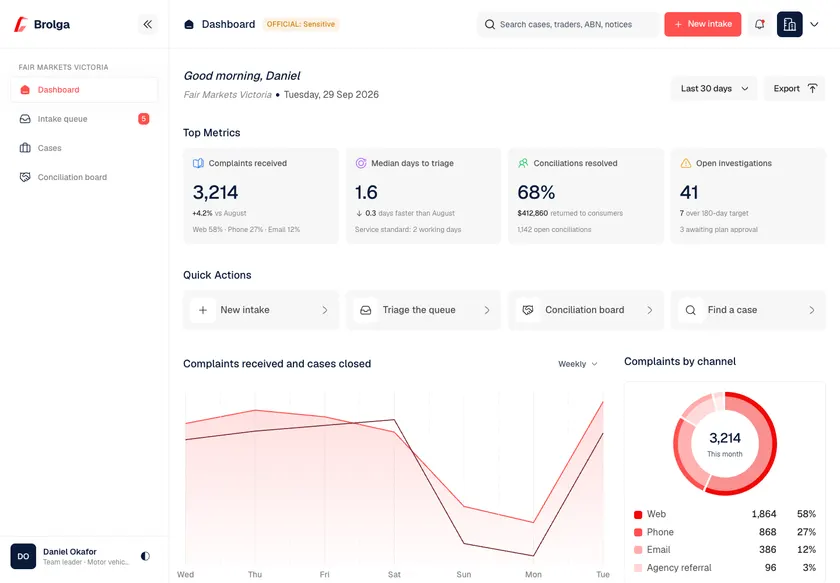
Brolga - Case Management for a Fair Trading Regulator
Designed and built a clickable case management system for a Victorian consumer affairs and fair trading regulator: one intake queue for web, phone, email and agency complaints, rule-based triage, a case workspace with every party, deadline and document, and a conciliation board that keeps dispute help separate from enforcement.
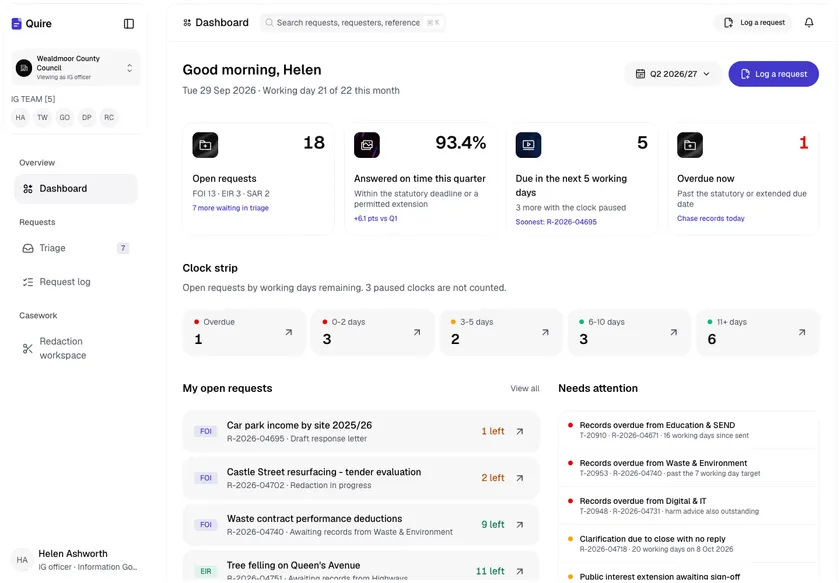
Quire - Information Rights Platform for FOI, EIR and Subject Access Requests
Designed and built a clickable information rights platform for an English county council: triage that classifies each request as FOI, EIR or SAR, a statutory clock counted in UK working days, a request log and detail page with the clock always in view, and a redaction workspace where every redaction carries its exemption code.
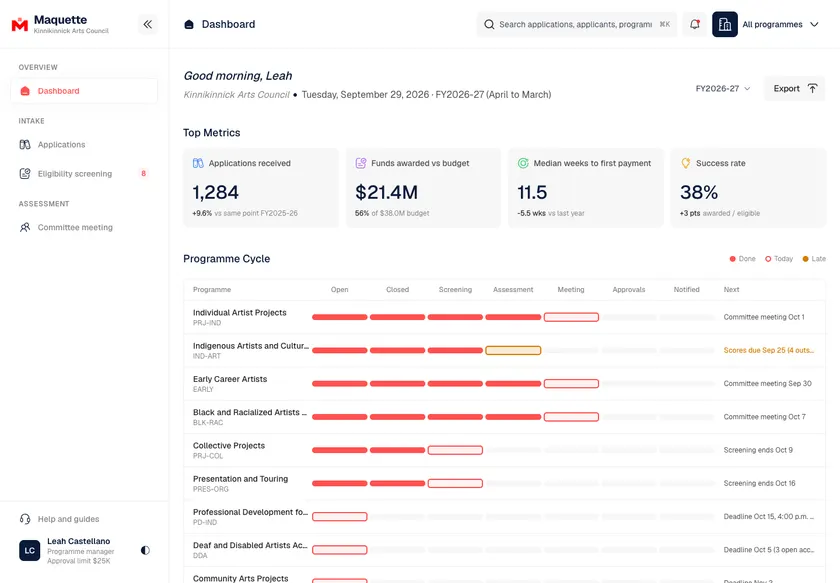
Maquette - Grants Management Platform for Peer-Assessed Arts Funding
Designed and built a clickable grants management platform for a British Columbia arts council that funds artists, collectives and arts organisations: one list of every application, eligibility screening with a second reviewer, and a live committee meeting that ranks peer scores against the budget - with self-identification data kept out of every staff and assessor view.
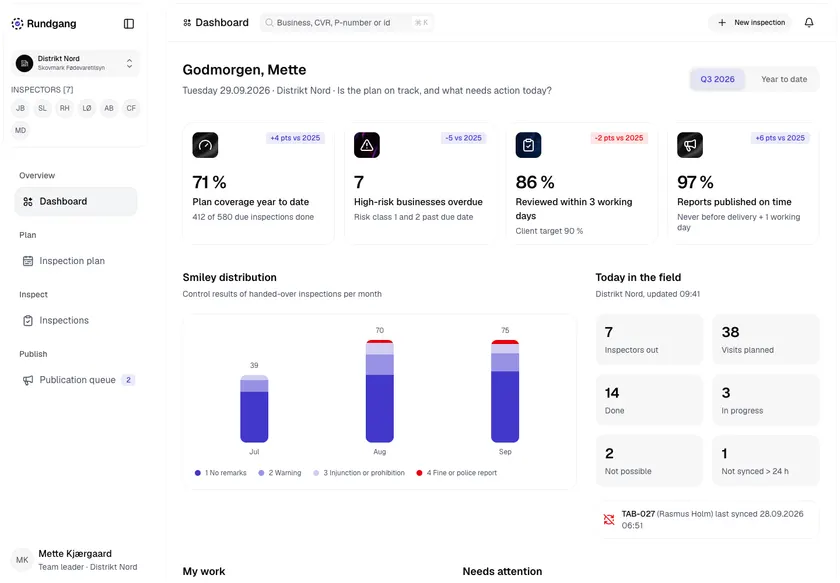
Rundgang - Food Inspection Platform with Smiley Results and Publication Rules
Designed and built a clickable office console for a Danish food control unit's inspection platform: a risk-based inspection plan, every inspection with its checklist, findings, sanctions and legal basis, and a publication queue that keeps a smiley report offline until the business has its own copy.
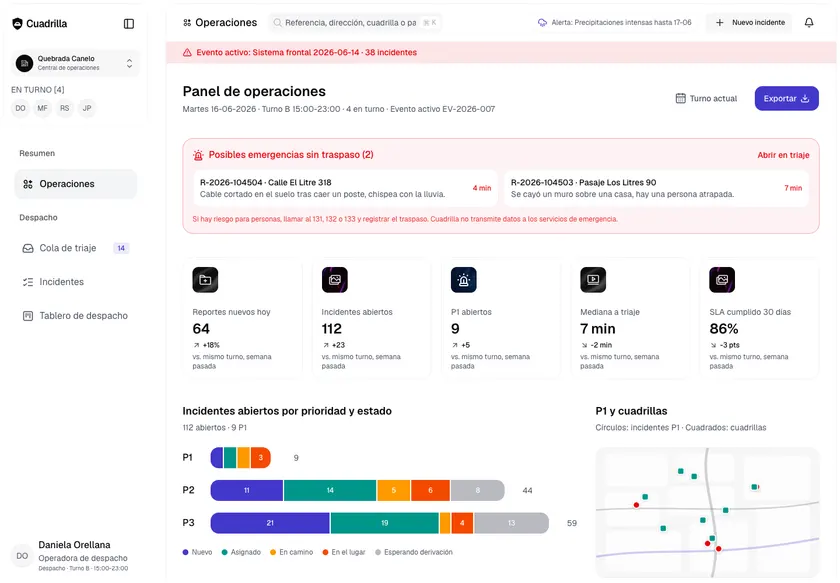
Cuadrilla - Street Incident Reporting and Crew Dispatch for a Chilean Municipality
Designed and built a clickable operations console for a hillside comuna in the Valparaíso Region: residents' reports of potholes, fallen trees, flooding and broken streetlights are triaged once, merged when they repeat, routed to the right department or responsible body and dispatched to crews against published service targets - with emergencies handed to 131, 132 and 133 by phone, never by the system.
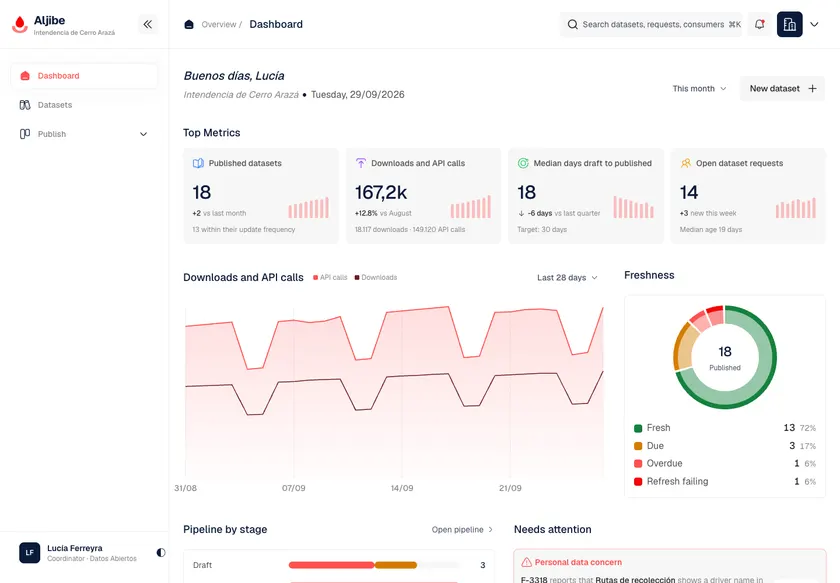
Aljibe - Open Data Portal with Mandatory Disclosure Review
Designed and built a clickable open data console for a Uruguayan departmental government: one catalogue of DCAT-described datasets, a publishing pipeline from draft to published, and a disclosure review workbench that blocks personal data and suppresses small cells before anything reaches the public.
The rules involved
The rules this kind of software usually has to follow. Guidance, not legal advice.
- 01
Accessibility
WCAG 2.1 or 2.2 AA, through laws such as Section 508 and ADA Title II in the US and EN 301 549 in the EU.
- 02
Freedom of information and records
Access to information laws set response deadlines. Public records laws set how long records are kept.
- 03
Data protection
The GDPR and national privacy laws, often with stricter rules for public bodies.
- 04
Digital identity
National eID schemes and EU eIDAS rules for logging citizens in and signing documents.
- 05
AI in public services
AI used to decide access to essential public services is high-risk under the EU AI Act, and public bodies must assess its impact on rights first.
Framework guides
Rules our GovTech builds cite most
- WCAG 2.1 AA5
- GDPR2
- WCAG 2.2 AA2
- Accessible British Columbia Act1
- ACL and Fair Trading Act 2012 (Vic)1
- ADA Title II1
- Administrative Procedure Act (Estonia)1
- AGESIC open data guidelines1
- Anti-Racism Data Act (BC)1
Two ways to work with OceanLab
Project build
We design and build the system as one project. It starts with a clickable prototype your team tries before any production code is written. Pay per milestone (outcome-based) or hourly at $30-50/hr, depending on role and seniority.
Embedded engineers
Our engineers join your team on a flexible monthly retainer. Part-time is fine and it runs month to month, with hours that overlap the US, UK and Europe, the Middle East, and Australia and Asia. Outcome-based or $30-50/hr.
Guides and tools
GovTech software questions
Do you build to WCAG accessibility standards?
Yes. Most of our govtech builds cite WCAG 2.1 AA or 2.2 AA in their requirements, and we design for it from the first screen rather than auditing at the end.
Can the system handle statutory deadlines?
Yes. Deadlines such as freedom of information response times are calculated by the system from the date received, with working days and pauses where the law allows them.
Can you work with an agency's procurement process?
Yes. A project build can be priced per milestone, which maps well to phased public contracts, or hourly at $30-50/hr.
