Payments software that reconciles to the cent
Reconciliation engines, chargeback managers, merchant onboarding and KYB, subscription billing, remittance apps, gateways and point-of-sale payments, built to keep card data and scope small.
What payments software has to get right
Payment systems have no tolerance for small errors. A fee booked twice or a refund matched to the wrong payout becomes a finance problem that takes days to find. Most of the work is making every movement of money traceable from the order to the bank statement.
They also carry the payment industry's own rules: PCI DSS for card data, scheme rules for disputes, and licensing and anti-money-laundering rules for moving money across borders.
Problems we are asked to fix
The problems teams bring to us, the system that fixes each one and the builds that did it.
Reconciliation engine
Reconciling payouts, fees and refunds across several PSPs and the bank by hand.
Orders, provider payouts and bank lines matched automatically, with a short exceptions queue for people.
Chargeback manager
Disputes are lost because evidence is gathered too late.
One dispute desk across every provider, with deadlines tracked and evidence gathered as soon as a dispute lands.
Merchant onboarding and KYB
Merchant onboarding takes weeks because KYB checks are manual.
Company checks and owner screening run in the flow, with four-eyes underwriting for the cases that need it.
Subscription billing
Plan changes, proration and dunning break custom billing logic.
Plans, proration, invoices and payment retries handled by one billing engine that follows local invoice rules.
Cross-border remittance
Cross-border transfers are slow and FX costs are opaque.
The full cost and exchange rate shown before sending, with an operations console behind the app.
PCI scope reduction
Every system that touches card data is pulled into PCI DSS scope.
Card data kept with the provider through hosted fields and tokens, so most of the system stays out of scope.
9 kinds of payments system we have built
Each one links the product build behind it, counted from our case studies.
Payments products we built
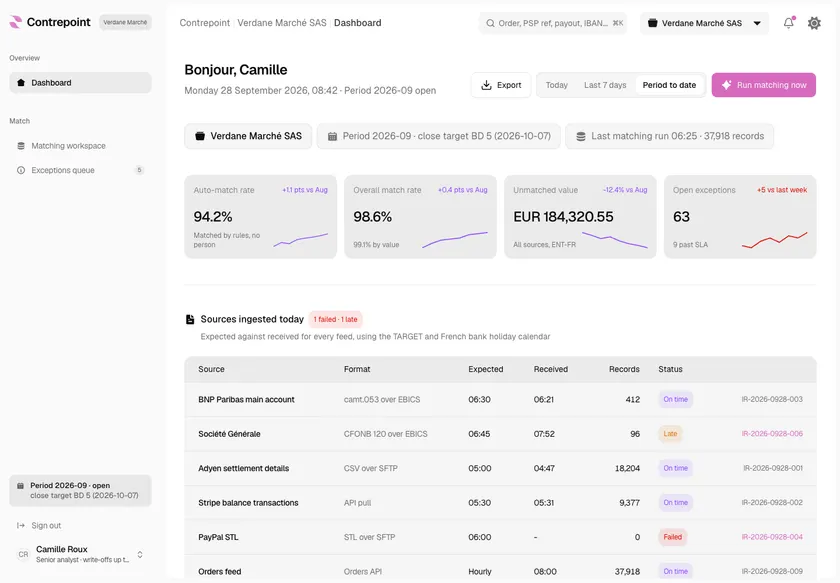
Contrepoint - Three-Way Reconciliation Engine for Orders, PSP Payouts and Bank Lines
Designed and built a clickable reconciliation engine for a Lyon-based marketplace group paid through Adyen, Stripe, PayPal and SEPA: it matches orders to PSP transactions, payouts and bank statement lines, explains every suggestion, turns what is left into a worked exceptions queue and traces each match to the journal entries it posts.
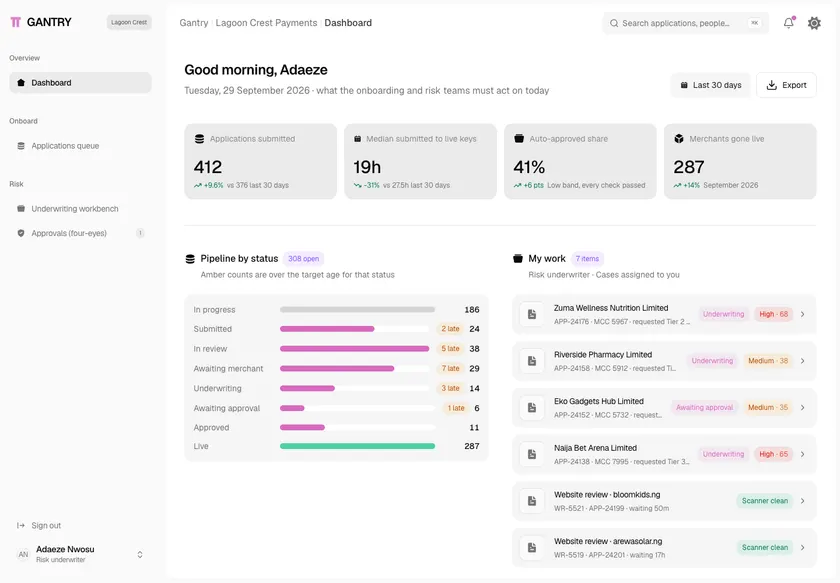
Gantry - Merchant Onboarding and KYB Platform with Four-Eyes Underwriting
Designed and built a clickable merchant onboarding and KYB console for a CBN-licensed payment gateway in Lagos: an applications queue, a case review that checks CAC, BVN, NIN, liveness and the settlement account name in one place, an underwriting workbench with an explainable risk score, limits and rolling reserves, and four-eyes approvals bound to each approver's mandate.
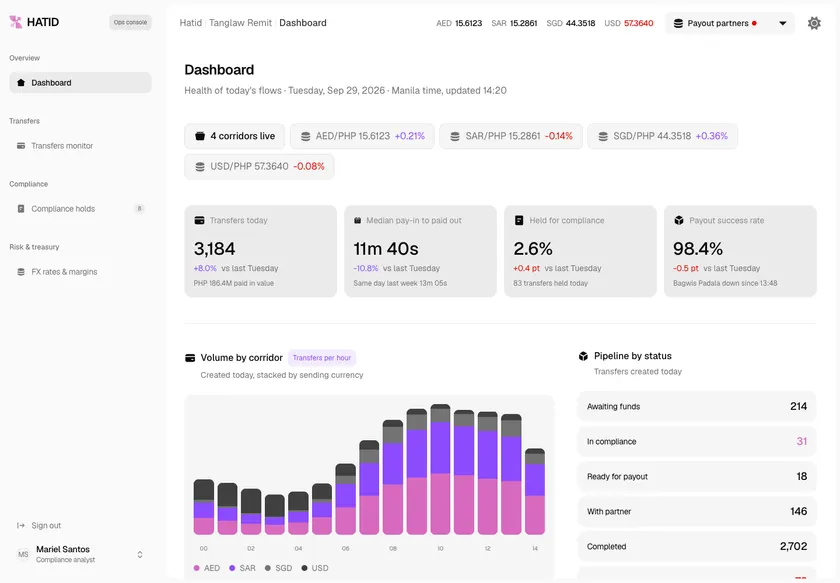
Hatid - Remittance App and Ops Console for Sending Money Home to the Philippines
Designed and built a clickable ops console for a Manila remittance company paying out PHP to the families of overseas Filipino workers: a live view of today's flows across 4 corridors, a transfers monitor with SLA timers, a full transfer record, compliance holds with a tipping-off check, and FX margins priced per corridor, payout method and amount band.
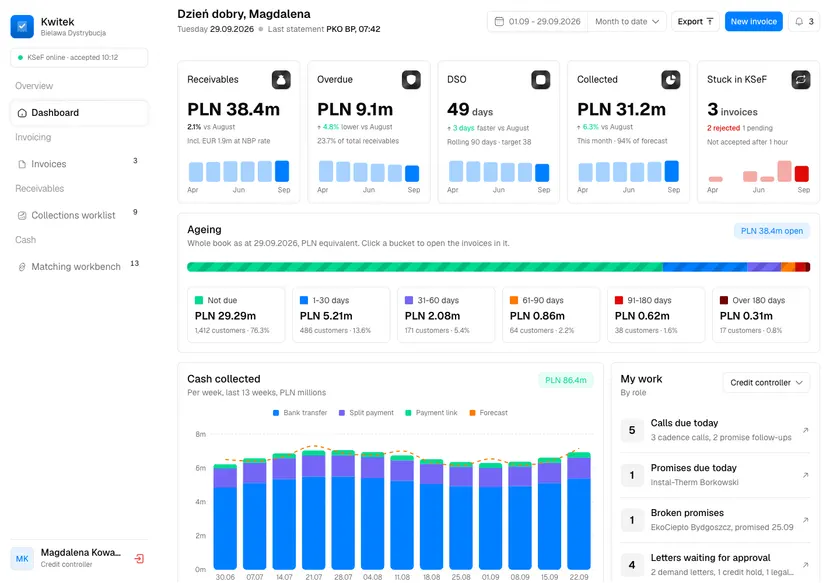
Kwitek - KSeF Invoicing, Collections and Cash Matching Platform
Designed and built a clickable invoicing and receivables platform for a Gdańsk wholesale distributor of heating and plumbing supplies: invoices issued through KSeF, a receivables dashboard with ageing, a collections worklist driven by a dunning cadence, and a matching workbench that pairs bank receipts, including split payments, with the invoices they pay.
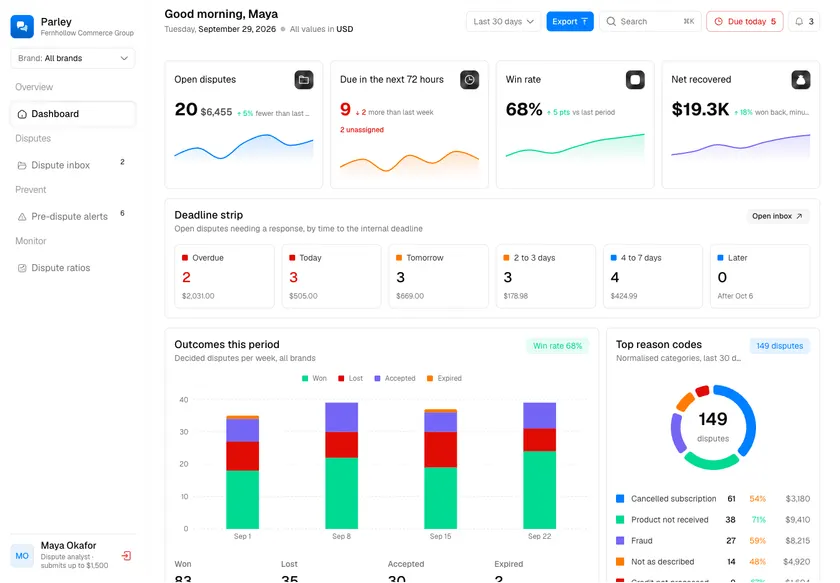
Parley - Chargeback Manager with One Dispute Desk Across Every PSP
Designed and built a clickable chargeback manager for a US merchant group with four online brands on Stripe, Adyen and Braintree: one inbox for every dispute with deadline countdowns, evidence gathered per reason code, a fight or accept recommendation with its reasons, pre-dispute alerts and dispute ratios tracked against network thresholds.
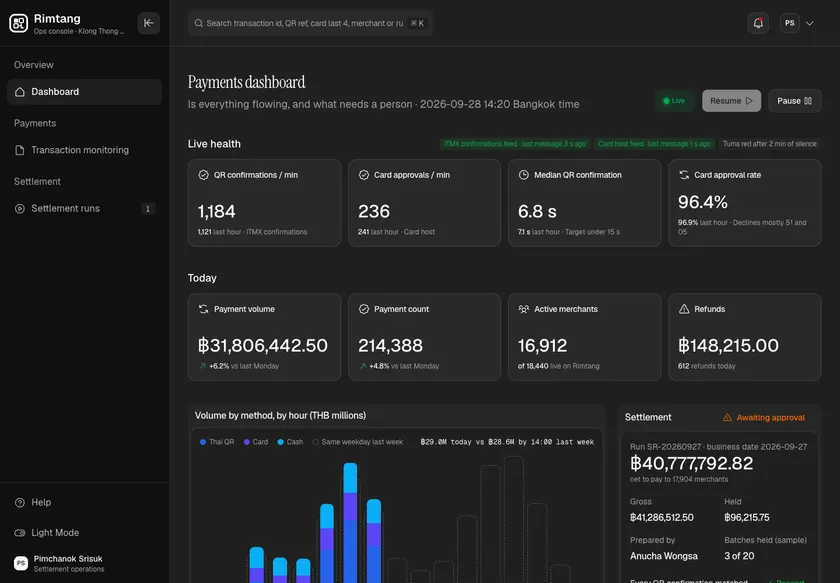
Rimtang - Phone-as-Till QR and Tap-to-Pay App with an Operations Console
Designed a phone-as-till payments product for a Thai bank-owned payment service provider and its street merchants - dynamic Thai QR, tap to pay on the phone and cash - and built a clickable operations console where staff watch payments, match late QR confirmations by hand and approve the daily settlement run.
The rules involved
The rules this kind of software usually has to follow. Guidance, not legal advice.
- 01
PCI DSS
The card industry's security standard, for anyone who stores, processes or sends card data.
- 02
Strong customer authentication
PSD2 in Europe requires two-factor checks on many online payments, usually through EMV 3-D Secure.
- 03
Licensing and AML
Payment and remittance companies need licences, customer and business checks, sanctions screening and the FATF travel rule for transfers.
- 04
Scheme rules
Visa and Mastercard rules set dispute reasons, evidence and deadlines.
- 05
Invoicing and tax
E-invoicing and tax reporting rules, such as KSeF in Poland or CFDI in Mexico, shape billing and receivables software.
Framework guides
Rules our payments builds cite most
- GDPR3
- PCI DSS3
- AML (Ley 10/2010)1
- AML Act B.E. 25421
- AMLA (RA 9160)1
- Anti-Terrorism Act of 20201
- APPI1
- ASBJ Statement No. 291
- Bad debt relief1
Two ways to work with OceanLab
Project build
We design and build the system as one project. It starts with a clickable prototype your team tries before any production code is written. Pay per milestone (outcome-based) or hourly at $30-50/hr, depending on role and seniority.
Embedded engineers
Our engineers join your team on a flexible monthly retainer. Part-time is fine and it runs month to month, with hours that overlap the US, UK and Europe, the Middle East, and Australia and Asia. Outcome-based or $30-50/hr.
Guides and tools
Payments software questions
Will our system have to be PCI DSS compliant?
If it stores, processes or sends card data, yes. The usual way to shrink that is to keep card numbers with the payment provider through hosted fields and store only tokens, so most of your system stays out of scope.
Can you integrate with several payment providers at once?
Yes. Reconciliation and chargeback systems are built to take data from several providers and the bank, and match them in one place.
Do you build for local payment rails?
Yes. Our payment builds work with local rails and rules such as QR payments in Thailand, SEPA in Europe and local e-invoicing systems.
