Web3 wallet and infrastructure software people can trust with keys
Multi-chain self-custody wallets, onboarding and recovery for first-time holders, institutional MPC custody with quorum approvals, smart contract admin consoles and collectibles marketplaces.
What web3 wallets and infrastructure software has to get right
Web3 products ask users to hold their own keys, and most users are not ready for that. First-time holders drop off at seed phrases, institutions need approval policies no single person can bypass, and admin actions on contracts are risky without review.
The builds below make key handling understandable, add recovery that does not hand control to the company, and put quorum approvals, simulation and logs around every action that can move value.
Problems we are asked to fix
The problems teams bring to us, the system that fixes each one and the builds that did it.
Wallet onboarding and recovery
First-time users drop off at seed phrases.
Onboarding that explains keys in plain words, with recovery options that keep the user in control.
Institutional MPC custody
Institutions need MPC custody with approval policies.
Keys split with MPC, quorum approvals and client-set policies on every transfer.
Smart contract admin console
Admin actions on smart contracts are risky without multi-sig and logs.
Contract changes reviewed, simulated and multi-signed before they run, with a full log.
Multi-chain wallet
Users want one wallet across many chains.
One wallet across chains, with clear network labels and fee estimates before every send.
Collectibles marketplace
Building an NFT marketplace with royalties and compliance.
A fan collectibles marketplace with local currency checkout, royalties and the virtual asset rules where it runs.
5 kinds of web3 wallets and infrastructure system we have built
Each one links the product build behind it, counted from our case studies.
Web3 wallets and infrastructure products we built
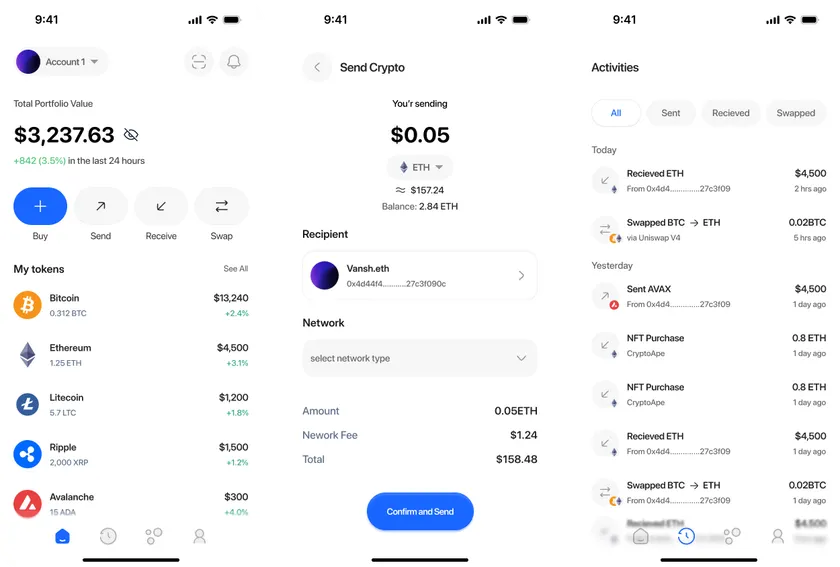
NovaWallet - Multi-Chain Self-Custody Mobile Wallet
Built an iOS and Android self-custody wallet supporting BTC, ETH, LTC, XRP and AVAX with one-tap send, receive and swap, plus a clean activity feed - shipped from clickable AI prototype to App Store in 8 weeks.
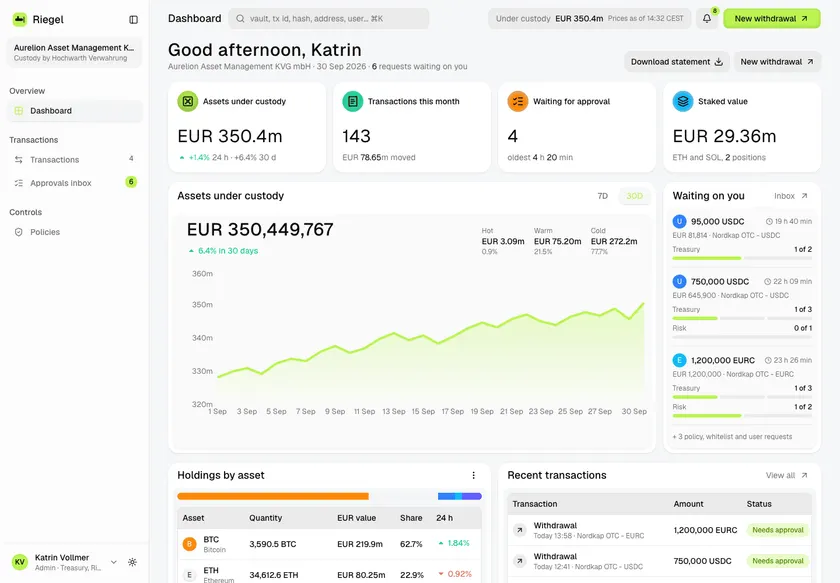
Riegel - Institutional MPC Custody Platform with Quorum Approvals and Client Policies
Designed and built a clickable client console for a German crypto custodian's MPC custody platform: institutions see their vaults and holdings, follow every transaction from request to final confirmation, approve with a security key against a quorum per approver group, and test their own first-match withdrawal policy before it goes live.
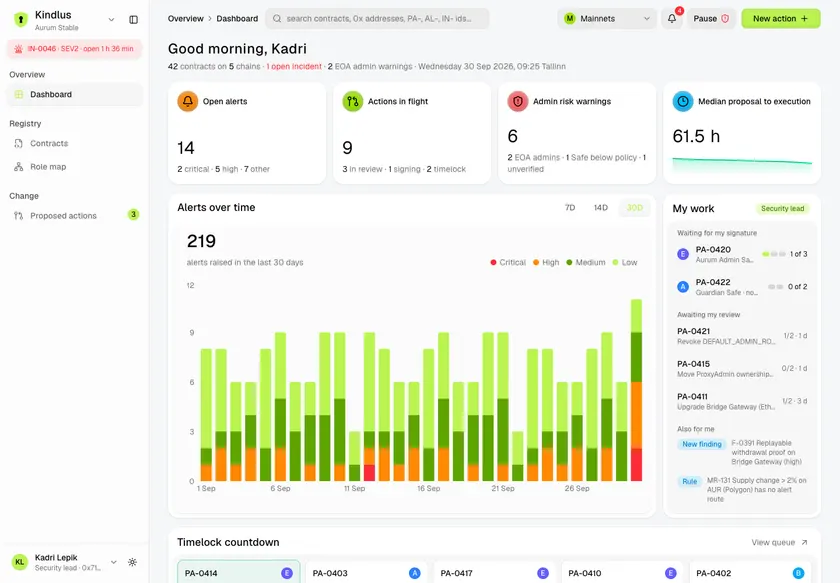
Kindlus - Smart Contract Admin Console with Reviewed, Simulated and Multi-Signed Changes
Designed and built a clickable smart contract admin console for a Tallinn infrastructure company that serves protocol teams and token issuers: a registry of deployed contracts across chains, a role map that flags single keys with admin power, and a queue where every upgrade, role change, parameter change or pause is reviewed, simulated and signed through a Safe and a timelock.
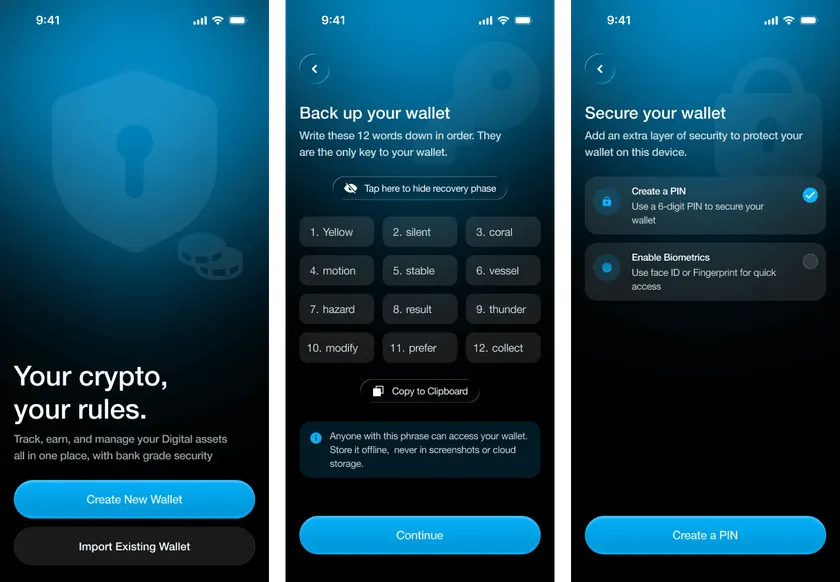
VaultGo - Self-Custody Onboarding & Recovery for First-Time Holders
Built a focused onboarding, recovery-phrase backup and PIN/biometric setup flow for a Japanese self-custody wallet - designed to convert first-time holders into confident self-custodians, shipped in 8 weeks.
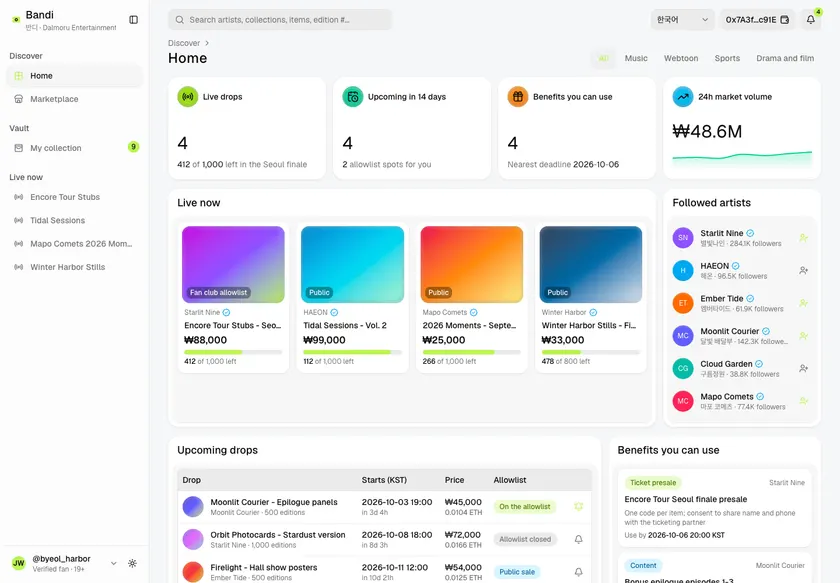
Bandi - K-Culture Fan Collectibles Marketplace with KRW Checkout
Designed and built a clickable fan collectibles marketplace for a Seoul entertainment-tech company: fans buy numbered collectibles from music labels, webtoon studios and sports clubs by Korean card in KRW or with ETH from their own wallet, use the holder benefits, and resell to other fans with the creator royalty shown on every sale.
The rules involved
The rules this kind of software usually has to follow. Guidance, not legal advice.
- 01
Crypto custody and licensing
MiCA in the EU and national regimes elsewhere decide whether holding keys or moving assets for users needs a licence.
- 02
Travel rule
Providers must send sender and receiver details with transfers, and check self-hosted wallets above set thresholds in the EU.
- 03
Security standards
Key storage in certified hardware or MPC, and assurance reports such as SOC 2 for institutional custody.
- 04
Operational resilience
DORA in the EU, and technology risk rules such as Singapore's MAS TRM guidelines.
Framework guides
Rules our web3 wallets and infrastructure builds cite most
- AML/KYC2
- DORA2
- GDPR2
- ISO 270012
- MiCA2
- Copyright Act1
- E-Commerce Consumer Protection Act1
- ERC-29811
- FIPS 140-2 / 140-3 Level 31
Two ways to work with OceanLab
Project build
We design and build the system as one project. It starts with a clickable prototype your team tries before any production code is written. Pay per milestone (outcome-based) or hourly at $30-50/hr, depending on role and seniority.
Embedded engineers
Our engineers join your team on a flexible monthly retainer. Part-time is fine and it runs month to month, with hours that overlap the US, UK and Europe, the Middle East, and Australia and Asia. Outcome-based or $30-50/hr.
Guides and tools
Web3 wallets and infrastructure software questions
Is a self-custody wallet regulated?
If only the user holds the keys and the company never controls the assets, it is usually not custody. Features such as swaps, fiat on-ramps or recovery services can bring regulation in, so we review each one.
MPC or multi-sig?
MPC keeps one address and splits the key off-chain, which works across chains. Multi-sig keeps approvals on-chain and is easy to audit. Many institutions use both for different jobs.
How do you make key recovery safe?
With options such as social recovery or split backups that never give the company full control, plus clear warnings and tests of the recovery path before the user needs it.
