Pagerline - Search and Rescue Callout and Coordination Platform for Volunteer Teams
Callout and Search Coordination for a New Zealand SAR Association
Designed and built a clickable callout and search coordination console for a volunteer search and rescue association in Queenstown, New Zealand: readiness by team, callout rounds that escalate from push to SMS to voice, a live incident workspace for the coordinator working under the police Incident Controller, and field team assignments that check qualifications and fatigue before a team goes out.
Most of our work is under NDA. Per agreement, we can share the work but not the company details - all names and identifying information shown here have been changed.
Impact
Operations dashboard, incidents list, and an incident workspace with overview, callout and responders, and teams and assignments. Each of the 20 demo incidents opens its own workspace, and closed ones show locked logs.
Every callout round goes out by push, falls back to SMS after 3 minutes and a voice call with keypad reply after 10. Members who have not answered after 10 minutes are listed with an Escalate action.
A member over 12 hours on task in 24 hours, or a river bank task with no current swiftwater rescue technician, raises a warning on the task. It can only be overridden with a reason, which is logged.
1 live alpine search with 3 callout rounds, 64 responses, 9 field teams, 12 tasks and 7 clues, plus 17 closed incidents and 2 exercises, across 9 teams and 418 members.
The Problem
Greyscree called its volunteers out with a group text from a coordinator's personal phone and a chain of phone calls. Replies came back across three phones, so nobody at base knew who was coming, when, or with what qualifications. Sectors were drawn on paper maps, clues went on a whiteboard, the radio log was a notebook, and nobody was counting volunteers' hours on task. The report to the police and the hours for funders took a coordinator most of a weekend to rebuild.
Our Solution
Pagerline gives the association's incident coordinators one console for each tasking from NZ Police: who is available now by team and qualification, callout rounds with delivery and response counts, a live picture of who is en route, checked in, on task or resting, and field teams with tasks on a board that warns before an unqualified or over-tired team is sent out. The police stay in command throughout.
The Challenge: Coordinating Volunteers Under Police Command
A search can start at any hour, with volunteers spread across a region, patchy coverage at base and a missing person whose details are among the most sensitive information the association will ever hold.
Support the Search, Never Direct It
NZ Police coordinate land, cave and inland water searches, and RCCNZ coordinates aviation and offshore maritime ones. Volunteers work under the coordinating authority's Incident Controller, so every incident records the police reference and Incident Controller, and helicopters are requested through the police, never booked directly.
Knowing Who Is Actually Coming
Free-text replies such as "maybe later" and "on my way" could not be counted. The coordinator needed a clear answer, an ETA and the qualifications of each responder, and a way to reach members whose phones missed the first message.
Volunteers Out Past Safe Limits
The Health and Safety at Work Act 2015 recognises volunteer workers, and Greyscree runs as if it holds those duties: no more than 12 hours on task in 24 hours and at least 8 hours' rest before re-tasking, as its own policy. Nobody at base was counting, and swiftwater or rope tasks need current qualifications.
Sensitive Subject Data and Records
Under the Privacy Act 2020, health information about a missing person is shared with the field only as the task needs it, medical notes are limited to team leaders and medics, and every view is logged. Incident records can be requested by the police or a coroner, so they become append-only when the incident closes.
Our Approach: From SAR Practice to a Clickable Console
Spec and Rules Research
Mapped 9 roles from field volunteer to the police SAR coordinator, and 40 screens across a mobile volunteer app, the coordinator console, association admin, settings and a read-only police view. Defined the data model for members, qualifications, availability, incidents, versioned briefs, callout rounds, responses, field teams, sectors, tasks, clues, position fixes and audit entries, and wrote down the rules the design follows: the police and RCCNZ split, the Privacy Act 2020, HSWA 2015 and the association's own fatigue policy.
Clickable Demo on a Production UI Kit
Built 5 key coordinator screens on a production dashboard kit: the operations dashboard with readiness cards, availability per team, callouts by month and type, currency and kit alerts and MetService warnings, the incidents list with status tabs and filters, and the incident workspace with its overview, callout and responders, and teams and assignments tabs. Share with police, escalation, check-in by hand, add to team, task moves and warning overrides all run on local state.
What a Production Build Adds
The mobile volunteer app with offline brief and maps, push through Firebase Cloud Messaging and APNs, SMS and voice callout through Twilio or Vonage, LINZ Topo50 base maps with MapLibre or Mapbox for search planning and the live map, the MetService API, Garmin inReach for teams out of coverage, S3 storage in Asia Pacific, Postmark email and passkey or Microsoft Entra ID sign-in. Plus the clue, radio, welfare and resource request logs, the subject profile with logged views, the incident report, and legal review of the privacy and HSWA positions.
Why It Works: Clear Answers at Base, Fast
Readiness Before the Call Comes
The dashboard shows members available now per team against each team's minimum strength, how many with swiftwater, rope and first aid qualifications are available, vehicles ready, and callout reach from the last test. A team below minimum strength shows in red before an incident starts.
One Answer per Volunteer
Each callout round shows paged, delivered and responded counts, and every responder has one answer (available, later or not available), an ETA, the channel they replied on and a status from en route to signed out. Mark not required thanks a member who is not needed.
Warnings Before a Team Goes Out
The tasks board runs from planned to debriefed, and each task checks its team's qualifications and fatigue. A warning cannot be dismissed silently: an override needs a reason and is logged, and checked-in volunteers waiting at base are listed with their qualifications and time since rest.
Police in Command, Kept in the Loop
The workspace header always shows the police reference, Incident Controller and operational period. Share with police creates a signed, read-only link that can be revoked and expires when the incident closes or after 72 hours, and each brief version shows how many of its audience have read it.
Related case studies
View all: GovTech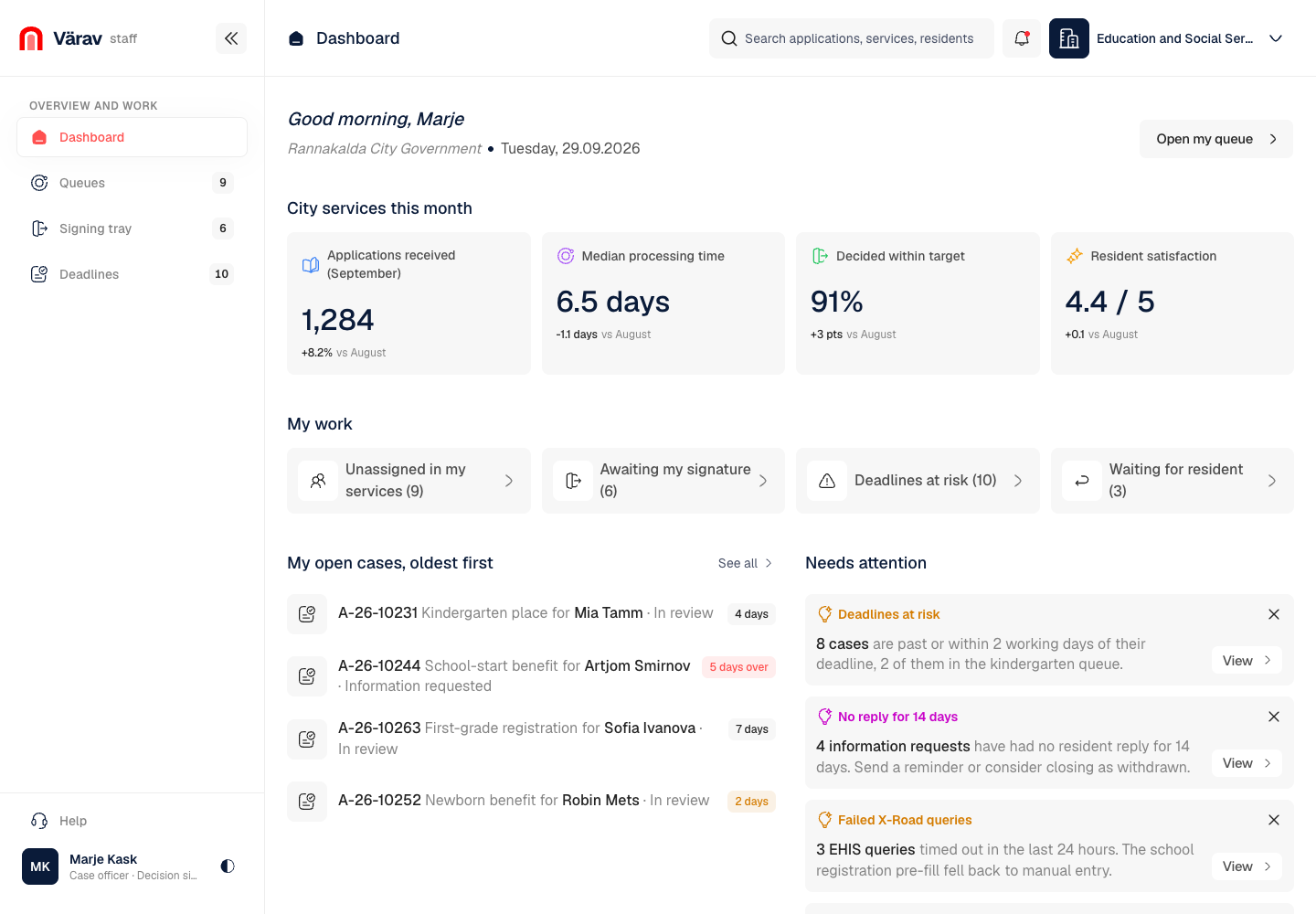
Värav - Citizen Services Portal Built on Estonia's eID and X-Road
Designed and built a clickable staff console for an Estonian city's resident services portal: service queues with eligibility results, case detail with register data pulled over X-Road, decision drafting with lawful reasons and appeal information, batch signing with eID and deadline tracking - so residents are never asked for data the state already holds.
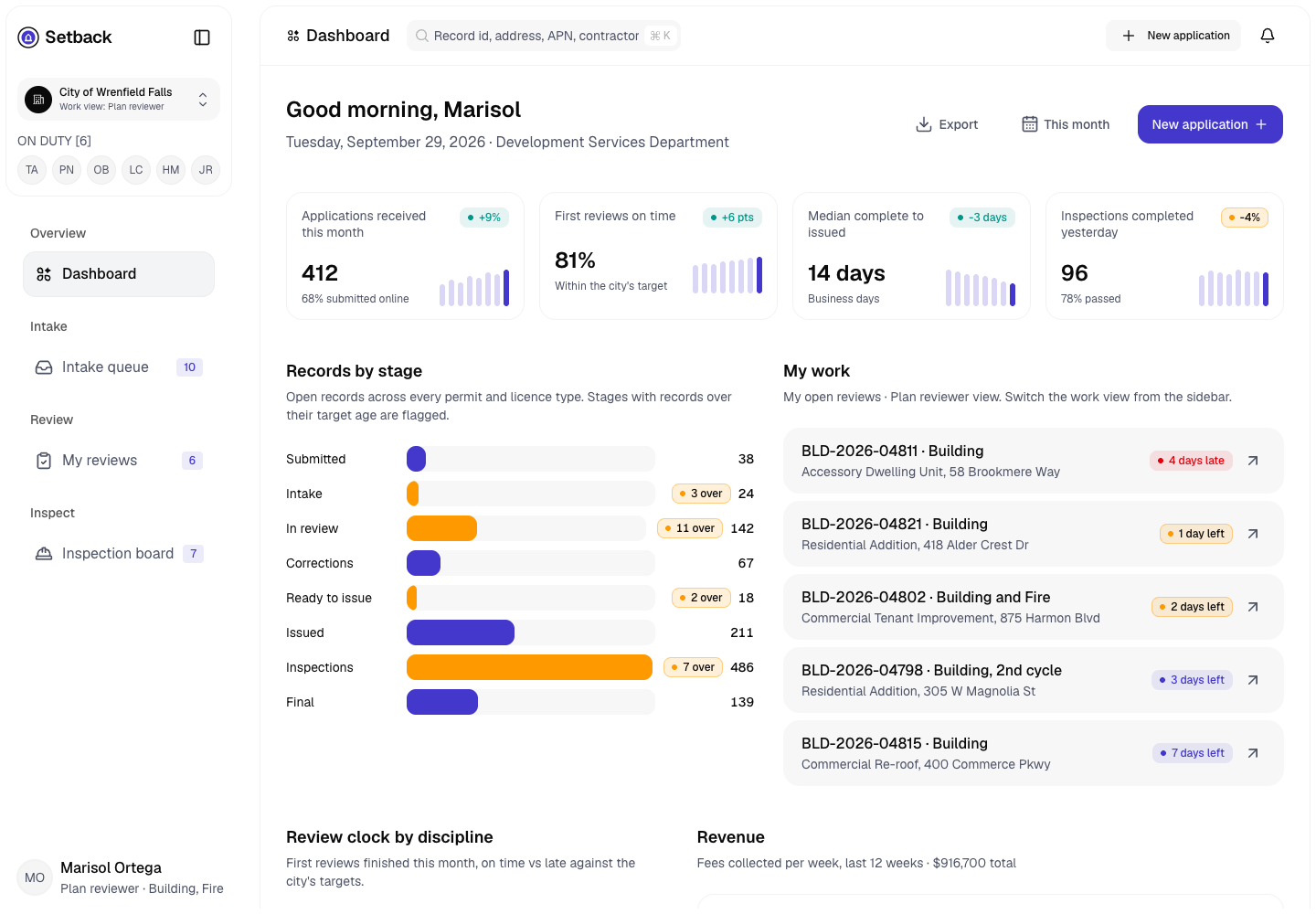
Setback - Permitting and Licensing Platform with Parallel Plan Review
Designed and built a clickable permitting and licensing platform for a US city's development services department: completeness checks before the review clock starts, building, zoning, fire and public works reviews running in parallel against city targets, an inspection board that checks certifications, and one record for every permit with its parcel, parties, holds, fees and inspections.
Enterprise Software Engineering - Human + AI
Contact Us
© 2026 - Copyright. All Rights reserved Oceanlab
Location
Global Headquarters
21 Merchant Road, 3rd Floor, Singapore 058267
Main corporate office and leadership operations
North America Office
548 Market Street, PMB 12345, San Francisco, CA 94104
Client operations and business development
India Office
402 Shivalik Shilp II, SG Highway, Ahmedabad 380015
Engineering and delivery center

Enterprise Software Engineering - Human + AI
Contact Us
Locations
Global Headquarters
21 Merchant Road, 3rd Floor, Singapore 058267
Main corporate office and leadership operations
North America Office
548 Market Street, PMB 12345, San Francisco, CA 94104
Client operations and business development
India Office
402 Shivalik Shilp II, SG Highway, Ahmedabad 380015
Engineering and delivery center
© 2026 - Copyright. All Rights reserved Oceanlab