AI for clinics and hospitals, with clinicians in charge
OceanLab builds AI into clinical and clinic workflows: notes, imaging, operations and patient feedback. The AI drafts and sorts; clinicians and staff make the calls. Every example below is a product we built.
OceanLab product builds
AI products we designed and built in this industry. Each one is a full case study with screens, scope and the rules it was built for.
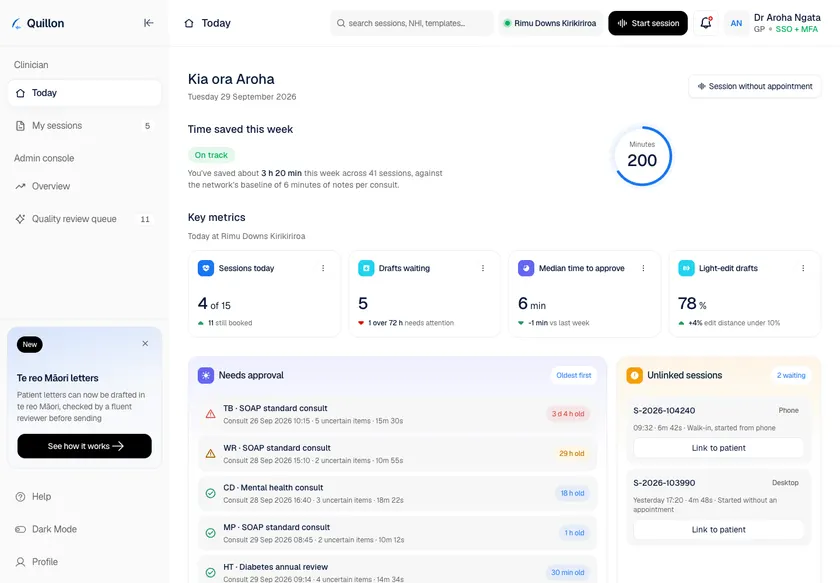
Quillon - AI Clinical Scribe That Drafts the Note and Leaves the Clinician in Charge
Designed and built a clickable ambient AI scribe for a network of 14 New Zealand general practices: consent before recording, a structured draft note with every uncertain item flagged, SNOMED CT code and follow-up suggestions, approve and push to the practice management system, and an admin console for safety, retention and quality review.
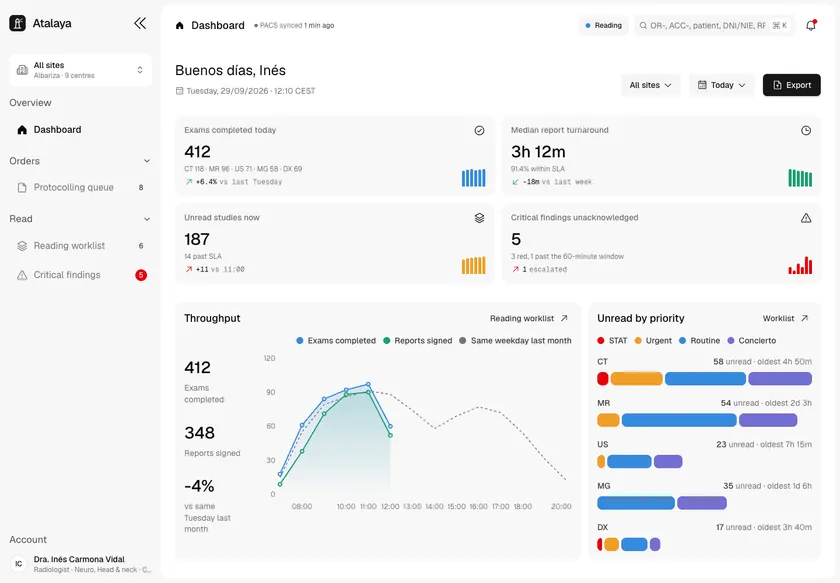
Atalaya - Radiology Information System from Order to Signed Report
Designed and built a clickable radiology information system for a private imaging group with nine centres in Andalucía, Madrid and Cataluña: radiologists protocol orders against safety rules, read from one worklist ranked by urgency and time to SLA, sign structured reports behind a pre-sign checklist, and prove every critical finding reached a clinician.
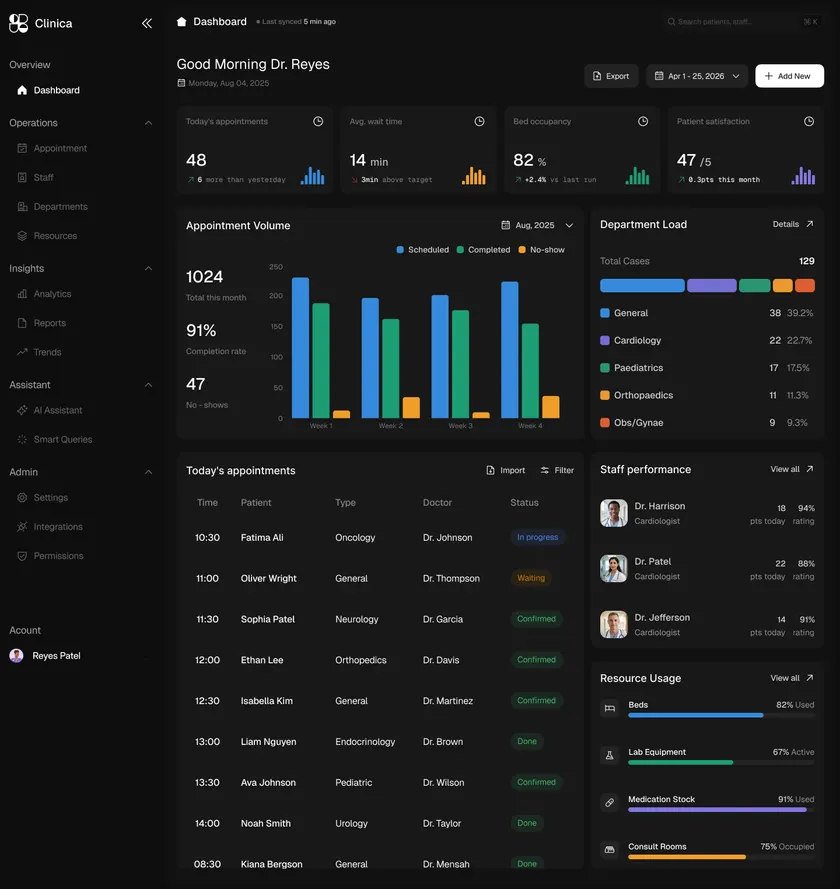
Clinica - Multi-Department Clinic Operations Console with AI Assistant
Built a multi-department clinic operations console with appointment management, department load tracking, staff performance, resource utilisation and an AI assistant for staff queries - shipped from clickable AI prototype to production in 14 weeks.
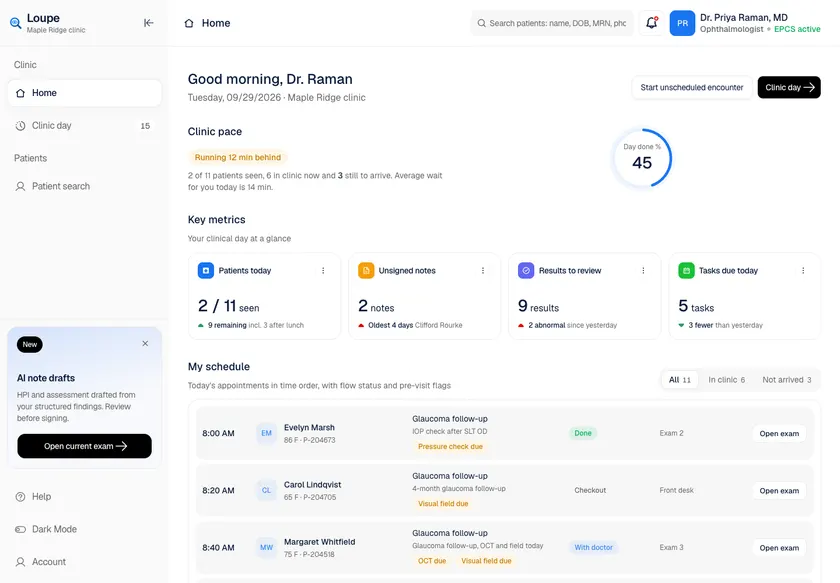
Loupe - Ophthalmology EHR with Per-Eye Charting and Laterality-Aware Coding
Designed and built a clickable ophthalmology EHR for a US eye care group with seven clinics: a clinician's day at a glance, a live patient flow board with dilation timers, patient search with break-the-glass access, a chart summary with right-eye and left-eye findings side by side, and a structured exam workspace per eye.
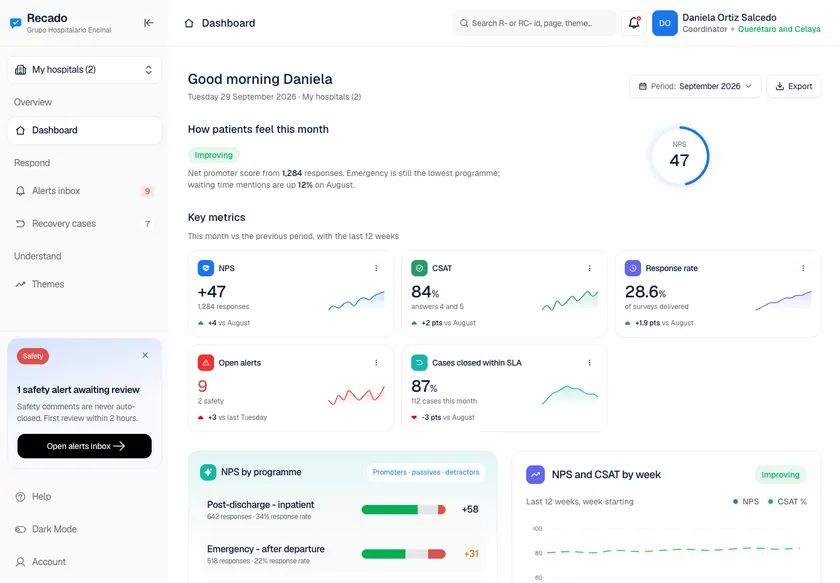
Recado - Patient Feedback Platform with Real-Time Alerts and Service Recovery
Designed and built a clickable patient feedback platform for a private hospital network in Mexico: survey results by programme, an alerts inbox that puts safety concerns and unhappy patients in front of a person within a set deadline, recovery cases that end with the patient being called back, and Spanish text analytics that show what patients talk about.
Where AI earns its place
Each use case names the builds that did it.
Clinical notes
An ambient scribe that asks for consent before recording, drafts a structured note with every uncertain item flagged, suggests codes and follow-ups, and pushes nothing until the clinician approves.
Radiology workflow
From order to signed report: radiologists protocol orders against safety rules, read from one worklist ranked by urgency, sign structured reports behind a checklist and prove every critical finding reached a clinician.
Clinic operations
One console for appointments, department load, staff and resources, with an AI assistant that answers staff questions.
Specialty records
A specialty EHR with a live patient flow board, break-the-glass access and right-eye and left-eye findings side by side.
Patient feedback
An alerts inbox that puts safety concerns and unhappy patients in front of a person within a set deadline, and recovery cases that end with a call back.
What to plan for
The rules that shape AI in this industry. General information, not legal advice: check with your own counsel.
Health data privacy
Medical device rules
Consent to record
A clinician signs off
Interoperability
Telling people it is AI
Frameworks our AI builds here cite
From one workflow to production
- 01
Pick the workflow
We start from one workflow your team wants off its plate and agree what a working result looks like.
- 02
Clickable AI prototype
Your team tries the flow on a clickable prototype before any production code is written.
- 03
Production build
We build the production version, with the approval steps and records your industry needs.
- 04
Launch and improve
It goes live in your team's hands, and we tune it as real work runs through it.
Priced either way, whichever suits the work: outcome-based, paid per milestone, or hourly at $30-50 depending on role and seniority. More on AI automation →
Questions teams ask
What can AI do for a clinic or hospital?
Take reading and drafting off clinicians and staff: draft clinical notes from the consultation, move imaging orders through to a signed report, answer staff questions about the clinic's operations and sort patient feedback so safety concerns are seen first. Each of these is a product OceanLab built.
Does a clinician stay in charge?
Yes. In our clinic builds the AI drafts and flags, and a clinician reviews and signs. Nothing clinical is final until a person approves it.
Is clinical AI high-risk under the EU AI Act?
It can be. AI that is a safety component of a medical device, or is itself a device that needs third-party assessment under the EU MDR, is high-risk under the EU AI Act. Admin tools such as scheduling usually are not. Check your own use case with counsel.
How is it priced?
Either way, whichever suits the work: outcome-based, where you pay per milestone, or hourly at $30-50 depending on role and seniority.
Keep exploring
Are you an AI lab looking for human training or evaluation data? That is a separate offer, OceanLab Labs.
