EU AI Act risk checker
Answer a few questions about your AI system to see its likely risk tier, what you would have to do, and from when.
Free, runs in your browser, no sign-up. Updated 2026-10-25.
Guidance, not legal advice. This is a first-pass classification to plan engineering work; confirm it with counsel.
Result
Likely tier: Transparency duties (Article 50). 1 obligation.
Why
- Art 50 transparency duties apply.
| Article | Obligation | Applies from |
|---|---|---|
| Art 50(1) | Tell people they are interacting with an AI system | 2 Aug 2026 · in force |
Maximum fine: Up to EUR 15M or 3% of worldwide annual turnover (Art 99(4)); lower of the two for SMEs (Art 99(6)) and SMCs (Art 99(6a))
- Art 4 (AI literacy) applies to all providers and deployers; it was amended by Regulation (EU) 2026/1744, so check its current wording.
- General-purpose AI model duties (Chapter V) are out of scope of this checker.
Send this result to OceanLab
Opens an email to OceanLab with this result and a link to your inputs. Nothing is sent until you press send, and there is no sign-up.
How this is calculated
The checker applies the Act's tests in order. A prohibited practice under Article 5 ends the check. Otherwise, a safety component under Annex I or a use in an Annex III area makes the system high-risk, unless an Article 6(3) condition applies and the system does not profile people.
Article 50 transparency duties are added on top of any tier: telling people they are talking to an AI, marking synthetic content, and disclosing emotion recognition or deepfakes.
Dates follow Regulation (EU) 2024/1689 as amended by Regulation (EU) 2026/1744 (the Digital Omnibus on AI): 2 December 2027 for Annex III systems and 2 August 2028 for Annex I systems.
General-purpose AI model duties (Chapter V) are out of scope.
Sources
- Regulation (EU) 2024/1689 (AI Act) · checked 2026-10-23
- Regulation (EU) 2026/1744 (Digital Omnibus on AI) · checked 2026-10-23
Questions about this tool
When do the high-risk rules apply?
After Regulation (EU) 2026/1744: 2 December 2027 for Annex III systems and 2 August 2028 for systems covered by Annex I product law.
Can an Annex III system avoid high-risk status?
Under Article 6(3), if it only does a narrow procedural or preparatory task and does not profile people. You must document that assessment and still register the system.
What are the maximum fines?
Up to EUR 35M or 7% of worldwide turnover for prohibited practices, and up to EUR 15M or 3% for most other breaches (Article 99).
Is this legal advice?
No. It is a first-pass classification to plan engineering work. Confirm the result with counsel.
Other free tools
OceanLab product builds like this
Products OceanLab designed and built. Each case study covers the screens, the scope and the rules it was built for.
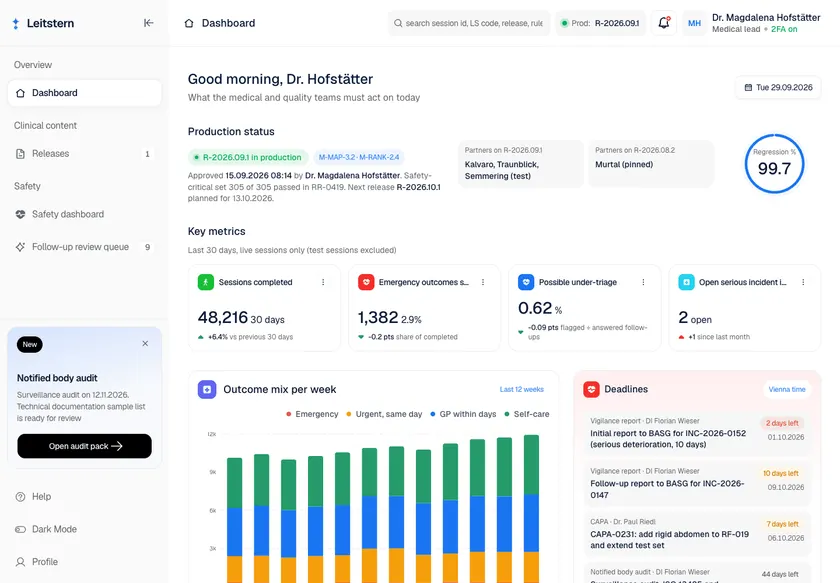
Leitstern - AI Symptom Checker with a Clinical Governance Console
Designed and built the clinical governance console for a CE-marked symptom checker that tells people in Austria how urgently to seek care: releases of clinical content, red-flag rules and locked models approved by e-signature against a passing regression run, real-world under-triage tracked from follow-ups, and vigilance deadlines kept in view.
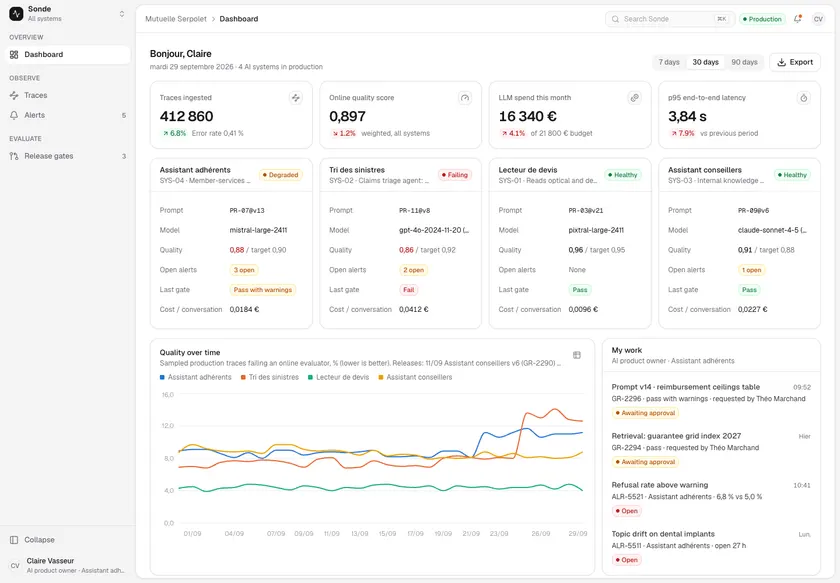
Sonde - LLM Evaluation and Observability Platform with Release Gates
Designed and built a clickable LLM evaluation and observability platform for the AI team of a French health mutual: redacted production traces span by span, release gates that block a prompt or model change when quality regresses, alerts with owners and ageing, and the monitoring record its risk and compliance teams can show a supervisor.
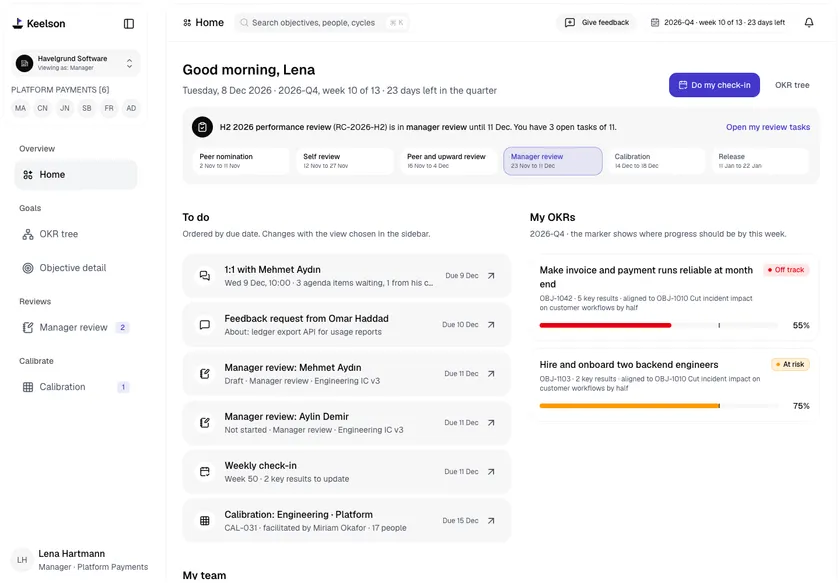
Keelson - Performance and OKR Platform with the Works Agreement Built In
Designed and built a clickable performance platform for a 520-person Berlin SaaS company with a works council: OKRs on an alignment tree with weekly check-ins, a manager review workspace with an AI summary the manager must edit before submitting, and calibration on a 9-box with a reason logged for every change.
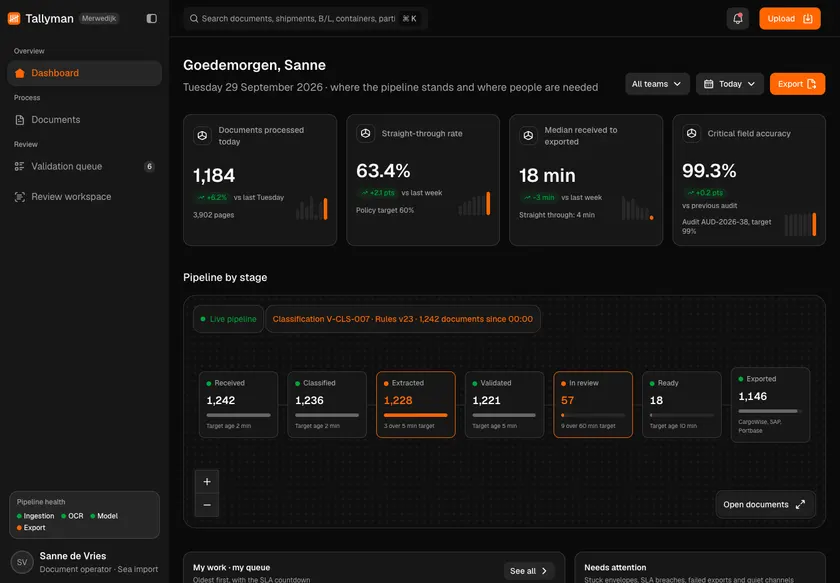
Tallyman - Intelligent Document Processing for Trade and Customs Documents
Designed and built a clickable document processing platform for a Rotterdam freight forwarder and customs representative: it classifies commercial invoices, packing lists, bills of lading, air waybills and certificates of origin, extracts each field with a confidence score, checks it against business rules and sends only the uncertain fields to a person in a side-by-side review workspace.
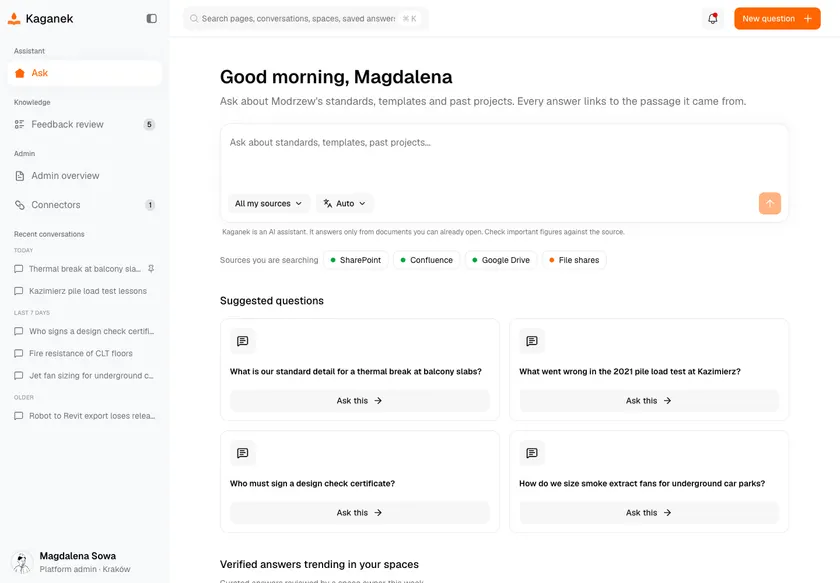
Kaganek - RAG Knowledge Assistant with Citations and Permissions Intact
Designed and built a clickable internal knowledge assistant for a Kraków consulting engineering firm: staff ask in Polish or English and get answers built only from the firm's own SharePoint, Confluence, Google Drive and file share documents, with every claim linked to its source passage and an honest "I don't know" when the sources are weak.
