SOC 2 readiness checklist
Turn the SOC 2 criteria into engineering tasks, pick the categories in scope, and track what is still open.
Free, runs in your browser, no sign-up. Updated 2026-10-25.
Guidance, not legal advice. Your auditor decides the scope and what evidence is enough.
0 of 19 done, 0%.
- Required done
- 0 of 16
- Access control
- 0 of 5
- Logging and monitoring
- 0 of 4
- Change management
- 0 of 3
- Risk and vendors
- 0 of 2
- Policies and people
- 0 of 2
- Availability
- 0 of 2
- Confidentiality
- 0 of 1
Ask OceanLab to help close the gaps
Opens an email to OceanLab with this result and a link to your inputs. Nothing is sent until you press send, and there is no sign-up.
How this is calculated
Security (the Common Criteria, CC1 to CC9) is always in scope. Availability, Confidentiality, Processing Integrity and Privacy are added when you pick them.
Each task is mapped to the Trust Services Criteria series it supports. The wording is OceanLab's paraphrase: the AICPA criteria text sits behind a sign-up form and was not reproduced.
Your ticks are saved in this browser only. Export them as Markdown or print the page.
Sources
- AICPA 2017 Trust Services Criteria (revised points of focus, 2022) · checked 2026-10-23
Questions about this tool
Is Security always in scope?
Yes. The Common Criteria (CC1 to CC9) are in every SOC 2 report. The other four categories are optional.
What is the difference between Type I and Type II?
Type I reports on how controls are designed at a point in time. Type II also tests that they operated over a period, usually several months.
Are these the official criteria?
Tasks are mapped to the criteria series IDs, with wording paraphrased by OceanLab. Use the AICPA criteria and your auditor for the exact text.
Is this audit or legal advice?
No. It is guidance for engineering teams. Your auditor decides the scope and what evidence is enough.
Other free tools
OceanLab product builds like this
Products OceanLab designed and built. Each case study covers the screens, the scope and the rules it was built for.
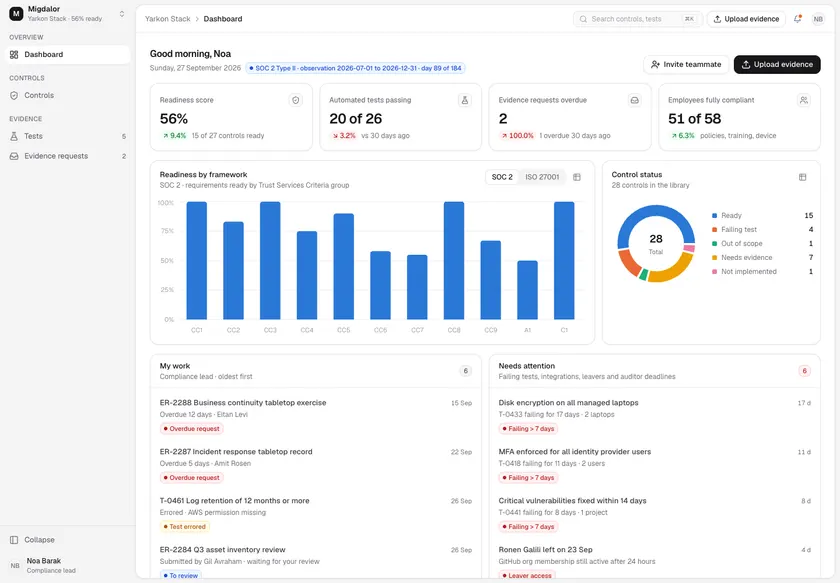
Migdalor - SOC 2 and ISO 27001 Audit Readiness Tracker for Startups
Designed and built a clickable audit readiness tracker for startups preparing for SOC 2 and ISO/IEC 27001: one control library mapped to both frameworks, automated tests against cloud, identity, code, HR and device systems, and an inbox that chases the evidence nobody can automate.
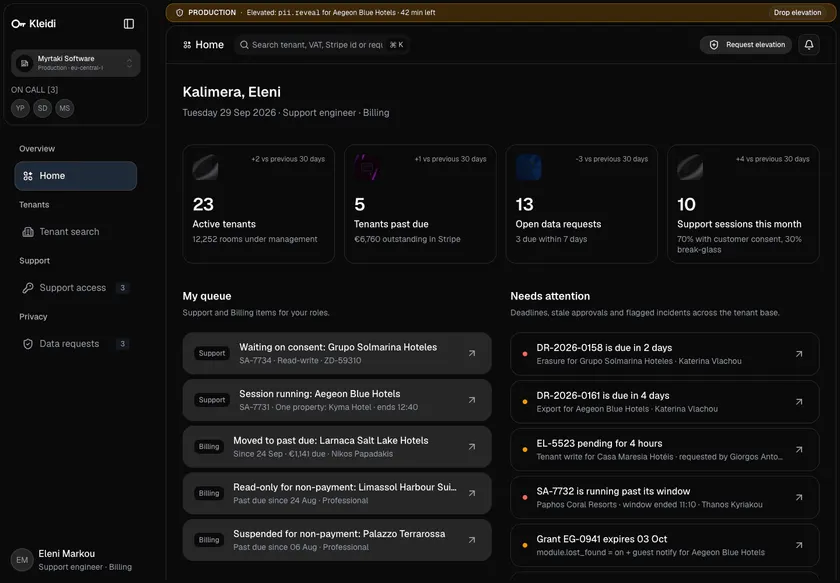
Kleidi - SaaS Admin Console with Consented Support Access and a Full Audit Trail
Designed and built a clickable internal admin console for an Athens SaaS company that sells housekeeping software to EU hotels: find any tenant and see everything about it on one page, enter a customer's workspace only with their consent, work GDPR data requests on the clock, and give staff elevated rights only for a limited window with someone else's approval.
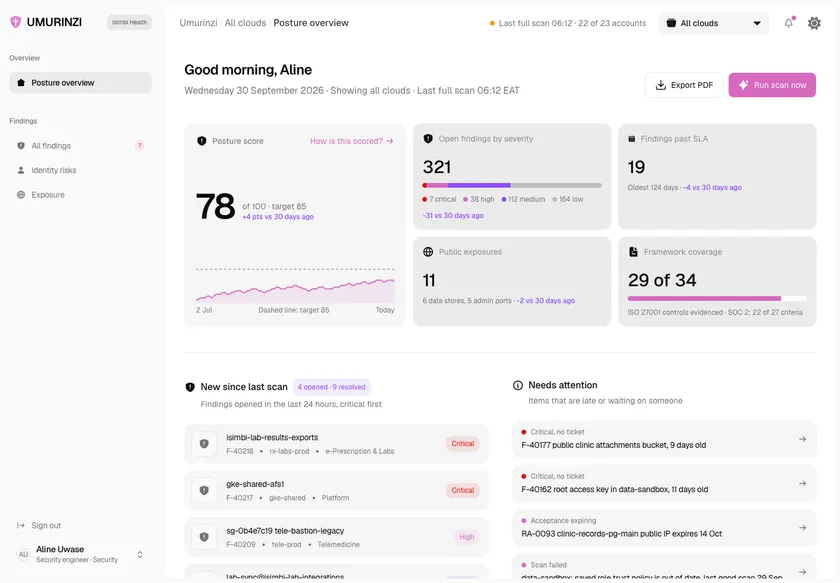
Umurinzi - Cloud Security Posture and Control Mapping Dashboard
Designed and built a clickable cloud security posture dashboard for a Kigali healthtech on AWS and Google Cloud: one findings queue checked against the CIS Benchmarks, identity risks and internet exposure in one view, every check mapped to ISO 27001 and SOC 2 controls, and a residency check for Rwandan patient data.
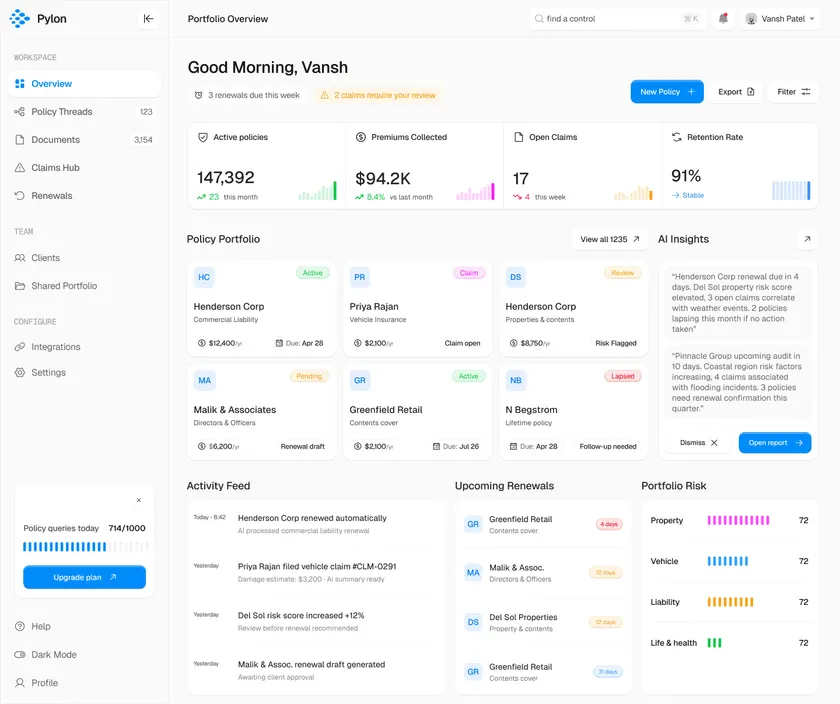
Building Pylon - AI-Native Insurance Operations from Prototype to Production
Replaced fragmented policy spreadsheets and disconnected claims tools with a unified AI-driven workspace, designed and shipped in 8 weeks via clickable AI prototype.
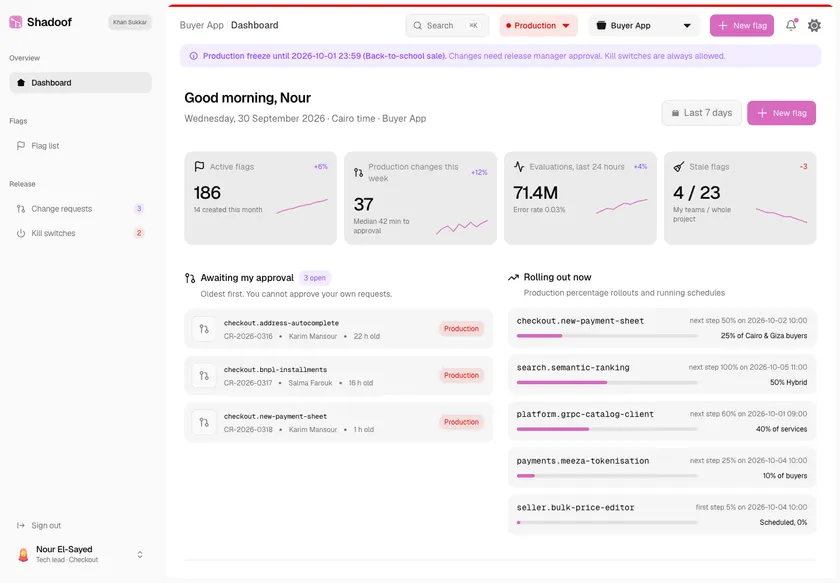
Shadoof - Feature Flag and Progressive Delivery Service for a Marketplace's Engineering Teams
Designed and built a clickable feature flag console for the engineering teams of a Cairo online marketplace: targeting rules and sticky percentage rollouts per environment, change requests with a second approver for Production, kill switches for incidents and a full change history for every flag.
