AI readiness assessment
Answer 17 questions across data, process, team and risk to see how ready you are for an AI project, and what to fix first.
Free, runs in your browser, no sign-up. Updated 2026-10-25.
Guidance, not an audit. The weights and bands are stated planning assumptions, not a benchmark or certification.
Result
Readiness 0%, Early.
- Data
- 0%
- Process
- 0%
- Team
- 0%
- Risk and governance
- 0%
Fix these first
- We know where the data for this use case lives (no, weight 2)
- We can access that data programmatically (API, export or database) (no, weight 2)
- We are allowed to use the data this way (contracts, consent) (no, weight 2)
- The process is written down step by step (no, weight 2)
- We measure the process today (time, cost, error rate) (no, weight 2)
- There is a human fallback when the AI is unsure or wrong (no, weight 2)
17 items unanswered count as no.
Each item scores no 0, partly 1, yes 2, times its weight (1 or 2). Weights and band thresholds are planning assumptions. Unanswered items count as no. Guidance only. This is not an audit, a certification or legal advice.
Talk to OceanLab about your first AI project
Opens an email to OceanLab with this result and a link to your inputs. Nothing is sent until you press send, and there is no sign-up.
How this is calculated
Each item scores no 0, partly 1 or yes 2, times its weight (1 or 2). Unanswered items count as no. The overall score is the weighted share of the maximum.
Bands: 75% and above is ready to pilot, 50% nearly ready, 25% build foundations first, below that early. The weights and band thresholds are OceanLab planning assumptions.
Open items are listed by weight, so the gaps that block a project most come first.
Questions about this tool
What does the score mean?
It is the weighted share of items you answered yes, with partly counting half. The bands, from early to ready to pilot, are planning assumptions with advice for each.
Which gaps should I close first?
The results list open items by weight. High-weight items such as data access, a written process and a human fallback come first.
Is this an audit or certification?
No. It is guidance to plan with. For regulated uses, check the rules that apply, for example with the EU AI Act risk checker.
Is anything I enter sent anywhere?
No. The tool runs in your browser and there is no sign-up. Nothing leaves the page unless you choose to email your result to OceanLab.
Other free tools
OceanLab product builds like this
Products OceanLab designed and built. Each case study covers the screens, the scope and the rules it was built for.
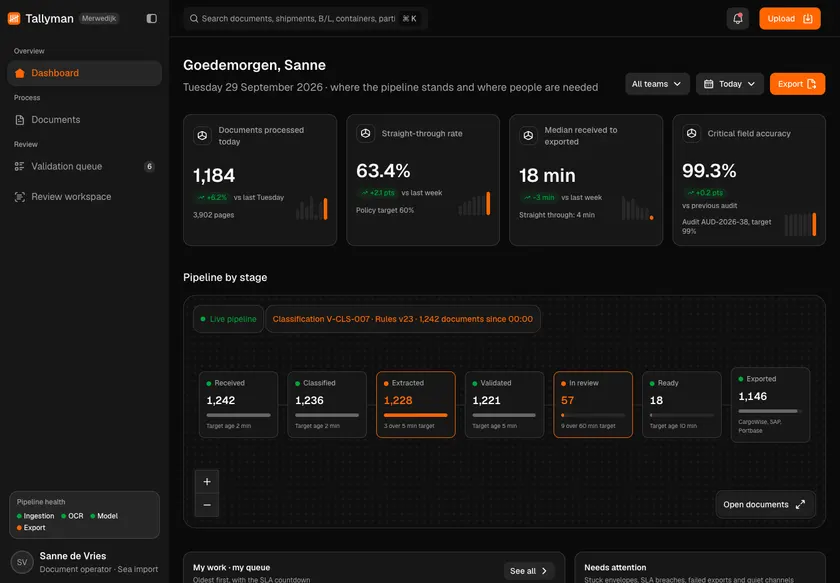
Tallyman - Intelligent Document Processing for Trade and Customs Documents
Designed and built a clickable document processing platform for a Rotterdam freight forwarder and customs representative: it classifies commercial invoices, packing lists, bills of lading, air waybills and certificates of origin, extracts each field with a confidence score, checks it against business rules and sends only the uncertain fields to a person in a side-by-side review workspace.
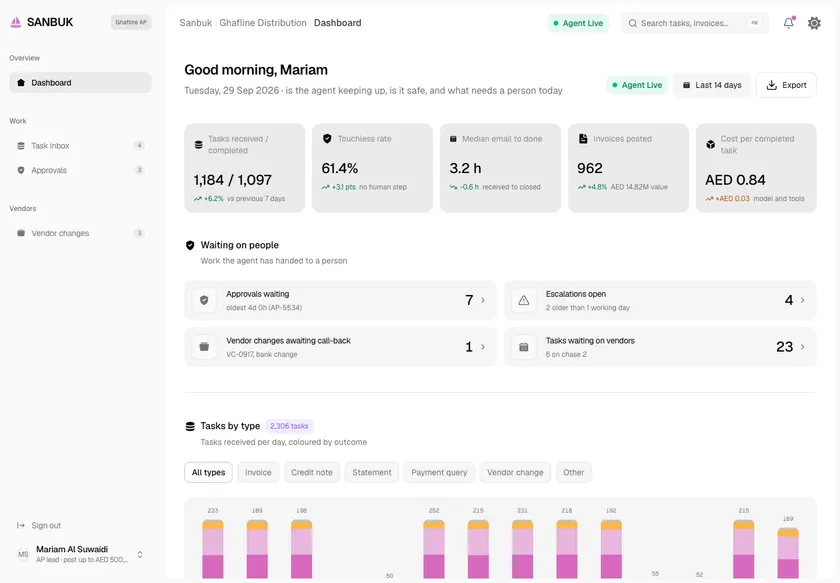
Sanbuk - Accounts Payable Agent with an Operator Console and Approval Gates
Designed and built a clickable back-office agent for a Dubai mainland distributor: it reads the AP and vendor mailboxes, matches invoices to POs and goods receipts, checks UAE tax invoice fields, drafts replies and posts to the ERP, while people approve by amount, see every tool call and handle every bank detail change themselves.
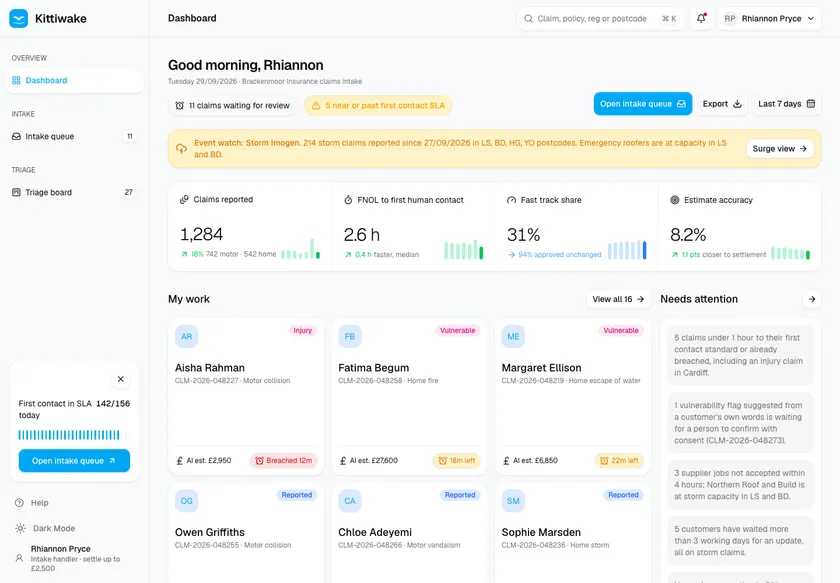
Kittiwake - AI Claims Intake with a Person Behind Every Decision
Designed and built a clickable claims intake console for a UK motor and home insurer: AI reads the customer's story and photos, extracts the facts, drafts a damage estimate and suggests a triage route with its reasons, while a named person confirms cover, routes the claim and makes every call that could go against the customer.
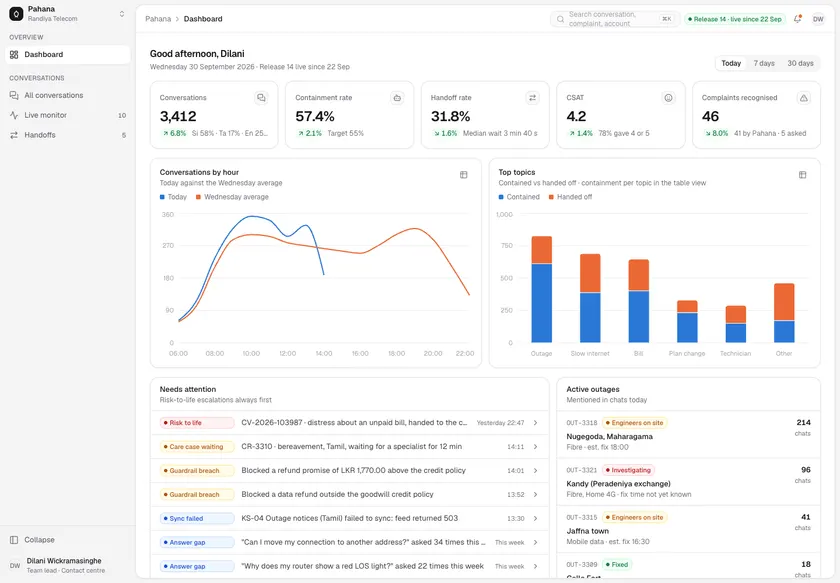
Pahana - Trilingual AI Support Agent with Safe Human Handoff
Designed and built the staff console for a trilingual AI support agent at a Colombo telecom operator: a dashboard of containment and satisfaction, every conversation with its tool calls and guardrail events, a live monitor where team leads take over a chat, and a handoff queue that makes sure no customer passed to a person is lost.
