Project timeline estimator
Give best, likely and worst-case weeks for each phase and get an expected finish date and a safer one to promise.
Free, runs in your browser, no sign-up. Updated 2026-10-25.
Result
Expected 22.7 weeks (about 85% likely within 25, 95% within 26.4). From 25 Oct 2026: likely done 2 Apr 2027, safe date 18 Apr 2027.
- About 85% likely within
- 25 weeks
- About 95% likely within
- 26.4 weeks
- Everything goes right
- 14 weeks
- Everything goes wrong
- 38 weeks
| Phase | Best | Likely | Worst | Expected | Spread (SD) |
|---|---|---|---|---|---|
| Discovery and scope | 1 | 2 | 4 | 2.2 | 0.5 |
| Design and clickable prototype | 2 | 3 | 5 | 3.2 | 0.5 |
| Build | 8 | 12 | 20 | 12.7 | 2 |
| Testing and fixes | 2 | 3 | 6 | 3.3 | 0.67 |
| Launch and handover | 1 | 1 | 3 | 1.3 | 0.33 |
Phases run one after another. The percentages assume the phases vary independently, a normal approximation.
Send this timeline to OceanLab
Opens an email to OceanLab with this result and a link to your inputs. Nothing is sent until you press send, and there is no sign-up.
How this is calculated
Each phase uses the PERT three-point formula: expected = (best + 4 × likely + worst) ÷ 6, and spread (standard deviation) = (worst − best) ÷ 6.
Phases run one after another, so the expected total is the sum of the phases. The spread of the total is the square root of the summed squares, assuming phases vary independently.
The 85% and 95% figures add 1.04 and 1.645 standard deviations, a normal approximation. Dates count calendar weeks from the start date.
The default weeks are an example for a first product release, not a benchmark.
Questions about this tool
Which date should I promise?
The 85% date is a common choice: likely enough to keep, without padding every phase. The expected date is a coin toss.
Why do worst cases matter so much?
Overruns are bigger than early finishes, so the worst case pulls the expected value up more than the best case pulls it down.
Can phases overlap?
This model runs them in sequence. If design and build overlap, shorten the build phase by the overlap.
Is anything I enter sent anywhere?
No. The tool runs in your browser and there is no sign-up. Nothing leaves the page unless you choose to email your result to OceanLab.
Other free tools
OceanLab product builds like this
Products OceanLab designed and built. Each case study covers the screens, the scope and the rules it was built for.
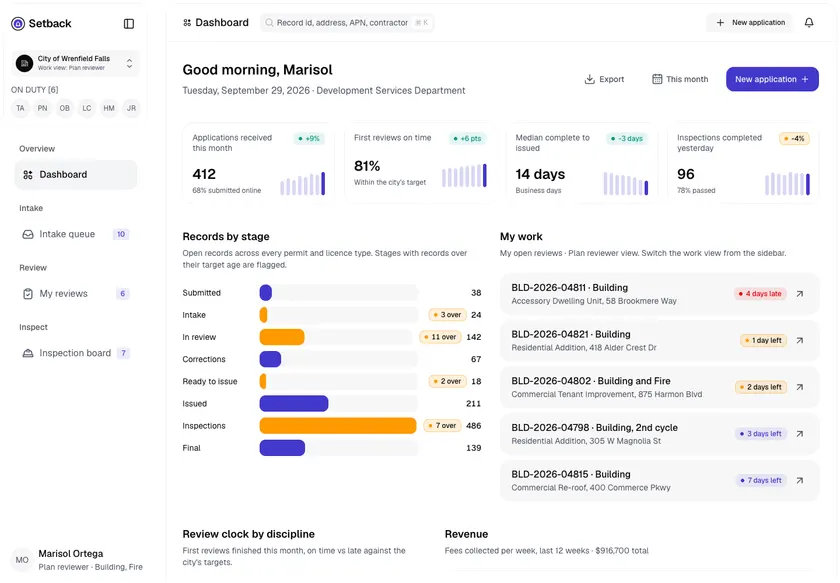
Setback - Permitting and Licensing Platform with Parallel Plan Review
Designed and built a clickable permitting and licensing platform for a US city's development services department: completeness checks before the review clock starts, building, zoning, fire and public works reviews running in parallel against city targets, an inspection board that checks certifications, and one record for every permit with its parcel, parties, holds, fees and inspections.
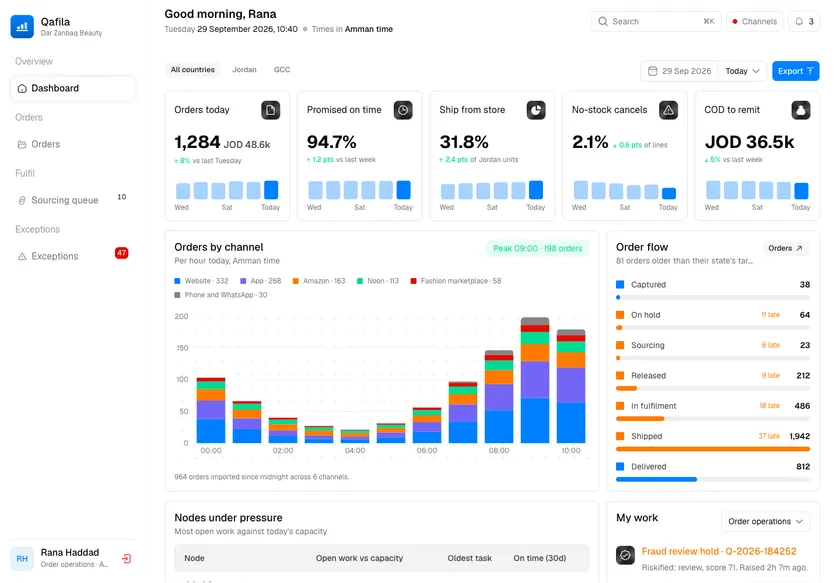
Qafila - Order Management System for Omnichannel Beauty Retail
Designed and built a clickable order management system for an Amman beauty retailer selling through 60 stores, two distribution centres, its own website and app, and Amazon, Noon and a fashion marketplace across Jordan and the GCC: every order in one place, sourcing that explains itself, and one dashboard for every stuck order.
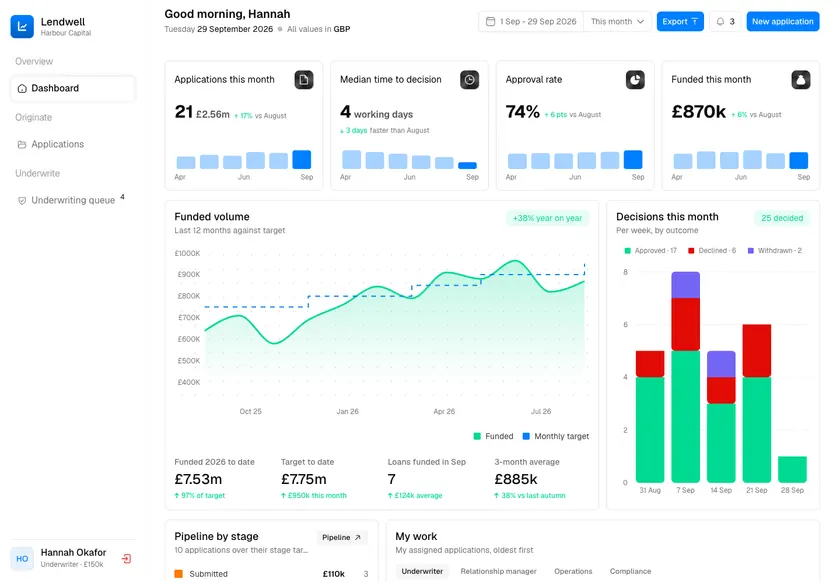
Lendwell - SME Loan Origination from Application to Funded
A loan origination platform for Harbour Capital, a UK digital lender offering £25,000 to £500,000 term loans to small businesses - one workspace for applications, KYB and KYC, open banking and bureau data, underwriting, credit committee, offers and funding.
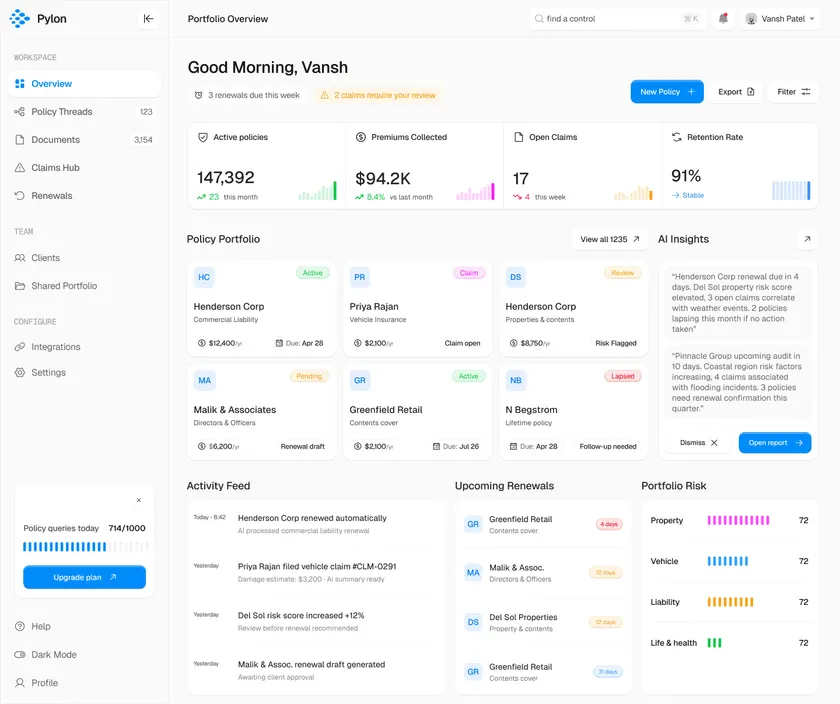
Building Pylon - AI-Native Insurance Operations from Prototype to Production
Replaced fragmented policy spreadsheets and disconnected claims tools with a unified AI-driven workspace, designed and shipped in 8 weeks via clickable AI prototype.
