Voltone - Electric Car Sharing Platform with Telematics, Damage and Fines Control
Car Sharing Operations Console for an Italian EV Fleet
Designed a car sharing platform for a Bologna operator of about 700 mostly electric cars and built its operator console as a clickable demo: a live fleet map with telematics and remote commands behind safeguards, damage reviews that compare before and after photos, and a fines desk sorted by the deadline to identify the driver.
Most of our work is under NDA. Per agreement, we can share the work but not the company details - all names and identifying information shown here have been changed.
Impact
Dashboard, fleet map with vehicle list and quick view, vehicle detail with 6 tabs, damage reviews with photo comparison, and the fines desk with its notice viewer.
Immobilise needs a second approver and is refused while the car reports ignition on and speed over 0. Unlock is refused during another member's trip, and every command needs a reason and a note.
Notices are sorted by the deadline entered from each notice, amber within 14 days and red within 7, with a warning when the offence falls between trips or in a telematics gap.
24 cars with live telematics state, 16 members, 6 home stations, 13 trips, 7 alerts, 12 damage cases, 16 fine and toll notices and 8 staff users.
The Problem
Aposa grew from a 120-car station-based pilot to 700 cars in three years on a white-label app that could not do free-floating, a spreadsheet of traffic fines and a WhatsApp group for field staff. Members waited up to three days for licence approval, damage disputes had no photo evidence, fines arriving by certified email were matched to trips by hand so some reached the deadline to name the driver unseen, and cars were left at 4% battery in side streets.
Our Solution
Voltone puts sign-up, trips, evidence, fines and field work on one platform. The operator console shows every car's status and telematics on one map, sends remote commands only through safeguards, suggests who caused new damage from before and after photos, and works traffic fines by deadline with the matching trip beside each notice.
The Challenge: One Fleet, Two Services, Many Rules
Aposa runs free-floating trips anywhere inside the Bologna operating area and round-trip bookings from 42 home stations, from one fleet of about 700 cars. Every trip touches telematics, payments, insurance, traffic law and personal data at once.
Fines Against the Clock
Under the Codice della Strada the owner receives the notice and can identify the renter so the authority re-issues it to them, including licence points. Each notice prints its own deadline, and a parking fine may belong to the last member who ended a trip there.
Damage Without Evidence
Members found scrapes and dents at the start of a trip with no way to prove who caused them. Charges had to stay within the member's excess under Aposa's fleet policy, with every car carrying compulsory RCA motor liability insurance.
Remote Control of Real Cars
Staff can lock, unlock and immobilise cars over the air. A wrong command can strand a member or affect a car in traffic, so immobilisation must only prevent the next engine start and never cut power to a moving car.
Location and Biometric Data
Trip location linked to a member is personal data under the GDPR and the EDPB guidelines on connected vehicles, and a selfie match against the licence photo is biometric data that needs explicit consent, a DPIA and a manual alternative.
Our Approach: From Car Sharing Rules to a Clickable Console
Spec and Rules Research
Mapped 12 user roles and 57 screens across the member app (23), the operator console (31) and the field app (3), and the data model for members, licences, verifications, vehicles, telematics, zones, tariffs, trips, remote commands, damage cases, fine notices, tolls, invoices, service tasks and an append-only audit log. Wrote down the rules the design follows: GDPR and the Italian Privacy Code, the EU driving licence directive, the Codice della Strada, RCA insurance, PSD2 strong customer authentication, SdI e-invoicing and the Consumer Code.
Clickable Demo on a Production UI Kit
Built the operator console's 5 key screens on a production dashboard kit with a stylised map of the Bologna operating area: the dashboard with KPIs, fleet status across 9 states, telematics alerts and work queues, the fleet map with zone layers and a vehicle quick view, vehicle detail with the remote command sheet, damage reviews with the charge sheet, and fines with the driver identification letter. Everything runs on mock data in the browser; nothing is persisted.
What a Production Build Adds
Integration with the telematics box and keyless entry (such as INVERS or Geotab), licence and selfie checks (such as Onfido, Veriff or IDnow), card payments and deposit pre-authorisations, SdI e-invoices through an accredited intermediary, Telepass tolls, the certified email inbox for fines and public charging networks. Staff auth by role with refund limits, the audit log, the member and field apps, and the rest of the console: verification queue, trips with logged route access, members, incidents, service tasks, charges, reports, privacy requests and settings.
Why It Works: Every Sensitive Action Has a Rule
Safeguards Inside the Command Sheet
Remote commands open one sheet that checks the car's state first: immobilise is refused while the car is moving, takes effect at the next start and waits for a second approver, and unlock is refused during another member's trip. A reason from a fixed list and a note are always required.
Photos Decide Damage
Each damage case shows the previous trip's end photos beside the next trip's start photos, angle by angle, with timestamps and who took them. The liability suggestion names the last trip whose end photos do not show the damage, and the charge is capped at the member's excess plus fixed fees.
Deadlines Drive the Fines Desk
Fines are sorted by the deadline printed on each notice, never computed, and the sidebar counts those due within 7 days. The notice viewer puts the candidate trip timeline next to the scan, so a fines administrator confirms the match and sends the driver identification in one place.
One Status for Every Car
The dashboard, map and vehicle detail share one status per car and one telematics state: ignition, doors, central lock, key card, charging, 12V battery and immobiliser. Alerts such as a crash detected while parked or a door open without a trip link straight to the car.
Related case studies
View all: Mobility & EV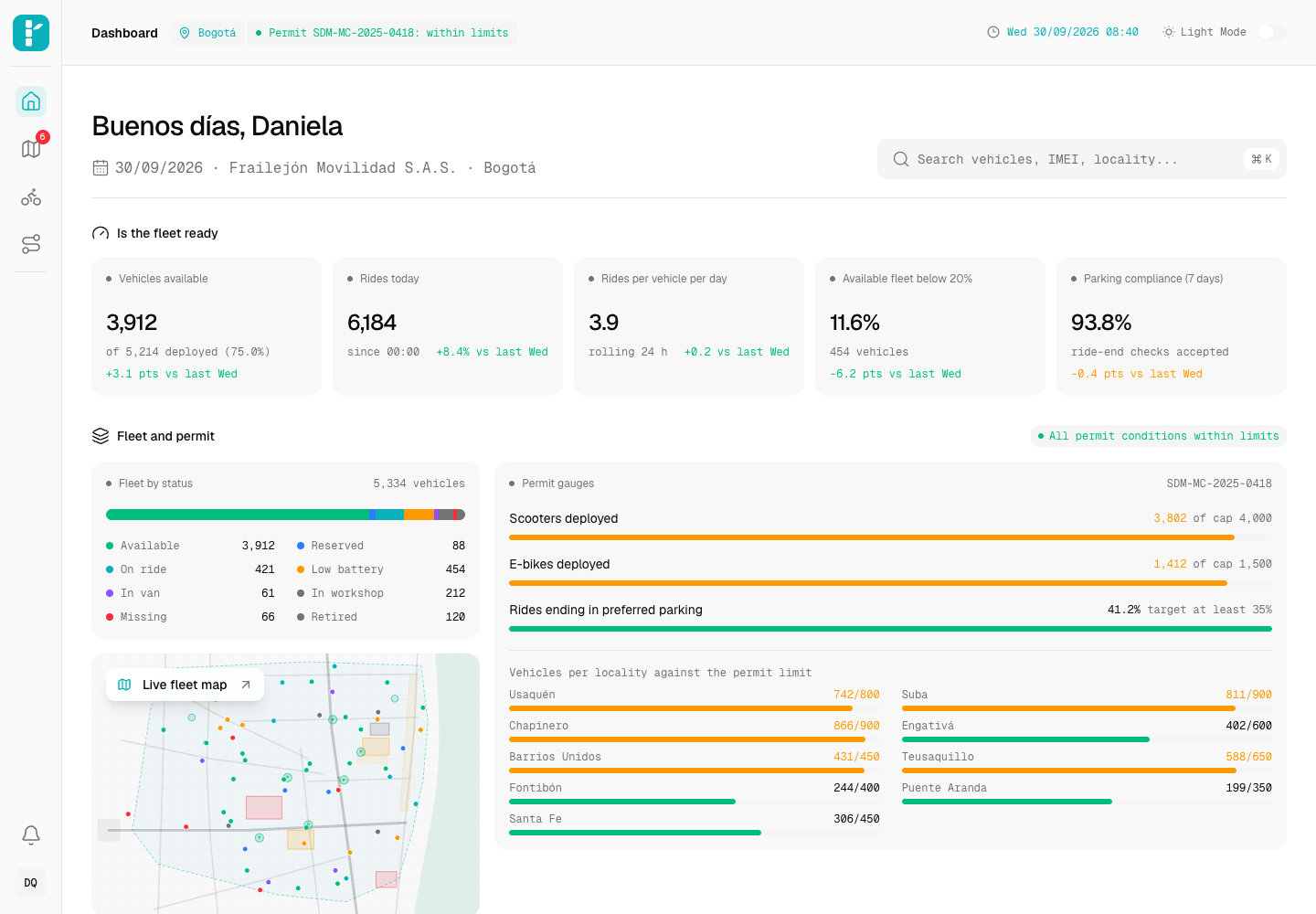
Guadua - Shared E-Scooter and E-Bike Operations Console for Bogotá
Designed a shared e-scooter and e-bike platform for a Bogotá operator running about 4,000 scooters and 1,500 e-bikes under a district permit, and built its clickable operator console: a dashboard that watches the permit's limits, a live fleet map with IoT state and alarms, vehicle records, and a planner that sends crews to swap batteries and rebalance where demand is forecast.

DriveLuxe - All-Electric Premium Ride-Hailing for Hong Kong
Built a rider mobile app for an all-electric premium ride-hailing service - live EV map, charge-aware vehicle selection, real-time booking, and trip-completion CO₂ accounting - shipped from clickable AI prototype to App Store in 10 weeks.
Enterprise Software Engineering - Human + AI
Contact Us
© 2026 - Copyright. All Rights reserved Oceanlab
Location
Global Headquarters
21 Merchant Road, 3rd Floor, Singapore 058267
Main corporate office and leadership operations
North America Office
548 Market Street, PMB 12345, San Francisco, CA 94104
Client operations and business development
India Office
402 Shivalik Shilp II, SG Highway, Ahmedabad 380015
Engineering and delivery center

Enterprise Software Engineering - Human + AI
Contact Us
Locations
Global Headquarters
21 Merchant Road, 3rd Floor, Singapore 058267
Main corporate office and leadership operations
North America Office
548 Market Street, PMB 12345, San Francisco, CA 94104
Client operations and business development
India Office
402 Shivalik Shilp II, SG Highway, Ahmedabad 380015
Engineering and delivery center
© 2026 - Copyright. All Rights reserved Oceanlab