Dawuro - Approval Workflow Engine for a Ghanaian Public University
Configurable Approvals for a Public University in Accra
Designed and built a clickable approval workflow engine for a public university in Accra: request forms routed by amount, cost centre and the department hierarchy, an approvals inbox and two-tap decision screen designed phone first, delegation and out-of-office cover, and a route and history on every request that shows who approved what, and when.
Most of our work is under NDA. Per agreement, we can share the work but not the company details - all names and identifying information shown here have been changed.
Impact
Home, approvals inbox, approval decision, my requests and request detail. Each of the 16 approval tasks and 30 requests in the demo opens its own page.
When an amount is above the approver's limit for that form, Approve is replaced by a notice to reassign, as on the GHS 62,400.00 NMR service contract. Approvals above the GHS 50,000.00 step-up amount also ask for a second-factor code.
Single, parallel (all), parallel (any), sequential chain, committee, notify only and system step. Skipped conditional steps show why, such as the tender committee below its configured threshold.
6 request forms, 16 approval tasks across 4 queues, 20 staff, 8 cost centres with budget balances, and a Dean's out-of-office cover running through the data.
The Problem
At Kpeshie Ridge, a purchase request was a printed memo with a minute sheet stapled to it, walked from the department to the Dean, the Budget Office, the Procurement Unit and the Finance Directorate. Files sat on desks while approvers travelled, nobody could say where a request was without phoning three offices, a routine purchase took a median of 19 working days, and Internal Audit found approvals signed by people without the authority for that amount.
Our Solution
Dawuro replaces memos and minute sheets with request forms that route themselves by amount, cost centre and the department hierarchy. Approvers see what is waiting on them and decide in two taps on a screen designed phone first, delegates act within the limits the approver set, and every request carries its full route, attachments, comments and history.
The Challenge: Approvals a Public Body Can Defend
Kpeshie Ridge is a public university with about 21,000 students, 5 colleges, 38 departments and 2,400 staff. Its approvals have to follow Ghana's procurement, public finance and data protection laws, and the university's own delegation of authority schedule, at once.
Authority That Nobody Checked
Each position may approve each form only up to its own limit, and the limits change by version with an effective date. On paper, nobody checked the amount against the signer's authority, so Internal Audit found approvals given by people who did not hold it.
Thresholds Set by Law, Not by Code
Procurement methods and approval thresholds come from the Public Procurement Act (Act 663) as amended, regulations such as L.I. 2516 and PPA guidance, and they change. Routing has to read threshold values the Procurement Unit maintains, never values built into the software.
Approvers Who Are Rarely at a Desk
Heads of Department, Deans and the Director of Finance act between meetings, lectures and travel, often on mobile data. When one is away, a delegate has to keep requests moving without approving their own request or one that benefits them.
A Record That Holds Up Later
Auditors could not reconstruct who had seen which version of a contract before signing it off. Each decision needs the approver's identity, time, channel and the exact request version, kept in a form that can be exported for Right to Information Act requests.
Our Approach: From Delegation of Authority to a Clickable Engine
Spec and Rules Research
Mapped 10 user roles, from requesters and approvers to Internal Audit and integration developers, 31 screens including two public pages, and the data model for forms, versioned workflows, steps, the approval matrix, thresholds, tasks, decisions, delegations, budget checks and a hash-chained audit trail. Wrote down the rules the design follows: the Data Protection Act (Act 843), the Public Procurement Act (Act 663) as amended by Act 914 and Act 1139, L.I. 2516, the Public Financial Management Act (Act 921), the Electronic Transactions Act (Act 772) and the Right to Information Act (Act 989).
Clickable Demo on a Production UI Kit
Built 5 key screens on a production dashboard kit: Home with approver KPIs and Approve or Reject straight from a task row, the approvals inbox with its four queues, group task claiming and bulk approval of local travel, the approval decision screen with flags, budget, attachments and every decision action, My requests with a quick view panel, and request detail with the full route and its tabs. All actions run on local state.
What a Production Build Adds
Microsoft Entra ID sign-in with multi-factor, HR system sync for the org structure and positions, budget checks and commitments through the finance system API, email, SMS and push notifications, SharePoint or S3 storage with ClamAV scanning, and calendar-based out-of-office detection. Then the remaining screens: the form builder, workflow designer, route simulator, approval matrix, oversight, reports, API and webhook settings, the one-tap action link and approval record verification.
Why It Works: Every Decision Explained
Every Task Says Why It Came to You
Each approval shows the rule that routed it, such as Head of requester's department or Dean's approval for the Faculty of Science, and marks tasks reached through cover as for Prof. A. Owusu. Tasks are sorted oldest and most overdue first, with an SLA chip on each.
Decide in Two Taps
The decision screen puts the summary, flags, key facts and budget before the full form, and keeps Approve, Reject and More in view. Reject needs a reason from a fixed list and a comment, and return, ask, reassign and forward for advice each need a comment.
Risks Flagged Before Approval
Split purchases, over-budget cost centres and steps added because an amount is above a configured threshold appear as flags on the request. The budget panel shows what is available on the cost centre now, this request and what remains after it.
A Route Anyone Can Read
Request detail shows every step with its kind, assignee, who actually acted and on whose behalf, outcome, comment and duration, with skipped steps and their reason. Attachments, comments, linked finance records and a full history sit in tabs beside it.
Related case studies
View all: Internal tools & ops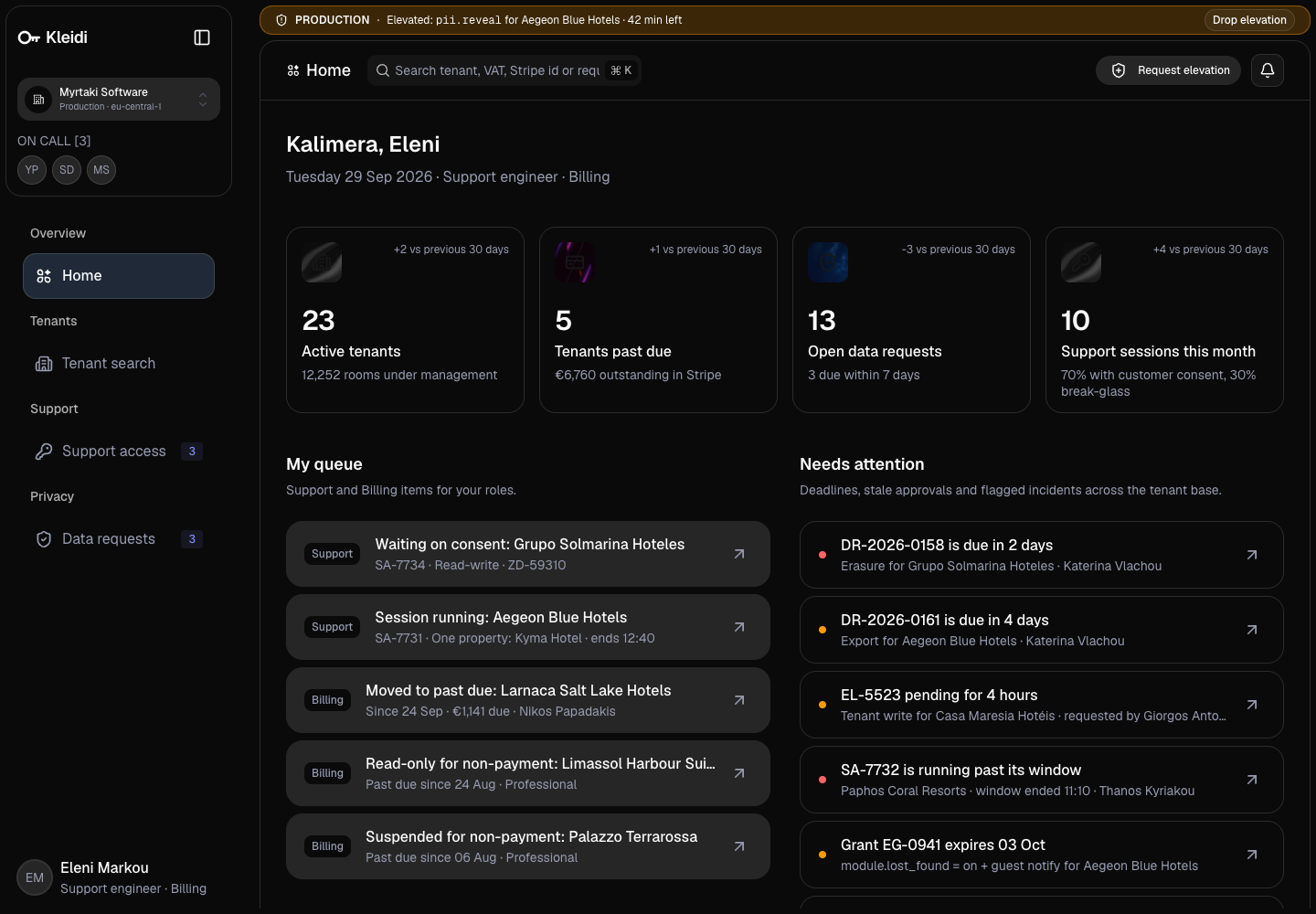
Kleidi - SaaS Admin Console with Consented Support Access and a Full Audit Trail
Designed and built a clickable internal admin console for an Athens SaaS company that sells housekeeping software to EU hotels: find any tenant and see everything about it on one page, enter a customer's workspace only with their consent, work GDPR data requests on the clock, and give staff elevated rights only for a limited window with someone else's approval.
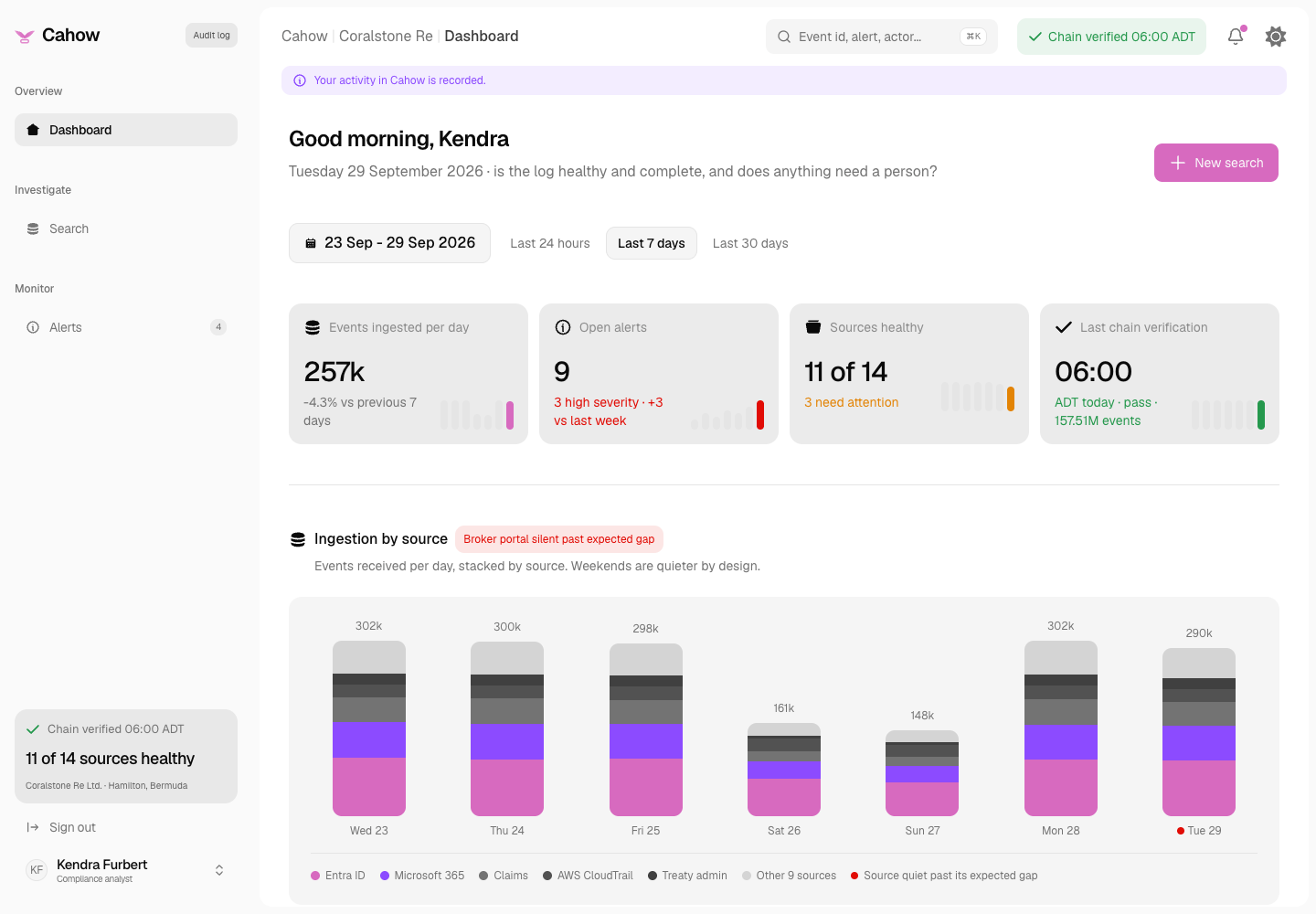
Cahow - Tamper-Evident Audit Log and Viewer for a Bermuda Reinsurer
Designed and built a clickable audit log viewer for a Bermuda property and casualty reinsurer: every internal system sends its events to one hash-chained store, and compliance, security, internal audit and legal search them, follow a person or a record, triage unusual behaviour and prove nothing was changed.
Enterprise Software Engineering - Human + AI
Contact Us
© 2026 - Copyright. All Rights reserved Oceanlab
Location
Global Headquarters
21 Merchant Road, 3rd Floor, Singapore 058267
Main corporate office and leadership operations
North America Office
548 Market Street, PMB 12345, San Francisco, CA 94104
Client operations and business development
India Office
402 Shivalik Shilp II, SG Highway, Ahmedabad 380015
Engineering and delivery center

Enterprise Software Engineering - Human + AI
Contact Us
Locations
Global Headquarters
21 Merchant Road, 3rd Floor, Singapore 058267
Main corporate office and leadership operations
North America Office
548 Market Street, PMB 12345, San Francisco, CA 94104
Client operations and business development
India Office
402 Shivalik Shilp II, SG Highway, Ahmedabad 380015
Engineering and delivery center
© 2026 - Copyright. All Rights reserved Oceanlab