Bhariya - Food Delivery Platform with Fair Rider Pay and Safety Built In
Food Delivery Ops Console for a Kathmandu Delivery Company
Designed and built a clickable ops console for a Kathmandu food delivery platform that links customers, about 600 restaurants and 900 riders: live orders and alerts across three cities, zone modes for surge, rain and road closures, a money split on every order, and weekly rider payouts with a per-order breakdown and two-person approval.
Most of our work is under NDA. Per agreement, we can share the work but not the company details - all names and identifying information shown here have been changed.
Impact
Live ops, orders, order detail, zones and modes, and rider payouts. Every one of the 30 demo orders opens its own detail with timeline, money split and refund, reassign and cancel actions.
Each change needs a reason and an end time and is logged. Rain mode extends customer ETAs, pays riders a Rs. 25 bonus per order, limits batching to one order and can pause bicycle riders.
A weekly run goes to connectIPS and the eSewa and Khalti wallets only after two different people approve it. Each rider's payout breaks down by day into order pay, wait pay, bonuses, tips and guarantee top-up.
16 restaurants, 24 riders, 12 zones in Kathmandu, Lalitpur and Bhaktapur, 6 live alerts including a rider SOS, and a weekly payout run for 874 riders.
The Problem
Sallaghari started as a phone-and-Viber operation: customers called a hotline, an operator phoned the restaurant and a dispatcher assigned riders from a WhatsApp group. Orders were lost between calls, customers could not see where their food was, restaurants could not pause when the kitchen was full and rider cash was reconciled by hand every night. Riders could not see what a job paid before taking it, got a single number as a weekly pay slip, and some felt pushed to ride fast in monsoon rain.
Our Solution
Bhariya runs the three sides of the business from one system: a customer app, a restaurant tablet app, a rider app and an ops console. The build is the ops console, where dispatchers and ops leads watch live orders and riders per zone, switch zones into surge, rain or suspended mode, see how every order's money splits between restaurant, rider and Sallaghari, and approve weekly rider payouts that show every line.
The Challenge: Three Sides, One Fair System
A delivery platform in the Kathmandu valley has to keep customers, restaurants and riders moving at once, on landmark addresses, monsoon roads and five payment rails, while Nepali law on privacy, payments, tax and rider status is still settling.
Rider Pay Nobody Could Check
Riders did not see the pay, distance or restaurant before accepting a job, and weekly pay was one number. Base pay, distance, waiting time, rain and peak bonuses, tips and cash collected all had to add up per order and per week.
Safety Against the Clock
Pressure to hit delivery times pushed riders to ride fast in rain. The product had to protect delivery promises without countdowns or late messages to riders, and handle SOS alerts, road closures and red-alert weather.
Many Ways to Pay, One Ledger
Customers pay by card, eSewa, Khalti, Fonepay QR or cash on delivery. Wallets are licensed by Nepal Rastra Bank, VAT is generally 13% and split between the restaurant's food bill and Sallaghari's own fees, and rider cash has to reconcile.
Rider Status Still Open in Law
Whether app-based riders are employees under the Labour Act, 2074 is an open question in Nepal. Riders are independent contractors today, so the product must avoid employer-style control while keeping records that would support an employment model.
Our Approach: From Delivery Rules to a Clickable Ops Console
Spec and Rules Research
Mapped 10 roles, from customer and rider to dispatcher, finance and rider operations, and 54 screens across the customer app, restaurant tablet, rider app and ops console. Modelled zones with versioned polygons, orders, payments, refunds, dispatch offers, shifts, versioned pay and fee rules, settlements, payouts, tickets and incidents. Wrote down the rules the design follows: the Individual Privacy Act, 2075, the Consumer Protection Act, 2075, the Payment and Settlement Act, 2075, VAT, the Labour and Social Security Acts, 2074 and road safety rules.
Clickable Demo on a Production UI Kit
Built the ops console's 5 key screens on a production dashboard kit, set during a dinner peak with rain mode in Lalitpur: live ops with a rider SOS banner, live KPIs per city, a zone table and alerts to acknowledge; orders with status pills and masked customers; order detail with timeline, rider offers, VAT split and money split; zones with a change mode panel; and the weekly payout run with approvals and a failed wallet payout to retry. Zone and alert changes carry across pages.
What a Production Build Adds
The customer app, restaurant tablet app and rider app, plus the remaining ops screens: dispatch exceptions, SLA monitor, support, refunds, incidents, shift planner, settlements, cash on delivery, reconciliation, reports, audit log and settings. Integration with eSewa, Khalti, Fonepay QR, a Nepali bank card gateway, connectIPS payouts, maps and routing, SMS OTP, masked calling and push notifications. Staff login by role, refund limits and a full audit log.
Why It Works: Pay and Safety You Can See
Every Rupee Has an Owner
Order detail splits the money between restaurant, rider and Sallaghari: 18% commission, rider base and distance pay, wait pay after 10 minutes, rain bonus and tips passed through in full. The order's price lists food, packaging, each fee and VAT on food and on fees.
Rider Pay Rules Are Written Down
Pay follows a versioned rule set, RP-v7 in the demo: Rs. 60 base, Rs. 18 per km, Rs. 3 a minute of waiting after 10 minutes, Rs. 25 rain and Rs. 15 peak bonus per order. Cash shortfalls are only recovered after the rider agrees on review.
Weather Changes the Promise, Not the Rider
In rain mode, customers get a longer ETA window and a plain message, riders get a bonus and fewer batched orders, and bicycles can be paused. An SOS stays as a full-width banner on every screen until someone acknowledges it.
Personal Data Stays Masked
Ops staff see customers by first name and the last four digits of their phone, and riders by masked plate. Search works on those same pieces, so a full phone number is never needed to find an order. Payments keep only the provider's transaction reference, never card numbers, wallet credentials or PINs.
Related case studies
View all: Food & restaurants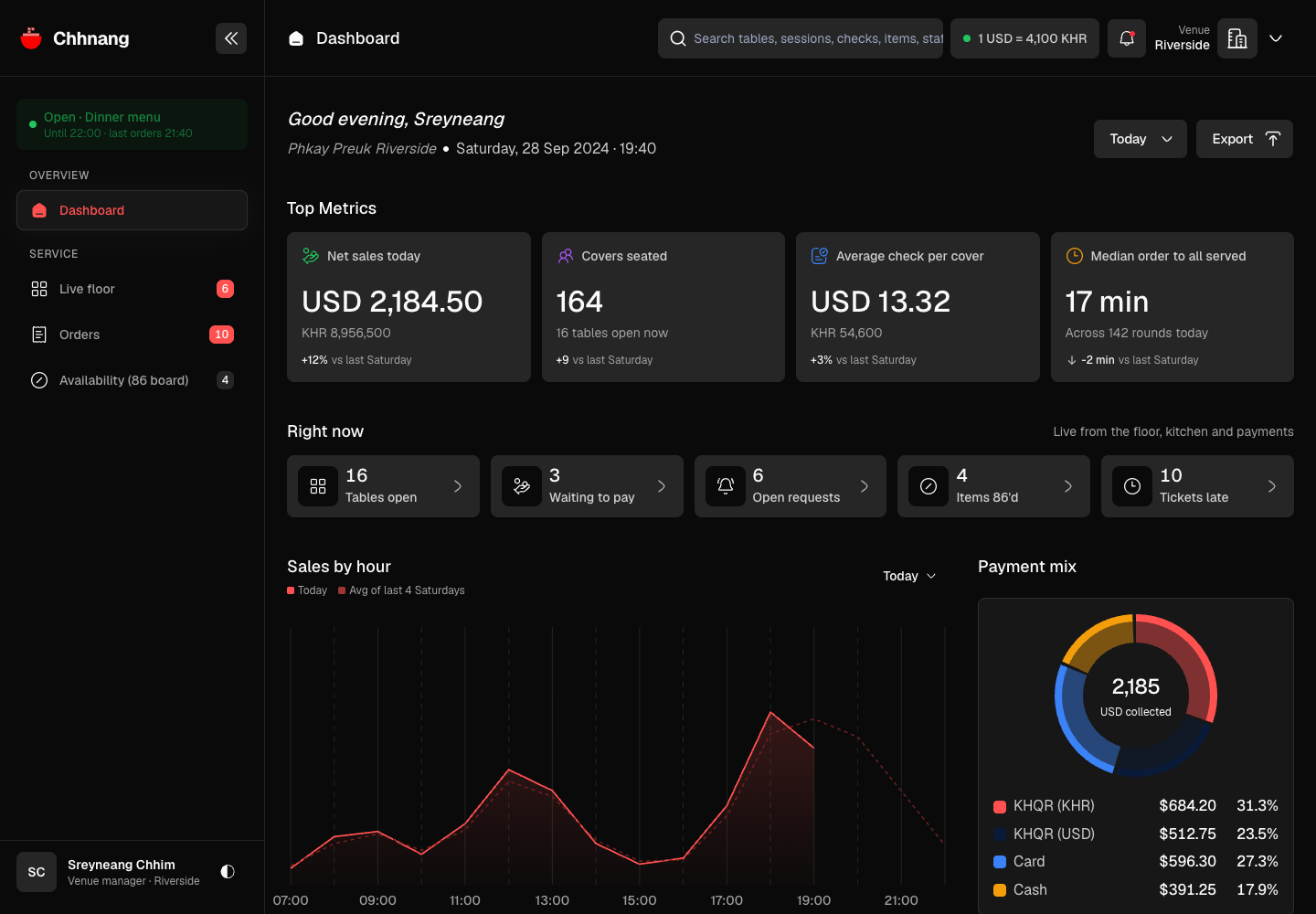
Chhnang - QR Ordering and Pay-at-Table Platform in Khmer, English and Chinese
Designed and built a clickable QR ordering and service console for a four-venue restaurant group in Phnom Penh: guests order in rounds from a shared table cart and pay by KHQR or card, every price shows in USD and riel, tickets route to the right kitchen station, and managers run the floor and the 86 board from one place.
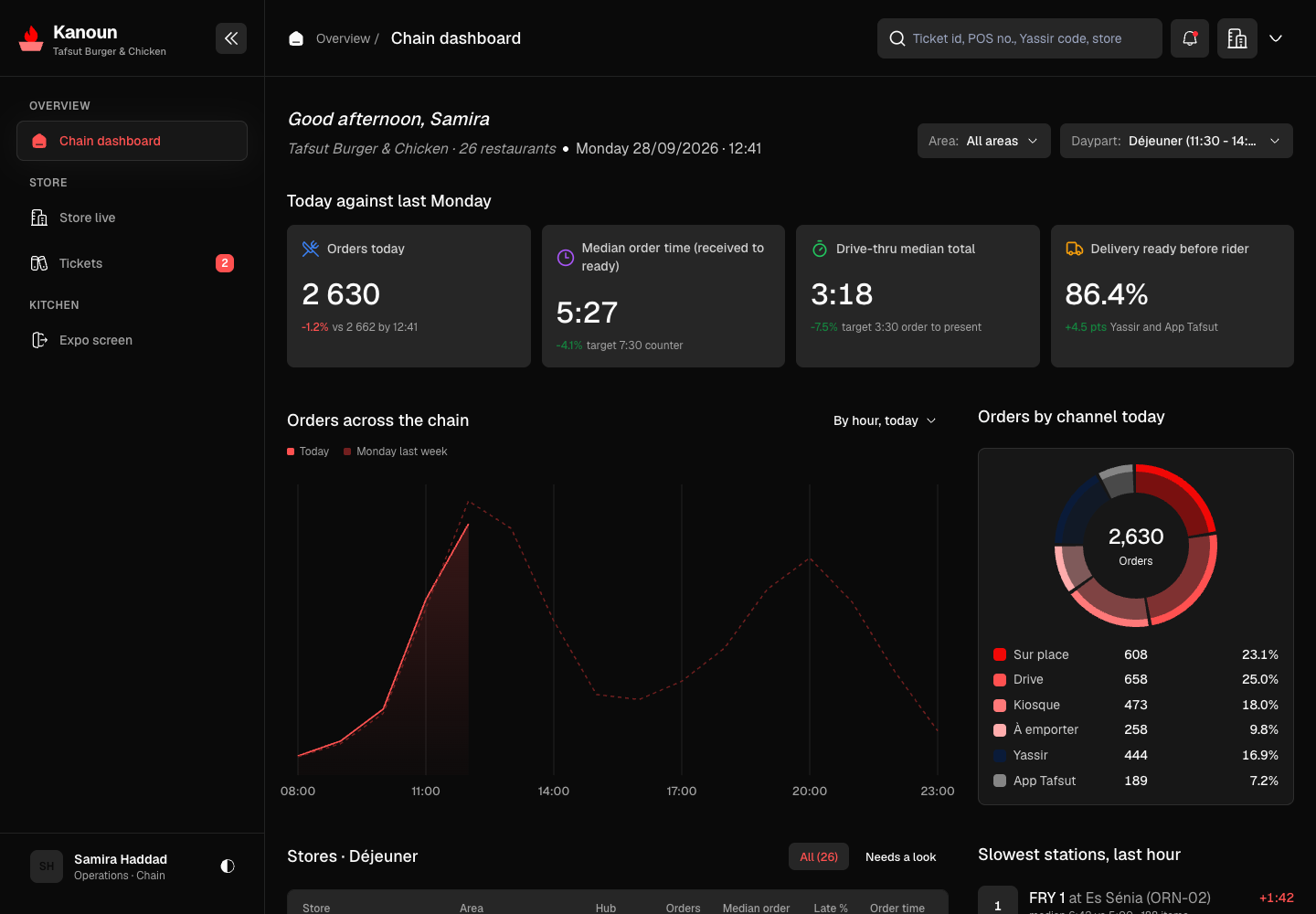
Kanoun - Kitchen Display System That Times and Checks Every Order
Designed and built a clickable kitchen display system for a 26-restaurant burger and fried chicken chain in Algeria: every order from the till, kiosks, drive-thru and delivery apps is split into station tickets, timed so the whole order finishes together, paced to the rider and checked at expo before it leaves, with allergy notes that can never be hidden.
Enterprise Software Engineering - Human + AI
Contact Us
© 2026 - Copyright. All Rights reserved Oceanlab
Location
Global Headquarters
21 Merchant Road, 3rd Floor, Singapore 058267
Main corporate office and leadership operations
North America Office
548 Market Street, PMB 12345, San Francisco, CA 94104
Client operations and business development
India Office
402 Shivalik Shilp II, SG Highway, Ahmedabad 380015
Engineering and delivery center

Enterprise Software Engineering - Human + AI
Contact Us
Locations
Global Headquarters
21 Merchant Road, 3rd Floor, Singapore 058267
Main corporate office and leadership operations
North America Office
548 Market Street, PMB 12345, San Francisco, CA 94104
Client operations and business development
India Office
402 Shivalik Shilp II, SG Highway, Ahmedabad 380015
Engineering and delivery center
© 2026 - Copyright. All Rights reserved Oceanlab