Balise - Driver Safety Telematics for a Dangerous Goods Tanker Fleet
Driver Safety Platform for an Ivorian Fuel and LPG Distributor
Designed and built a clickable driver safety console for a fuel and LPG distributor running about 350 tanker and delivery trucks across Côte d'Ivoire: explained driver scores, a review queue for telematics and AI dashcam events, a live map with curfew and SOS alerts, and coaching built on evidence drivers can see and dispute.
Most of our work is under NDA. Per agreement, we can share the work but not the company details - all names and identifying information shown here have been changed.
Impact
Dashboard, live map, event review queue, event review workspace, drivers list and driver detail. Each of the 24 demo events and 24 drivers opens its own page.
Speeding, harsh braking, fatigue, phone use, following distance and harsh cornering. Score = 100 minus 5 x weighted points per 1,000 km over 30 days, with no score below 500 km, shown as a waterfall per behaviour.
Critical events turn red after 4 hours unreviewed and sort to the top. Low-severity telematics events without video show a countdown to auto-confirmation at 72 hours.
5 depots, 24 drivers, 20 vehicles, 24 events, 14 trucks on the road and 6 live alerts, including an SOS sent by SMS.
The Problem
Kopéla's trucks had GPS trackers from two vendors and, on about a third of the fleet, dashcams recording to SD cards nobody checked unless there was a crash. The safety team got a daily email of hundreds of harsh braking alerts, coaching in the depot car park was never written down, trucks still arrived after dark despite a night driving ban, and the board saw one number a quarter: the count of crashes. After a near miss with a loaded LPG truck on a night run, the board asked for a system that finds risky behaviour early, treats drivers fairly and proves what was done.
Our Solution
Balise turns telematics data and in-cab camera events into reviewed evidence and driver scores. Reviewers confirm or reject each event with video, scores explain where every point was lost, the control room watches trucks against the curfew, and coaching is recorded and acknowledged by the driver. Drivers get an app to see their own events, dispute them and raise an SOS.
The Challenge: Fair Evidence on Dangerous Roads
Kopéla carries petrol, diesel, kerosene and LPG from five depots on long upcountry routes. A safety programme there has to catch fatigue and speeding on laden tankers while respecting Ivorian data protection law and treating drivers fairly.
Too Many Raw Alerts
Devices fire harsh driving events all day, and many are false or meaningless: a pothole, a moto-taxi cutting in, a wrong speed limit in the map data. Counting them straight into a score would punish drivers for the road, not their driving.
Cabin Video and Personal Data
Law No. 2013-450 governs drivers' location and video data. Processing generally has to be declared to the ARTCI, video surveillance generally needs its prior authorisation, and transfers abroad may need authorisation too, so the camera cannot simply record everything.
Laden Tankers After Dark
Kopéla's own policy bans driving between 18:30 and 05:30 and caps laden tankers at 80 km/h on highways. A truck that leaves late or stops too long may not reach a safe stop before the curfew, and the control room needs to know hours in advance.
Coaching, Not Discipline
Scores have to feed coaching that drivers accept. A driver's dispute must be answered before an event counts, and every review, severity change and video view has to be written down so the programme can prove it is fair.
Our Approach: From Safety Rules to a Clickable Console
Spec and Rules Research
Mapped 10 roles from safety reviewer and driver coach to the data protection officer and drivers, 38 screens across the web console and an offline Android driver app, and the data model for trips, events, clips, video access, disputes, versioned scoring models and event rules, coaching, hours, journey plans and incidents. Wrote down the rules the design follows: Law No. 2013-450 and ARTCI filings, dangerous goods practice after the UN Model Regulations and ADR, and hours limits kept as client policy for HR to check against the Labour Code.
Clickable Demo on a Production UI Kit
Built 6 key screens on a production dashboard kit: the dashboard with fleet score, score bands per depot and work by role, a schematic live map of Côte d'Ivoire with curfew margins and an alerts rail, the review queue with bulk actions, the event workspace with clip, telemetry timeline and decision panel, the drivers list and the driver detail with a 26-week score chart and score waterfall. Decisions, notes and acknowledgements run on local state.
What a Production Build Adds
Integration with Teltonika telematics units, Streamax or Howen AI dashcams, HERE speed limits, Mapbox maps and routing, Infobip SMS, Firebase push, Sage HR and storage with a region agreed after the ARTCI transfer review. Role-based access with driver video granted by the data protection officer, an append-only audit log, and the remaining screens: vehicles, devices, disputes, coaching, recognition, hours, journey plans, geofences, incidents, board reports, settings and the driver app.
Why It Works: Scores Drivers Can Trust
Events Count Only After Review
Every device event lands in the review queue with its trigger values, AI confidence and clip. Reviewers confirm it, mark it a false positive with a reason from a fixed list, or escalate it, and a severity change needs a reason. Disputed events wait for an answer.
Every Point Is Explained
The driver page opens with one sentence, such as "Most points were lost to speeding on the A3 between Yamoussoukro and Bouaké", then a waterfall from 100 per behaviour with events per 1,000 km beside the depot median, and a short tip for the behaviours costing the most.
Driver Video Behind a Reason
The cabin camera saves a short clip only when an event triggers, with no audio. Only roles with driver video access see the Show driver camera button, and opening it asks for a reason that is written to the video access log.
The Curfew Is Watched Live
The live map lists trucks on the road sorted by curfew margin, marks laden tankers with a hazard diamond, and pins SOS alerts in red above critical events, curfew risk, off route and long stops until someone acknowledges them.
Related case studies
View all: Mobility & EV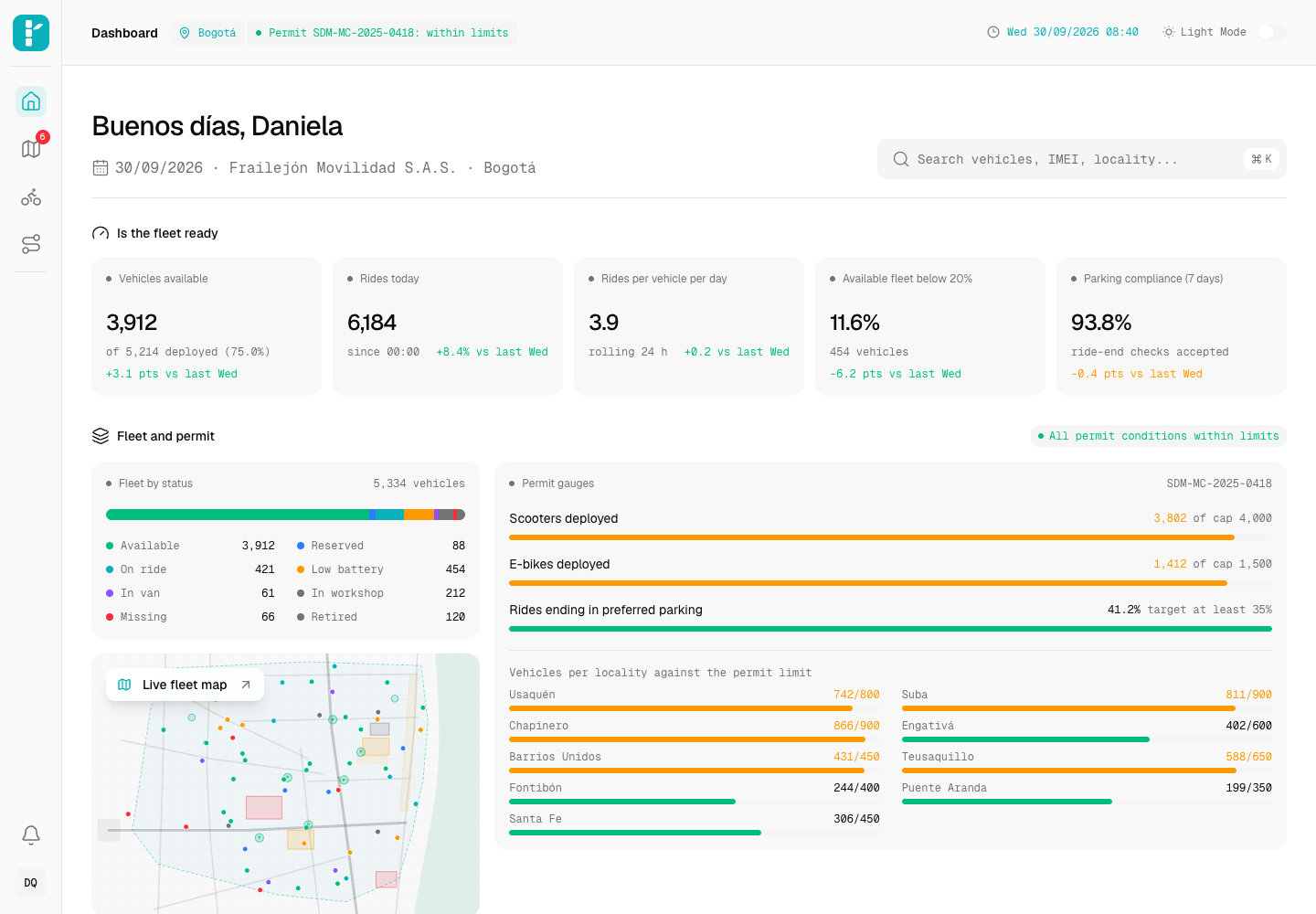
Guadua - Shared E-Scooter and E-Bike Operations Console for Bogotá
Designed a shared e-scooter and e-bike platform for a Bogotá operator running about 4,000 scooters and 1,500 e-bikes under a district permit, and built its clickable operator console: a dashboard that watches the permit's limits, a live fleet map with IoT state and alarms, vehicle records, and a planner that sends crews to swap batteries and rebalance where demand is forecast.
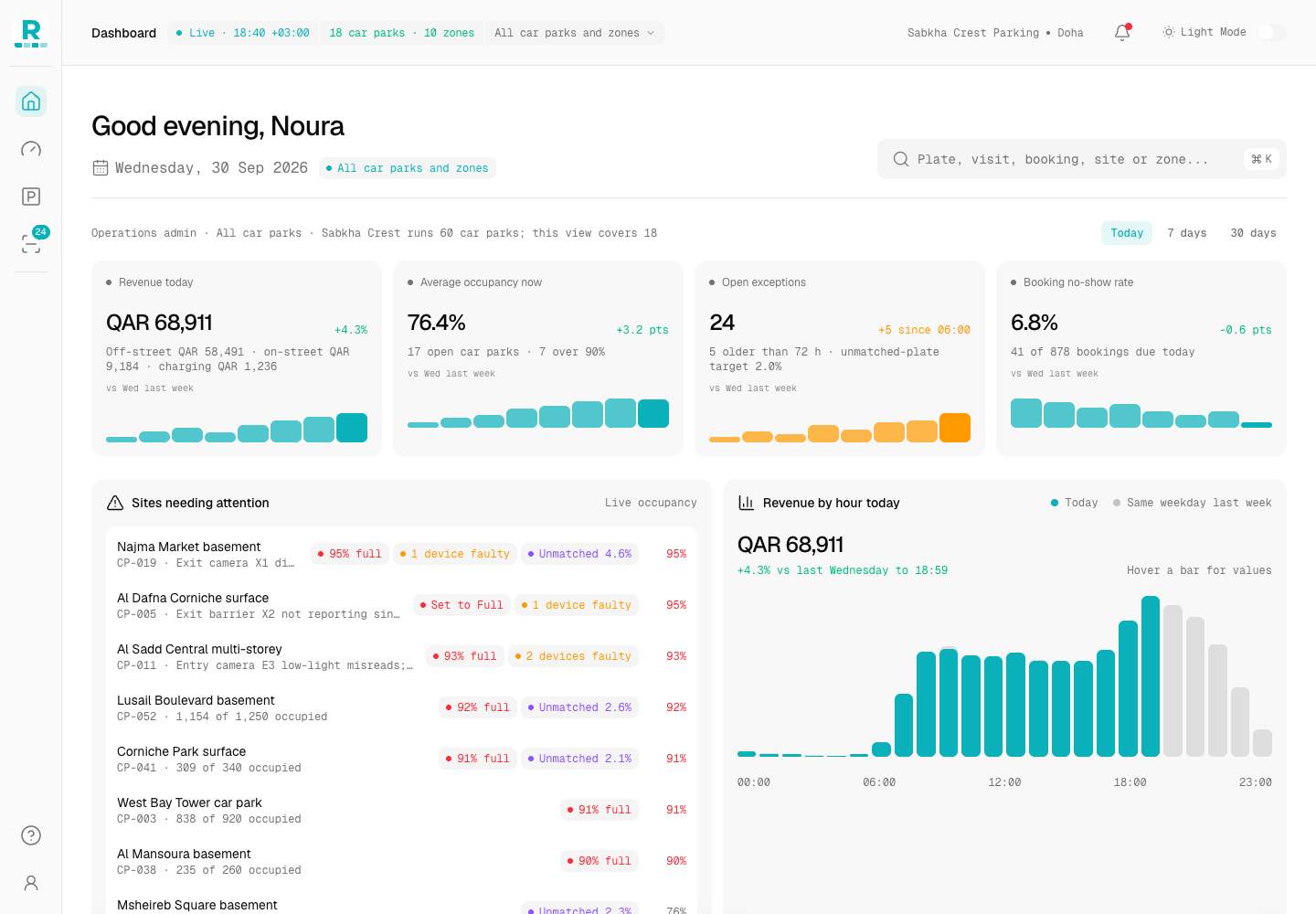
Rasif - Parking Operations Console for ANPR Car Parks and On-Street Zones
Designed and built a clickable operator console for a Doha parking operator running ANPR car parks and on-street pay-by-phone zones: live occupancy on one map, car parks with tariffs, devices and pre-booking inventory, and an exceptions queue that clears unmatched plate reads with ranked suggestions.
Enterprise Software Engineering - Human + AI
Contact Us
© 2026 - Copyright. All Rights reserved Oceanlab
Location
Global Headquarters
21 Merchant Road, 3rd Floor, Singapore 058267
Main corporate office and leadership operations
North America Office
548 Market Street, PMB 12345, San Francisco, CA 94104
Client operations and business development
India Office
402 Shivalik Shilp II, SG Highway, Ahmedabad 380015
Engineering and delivery center

Enterprise Software Engineering - Human + AI
Contact Us
Locations
Global Headquarters
21 Merchant Road, 3rd Floor, Singapore 058267
Main corporate office and leadership operations
North America Office
548 Market Street, PMB 12345, San Francisco, CA 94104
Client operations and business development
India Office
402 Shivalik Shilp II, SG Highway, Ahmedabad 380015
Engineering and delivery center
© 2026 - Copyright. All Rights reserved Oceanlab