Zabuni - Tender Management System with a Tender File Ready for Review
Tender Management for a Kenyan County Government
Designed and built a clickable tender management system for a Kenyan county that buys about KES 4.2 billion a year across ten departments: tenders raised from the procurement plan, clarifications answered to every bidder, addenda tracked per supplier, and an evaluation committee that scores alone before agreeing a consensus.
Most of our work is under NDA. Per agreement, we can share the work but not the company details - all names and identifying information shown here have been changed.
Impact
Dashboard, tenders table and board, tender detail with 8 tabs, the clarifications queue and the evaluation consensus and report. Every one of the 22 demo tenders opens its own detail page.
The consensus matrix shows each evaluator's score per criterion and flags any spread above 30% of the criterion's maximum. Consensus scores are recorded with a reason next to the individual scores, which never change.
The dashboard shows the AGPO share of awards, KES 312.0M or 27.4% in the demo, against the 30% reservation. Reserved tenders are flagged in the list and add an AGPO certificate check to the preliminary criteria.
Across 10 departments and every stage from draft to notified, with 14 suppliers, 16 clarifications, 3 evaluations holding 15 bids and 12 county staff users.
The Problem
Mawingu's supply chain management unit ran tenders on paper and email alongside the national e-procurement system. Bids were printed and boxed, clarifications went by email to whichever bidders had asked, and evaluators scored on photocopied sheets. When three awards went to the Review Board in one year, the county could not quickly show who had received an addendum or when an evaluator had declared a conflict, and one tender was annulled and re-advertised.
Our Solution
Zabuni follows a tender from its line in the annual procurement plan to the notification of award, with every step on one record. Officers set up tenders with lots and weighted criteria, answer clarifications once for every bidder, issue numbered addenda that each supplier must acknowledge, and run an evaluation committee that scores individually before agreeing a consensus and signing the report.
The Challenge: Every Decision Must Survive a Review
Public procurement in Kenya must be fair, equitable, transparent, competitive and cost-effective under Article 227 of the Constitution, and the Public Procurement and Asset Disposal Act 2015 and its regulations set out each step. Any award can be taken to the Public Procurement Administrative Review Board, so the county has to prove what happened, not just do it.
Answers That Reach Every Bidder
An answer to one bidder's question has to go to every supplier holding the tender documents, without revealing who asked. Changes to the tender go out as numbered addenda, and the county must be able to show which bidders received and acknowledged each one.
Committees Without Conflicts
The accounting officer appoints the opening and evaluation committees. Evaluators must declare any interest in a bidder before seeing bids, nobody should score a tender they helped specify without a recorded reason, and the person approving the award must not have sat on the evaluation committee.
Sealed Bids and Fair Scoring
Bids may be opened only after the closing time, with an opening record of each bidder. Each evaluator scores alone against weighted criteria, and the committee agrees consensus scores without overwriting what each member gave.
AGPO Spend Nobody Could Count
AGPO generally reserves at least 30% of a procuring entity's procurement budget for enterprises owned by youth, women and persons with disabilities. The Ward Development Fund team could not say how much of the year's spend had actually gone to AGPO-registered firms.
Our Approach: From Procurement Law to a Clickable Tender System
Spec and Rules Research
Mapped 12 roles, from procurement officers and committee members to the accounting officer, legal, internal audit, suppliers and the public, and 37 screens across staff, supplier portal and public pages. Defined the data model for plan lines, tenders, lots, criteria, documents, addenda, clarifications, sealed bids, key shares, committees, declarations, scores, reports, awards, standstill and complaints. Wrote down the rules the design follows: Article 227, the PPAD Act 2015 and regulations, PPRA standard tender documents, AGPO and the Data Protection Act 2019, with statutory periods configured rather than hard-coded.
Clickable Demo on a Production UI Kit
Built 5 key screens on a production workspace kit: the dashboard with plan execution, pipeline by stage with over-target flags, this week and needs attention; the tenders table and board with a quick view and the first step of the new tender wizard; tender detail with approval checklist, addendum, extend and cancel modals; the clarifications queue with a thread panel; and consensus and report with the score matrix, results per lot, report draft and signatures. All actions run on local state.
What a Production Build Adds
The remaining screens: procurement plan, full tender wizard, bid box and opening session with encrypted bids, committees and declarations, individual scoring, awards, standstill and notifications, complaints and review cases, audit log, reports, settings, and the supplier and public portals. Integration with IFMIS or the national e-GP system, the PPRA portal, supplier and AGPO records, county budget lines, e-signatures, SMS and email, and encrypted document storage with keys in a hardware security module. Staff auth by role and an append-only tender file.
Why It Works: The Tender File Is the Evidence
Addenda Acknowledged Per Supplier
The interested suppliers tab lists every firm that downloaded the documents, with the time and how many addenda it has acknowledged. Issuing an addendum sends it to every supplier with the documents, and the tender criteria lock at publication so any change needs one.
One Answer, Sent to Everyone
Clarifications sit in to answer, drafted and published tabs with their age in working days and the tender's clarification deadline. An answer can be marked as changing the tender, which starts a draft addendum, and published answers go to every bidder without naming who asked.
Scores Stay as Given
Individual scores show only after every appointed evaluator has submitted. Each consensus score needs a reason, the technical stage locks only when every criterion is agreed, and members sign the report before it goes to the head of SCM.
Checks Before Publication
Approval for publication runs a checklist: plan line linked, technical weights total 100, documents uploaded with checksums, dates that meet the minimum open period and consistent AGPO settings. Estimated values are marked staff only, and evaluation pages carry a confidentiality notice.
Related case studies
View all: Procurement & ESG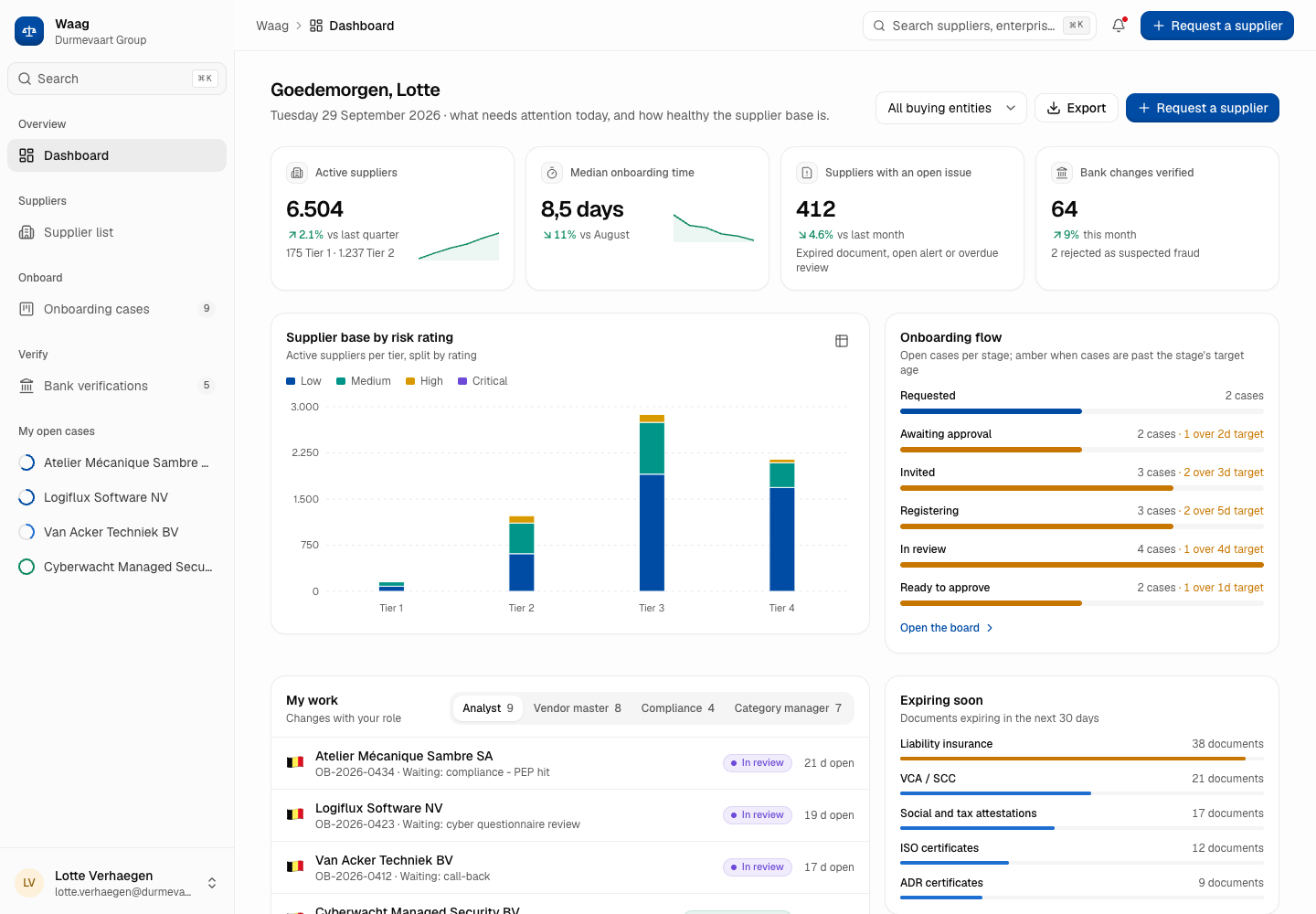
Waag - Supplier Onboarding and Third-Party Risk Platform
Designed and built a clickable supplier onboarding and third-party risk platform for a Belgian industrial and logistics group: a 10-item onboarding checklist from request to approved vendor, registry, VAT and ownership checks, bank details confirmed by an independent call-back and a second person, and a supplier base scored by tier and risk rating.
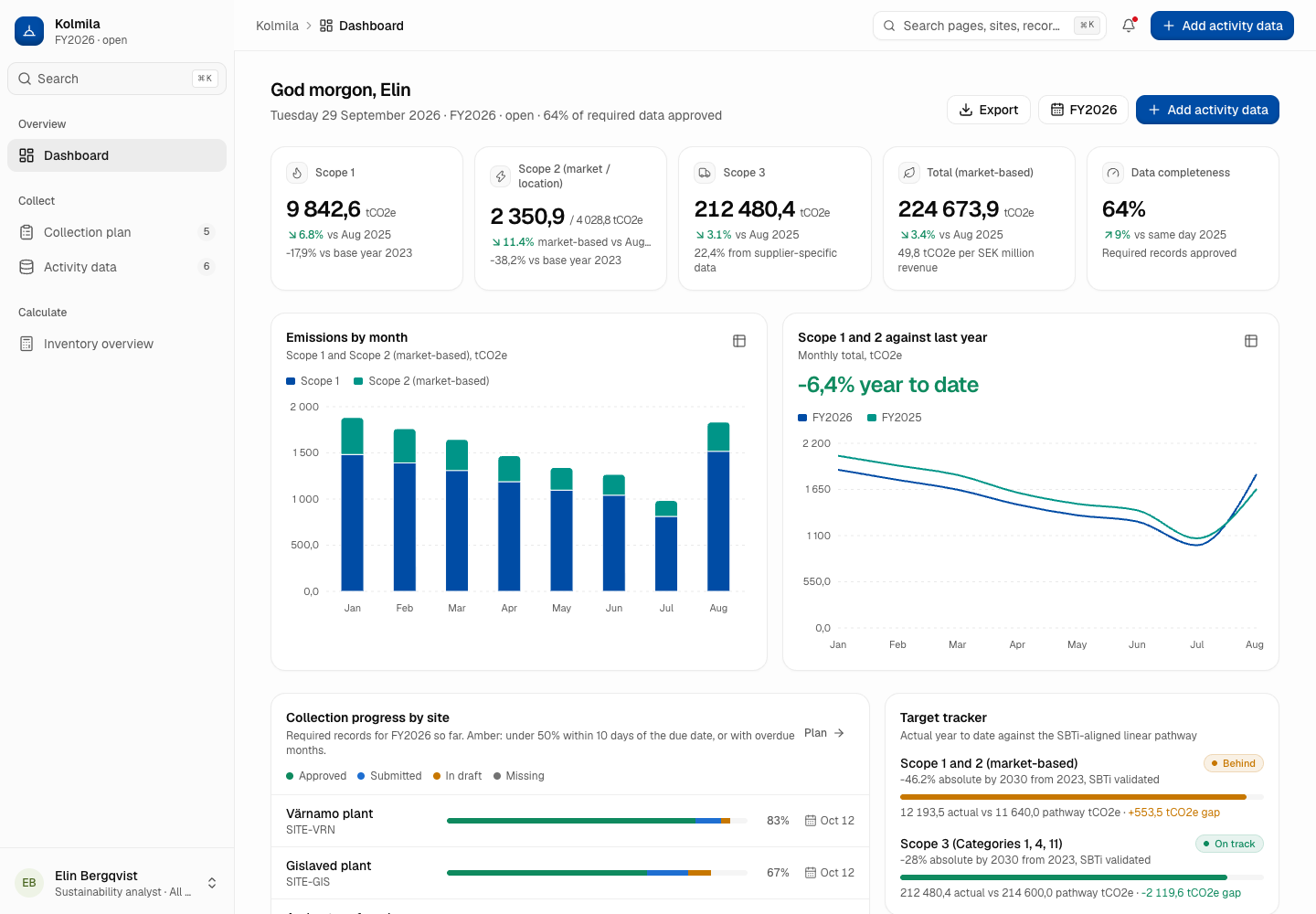
Kolmila - GHG Inventory and Sustainability Reporting Platform with Evidence Behind Every Number
Designed and built a clickable sustainability data platform for a Swedish manufacturer of hydraulic cylinders, steel fabrications and castings: site data collection with evidence, two-step review, a versioned emission factor library and a Scope 1, 2 and 3 inventory under the GHG Protocol, built to feed an ESRS sustainability statement and limited assurance.
Enterprise Software Engineering - Human + AI
Contact Us
© 2026 - Copyright. All Rights reserved Oceanlab
Location
Global Headquarters
21 Merchant Road, 3rd Floor, Singapore 058267
Main corporate office and leadership operations
North America Office
548 Market Street, PMB 12345, San Francisco, CA 94104
Client operations and business development
India Office
402 Shivalik Shilp II, SG Highway, Ahmedabad 380015
Engineering and delivery center

Enterprise Software Engineering - Human + AI
Contact Us
Locations
Global Headquarters
21 Merchant Road, 3rd Floor, Singapore 058267
Main corporate office and leadership operations
North America Office
548 Market Street, PMB 12345, San Francisco, CA 94104
Client operations and business development
India Office
402 Shivalik Shilp II, SG Highway, Ahmedabad 380015
Engineering and delivery center
© 2026 - Copyright. All Rights reserved Oceanlab