Tolltide - Business Billing and Usage Platform with Checked Bill Runs and Fair Collections
Billing Ops Console for a New Zealand Business Telco
Designed and built a clickable billing ops console for an Auckland business telecom provider: monthly bill runs checked against last month before release, a disputes queue and workbench on a working-day SLA clock, and collections that hold back disputed amounts and refuse to suspend accounts a safeguard protects.
Most of our work is under NDA. Per agreement, we can share the work but not the company details - all names and identifying information shown here have been changed.
Impact
Ops dashboard, bill runs with run detail, disputes queue, dispute workbench and collections. Every one of the 13 bill runs and 16 disputes opens its own detail.
Total changed over 50%, zero value, missing address, missing GST details, unrated records, negative balance and invoices over $50,000. Release waits until each is held or released, by a billing lead who did not start the run.
An open dispute, critical services, a payment plan or a hardship flag disables the suspension request. Fridays, weekends and public holidays are never offered, and 111 stays available.
13 bill runs across the four monthly cycles, 16 disputes, 14 collections cases and 7 staff users in 5 roles, in NZD with GST at 15%.
The Problem
Karaka Point's 9,000 business customers received one PDF invoice per account each month, often 80 pages long, and re-keyed totals into spreadsheets to split costs. Inside Karaka Point, bill runs ran from a script, rating errors surfaced only when customers complained, credit notes went out without approval, and a customer with an open dispute got the same dunning letters as one that simply had not paid. Disputes took a median of 19 working days to close, and about 6% of business revenue sat over 60 days overdue.
Our Solution
Tolltide gives Karaka Point a business customer portal for invoices, itemised usage, cost centres, budgets and disputes, and a billing ops console for its own team. The demo builds the ops console: bill runs checked step by step and released by a second person, disputes worked against a 10 working day target with the disputed amount on hold, and collections that only move forward when no safeguard applies.
The Challenge: Billing Thousands of Businesses Fairly
A business telco bills mobile fleets, SIP trunks, internet lines and IoT SIMs in four cycles a month. Every invoice has to be right before it goes out, every challenged charge has to be tracked, and collections must never punish a customer for a dispute or cut off a service that matters.
Bill Runs Released on Trust
Bill runs ran from a script with no review step. An account whose total tripled, an invoice with no billing address or a batch of unrated records was found only after the invoices had gone out, and the person who ran the bill run also released it.
Call Records Are Personal Information
Itemised records show who an employee called, when and from where. The Privacy Act 2020 applies, and Tolltide treats the Telecommunications Information Privacy Code as applicable, so cost centre managers see masked numbers and every reveal of a full number is logged.
Disputes Nobody Could Track
Disputes arrived by email with no owner, reference or deadline. Industry codes from the Telecommunications Forum and the Telecommunications Dispute Resolution scheme mean Karaka Point has to show how each complaint was handled, from raising to outcome.
Collections Without Context
Dunning treated a disputed balance like an unpaid one. A council or health trust with critical services could be barred like any other account, and a suspension could land on a Friday with no one to restore it. Barring must still keep 111 emergency calling.
Our Approach: From Billing Rules to a Clickable Console
Spec and Rules Research
Mapped 13 roles across the business customer portal and the ops console, 39 screens (20 portal and 19 ops) with 5 slide-over panels and about 18 modals, and the data model for customers, billing accounts, cost centres, lines, usage records, invoices, charges, allocation rules, budgets, IoT pools, disputes, credit notes, payments, bill runs and collections cases. Wrote down the rules the design follows: the Privacy Act 2020 and the Telecommunications Information Privacy Code, TCF codes and the TDR scheme, retail service quality codes under Part 7 of the Telecommunications Act 2001, GST as configuration, Payments NZ direct debit rules and 111 kept on every barred line.
Clickable Demo on a Production UI Kit
Built the ops console's 5 key screens on a production dashboard kit: the dashboard with KPIs, a tracker for the four bill cycles, collected vs billed for 12 months and rating errors by cause; bill runs with an 8-step tracker, totals against the same cycle last month and exceptions to hold or release; the disputes queue with SLA chips; the dispute workbench with evidence on the left and the outcome form on the right; and collections with ageing buckets, safeguards and the dunning timeline. All actions run on local state.
What a Production Build Adds
Integration with the charging system (such as CSG, Amdocs or Cerillion), Cisco IoT Control Center, roaming TAP files through a clearing house such as Syniverse, Windcave or Stripe cards, GoCardless direct debit, the NZBN API, Xero and MYOB export, Peppol e-invoicing, Centrix or Equifax NZ credit checks and Postmark or SendGrid email. Customer SSO through Microsoft Entra ID or Okta, an append-only audit log, and the remaining screens: the 20-screen customer portal, rating errors, Customer 360, credit notes, reports and ops settings.
Why It Works: Checks Before Anything Leaves
Every Exception Decided Before Release
A bill run shows each step from usage cut-off to issued, highlights any service type more than 10% off the same cycle last month, and lists its exceptions. Holding an account needs a logged reason, and Approve release stays blocked until every exception is decided and the approver is not the person who started the run.
Disputes on a Working-Day Clock
Each dispute has a 10 working day outcome target, turns amber at 2 working days left and red when past due, and pauses while Karaka Point waits on the customer. The disputed amount is on hold from collections for as long as the dispute is open.
Credits Within Approval Limits
The workbench puts disputed charges, rated records, plan history and network evidence beside the outcome form. Recording an outcome adds GST and creates a draft credit note, and a credit above the user's limit goes to the finance controller instead.
Collections That Respect Safeguards
The worklist chases only the overdue amount outside open disputes and shows each account's safeguards. A suspension request is disabled while any safeguard applies, offers only dates that are not a Friday, weekend or public holiday, keeps 111 available and waits for finance controller approval.
Related case studies
View all: Telecom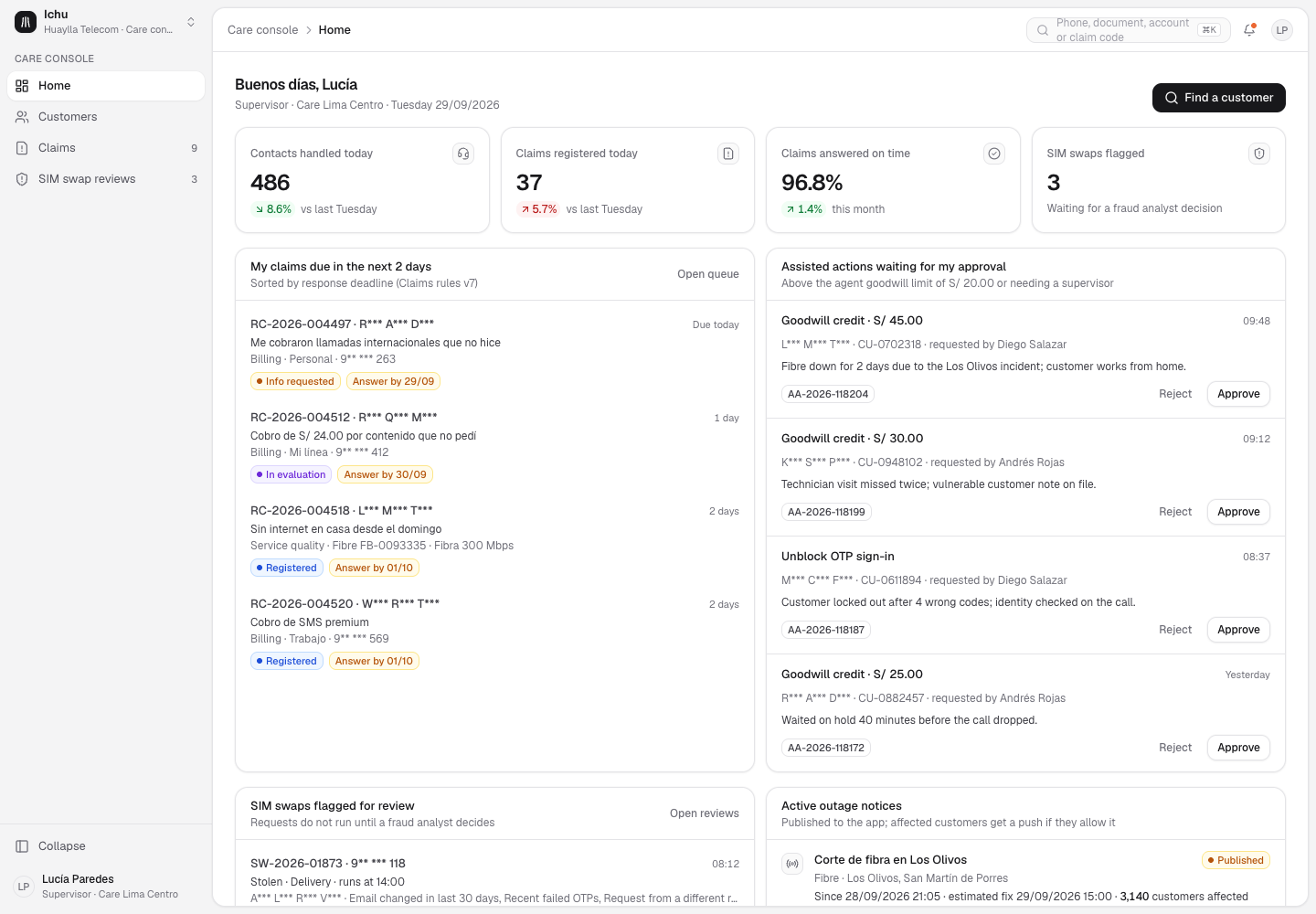
Ichu - Customer Self-Care App and Care Console with SIM Swap Controls
Designed a self-care app and care agent console for a Lima mobile and home fibre operator, and built the care console as a clickable demo: a masked customer 360 with audited assisted actions, a claims queue and workspace run against regulatory deadlines, and SIM swap reviews scored by weighted fraud signals.
Atupa - NOC Console for Tower Site Power, Alarms and Tenant SLAs
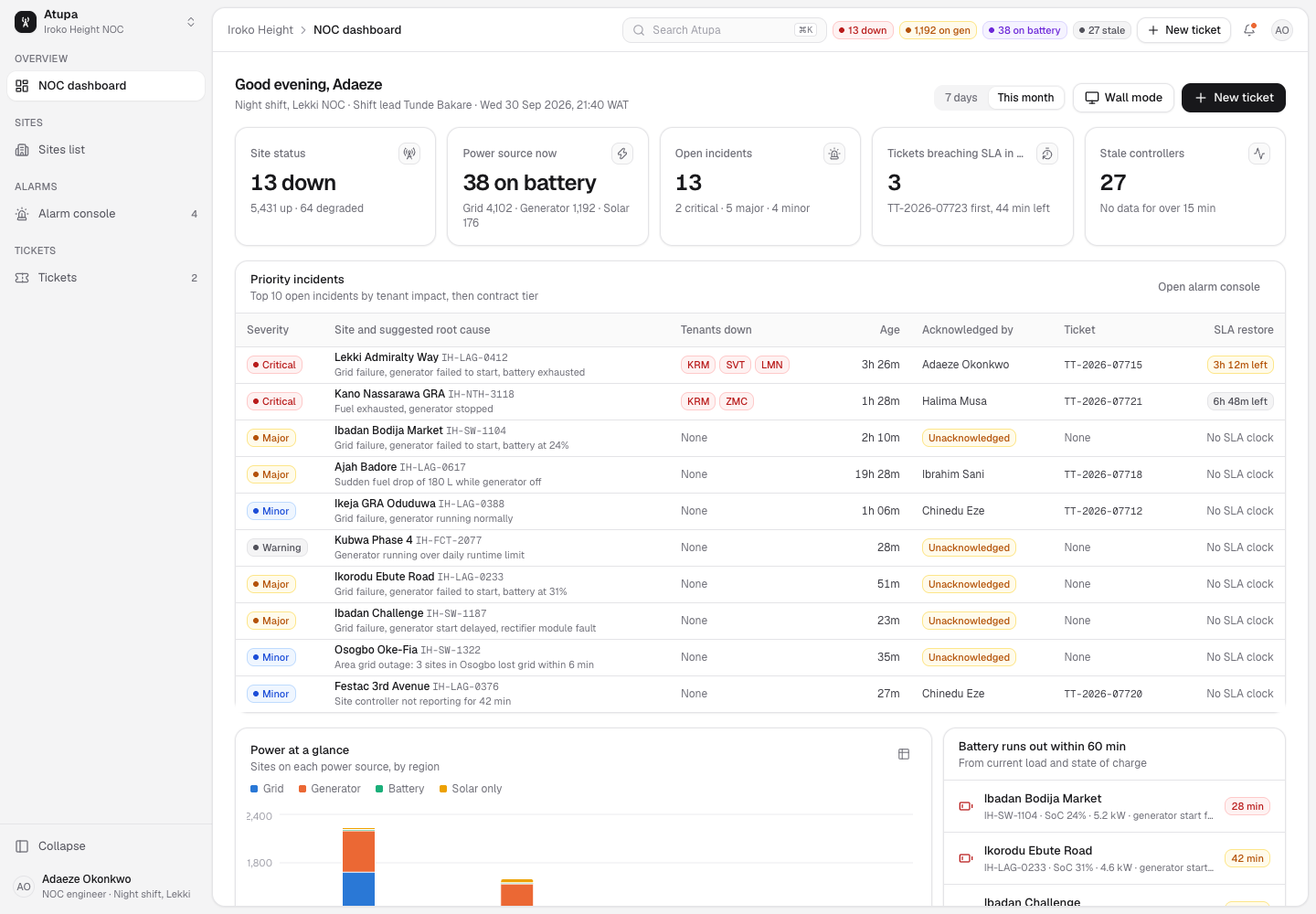
Designed and built a clickable network operations centre console for a Lagos tower company with about 5,500 sites: live site power and battery autonomy, an alarm console that groups alarms into incidents with a suggested root cause, trouble tickets with a separate SLA clock for each mobile operator, and penalty exposure per tenant.
Enterprise Software Engineering - Human + AI
Contact Us
© 2026 - Copyright. All Rights reserved Oceanlab
Location
Global Headquarters
21 Merchant Road, 3rd Floor, Singapore 058267
Main corporate office and leadership operations
North America Office
548 Market Street, PMB 12345, San Francisco, CA 94104
Client operations and business development
India Office
402 Shivalik Shilp II, SG Highway, Ahmedabad 380015
Engineering and delivery center

Enterprise Software Engineering - Human + AI
Contact Us
Locations
Global Headquarters
21 Merchant Road, 3rd Floor, Singapore 058267
Main corporate office and leadership operations
North America Office
548 Market Street, PMB 12345, San Francisco, CA 94104
Client operations and business development
India Office
402 Shivalik Shilp II, SG Highway, Ahmedabad 380015
Engineering and delivery center
© 2026 - Copyright. All Rights reserved Oceanlab