Stepwell - Care Team Dashboard for an NHS Talking Therapies Service
Caseload, Risk and Outcomes Dashboard for NHS Talking Therapies
Designed and built a clickable care team dashboard for an NHS Talking Therapies provider in England: each clinician's caseload with risk flags and session-by-session outcome measures, a same-day risk review workflow, and a service view of waiting times and recovery rates against the national standards.
Most of our work is under NDA. Per agreement, we can share the work but not the company details - all names and identifying information shown here have been changed.
Impact
Today, My caseload, the patient record with 7 tabs, Risk flags and Service overview, plus the session prep, patient quick view and risk history panels.
High risk flags are due the same working day and turn red after 4 working hours. The risk strip cannot be dismissed, only cleared by recording a review, and discharge stays blocked until then.
Entry to treatment within 6 weeks (75%) and 18 weeks (95%), recovery (ambition around 50%), reliable improvement, reliable recovery and DNA rate, each with its standard drawn as a reference line.
24 on the signed-in therapist's caseload, 20 risk flags with reviews, 8 sessions today, 7 staff across 5 locality teams and 2 ICBs, and PHQ-9, GAD-7, WSAS and 5 disorder-specific measures.
The Problem
Greywell's clinicians kept caseloads in the clinical record system, but risk flags lived in a shared spreadsheet, waiting list breach dates were worked out by hand, supervision notes sat in Word documents and outcome figures appeared only after month end. A PHQ-9 item 9 answer of 2 on a paper questionnaire might not be seen until the session started, and the ICBs saw recovery at 44% against a national ambition of around 50%.
Our Solution
Stepwell gives each clinician one view of their caseload, sorted so risk comes first, with outcome measures from every session and the questionnaire the patient completed on their phone that morning. Risk flags are raised by rule and resolved only by a recorded review, and service managers see waiting times, recovery, reliable improvement and DNA rates against the national standards for both commissioners.
The Challenge: Stepped Care With Risk in Plain Sight
NHS Talking Therapies services in England treat anxiety and depression in stepped care, measure every patient at every session and report monthly to NHS England. Greywell runs this for two integrated care boards with around 140 clinicians in five locality teams.
Risk Answers Seen Too Late
PHQ-9 item 9 asks about thoughts of being better off dead or of self-harm. A positive answer is a prompt for clinical review, not a risk assessment, but when it sat on a questionnaire nobody had opened, no one acted on it before the session began.
Outcomes That Depend on Every Score
Recovery means at caseness at the start (PHQ-9 10 or more, GAD-7 8 or more) and below it at the end, for people who finished treatment. A missing final score means a finished course cannot count as recovered, and Greywell found out only when the national dataset queried the month.
Waiting Times Nobody Could Forecast
The standards are 75% of people entering treatment within 6 weeks of referral and 95% within 18 weeks. With breach dates worked out by hand, the ICBs saw 18-week breaches that nobody had seen coming.
Clinical Safety and Confidentiality
Mental health data is special category data under UK GDPR, and the common law duty of confidentiality and the Caldicott principles apply. Flag rules are clinical risk controls under DCB0129 and DCB0160, and safeguarding details must stay with the people who need them.
Our Approach: From the Talking Therapies Manual to a Clickable Dashboard
Spec and Rules Research
Mapped 10 user roles, from psychological wellbeing practitioners and high-intensity therapists to the safeguarding lead, data officer and patients, and 30 screens with 4 slide-over panels. Defined the data model for referrals, episodes, care contacts, measure responses, flags, risk reviews, safeguarding concerns, step decisions, discharges and dataset submissions, and wrote down the rules the design follows: stepped care, caseness, recovery and reliable change, waiting time standards and the national dataset.
Clickable Demo on a Production UI Kit
Built 5 key screens on a production dashboard kit: Today with the risk strip, KPI cards, today's sessions and the session prep panel; My caseload sorted by flag severity with the patient quick view; the patient record with measure charts, care rail and 7 tabs; Risk flags with working-hours SLAs and the risk review form; and Service overview with ICB and period selectors. Recording a review moves the patient's flags to Resolved as you click.
What a Production Build Adds
Integration with the Personal Demographics Service, NHS login for patients, CIS2 or Entra ID for staff, the booking system, MESH or NHSmail letters to GPs, GOV.UK Notify messages and the NHS England dataset submission. A DCB0129 hazard log and DCB0160 safety case, an append-only audit log of every out-of-team view and risk judgement, and the remaining screens: referrals and triage, waiting list, safeguarding, supervision, discharge, data quality, settings and the 3 patient pages.
Why It Works: Risk First, Scores Every Session
Risk Comes First on Every Screen
The caseload sorts by flag severity, then days since last contact. A flag chip explains on hover why it was raised and when, and an item 9 answer of 2 or 3 on a morning questionnaire appears on Today as a red strip that only a recorded review can clear.
The Clinician Makes the Judgement
Stepwell raises a flag and a task; it does not assess risk. The review records the contact made, the clinician's judgement for risk to self, to others and from others, and the actions taken, such as crisis plan updated, GP informed or duty informed.
Scores Read Against the Rules
Each measure is charted across sessions with its caseness threshold drawn as a line and the reliable change band shaded around the first score. Scores are coloured by caseness, and each one shows whether the patient entered it online or the clinician entered it in session.
Service Figures Against the Standard
Every service KPI shows its 6-week, 18-week, national ambition or contract target as a reference line, with a recovery heat table by team and step and an 8-week breach forecast, so a manager sees a problem before the ICB does.
Related case studies
View all: Mental health & wellness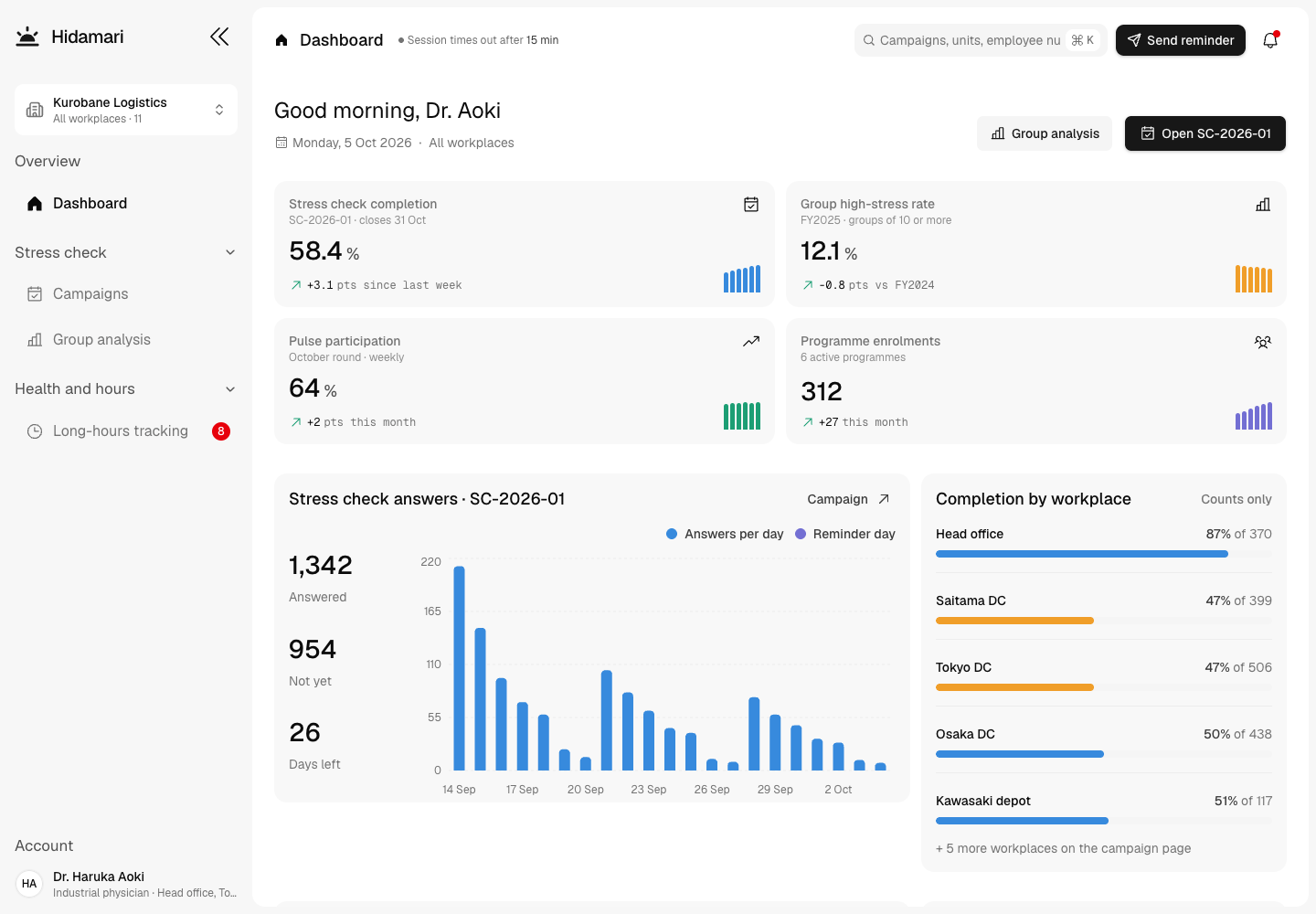
Hidamari - Employee Wellbeing Platform for Stress Checks and Long Working Hours
Designed and built a clickable staff console for a Tokyo HR-tech company's employee wellbeing platform: run the annual stress check, read group analysis that never shows a group under 10 people, follow physician interviews and track long working hours, with each piece of health information kept with the people allowed to see it.
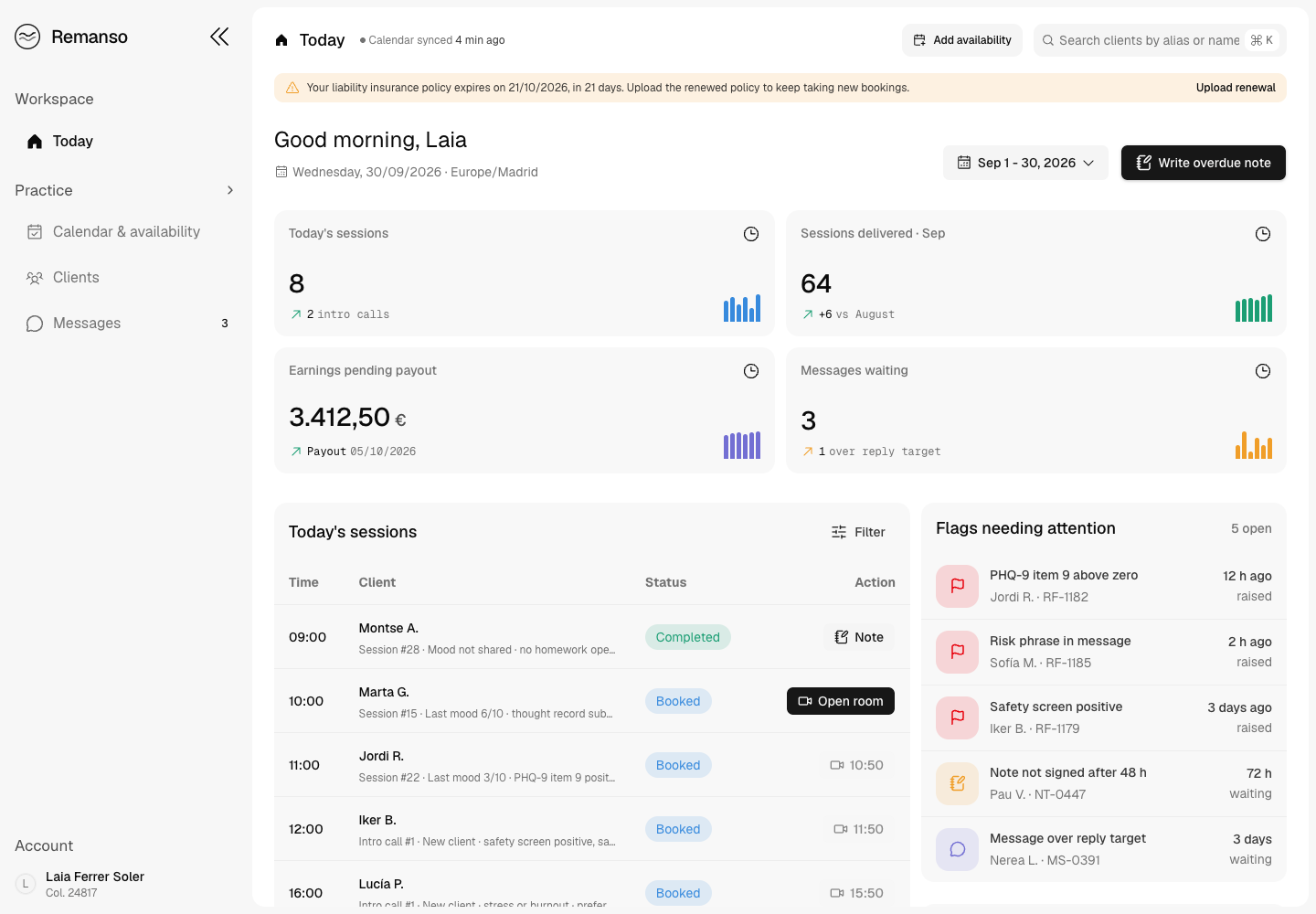
Remanso - Online Therapy Platform with Crisis Rules Built In
Designed and built a clickable psychologist workspace for a Spanish online therapy platform that matches clients with licensed psychologists: today's sessions with a pre-session summary, availability and bookings, a private clinical record per client, and a message inbox that flags risk phrases and replies waiting too long.
Enterprise Software Engineering - Human + AI
Contact Us
© 2026 - Copyright. All Rights reserved Oceanlab
Location
Global Headquarters
21 Merchant Road, 3rd Floor, Singapore 058267
Main corporate office and leadership operations
North America Office
548 Market Street, PMB 12345, San Francisco, CA 94104
Client operations and business development
India Office
402 Shivalik Shilp II, SG Highway, Ahmedabad 380015
Engineering and delivery center

Enterprise Software Engineering - Human + AI
Contact Us
Locations
Global Headquarters
21 Merchant Road, 3rd Floor, Singapore 058267
Main corporate office and leadership operations
North America Office
548 Market Street, PMB 12345, San Francisco, CA 94104
Client operations and business development
India Office
402 Shivalik Shilp II, SG Highway, Ahmedabad 380015
Engineering and delivery center
© 2026 - Copyright. All Rights reserved Oceanlab