Second Life - Repair Café Platform with Safety Checks and Explainable Impact
Repair Café Platform for a Belgian Volunteer Network
Designed and built a clickable platform for a non-profit that runs 18 volunteer repair cafés in and around Leuven: a network dashboard, an event desk for hosts on the day, repair records with electrical safety tests, and a tool library loans desk - with waste avoided counted only from items that were fully fixed.
Most of our work is under NDA. Per agreement, we can share the work but not the company details - all names and identifying information shown here have been changed.
Impact
Network dashboard, event desk with a queue board per table, repair records, the repair record with its safety test and corrections, and the tool library loans desk.
Only fixers with an electrical safety badge can be assigned a mains item, an opened mains item cannot be saved as Fixed without a safety test, and a failed test means Not fixed with a do not use tag.
Waste and CO2e avoided are estimated only from fully fixed items, using an average weight and emission factor for each of 18 item categories in factor version 2026-1.
18 cafés, 9 events in the next 14 days, 22 bookings on today's event desk, 14 volunteers, 16 library tools, 11 members and 19 loans.
The Problem
Lapwerk grew from one café in a parish hall to 18, and its tooling did not grow with it. Each café kept paper intake forms and a shared spreadsheet that half the hosts forgot to fill in, visitors queued with a bike when the only bike fixer had cancelled, nobody could say which electrical items had passed a safety check, and the tool library ran on a notebook. Every January the coordinator spent two weeks retyping forms for the waste authority that part-funds Lapwerk, without being able to explain how the kilograms were estimated.
Our Solution
Second Life takes a broken toaster from "where can I get this fixed?" to a logged repair outcome. The network console shows bookings against capacity and gaps in fixer cover, hosts run the day from an event desk with a queue per table, every repair is logged with its outcome, parts and safety test, the library desk handles pickups, returns and deposits, and impact is computed from a versioned factor table that every report can print.
The Challenge: Volunteer Repair That Has to Add Up
A repair café is run by volunteers on a noisy Saturday morning, but the records it keeps carry safety duties, Belgian volunteer and data protection law, and a funder that wants evidence of waste kept out of its collection rounds.
Electrical Items Without a Safety Record
Lapwerk's own policy is that only badge-holding fixers repair mains items, and every opened mains item gets a visual inspection and an electrical safety test after repair, in the spirit of EN 50678. On paper there was no record of which items passed or which tester was used.
Impact Figures Nobody Could Explain
The funding agreement now asks for a consistent, explainable impact method. Kilograms and CO2e avoided are estimates, so the method, the category weights, the factors and their sources have to be visible, and partly fixed items must not count.
Volunteers, House Rules and Liability
Belgian volunteer law expects organisations to inform volunteers about aims, insurance and expenses before they start. Visitors accept house rules before a repair, and each accepted version must be stored, including for walk-ins without a phone.
Personal Data in Repair Records
Visitors, members and volunteers are covered by the GDPR and the Belgian data protection law. Fault photos can show faces or homes, and repair data shared under the Open Repair Data Standard must leave the platform without names, emails or photos.
Our Approach: From Repair Café Rules to a Clickable Platform
Spec and Rules Research
Mapped 9 roles from visitor and fixer to safety lead and funder viewer, 42 screens across the visitor site, the fixer and host app and the network console, and the data model for cafés, events, bookings, repairs, safety tests, test devices, badges, tools, loans, spare parts and versioned impact factors. Wrote down the rules the design follows: the GDPR and the Belgian data protection law, the Belgian volunteer law, house rules and liability, electrical testing after repair, the GPSR for recalled products and the Open Repair Data Standard.
Clickable Demo on a Production UI Kit
Built 5 key screens on a production dashboard kit: the dashboard with KPIs against last year, the next 14 days with red fixer-cover gaps and a needs attention list, the event desk with a drag-and-drop queue board, walk-ins and a close event panel, repair records with a data quality bar and missing data filter, the repair record with safety test readings and audited corrections, and the loans desk with member blocks, kit checklists and deposits. A café filter changes the dashboard, the sidebar counts and the repair records, and all actions run on local state.
What a Production Build Adds
The visitor booking site and the fixer app with offline sync, Mollie or Stripe for donations, memberships and deposits, maps, Brevo or Postmark email and optional SMS, photo storage with scheduled deletion, iCalendar feeds for volunteers and label printing for repaired and do not use tags. Role-based access by café, an append-only audit log, the impact report, funder reports and the ORDS export, all in Dutch and English.
Why It Works: Safety and Evidence Built Into the Day
Safety Flags Travel With the Item
A mains item with visible cable or plug damage is flagged at the door as badge only, the assign menu disables fixers without an electrical safety badge, and the repair record shows the tester, its readings and the overall result next to the outcome.
One Desk for the Whole Event
The host sees expected, waiting, at table, done, no-show and walk-in counts at a glance, with one queue column per table and the fixers present at each. Walk-ins without a phone are added with the house rules ticked by the host as witness.
Data Quality Before the Export
Repair records show how many have a brand, age band, category and outcome, because those fields drive the open repair data export. Drafts without an outcome are counted in the sidebar and on the dashboard, and corrections are kept with who made them and why.
Library Rules at the Desk
Looking up a member shows an expired or suspended membership and any loan 7 or more days overdue as a block on new loans. Check-out needs every kit item ticked, and a deposit deduction above 30 EUR needs coordinator approval.
Related case studies
View all: Waste & circular economy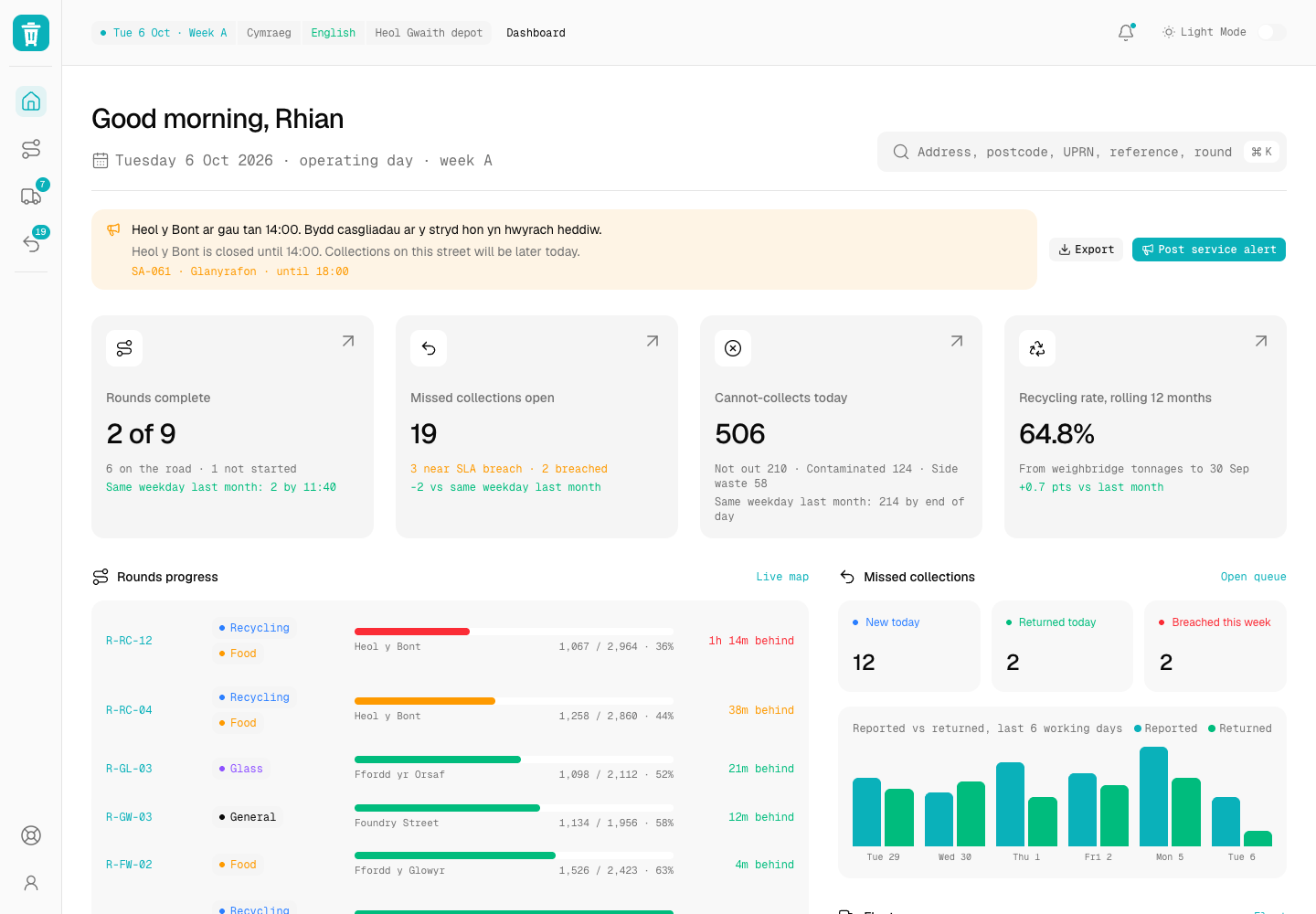
Binday - Bilingual Waste Collection Platform for a Welsh Council
Designed and built a clickable operations console for a Welsh city council's household waste service: live rounds and fleet, missed bins checked against crew records and returned within SLA, round sequences with crew suggestions, and service alerts in Welsh and English.
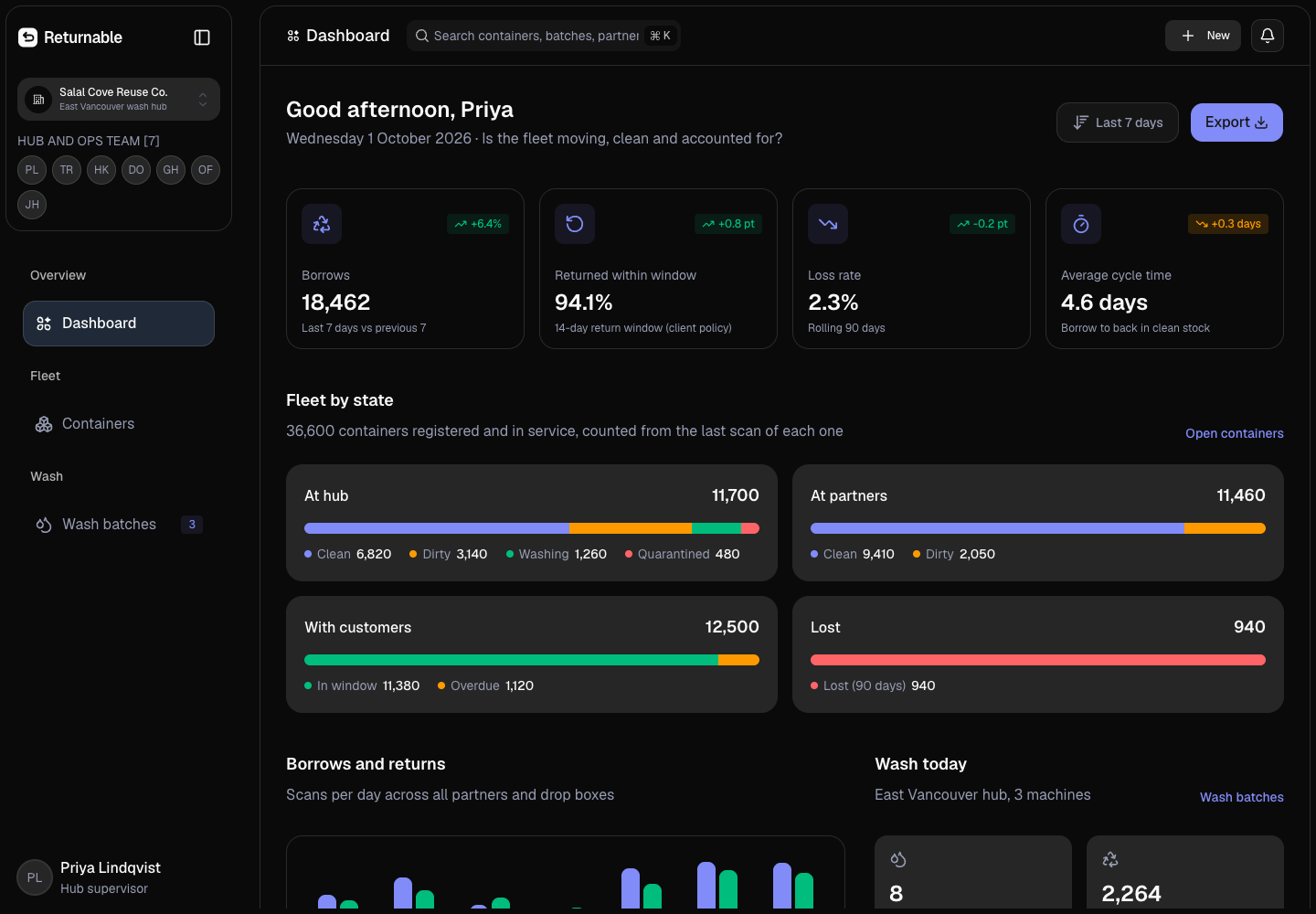
Returnable - Reusable Cup and Container Platform with Batch-Level Wash Traceability
Designed and built a clickable hub and fleet console for a Vancouver operator of deposit-based reusable cups and takeaway containers: every container tracked by scan from counter to wash hub, every wash batch checked against the food safety plan, and a quarantined batch traced to the partner venues still holding its items.
Enterprise Software Engineering - Human + AI
Contact Us
© 2026 - Copyright. All Rights reserved Oceanlab
Location
Global Headquarters
21 Merchant Road, 3rd Floor, Singapore 058267
Main corporate office and leadership operations
North America Office
548 Market Street, PMB 12345, San Francisco, CA 94104
Client operations and business development
India Office
402 Shivalik Shilp II, SG Highway, Ahmedabad 380015
Engineering and delivery center

Enterprise Software Engineering - Human + AI
Contact Us
Locations
Global Headquarters
21 Merchant Road, 3rd Floor, Singapore 058267
Main corporate office and leadership operations
North America Office
548 Market Street, PMB 12345, San Francisco, CA 94104
Client operations and business development
India Office
402 Shivalik Shilp II, SG Highway, Ahmedabad 380015
Engineering and delivery center
© 2026 - Copyright. All Rights reserved Oceanlab