Binday - Bilingual Waste Collection Platform for a Welsh Council
Household Waste Collection Platform for a Welsh City Council
Designed and built a clickable operations console for a Welsh city council's household waste service: live rounds and fleet, missed bins checked against crew records and returned within SLA, round sequences with crew suggestions, and service alerts in Welsh and English.
Most of our work is under NDA. Per agreement, we can share the work but not the company details - all names and identifying information shown here have been changed.
Impact
Dashboard, missed collections queue, rounds list, round detail with its sequence and route map, and live rounds and fleet. Every one of the 48 rounds opens its own detail page.
Each report shows its return deadline and time left, amber under 24 hours and red when breached. A crew record of collected within 30 m, or not out with a photo, suggests not valid; the advisor decides.
A service alert cannot be posted without both Welsh and English text, and Welsh shows first. Every missed bin report carries the resident's language so the reply goes out in it.
48 rounds across 5 streams, 9 running today, 20 vehicles with defects, 6 office staff and 38 crew, 24 missed bin reports and 7 unassigned jobs.
The Problem
Caerwen's residents found their bin day on a PDF calendar that went out of date every bank holiday and reported missed bins by phone, filling the contact centre every Tuesday morning. Crews carried printed round sheets and radioed the depot about contaminated or blocked bins, so the office could not tell a genuine miss from a bin that was not put out. Assisted collection lists lived in a spreadsheet crews rarely saw, and the quarterly return to the Welsh Government took a week to build.
Our Solution
Binday joins the council's waste service in one platform: a bilingual resident web app, an offline in-cab tablet for crews and an operations console. The build shows the console, where supervisors watch every round and vehicle live, check each missed bin against what the crew recorded at the stop, send returns to the nearest vehicle and publish round sequences with crew suggestions folded in.
The Challenge: One Service, Three Audiences, Two Languages
Caerwen City Council collects general waste, recycling, food and garden waste from about 110,000 households on 48 rounds from one depot. Residents, crews in the cab and office staff all need the same facts at the same time, under Welsh law and the council's own policies.
Genuine Misses or Not Out
Without crew records, every report looked the same. The office could not tell a missed street from a bin that was never put out or was left contaminated, so crews were sent back to stops they had already visited.
Welsh No Less Favourably Than English
Councils in Wales are generally subject to Welsh Language Standards under the Welsh Language (Wales) Measure 2011. Every resident screen, notification and letter has to exist in both languages, and a resident's choice has to be remembered.
Health Data That Crews Must Not See
An assisted collection request usually reveals health or disability information, which is special category data under UK GDPR. Crews need to know where the bin is kept, but only the assisted collection officer may see why.
Rounds That Keep Changing
New estates, bank holidays, road closures and crew knowledge of the streets all change the order of a round. Sequences were edited on paper, and residents' bin days and the recycling figures for the Waste (Wales) Measure 2010 had to stay right.
Our Approach: From Council Rules to a Clickable Console
Spec and Rules Research
Mapped 10 roles, from resident and crew loader to the assisted collection officer, and 42 screens across the resident app, crew tablet and operations console. Defined the data model for properties by UPRN, rounds with versioned sequences, append-only crew events, missed reports, assisted collections, sensors and tonnages. Wrote down the rules the design follows: the Environmental Protection Act 1990, the Controlled Waste Regulations 2012, the Waste (Wales) Measure 2010 and WasteDataFlow, UK GDPR and the Data Protection Act 2018, Welsh Language Standards and the Public Sector Bodies Accessibility Regulations 2018.
Clickable Demo on a Production UI Kit
Built 5 key operations screens on a production dashboard kit: the dashboard with KPIs, rounds progress and the bilingual service alert, the missed collections queue with its request panel, the rounds list, round detail with a numbered route map, sequence reordering into a draft and crew suggestions, and the live map of vehicles and unassigned jobs. Marking reports, sending jobs and publishing a sequence all run on local state.
What a Production Build Adds
Integration with Ordnance Survey AddressBase via GeoPlace and the OS Maps API, GOV.UK Pay or Civica Pay, GOV.UK Notify, vehicle telematics such as Webfleet or Samsara, bin sensors such as Sensoneo or Nordsense, weighbridge exports, WasteDataFlow uploads and the council CRM. Staff auth by role, an append-only audit log, and the remaining screens: the bilingual resident app, the offline crew tablet, calendar and bank holidays, assisted collections, sensors, contamination, fly-tipping, tonnages and settings.
Why It Works: Crew Records Behind Every Decision
Every Miss Checked Against the Stop
The request panel puts the resident's report next to the crew record, its time, photo and GPS distance from the property, plus previous misses at the address. Not valid needs a reason, which goes to the resident in their language.
Returns Go to the Nearest Vehicle
Valid misses and sensor jobs show as unassigned pins on the live map. A supervisor sends one to a vehicle already on a round for that stream, or bulk sends a round's misses at once.
Assisted Shows as a Flag Only
Round stops show Assisted collection beside narrow lane, dog on property or gated collection point, never the reason. Crews see only where the bin is kept; the health or disability reason stays with the assisted collection officer.
Sequence Changes Are Versioned
Supervisors reorder streets into a draft, approve or reject crew suggestions with their notes, and publish a new version with an effective date and the number of households affected. Earlier versions stay in the Changes tab.
Related case studies
View all: Waste & circular economy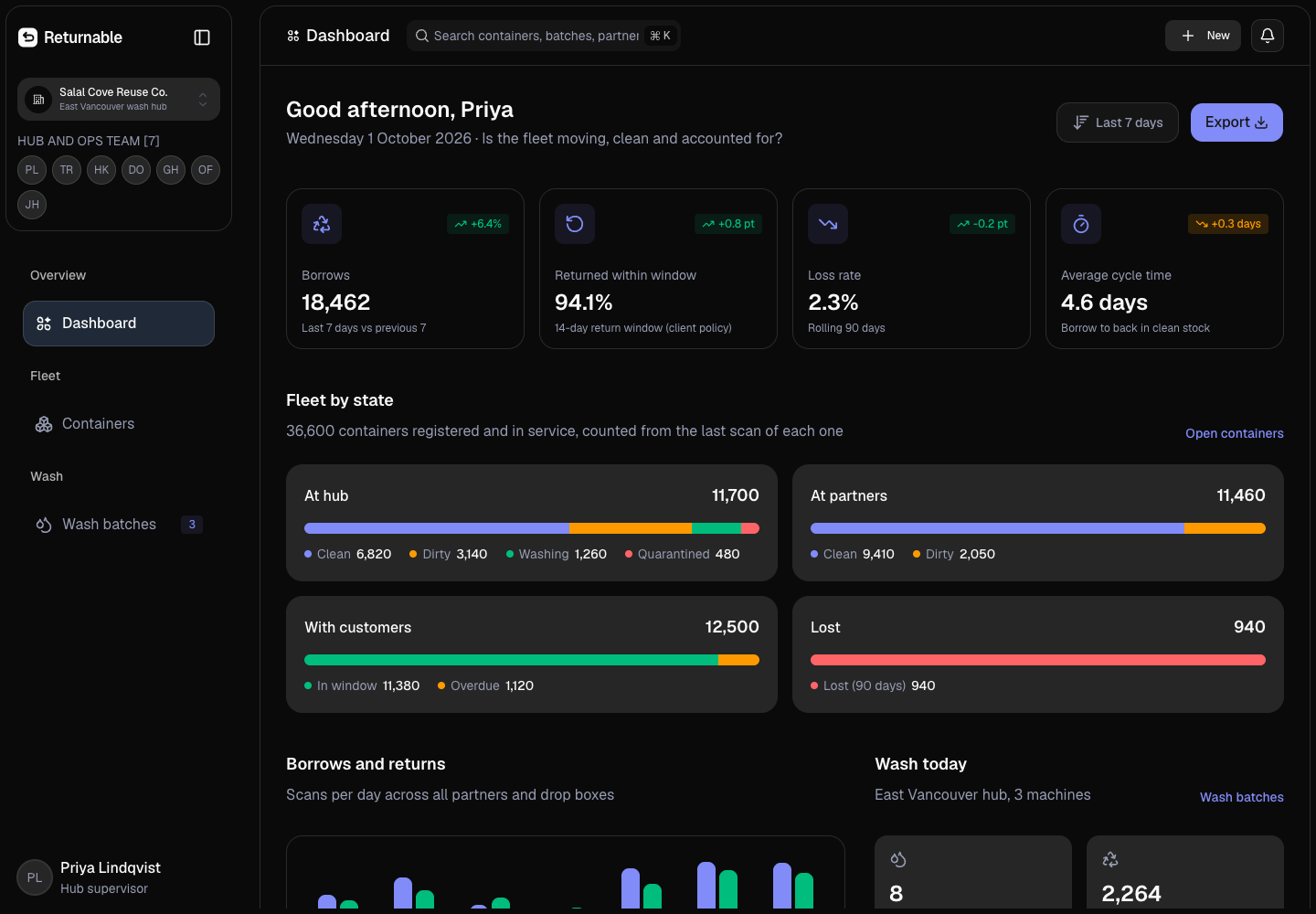
Returnable - Reusable Cup and Container Platform with Batch-Level Wash Traceability
Designed and built a clickable hub and fleet console for a Vancouver operator of deposit-based reusable cups and takeaway containers: every container tracked by scan from counter to wash hub, every wash batch checked against the food safety plan, and a quarantined batch traced to the partner venues still holding its items.
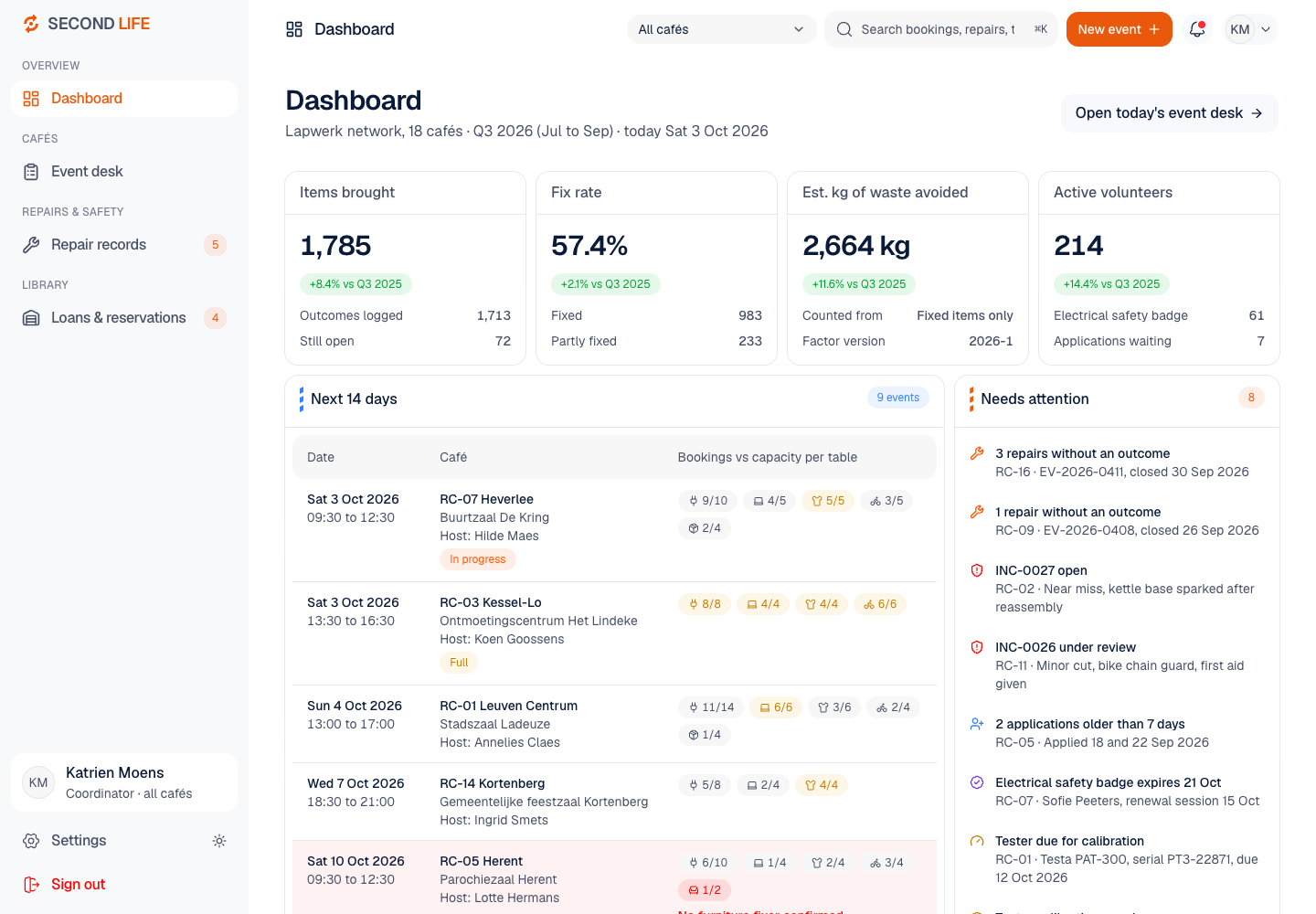
Second Life - Repair Café Platform with Safety Checks and Explainable Impact
Designed and built a clickable platform for a non-profit that runs 18 volunteer repair cafés in and around Leuven: a network dashboard, an event desk for hosts on the day, repair records with electrical safety tests, and a tool library loans desk - with waste avoided counted only from items that were fully fixed.
Enterprise Software Engineering - Human + AI
Contact Us
© 2026 - Copyright. All Rights reserved Oceanlab
Location
Global Headquarters
21 Merchant Road, 3rd Floor, Singapore 058267
Main corporate office and leadership operations
North America Office
548 Market Street, PMB 12345, San Francisco, CA 94104
Client operations and business development
India Office
402 Shivalik Shilp II, SG Highway, Ahmedabad 380015
Engineering and delivery center

Enterprise Software Engineering - Human + AI
Contact Us
Locations
Global Headquarters
21 Merchant Road, 3rd Floor, Singapore 058267
Main corporate office and leadership operations
North America Office
548 Market Street, PMB 12345, San Francisco, CA 94104
Client operations and business development
India Office
402 Shivalik Shilp II, SG Highway, Ahmedabad 380015
Engineering and delivery center
© 2026 - Copyright. All Rights reserved Oceanlab