Portage - On-chain Analytics with Finality, Methodology and Labels Shown
On-chain Analytics Product for a Toronto Data Company
Designed and built a clickable on-chain analytics product for a Toronto blockchain data company that sells to crypto funds, protocol teams and researchers: protocol and wallet pages over indexed chain data, alerts by email, webhook or Telegram, and a freshness and finality status on every number.
Most of our work is under NDA. Per agreement, we can share the work but not the company details - all names and identifying information shown here have been changed.
Impact
Home, the protocols table, protocol detail, wallet and alerts with an alert detail panel. Each of the 16 protocols and 12 wallets in the demo opens its own page.
Ethereum, Arbitrum, Base, Optimism, Polygon, Bitcoin and Solana, each with its own finality rule, head lag and finalised lag. Activity rows show finalised, unfinalised or reorged out.
Wallet movement, token transfer size, protocol TVL change, contract event and query threshold, delivered by email, webhook or Telegram. A firing in a reorged-out block is retracted.
11 active, 2 paused and 1 failing, with 10 recent firings including a retraction, across 16 protocols in 6 categories and 12 labelled and unlabelled wallets.
The Problem
Humber Bluff's customers were stitching answers together from block explorers, a free public dashboard site, spreadsheets and their own scripts against RPC endpoints. Analysts copied addresses by hand between four tools, nobody could say how TVL had been calculated or whether a reorg had rewritten the numbers, and protocol teams relied on homemade alert bots that broke at every chain upgrade.
Our Solution
Portage turns Humber Bluff's indexed blockchain data into one product: explore pages for protocols and wallets, alerts on wallet moves, transfers, TVL drops, contract events and query results, and labels with source and confidence. Every number shows how fresh it is, whether its block is final, and which methodology and price source produced it.
The Challenge: Trusted Numbers From Public Chains
Blockchain data is public, but turning it into answers a fund or protocol team can rely on means handling finality that differs per chain, metrics that need a stated method, labels that can identify people, and licences that limit what can be shared.
Blocks Are Not Final When They Appear
Ethereum finalises after about two epochs, Bitcoin by confirmation depth, Solana by commitment level and rollups when their batch settles on Ethereum. A reorg can rewrite rows an hour after an analyst read them, and alerts may already have fired on them.
Metrics Nobody Could Check
TVL, fees, revenue and active users depend on choices: which contracts count, whether a governance token is excluded, how liquid staking tokens deposited elsewhere are handled. Without a versioned methodology, two sources give two answers and neither can be checked.
Labels Are Claims, Not Facts
An address linked to an identifiable person becomes personal information under PIPEDA and, for EU or UK individuals, the GDPR. Sanctions labels must cite an official list such as the OFAC SDN list, and being listed is different from having interacted with a listed address.
Data, Not Advice, Under Licence
Advising on buying or selling securities is a registrable activity under Canadian provincial securities law, so Portage gives no signals or picks. Licensed prices and labels limit redistribution, so the API and exports must leave out fields the licence does not allow.
Our Approach: From Chain Data Rules to a Clickable Product
Spec and Rules Research
Mapped 10 user roles from analysts and developers to Humber Bluff's label moderators and on-call data engineers, 41 screens across the customer app, the internal ops console and public pages, and the data model for chains, finality, metrics, methodology versions, labels, alerts, credits and reorg incidents. Wrote down the rules the design follows: finality per chain, PIPEDA and the GDPR for labels, official sanctions lists, data licensing, CASL, AODA and WCAG 2.1 AA.
Clickable Demo on a Production UI Kit
Built 5 key screens on a production web3 dashboard kit: home with a data health strip per chain, an open reorg incident banner, recent alerts and a watchlist; the protocols table with methodology links; protocol detail with TVL by chain and asset and markers for methodology changes, incidents and reorg corrections; the wallet page with holdings, activity finality and private notes; and alerts with an alert detail panel. Star, pause, test and note actions run on local state.
What a Production Build Adds
Indexing from Humber Bluff's own nodes with fallback RPC, ClickHouse for the indexed tables, licensed prices and attribution data, ENS names and the OFAC SDN list, Postmark or SES and the Telegram Bot API for alerts, Stripe Billing and Auth0 or WorkOS SSO. Plus the remaining screens: the SQL editor and dashboards, labels and moderation, the API with keys and credits, the ops console for indexer health and reorgs, the public status and methodology pages, and an append-only audit log.
Why It Works: Every Number Shows Its Working
Freshness on Every Page
A freshness chip shows a dot per chain the page uses, with block, lag behind head and finalised block. Open reorg incidents appear as a banner on home, and wallet activity marks each row finalised, unfinalised or reorged out.
Metrics Link to Their Method
Every metric header and KPI card links to its methodology version, protocol pages list which contracts count towards TVL and the known exclusions, and the TVL chart marks methodology changes, price gaps and reorg corrections.
Labels Carry Source and Confidence
Each label shows whether it came from Humber Bluff research, the community, a licensed provider, the entity itself or an official list. A sanctions tag appears only for an official-list label, and "interacted with a listed address" is shown apart and never inferred from clustering.
Alerts That Respect Finality
Each rule chooses first sight for speed or after finality for stable results, and a first-sight firing in a reorged-out block is shown as retracted. A footer on every page reads "Data only, not investment advice".
Related case studies
View all: Crypto & DeFi
ChainFlow - On-Chain Lending, Borrowing and Swap Console from Prototype to Production
Unified supply, borrow, swap, vault staking and portfolio analytics into a single multi-chain console - shipped from clickable AI prototype to production in 8 weeks.
Levada - Non-Custodial DEX Aggregator with Split Routing and an Ops Console
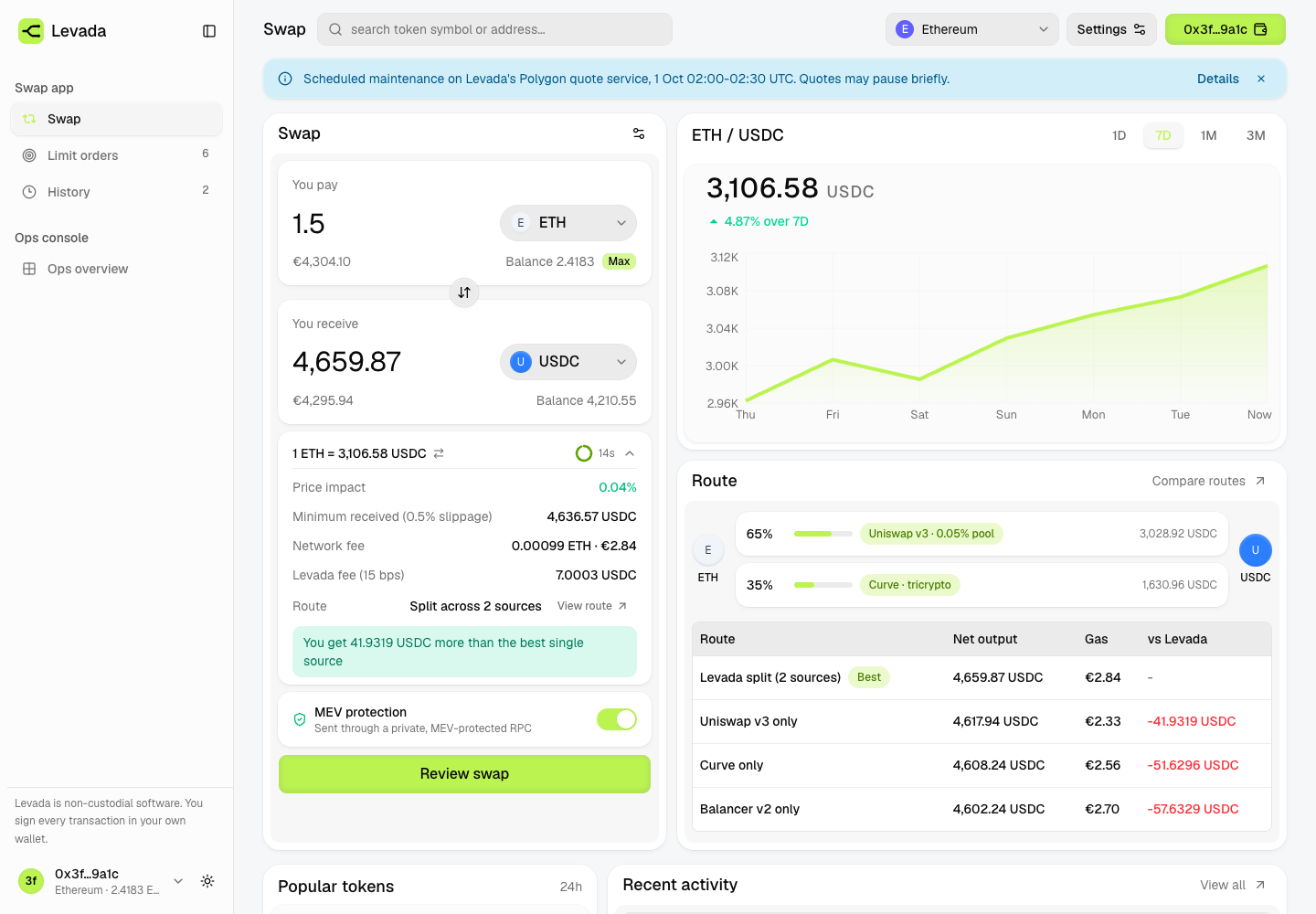
Designed and built a clickable non-custodial DEX aggregator for a Lisbon DeFi team: a swap app that splits trades across liquidity sources and shows every fee before the user signs, gasless limit orders, wallet history with approval revoking, transaction status, and an ops console that watches chain health, quote quality and failure clusters.
Enterprise Software Engineering - Human + AI
Contact Us
© 2026 - Copyright. All Rights reserved Oceanlab
Location
Global Headquarters
21 Merchant Road, 3rd Floor, Singapore 058267
Main corporate office and leadership operations
North America Office
548 Market Street, PMB 12345, San Francisco, CA 94104
Client operations and business development
India Office
402 Shivalik Shilp II, SG Highway, Ahmedabad 380015
Engineering and delivery center

Enterprise Software Engineering - Human + AI
Contact Us
Locations
Global Headquarters
21 Merchant Road, 3rd Floor, Singapore 058267
Main corporate office and leadership operations
North America Office
548 Market Street, PMB 12345, San Francisco, CA 94104
Client operations and business development
India Office
402 Shivalik Shilp II, SG Highway, Ahmedabad 380015
Engineering and delivery center
© 2026 - Copyright. All Rights reserved Oceanlab