Pontje - eSIM Sales, Activation and Ops Console for a Digital-Only Mobile Brand
eSIM Onboarding Platform for a Dutch MVNO
Designed and built a clickable ops console for an Amsterdam mobile brand that sells eSIMs online only: follow every order from payment to a live line, see each SM-DP+ event, work rejected port-ins with plain-language reasons, and review orders and transfers held by fraud rules.
Most of our work is under NDA. Per agreement, we can share the work but not the company details - all names and identifying information shown here have been changed.
Impact
Dashboard, orders, order detail with its event timeline, port-ins and fraud review with the full case view. Refund, cancel, reissue, resubmit and fraud decisions all open working modals.
Device check, plan, number, identity, paid, downloaded, installed and active, with the drop-off between each step. The demo day runs from 2,140 device checks to 355 active lines.
More than 2 cards tried in 10 minutes, the same EID on more than 2 accounts in 30 days, and a score above 70. Held cases turn amber after 30 minutes and red after 1 hour.
24 orders with full event timelines, 18 port-ins with donor responses, 14 fraud cases, 6 plans and 3 eSIM profile types tracked against a reorder level of 500.
The Problem
Merelbrug launched with a generic web shop and emailed QR codes by hand from a spreadsheet of eSIM profiles. About a third of buyers never got connected: some phones were locked or had no eSIM support, some customers scanned the QR code on the phone they were reading it on, and some deleted the profile while trying again. Support could not see whether a profile had been downloaded, port-ins failed on wrong customer numbers with no clear message, and orders paid with stolen cards cost chargebacks and profiles that could not be reused.
Our Solution
Pontje takes a customer from "does my phone support eSIM?" to a working line, and gives Merelbrug's staff one console behind it. Every order shows its payment, fraud score, identity result and SM-DP+ events on a timeline, port-in rejections arrive with the reason in plain words, and orders held by fraud rules land in a review queue with the rules hit and the signals behind them.
The Challenge: A Working Line Without a Shop
Merelbrug has no shops and no plastic SIM cards. It runs on a Dutch host network and sells online to residents and visitors, so the device check, the eSIM profile, the number port and the fraud check all have to work without a person in the room.
Profiles That Install Only Once
Under the GSMA consumer eSIM specifications a profile is normally downloadable once. Scan it from a photo on the same phone, or delete it while trying again, and the customer needs a new one. Support had no view of whether a profile was downloaded, installed or enabled.
Port-Ins Failing Without a Reason
Customers have the right to keep their number, and under the EECC the port is generally completed within one working day of the agreed date. In the Netherlands porting runs through COIN, and a wrong customer or contract number gets the request rejected by the old operator.
Stolen Cards and Account Takeover
Orders paid with stolen cards meant chargebacks and burnt profiles. A transfer to a new phone or a lost phone replacement is also a way to take over someone's number, so these requests need the same checks as a new order.
Identity and Device Data Under GDPR
Merelbrug verifies residents on monthly plans and every port-in, but must never collect the BSN. EID, IMEI and ICCID are personal data under GDPR and the UAVG, so support has to work with them masked.
Our Approach: From eSIM Rules to a Clickable Console
Spec and Rules Research
Mapped 8 roles, from support agent and fraud analyst to porting specialist and ops lead, 37 screens (16 customer screens and 21 ops console screens) and the data model for plans, device checks, orders, eSIM profiles, lines, port-ins, identity checks, fraud scores and refunds. Wrote down the rules the design follows: GSMA SGP.21 and SGP.22, number portability under the EECC and COIN, the Telecommunicatiewet, GDPR and the UAVG, PSD2 strong customer authentication, the 14-day right of withdrawal and EU roaming.
Clickable Demo on a Production UI Kit
Built the ops console's 5 key screens on a production dashboard kit: the dashboard with 5 KPIs, the live funnel, orders per hour and profile stock, the orders list with status counts and filters, order detail with its event timeline and internal notes, port-ins with donor responses and the COIN reference, and fraud review with rules hit, related cases and takeover signals. Order actions and fraud decisions each need a reason, and all actions run on local state.
What a Production Build Adds
Integration with an SM-DP+ vendor (such as Thales, IDEMIA or Giesecke+Devrient), the host network's wholesale API and COIN porting through it, Adyen or Mollie payments, Onfido or Veriff identity checks, Sift fraud scoring, Postmark email and Bird SMS. Staff SSO with a second factor, refund limits per role, logged data reveals and an audit log, and the remaining screens: the 16 customer screens for buying, installing and managing an eSIM, the activation funnel, profile inventory, customers, refunds, reports and settings.
Why It Works: Every Step of the Line Is Visible
One Timeline per Order
Device check, payment, fraud score, identity result, profile reserved and released, download, install, network active, port-in steps and messages sent all sit on one timeline. The device panel shows whether the EID that downloaded the profile matches the one the customer gave.
Port-In Rejections in Plain Words
Each donor response shows its reason code next to the text the customer sees, such as "Your old provider could not match the customer number." Staff can fix the details and resubmit, change the wish date or cancel, and the attempt count and the last 30 days of rejection reasons are always in view.
Fraud Holds Explain Themselves
A held case lists every rule hit with its value and limit, card and IP country, email age, device links and related cases by EID, card fingerprint or IP. Transfers and lost phone replacements also show recent account changes and the step-up result.
Problems Surface Before Tickets
The dashboard lists orders paid over 2 hours ago with no download, port-ins rejected in the last 24 hours, fraud holds older than 1 hour and integration errors. Profile stock turns amber below the reorder level of 500 and red below 100.
Related case studies
View all: Telecom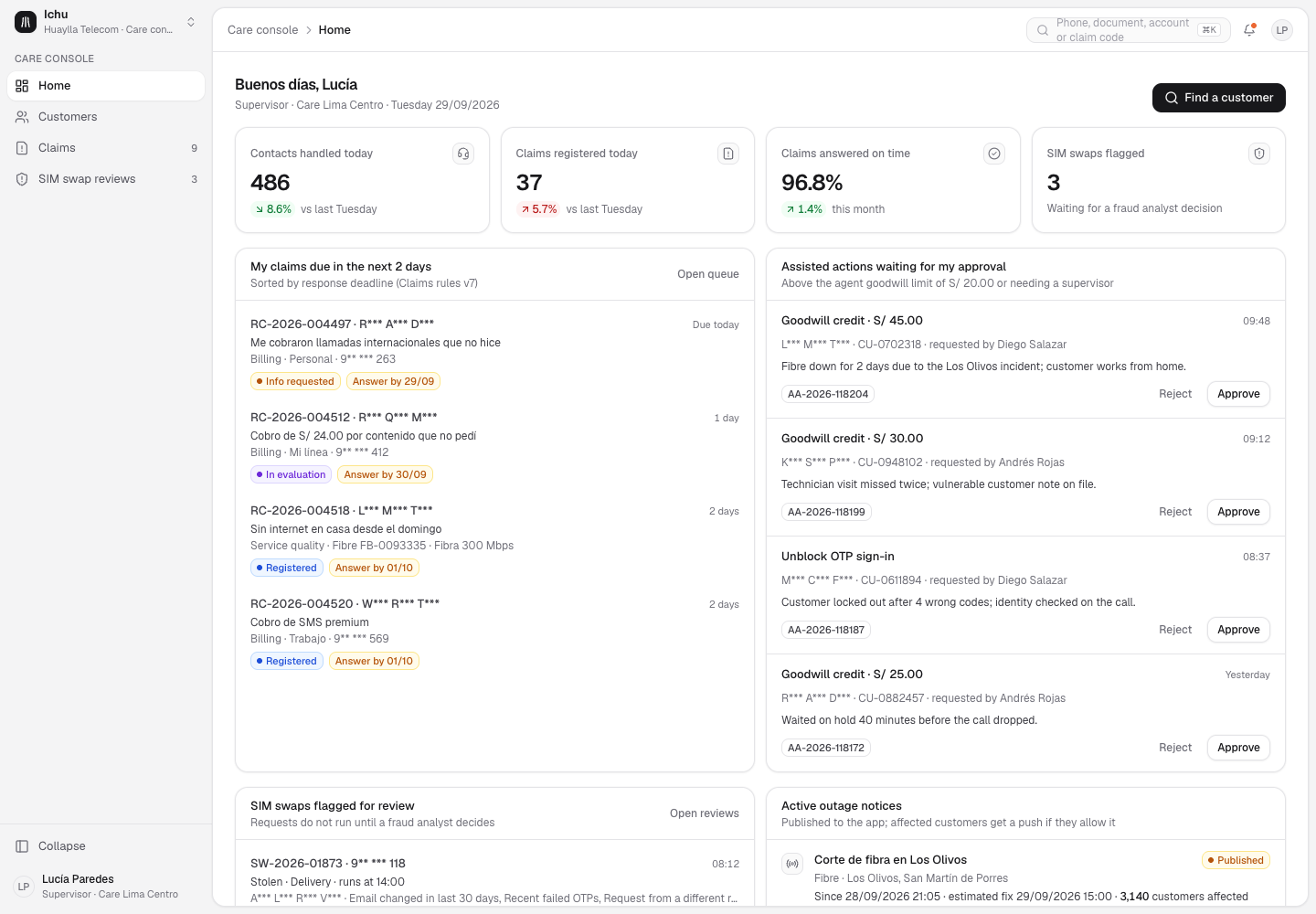
Ichu - Customer Self-Care App and Care Console with SIM Swap Controls
Designed a self-care app and care agent console for a Lima mobile and home fibre operator, and built the care console as a clickable demo: a masked customer 360 with audited assisted actions, a claims queue and workspace run against regulatory deadlines, and SIM swap reviews scored by weighted fraud signals.
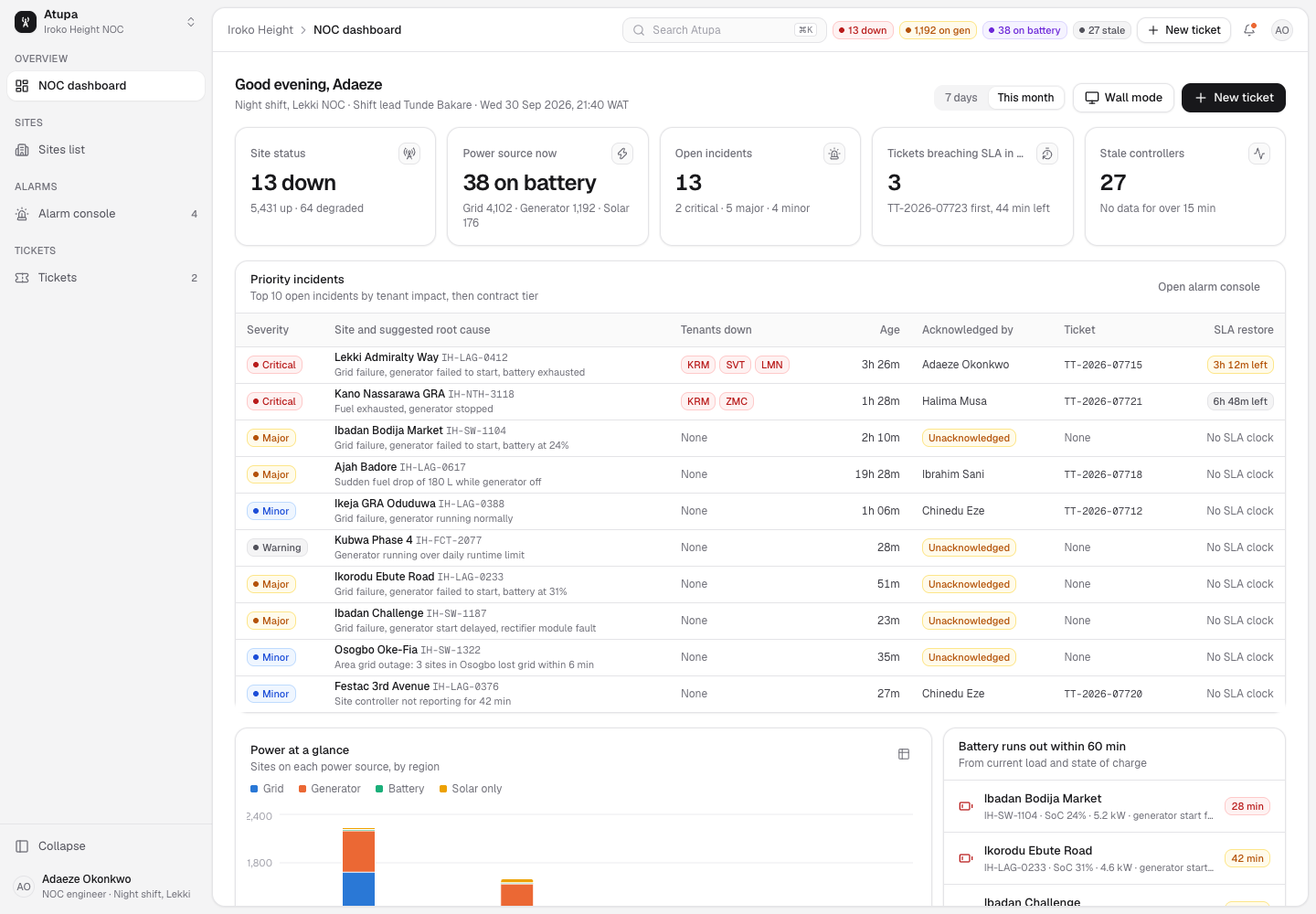
Atupa - NOC Console for Tower Site Power, Alarms and Tenant SLAs
Designed and built a clickable network operations centre console for a Lagos tower company with about 5,500 sites: live site power and battery autonomy, an alarm console that groups alarms into incidents with a suggested root cause, trouble tickets with a separate SLA clock for each mobile operator, and penalty exposure per tenant.
Enterprise Software Engineering - Human + AI
Contact Us
© 2026 - Copyright. All Rights reserved Oceanlab
Location
Global Headquarters
21 Merchant Road, 3rd Floor, Singapore 058267
Main corporate office and leadership operations
North America Office
548 Market Street, PMB 12345, San Francisco, CA 94104
Client operations and business development
India Office
402 Shivalik Shilp II, SG Highway, Ahmedabad 380015
Engineering and delivery center

Enterprise Software Engineering - Human + AI
Contact Us
Locations
Global Headquarters
21 Merchant Road, 3rd Floor, Singapore 058267
Main corporate office and leadership operations
North America Office
548 Market Street, PMB 12345, San Francisco, CA 94104
Client operations and business development
India Office
402 Shivalik Shilp II, SG Highway, Ahmedabad 380015
Engineering and delivery center
© 2026 - Copyright. All Rights reserved Oceanlab