Meeple Table - Bookings, Game Library and Rules Teaching for a Board Game Café Chain
Café Operations Platform for a Seoul Board Game Chain
Designed and built a clickable operations console for a chain of 4 board game cafés in Seoul: bookings with deposits and no-show rules, a teach queue that only hands heavy games to signed-off gurus, and a shared game library tracked copy by copy, with piece reports, damage rates and transfers between cafés.
Most of our work is under NDA. Per agreement, we can share the work but not the company details - all names and identifying information shown here have been changed.
Impact
Manager dashboard, bookings with quick view and phone booking, the teach queue, the library catalogue and a title detail with copies, piece list, piece reports and guru sign-offs.
Heavy games are flagged in the teach queue, which lists the gurus on shift and whether each one is signed off on that title. Requests waiting over 10 minutes are flagged in red.
5,000 KRW per person for groups of 6 or more and Friday and Saturday evenings from 18:00, deducted from the bill. Marking a no-show needs a reason, logged on the booking, and keeps the deposit once the hold has passed.
144 copies across 4 cafés and 76 tables, 22 bookings, 10 teach requests, 10 piece reports and 9 staff, with Korean and English game titles.
The Problem
Moraeseom took bookings by KakaoTalk message and phone, tracked table time with paper slips clipped to each table, and kept its library of about 2,200 games in a spreadsheet nobody updated after a busy weekend. On Friday nights guests waited 20 minutes for a guru to teach a game, only for the guru to find the box was on another table or missing half its cards, and managers could not say which games earned their shelf space.
Our Solution
Meeple Table connects the booking, the table, the game copy and the teach request. Managers see bookings, deposits and no-shows in one place, gurus work a teach queue that knows who may teach each game, and every copy in the library has a shelf, a status, a piece list and a damage history.
The Challenge: One Visit, Many Moving Parts
A board game café sells time at a table, a game from a shared library, a person to teach it, and food and drink, all at once. Moraeseom runs 4 cafés from one library, so a single visit touches bookings, copies, staff skills and Korean consumer, food and youth rules.
Bookings Without Firm Rules
Hourly cover charges change at 18:00 and at weekends, deposits apply only to large groups and busy evenings, and a table is held for 15 minutes before it is released. Over KakaoTalk and phone, none of this was applied the same way twice, and no-show terms must stay within the Framework Act on Consumers.
A Library Nobody Could Trust
About 2,200 games across 4 cafés, with copies moving between tables, shelves, repair and other cafés. Missing cards were found only when a guest complained, and spare parts sat in an unlabelled drawer.
Teaching Depends on Who Is on Shift
Teaching is free for every game, but heavy games need a guru who knows that title. On a busy night the shift lead had no way to see which gurus could teach what, or how long a table had been waiting.
Youth, Food and Privacy Rules
Under the Youth Protection Act, guests under 19 must leave by 22:00 under Moraeseom's policy and never see alcohol on the menu. Food service falls under the Food Sanitation Act, and guest accounts and bookings under PIPA, which also rules out collecting resident registration numbers.
Our Approach: From Café Rules to a Clickable Console
Spec and Rules Research
Mapped 9 user roles from game guru to operations director, 50 screens across the guest app, staff app, manager console and settings, and the data model for cafés, tables, bookings, table sessions, game titles and copies, copy movements, damage reports, teach requests and cover rules. Wrote down the rules the design follows: PIPA, the Food Sanitation Act, the Youth Protection Act, the Framework Act on Consumers, the E-Commerce Consumer Protection Act and KC certification for children's products in the shop.
Clickable Demo on a Production UI Kit
Built 5 key screens of the manager and floor workflows on a production dashboard kit: the dashboard with guest hours, table utilisation, revenue by stream and a needs-attention list, bookings with filters, a quick view and a no-show modal, the teach queue with request threads and internal notes, the library catalogue with damage per 100 plays, and a title detail with copy history, piece reports, guru sign-offs and copy transfers.
What a Production Build Adds
The guest app in Korean and English (booking wizard, game finder, table page, ordering, bill and shop), the rest of the staff app (table map, barcode check-out and check-in, cleaning checklists), payments through Toss Payments, KakaoPay and Naver Pay, KakaoTalk AlimTalk messages, POS integration, staff auth by role, an audit log for refunds, no-shows, cover overrides and retirements, and legal review of consent texts and deposit terms.
Why It Works: The Booking, the Game and the Guru Connected
The Right Guru for Each Game
Each teach request shows the game's weight, teach time and player count beside the gurus on shift, marked signed off or not. Shift leads add internal notes the table never sees, and gurus accept, hand over or mark a request done.
Every Copy Has a History
A copy panel shows its shelf, status, condition, last piece check and every check-out, check-in and transfer. Piece lists mark the items to count on return, and piece reports show whether a spare is available.
Shelf Space Earns Its Place
The catalogue ranks titles by plays in the last 90 days, rating and damage per 100 plays, and flags titles at 4.0 reports per 100 plays or more, so the curator can see what to restock, repair or retire.
Deposits Follow the Policy
Every booking shows its deposit as paid, deducted, refunded or kept, with the booking history behind it. Youth guests are flagged on the booking, and the manager dashboard lists what needs attention today, from unplayable copies to open privacy requests.
Related case studies
View all: Venues & nightlife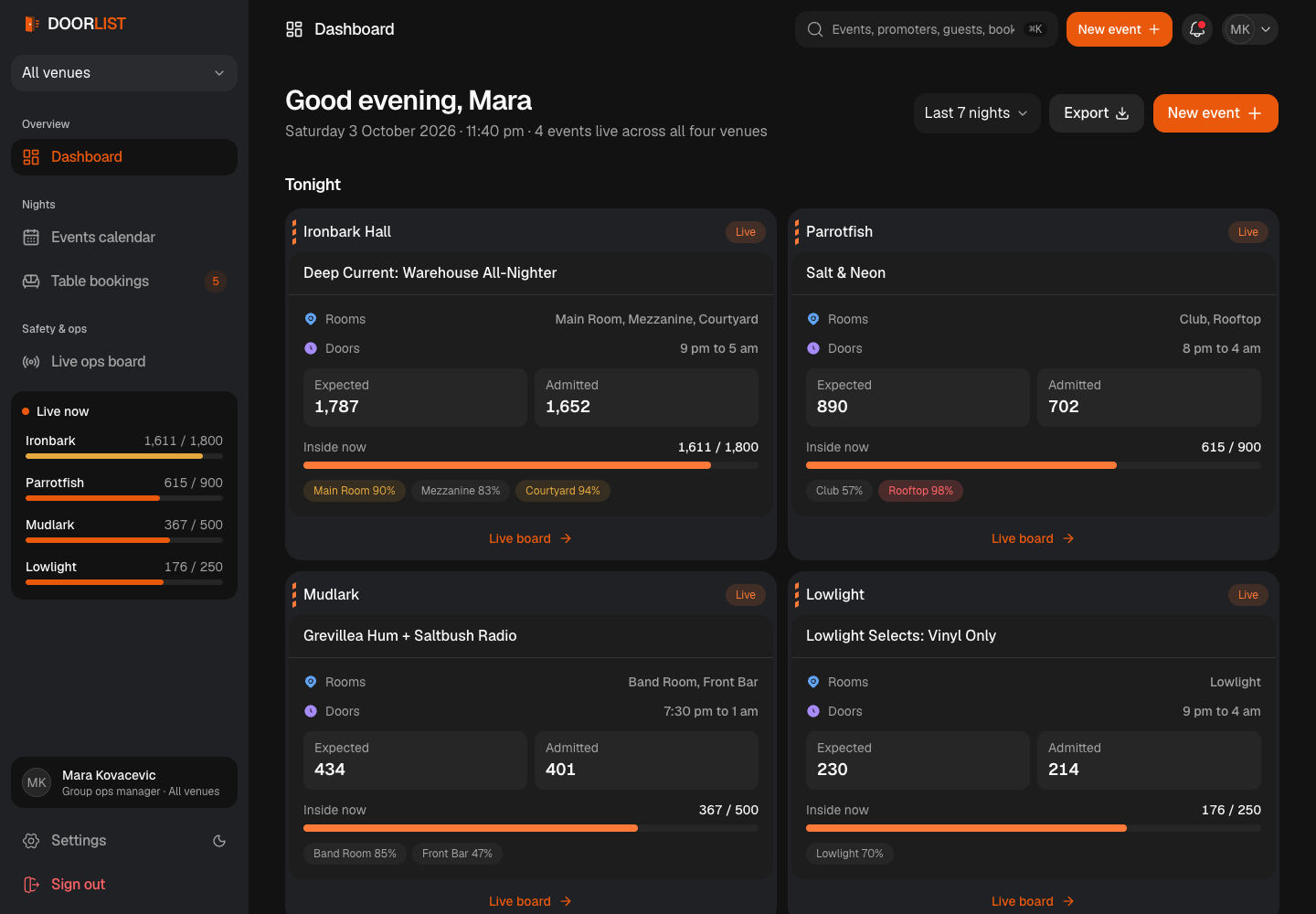
Doorlist - Guest List, Table Booking and Door Platform with Live Capacity
Designed and built a clickable guest list and door platform for a Melbourne operator of four music venues and clubs: an events calendar across every venue, promoter lists with caps, table bookings with deposits and minimum spends, and a live ops board that counts every room against its licensed capacity.
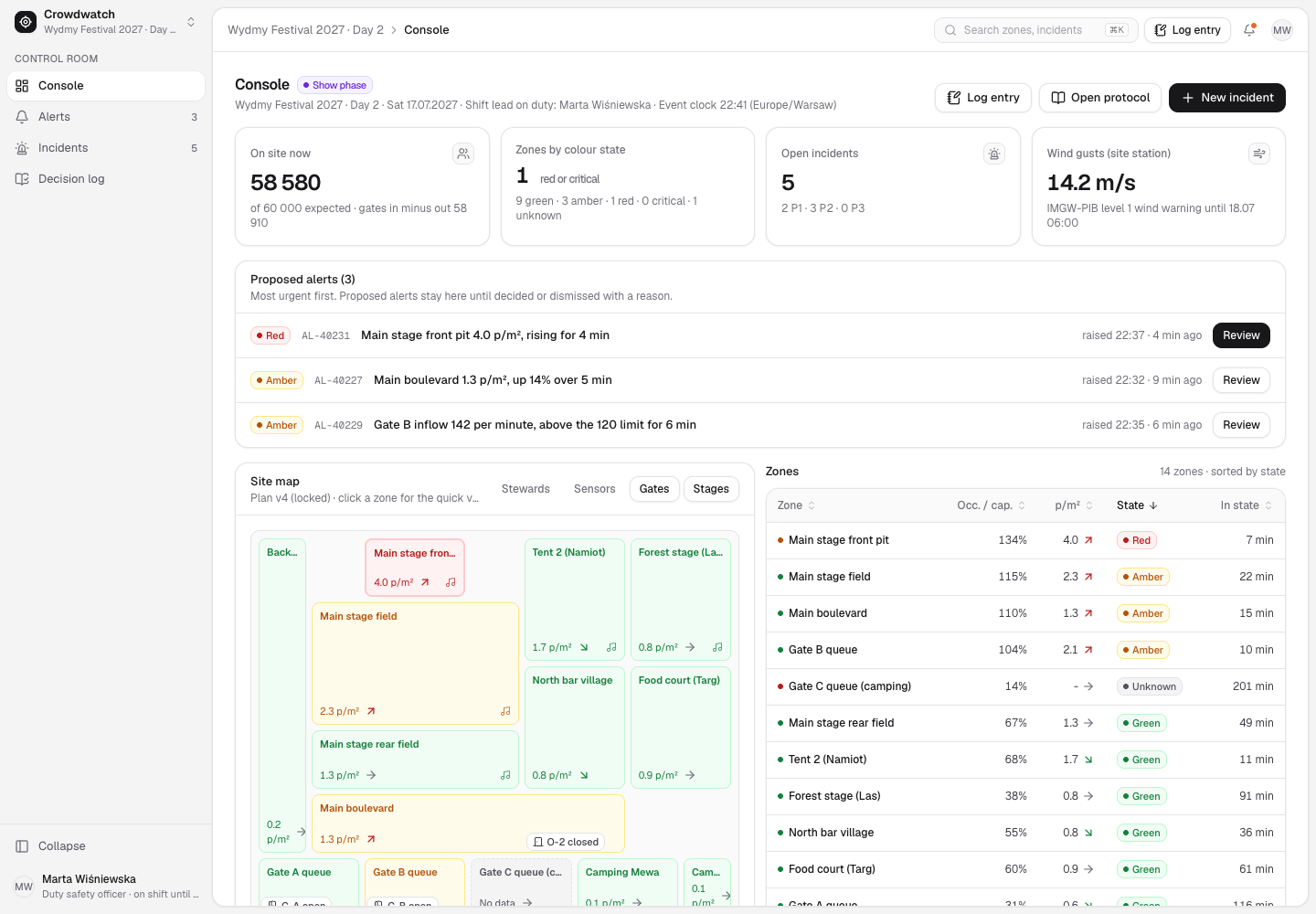
Crowdwatch - Festival Crowd Safety Control Room Where People Make Every Call
Designed and built a clickable control room for a Gdynia festival organiser running a 60,000-a-day coastal festival: live crowd density per zone from counts-only sensors, alerts that a duty safety officer must decide, incidents from first report to closure, and an append-only decision log for the debrief with police and the city.
Enterprise Software Engineering - Human + AI
Contact Us
© 2026 - Copyright. All Rights reserved Oceanlab
Location
Global Headquarters
21 Merchant Road, 3rd Floor, Singapore 058267
Main corporate office and leadership operations
North America Office
548 Market Street, PMB 12345, San Francisco, CA 94104
Client operations and business development
India Office
402 Shivalik Shilp II, SG Highway, Ahmedabad 380015
Engineering and delivery center

Enterprise Software Engineering - Human + AI
Contact Us
Locations
Global Headquarters
21 Merchant Road, 3rd Floor, Singapore 058267
Main corporate office and leadership operations
North America Office
548 Market Street, PMB 12345, San Francisco, CA 94104
Client operations and business development
India Office
402 Shivalik Shilp II, SG Highway, Ahmedabad 380015
Engineering and delivery center
© 2026 - Copyright. All Rights reserved Oceanlab