Crowdwatch - Festival Crowd Safety Control Room Where People Make Every Call
Crowd Safety Platform for a Polish Festival Organiser
Designed and built a clickable control room for a Gdynia festival organiser running a 60,000-a-day coastal festival: live crowd density per zone from counts-only sensors, alerts that a duty safety officer must decide, incidents from first report to closure, and an append-only decision log for the debrief with police and the city.
Most of our work is under NDA. Per agreement, we can share the work but not the company details - all names and identifying information shown here have been changed.
Impact
Console, alerts, alert decision, incidents with incident detail, zone detail and the decision log. Every zone on the site map opens its own detail page.
Take action under a protocol, monitor with a re-check time, or dismiss with a required reason. Alerts are never accepted automatically and nothing closes a gate or pauses a stage by itself.
Amber, red and critical for standing viewing areas, with separate client-policy values for 6 zone types. A zone whose sensor is offline shows Unknown instead of a guess.
A live headliner set on day 2 of Wydmy Festival: 14 zones, 8 gates and routes, 16 counters and analytics cameras, 13 alerts, 12 incidents, 12 decisions and 4 protocols.
The Problem
At the last Wydmy Festival the control room worked from a printed site plan, three radio channels, a whiteboard and an incident spreadsheet typed up after the fact. Gate counts arrived by radio every 15 minutes, the safety officer only saw the main stage front pit filling when a steward called it in, and nobody could later say when the pause-the-stage call was made, by whom or on what information.
Our Solution
Crowdwatch gives Szkwał's control room one live picture of the site: zones shaded by density and trend, gates and exits, stages, incidents, the radio log and weather. It proposes alerts from density and flow, a named duty safety officer decides every action under a protocol, and each decision is logged with the time, the reason and the density snapshot they saw.
The Challenge: Safe Crowds, Human Decisions
Szkwał runs a 3-day festival for 60,000 people a day on a coastal meadow and two smaller city festivals. Every event needs a permit, a safety manager, trained stewards and a plan the police, fire and ambulance services can trust, and the data behind it touches both festival-goers and staff.
Crowd Build-Up Seen Too Late
Density in the front pit can climb within minutes of a headliner starting, while radio gate counts came every 15 minutes. The control room needed density, trend and flow per zone as it happens, from people counters and camera analytics.
Decisions Nobody Could Reconstruct
The post-event debrief with the police and the city took weeks to piece together from handwritten logs. Every entrance closed, overflow opened or stage pause requested has to be recorded with who decided, when, why and what they could see.
Counting People Without Watching Them
Camera analytics are video processing under GDPR even when only counts leave the device, and large-scale monitoring of public areas needs a DPIA on UODO's list. The product has to work on aggregate counts only, with no images and no facial recognition.
Many Organisations on One Site
Szkwał stewards, a contracted security company, the medical provider, welfare partners and agency liaisons all work the same event. Medical, welfare and lost child records are sensitive, and steward location may only be used during checked-in shift time.
Our Approach: From the Crowd Management Plan to a Clickable Control Room
Spec and Rules Research
Mapped 13 roles from the event safety manager to read-only agency liaisons, 36 screens across the control room, planning, review, agency views and a steward app, and the data model for site items, live state, sensors, thresholds, alerts, decisions, protocols, incidents and the radio log. Wrote down the rules the design follows: the Act on the Safety of Mass Events, GDPR with Poland's 2018 data protection act, Labour Code health and safety duties for stewards, and IMGW-PIB weather warnings.
Clickable Demo on a Production UI Kit
Built 7 control room screens on a production dashboard kit: the console with site status, proposed alerts, a schematic site map with layers and zone quick view, zone list, gates, incidents, stage programme and weather; the alerts table; the alert decision with evidence and protocol steps; incidents with timeline and restricted personal data; zone detail with density and flow charts; and the decision log with snapshots and follow-up notes. All actions run on local state.
What a Production Build Adds
Integration with people counters and on-device camera analytics (such as Xovis, Axis or Hanwha Vision), the MOTOTRBO or Hytera radio system, IMGW-PIB and an on-site weather station, a lightning feed, push and SMS to stewards, and the client's CAD site plan. Staff sign-in with Microsoft Entra ID and one-time codes for stewards, an append-only audit log, and the remaining screens: planning, capacity, briefing packs, post-event review, settings, the agency views and the steward app.
Why It Works: The System Proposes, People Decide
Alerts Wait for a Person
Proposed alerts stay pinned at the top of the console, most urgent first, until someone decides or dismisses them with a reason. The console has no button that acts on the site directly, and public messages stay with the show caller outside Crowdwatch.
Evidence Beside the Decision
The alert decision shows the trigger, current value against the threshold, the last 15 minutes, nearby zones, feeding gates, radio entries and steward reports next to the suggested protocol steps. If a covering sensor is degraded, a banner warns that the reading may be unreliable.
A Log That Is Never Edited
Each decision records who decided, their role, the protocol steps ticked, confirmations such as the structural engineer's or the ambulance liaison's, and the density snapshot at that moment. Corrections are follow-up notes added underneath, so the post-event review uses the record as it was.
Counts, Not Faces
Sensors show their coverage share and health, and analytics cameras are marked as sending counts only. Incident subjects are described without names by default, and names, contacts and steward photos are restricted to the relevant leads, with viewing audited.
Related case studies
View all: Venues & nightlife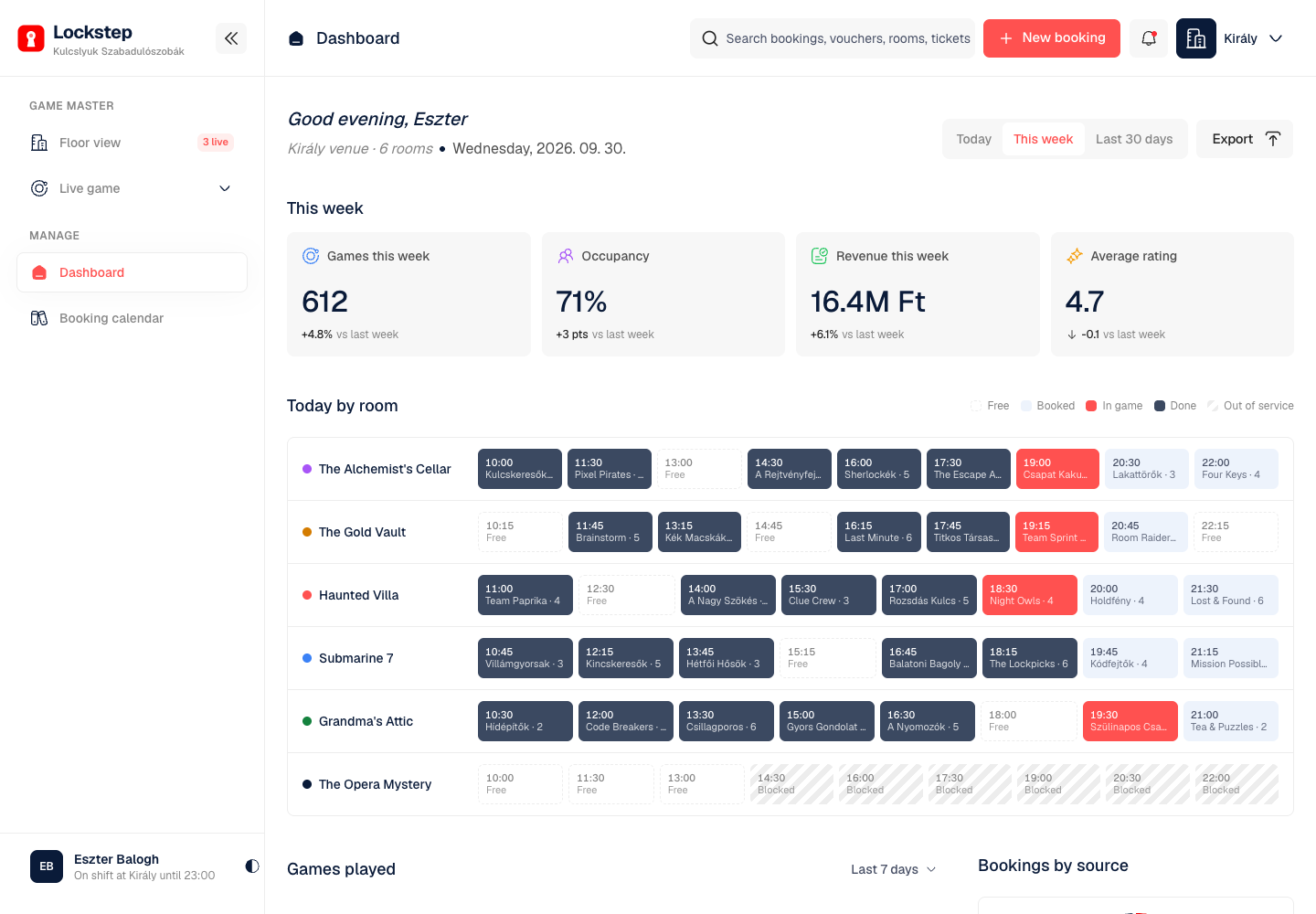
Lockstep - Escape Room Operations Platform with Safety Status on Every Screen
Designed and built a clickable operations platform for a Budapest escape room company with 3 venues and 16 rooms: a game master console for running several live games at once with cameras, puzzle progress, hints and lock circuit status, and a manager console for today's rooms, the booking calendar and every booking's waivers, payments and cancellation rules.
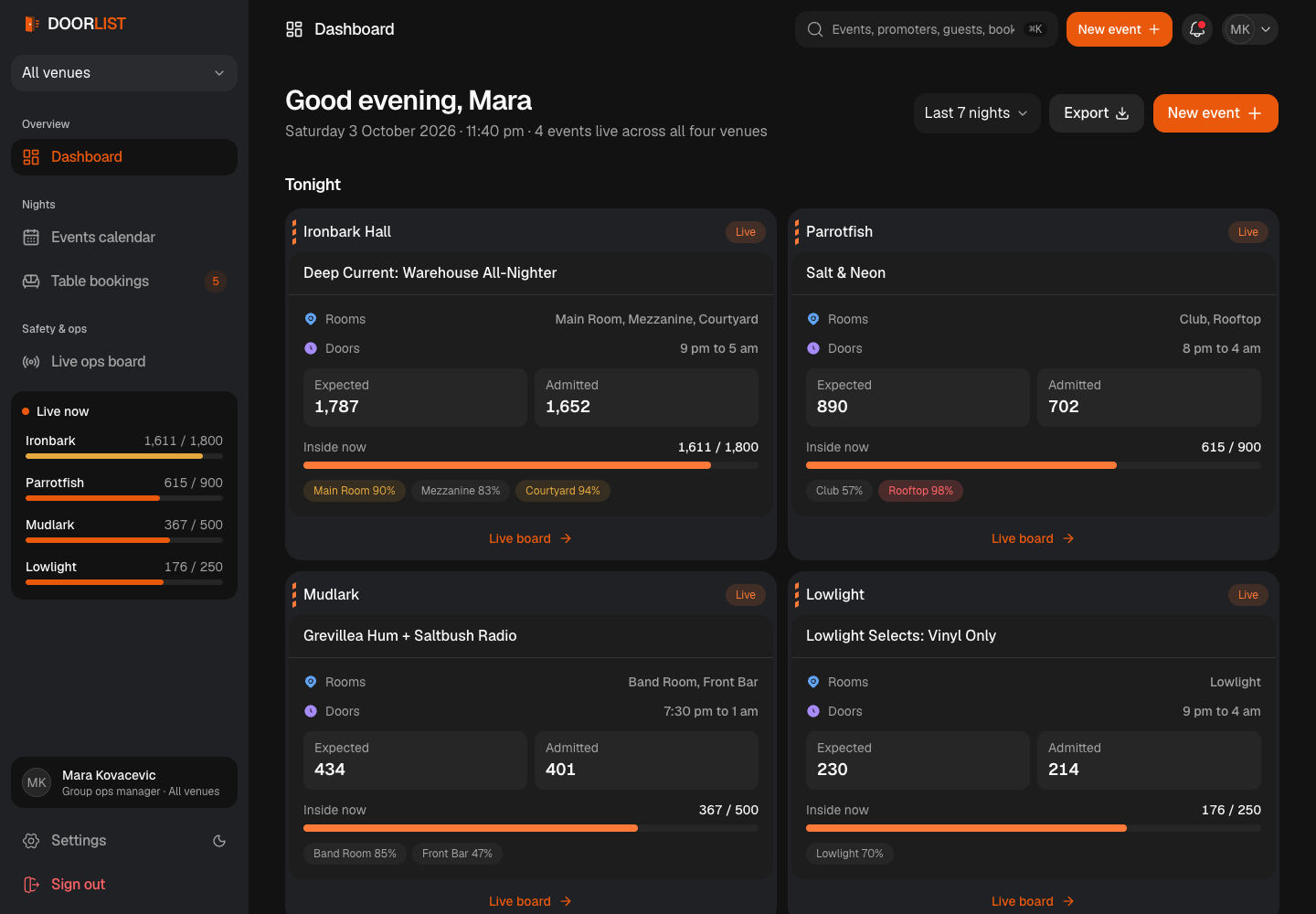
Doorlist - Guest List, Table Booking and Door Platform with Live Capacity
Designed and built a clickable guest list and door platform for a Melbourne operator of four music venues and clubs: an events calendar across every venue, promoter lists with caps, table bookings with deposits and minimum spends, and a live ops board that counts every room against its licensed capacity.
Enterprise Software Engineering - Human + AI
Contact Us
© 2026 - Copyright. All Rights reserved Oceanlab
Location
Global Headquarters
21 Merchant Road, 3rd Floor, Singapore 058267
Main corporate office and leadership operations
North America Office
548 Market Street, PMB 12345, San Francisco, CA 94104
Client operations and business development
India Office
402 Shivalik Shilp II, SG Highway, Ahmedabad 380015
Engineering and delivery center

Enterprise Software Engineering - Human + AI
Contact Us
Locations
Global Headquarters
21 Merchant Road, 3rd Floor, Singapore 058267
Main corporate office and leadership operations
North America Office
548 Market Street, PMB 12345, San Francisco, CA 94104
Client operations and business development
India Office
402 Shivalik Shilp II, SG Highway, Ahmedabad 380015
Engineering and delivery center
© 2026 - Copyright. All Rights reserved Oceanlab