Lockstep - Escape Room Operations Platform with Safety Status on Every Screen
Escape Room Operations Platform for a Budapest Operator
Designed and built a clickable operations platform for a Budapest escape room company with 3 venues and 16 rooms: a game master console for running several live games at once with cameras, puzzle progress, hints and lock circuit status, and a manager console for today's rooms, the booking calendar and every booking's waivers, payments and cancellation rules.
Most of our work is under NDA. Per agreement, we can share the work but not the company details - all names and identifying information shown here have been changed.
Impact
Manager dashboard, game master floor view, live game console, booking calendar and booking detail. All 3 live games and every one of today's 36 bookings at the Király venue open their own page.
Exit doors are not on the game controller, so the console has no control that locks one. Each room's lock circuit state is read from hardware and pinned on every game master page, and the strip cannot be dismissed.
The current step offers gentle, clear and solution hints in the team's language, plus a custom hint, sent to the room screen, audio or both and logged with the time.
A full Wednesday at Király: 36 bookings across 5 rooms with a sixth out of service, 3 live games with 33 puzzle steps, a minor with guardian consent pending, corporate teams, a voucher, a no-show and a late cancellation. 16 rooms across 3 venues and 8 staff.
The Problem
Kulcslyuk took bookings through an off-the-shelf widget, ran each room from its own control tool, tracked resets on paper clipboards and sold vouchers as printed codes in a spreadsheet. Game masters juggled three screens per room and wrote hint counts on a whiteboard, so nobody knew which rooms were too hard or which props kept breaking. Teenage players signed waivers on paper at the door, or not at all, and corporate clients waited days for quotes and invoices.
Our Solution
Lockstep runs the whole game from booking to reset. Game masters see every room at their venue on one floor view, run each live game from a single console with cameras, puzzle progress, hints and prop controls, and always see the lock circuit state. Managers see today's rooms, completion rates and what needs attention, and every booking carries its players' waivers, guardian consent, pricing version and cancellation policy.
The Challenge: Running Live Games Safely
An escape room company runs about 900 games a week across 3 venues and 16 rooms, each with its own props, sensors and cameras. Guest safety, camera privacy, minors' consent and consumer rules all apply to the same 90-minute slot.
Guests Are Never Locked In
After the fatal escape room fire in Koszalin, Poland, in 2019, several countries tightened their rules. In Hungary fire safety falls under the Fire Protection Act and OTSZ. Exit doors are never locked by the game, maglocks are fail-safe and the hardwired release works without software, so Lockstep may show the lock circuit but never hold or delay a release.
Several Rooms, One Game Master
A game master runs 1 to 3 live games at once. Each room had its own control tool, cameras and hint counts on a whiteboard, so a stuck team, an offline sensor or a game running over time was easy to miss.
Cameras on Guests, Including Minors
In-room cameras are systematic monitoring under the GDPR and Hungary's Info Act, with NAIH guidance on camera surveillance. By client policy feeds are live only, shown only to on-duty game masters and never recorded by default, and a DPIA is needed before launch.
Waivers, Minors and Cancellations
Players under 18 need guardian consent, and players aged 10 to 15 also need an adult in the team. Leisure bookings for a set date are generally exempt from the 14-day withdrawal right under Government Decree 45/2014, so the cancellation terms shown at booking are the ones that apply.
Our Approach: From Room Safety Rules to a Clickable Console
Spec and Rules Research
Mapped 10 roles, from game master and technician to players and guardians on magic links, 36 screens, 4 slide-over panels and the data model for rooms, puzzle steps, hints, props, cameras, lock circuits, bookings, players, waivers, games, reset runs and safety checks. Wrote down the rules the design follows: never locked in, fire safety under the Fire Protection Act and OTSZ, GDPR and the Info Act for cameras, minors' consent, consumer rules and NAV Online Számla invoicing.
Clickable Demo on a Production UI Kit
Built 5 key screens on a production dashboard kit: the dashboard with KPIs, today's slots by room, completion rate against the 35% to 60% target band and needs attention; the floor view with room tiles, timers and alerts; the live game console with cameras, puzzle steps, hints, prop controls and the safety card; the booking calendar with Day, Week and List views; and booking detail with waivers, payments and cancellation. All actions run on local state.
What a Production Build Adds
Payments through Barion, OTP SimplePay or Stripe, invoices through Számlázz.hu or Billingo for NAV reporting, email and SMS reminders, live camera streams relayed from the venue network, and prop controllers over MQTT. Staff sign-in by role with camera access only on shift, an audit log for releases, refunds and price changes, a local server per venue for offline running, and the remaining screens: check-in, game end, reset checklist, corporate, vouchers, rooms, maintenance, rota, safety log, privacy, reports, settings and the public booking site.
Why It Works: Safety First, Then the Game
Lock Status That Never Disappears
A safety strip under the top bar shows every room's lock circuit on every game master page: green when release is ready, red when an emergency release is active and grey when the controller is silent, never green. Open all locks needs one confirm, since releasing is always allowed.
Every Room on One Floor
Each tile shows its state, countdown, team, hints used, puzzle progress such as 7 of 12 steps and a live camera thumbnail, with alerts like no progress for 12 minutes, prop sensor offline or game over time, and the next team's waiver count.
Hints Matched to the Moment
The live game shows time since the last solved step, flags sensors that stop reporting and lets the game master tick or skip a step by hand. Prepared hints for the current step come in the team's language, ordered by how much they give away.
Bookings Carry Their Own Rules
Booking detail lists each player's age band and waiver status, with guardian pending shown for minors, and keeps the pricing version fixed at booking. Cancelling applies the 48-hour policy, and a manager override needs a reason.
Related case studies
View all: Venues & nightlife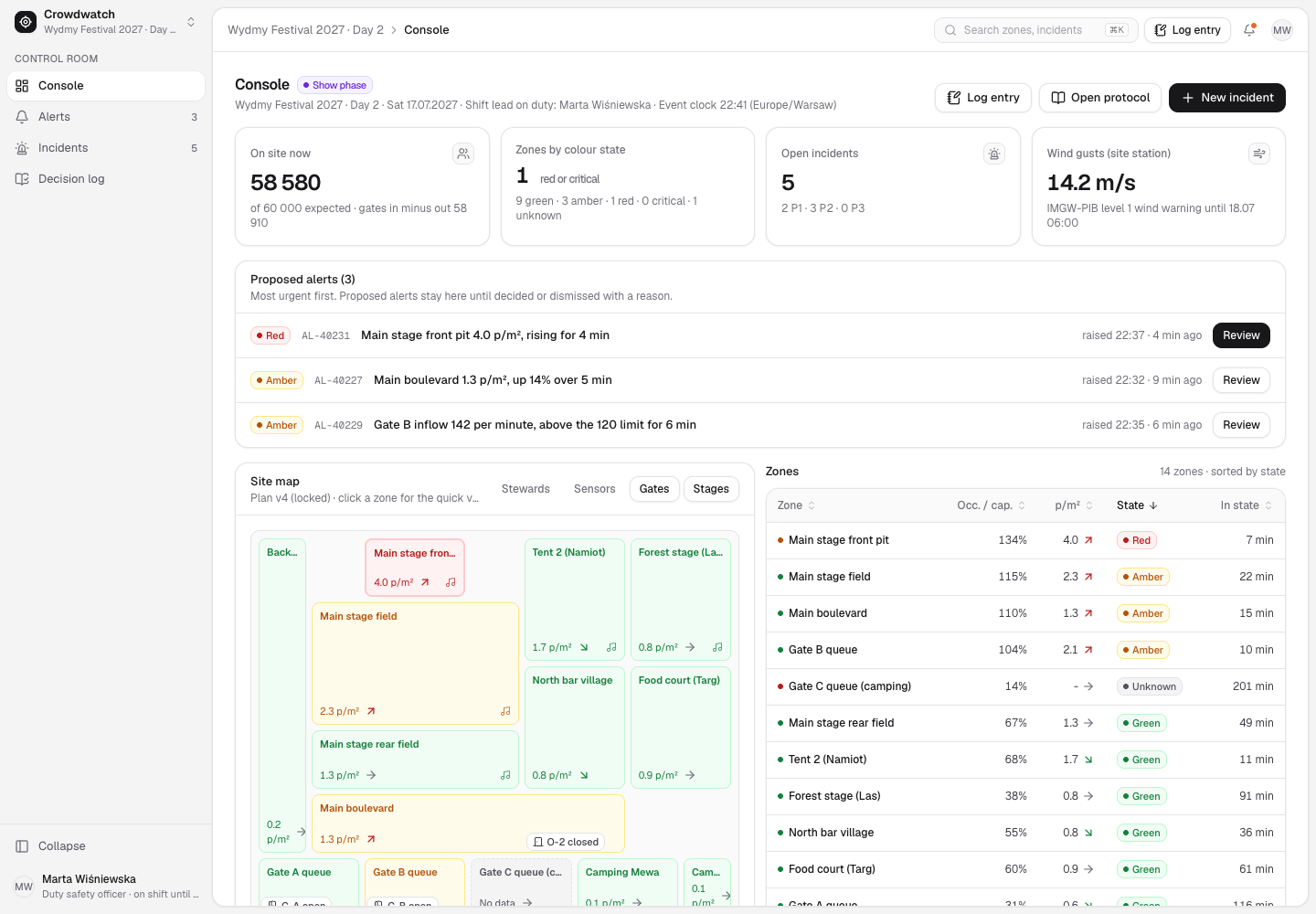
Crowdwatch - Festival Crowd Safety Control Room Where People Make Every Call
Designed and built a clickable control room for a Gdynia festival organiser running a 60,000-a-day coastal festival: live crowd density per zone from counts-only sensors, alerts that a duty safety officer must decide, incidents from first report to closure, and an append-only decision log for the debrief with police and the city.
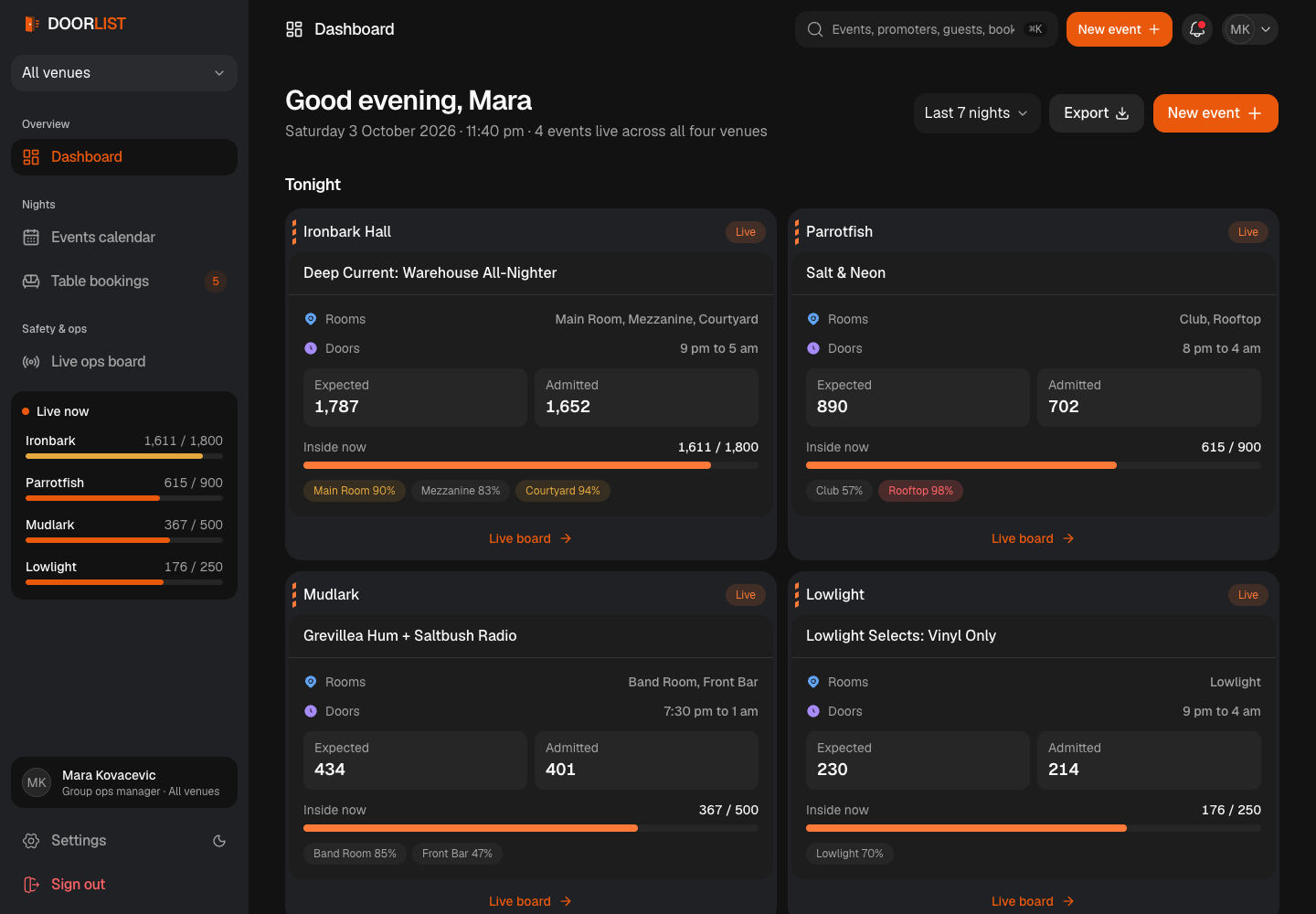
Doorlist - Guest List, Table Booking and Door Platform with Live Capacity
Designed and built a clickable guest list and door platform for a Melbourne operator of four music venues and clubs: an events calendar across every venue, promoter lists with caps, table bookings with deposits and minimum spends, and a live ops board that counts every room against its licensed capacity.
Enterprise Software Engineering - Human + AI
Contact Us
© 2026 - Copyright. All Rights reserved Oceanlab
Location
Global Headquarters
21 Merchant Road, 3rd Floor, Singapore 058267
Main corporate office and leadership operations
North America Office
548 Market Street, PMB 12345, San Francisco, CA 94104
Client operations and business development
India Office
402 Shivalik Shilp II, SG Highway, Ahmedabad 380015
Engineering and delivery center

Enterprise Software Engineering - Human + AI
Contact Us
Locations
Global Headquarters
21 Merchant Road, 3rd Floor, Singapore 058267
Main corporate office and leadership operations
North America Office
548 Market Street, PMB 12345, San Francisco, CA 94104
Client operations and business development
India Office
402 Shivalik Shilp II, SG Highway, Ahmedabad 380015
Engineering and delivery center
© 2026 - Copyright. All Rights reserved Oceanlab