Hivewise - Hive Monitoring and Honey Traceability Platform for a Beekeeping Cooperative
Hive Monitoring Console for a Slovenian Beekeeping Cooperative
Designed and built a clickable hive monitoring console for a beekeeping cooperative in Maribor, Slovenia: alerts from hive scales and climate sensors, notifiable disease cases up to the handoff to the official vet, honey intake with withdrawal and disease checks, and a batch trace from every jar lot back to the hives and members behind it.
Most of our work is under NDA. Per agreement, we can share the work but not the company details - all names and identifying information shown here have been changed.
Impact
Dashboard, disease cases, sensor alerts, deliveries and batches, and the batch detail with its traceability tree. Every case, alert and batch opens its own detail.
Jar lots, batch, drums, harvests, hives, apiaries and members in one tree, with every treatment on those hives in the 12 months before harvest.
Withdrawal period, disease freeze and moisture against the 18.5% client limit. A drum that fails is held or rejected with the reason, such as hives under withdrawal until 18 May.
26 apiaries in 3 areas, 22 sensor alerts, 7 disease cases, 20 deliveries with 29 drums and 8 honey batches with lab tests and jar lots.
The Problem
Satovnik's 140 or so members kept about 9,000 hives on paper hive cards, notebooks and phone notes. The cooperative had only a delivery slip per drum, so a failed lab result could not be traced back to the hives, treatments or harvest dates behind it. Treatment records often lacked the withdrawal date, swarms and two hive thefts were noticed days late, orchard clients rang the office to ask where their hives were, and nobody could say with numbers how many colonies were lost each winter, or why.
Our Solution
Hivewise gives the cooperative's staff one console for the season: sensor alerts from hive scales and climate sensors with the context to act on them, notifiable disease cases that freeze hives and honey until an official result is recorded, honey intake that checks every drum against withdrawal periods, disease freezes and moisture, and a batch trace from jar lot to member.
The Challenge: Honey, Hives and Health in One Record
A beekeeping cooperative sits between food law, veterinary medicine rules and animal health law, with members spread across the Drava valley, Pohorje and the Slovenske gorice hills and apiaries nobody visits every day.
Honey That Could Not Be Traced
Honey is food, so the General Food Law expects traceability one step back and one step forward. With only a slip per drum, a lab failure could not be tied to the harvests, hives and treatments that produced it, or to the jar lots it went into.
Medicine Records and Withdrawal Periods
Under Regulation (EU) 2019/6, beekeepers must generally record each veterinary medicine with its product, batch, dose, date and withdrawal period. Records were scattered and often missing the withdrawal date, so honey from a treated hive could reach a drum.
Notifiable Disease Without a Paper Trail
American foulbrood is generally notifiable in Slovenia, and the EU Animal Health Law lists the small hive beetle and Tropilaelaps mites. A suspicion goes to the official vet through its own channels, while the cooperative has to stop moves and honey from the affected hives and warn apiaries nearby.
Out-Apiaries Nobody Visits Daily
Swarms and thefts were noticed days late, including hives placed in client orchards. Sensors can raise the alarm, but only if each alert says what happened, where and what to do next, without exposing apiary locations, which are treated as confidential.
Our Approach: From Beekeeping Rules to a Clickable Console
Spec and Rules Research
Mapped 11 roles from beekeeper and helper to field advisor, honey house manager, compliance lead and orchard client, 42 screens across the beekeeper app, cooperative console, orchard portal and public pages, and the data model for apiaries, hives, queens, inspections, treatments, harvests, drums, batches, lab tests, jar lots, devices, alerts, disease cases and pollination contracts. Wrote down the rules the design follows: GDPR and ZVOP-2, apiary registration with UVHVVR, protection of the Carniolan bee, the EU Animal Health Law, Regulation (EU) 2019/6, the General Food Law and food hygiene rules, and EU honey labelling.
Clickable Demo on a Production UI Kit
Built the cooperative console's 5 key screens on a production dashboard kit: the dashboard with season KPIs, an apiary map by alert status and the weight trend against last season, disease cases with the case panel, handoff summary and authority report sheet, sensor alerts with the alert detail panel and resolve outcomes, deliveries and batches with the Receive delivery and Create batch sheets, and the batch detail with trace tree, lab tests, jar lots and release, block and recall actions. All actions run on local state.
What a Production Build Adds
Integration with hive scales and sensors (such as BroodMinder or BEEP) over LoRaWAN through The Things Network, offline map tiles, ARSO or Open-Meteo weather, Infobip or Twilio SMS and push alerts, lab report import, GS1 Slovenia barcodes and Zebra label printers, and Minimax invoicing. Staff auth by role, an append-only audit log, the offline-first beekeeper app, the orchard portal, the public spray notice form and jar lookup, and confirmation of every legal point with the client's advisors.
Why It Works: Every Block Explains Itself
A Batch Answers Where It Came From
The batch detail shows the full tree from jar lot to member in one screen, each drum's intake checks in green or the reason it was held in red, and every lab parameter against its limit with the limit's source: legal or the cooperative's own tighter policy.
Honey Cannot Slip Past a Rule
Intake checks each drum's harvests against withdrawal periods and open disease cases and measures moisture, and drums that fail are held or rejected with the reason. A batch can be released only with a passing lab result and only by the compliance lead.
Disease Cases Stop at the Handoff
A suspected case freezes its hives, holds the affected harvests and drums and lists apiaries within the 3 km watch radius. Cases with no field visit after 24 hours are flagged, the authority report records who reported, when and the reference, and the freeze lifts only after an official result.
Alerts With Context, Not Just Numbers
Each alert opens a chart around the event, the likely causes and the weather, and is resolved with an outcome such as swarm caught or false alarm. Orchard placements are tagged, the rule thresholds are shown as client policy, and the acoustic swarm-risk index is labelled experimental.
Related case studies
View all: Climate & nature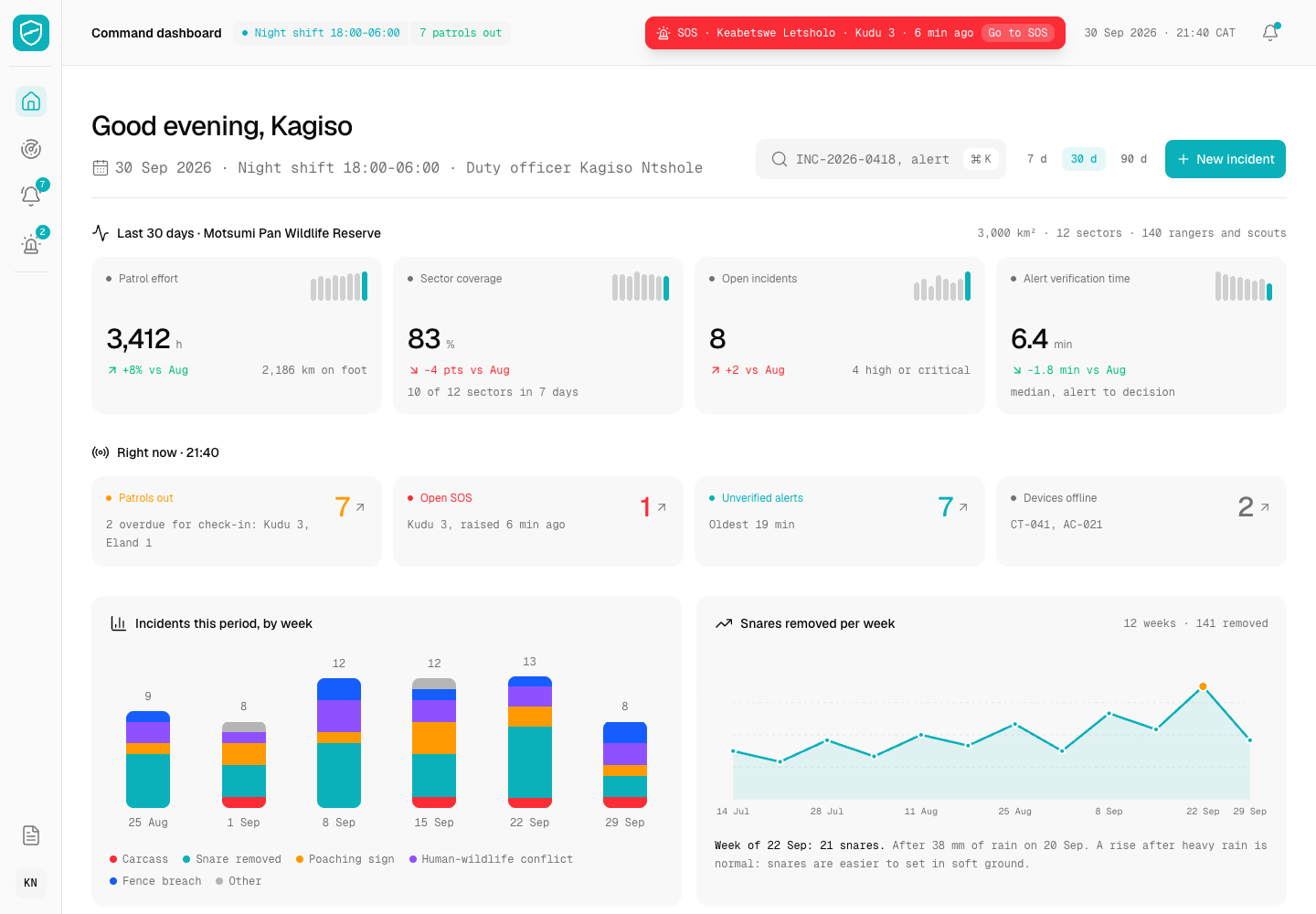
Ranger Line - Anti-Poaching Ops Room Console with Evidence Chain of Custody
Designed and built a clickable ops room console for a conservation trust protecting rhino, elephant and pangolin on a 3,000 km² reserve near Maun: a live map of patrols and ranger positions, sensor alerts verified by a person, and incidents with photos, evidence and an unbroken chain of custody - with exact rhino locations shown only to cleared staff.
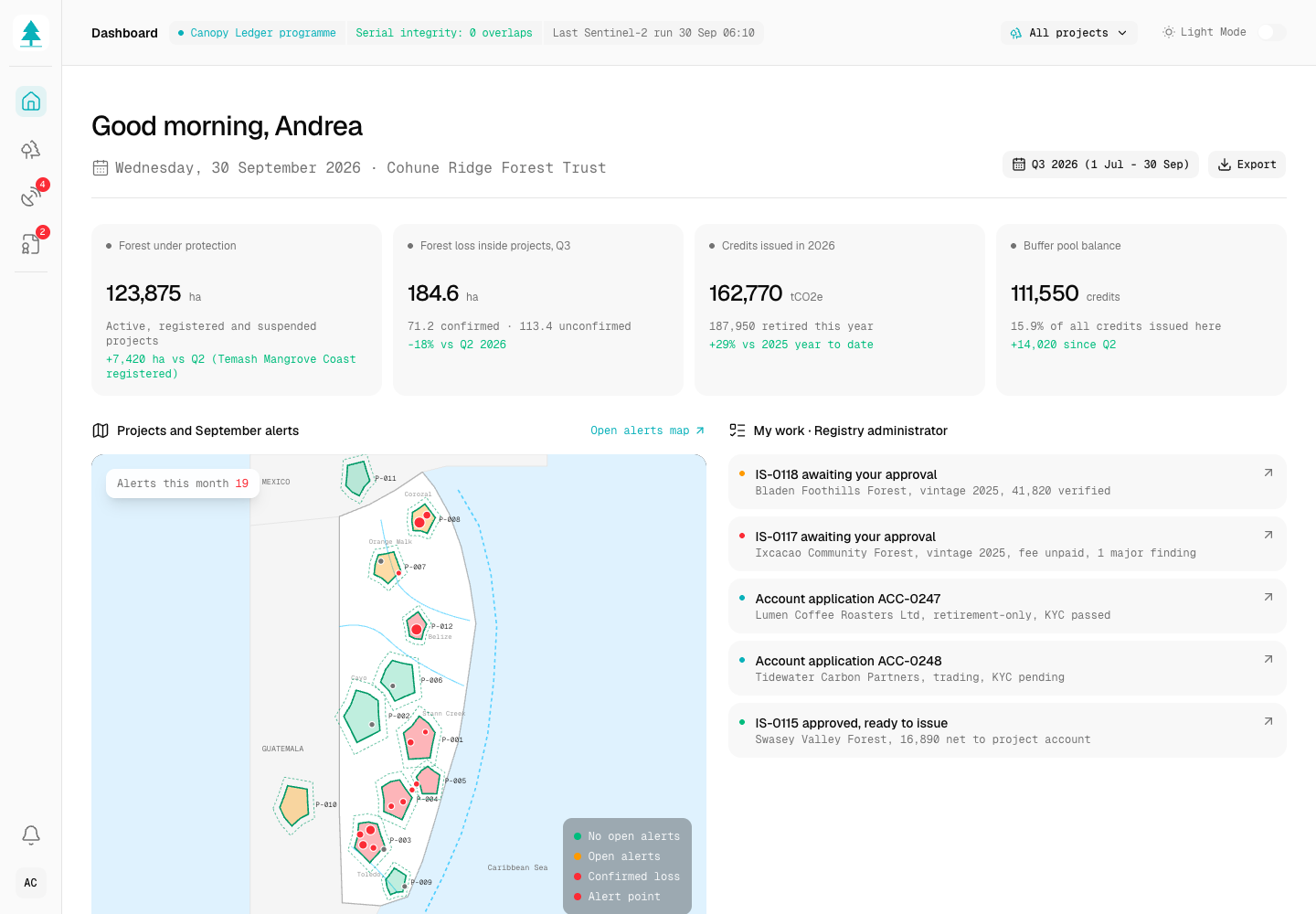
Canopy Ledger - Forest Carbon Credit Registry with Satellite Monitoring
Designed and built a clickable registry and monitoring platform for a Belize forest carbon developer: every community forest project with its boundary and methodology, satellite forest-change alerts triaged to ground-truth, and issuance requests that only create serial numbers after a four-eyes check against verification, consent and double counting.
Enterprise Software Engineering - Human + AI
Contact Us
© 2026 - Copyright. All Rights reserved Oceanlab
Location
Global Headquarters
21 Merchant Road, 3rd Floor, Singapore 058267
Main corporate office and leadership operations
North America Office
548 Market Street, PMB 12345, San Francisco, CA 94104
Client operations and business development
India Office
402 Shivalik Shilp II, SG Highway, Ahmedabad 380015
Engineering and delivery center

Enterprise Software Engineering - Human + AI
Contact Us
Locations
Global Headquarters
21 Merchant Road, 3rd Floor, Singapore 058267
Main corporate office and leadership operations
North America Office
548 Market Street, PMB 12345, San Francisco, CA 94104
Client operations and business development
India Office
402 Shivalik Shilp II, SG Highway, Ahmedabad 380015
Engineering and delivery center
© 2026 - Copyright. All Rights reserved Oceanlab