Ferrule - Field Technician App and Dispatch Console for Fibre Installs
Field Service Platform for an Irish Fibre Installer
Designed and built a clickable dispatch console for a Dublin fibre installation contractor working for two network operators: a control room for the day, a dispatch board that checks skills, certifications and patch before allocating, a full evidence record for every job, and a jeopardy queue that catches missed appointments before the operator calls.
Most of our work is under NDA. Per agreement, we can share the work but not the company details - all names and identifying information shown here have been changed.
Impact
Control room, dispatch board, jobs list, job detail with 7 tabs and the jeopardy queue. Each of the 45 demo jobs opens its own record.
Skill, traffic management certification for street works, working at height certification, patch cover and room in the AM or PM window. A refused allocation states the reason.
A job is at risk when the predicted arrival is after the window end, or the technician has not started travelling 45 minutes before it ends. Time in jeopardy turns amber after 15 minutes and red after 45.
36 booked today across 2 operators, 12 technicians in 3 teams, 6 patches and 5 street works permits, with a live lone worker alarm.
The Problem
Glenbarra re-keyed work orders from two operator systems into a spreadsheet and sent each technician a PDF job sheet by WhatsApp every evening. Light levels and ONT serials went on paper, photos were emailed in batches from personal phones, and operators rejected about one completion claim in eight for missing or unreadable evidence. Dispatchers learned about missed appointments when the operator phoned to complain.
Our Solution
Ferrule gives Glenbarra one field service platform: an offline-first app for its technicians, a dispatcher console for the control room and a portal for each operator. The build is the dispatcher console, where work orders from both operators arrive in one place, jobs are allocated by skill, certification, patch and window, and every job carries its readings, serials, photos and sign-off.
The Challenge: Evidence, Safety and Windows on Every Job
Glenbarra's 450 or so technicians do home connections, fault repairs and street cabinet work for two operators with different systems, rate cards and evidence standards, often in rural places with no mobile signal.
Payment Depends on Evidence
Each operator sets its own light level ranges, speed test pass mark and photo list. A claim with a missing or unreadable photo is rejected, and Glenbarra is only paid once the evidence is fixed.
Appointments Missed Without Warning
Operators give a five-hour AM or PM window. Nobody saw an overrunning job or a technician who had not left yet until the window had passed, and since 4 December 2025 ComReg's rules require operators to run a compensation scheme for missed or delayed switching and porting appointments.
Safety Rules Before Any Work
The Safety, Health and Welfare at Work Act 2005 needs a risk assessment at the point of work, aerial drops need a working at height check, cabinet crews often work alone, and street works need a local authority road opening licence with Chapter 8 traffic management.
Tracking People Fairly
Install photos can show the inside of a home, and the Data Protection Commission expects location tracking of staff to be necessary, proportionate and transparent. Positions are kept only while a technician is on shift and off break.
Our Approach: From Field Rules to a Clickable Console
Spec and Rules Research
Mapped 11 roles from technician and dispatcher to quality auditor, stores controller and operator user, 41 screens across the technician app, the dispatcher console and the operator portal, and the data model for work orders, jobs, readings, photos, risk assessments, permits, stock, timesheets and claims. Wrote down the rules the design follows: GDPR and the Data Protection Act 2018, health and safety and working time law, road opening licences, Chapter 8 and the Purple Book, IEC 60825-2 laser safety and ComReg's appointment rules.
Clickable Demo on a Production UI Kit
Built the dispatcher console's 5 key screens on a production dashboard kit: the control room with KPIs, hourly progress against plan and a needs attention list, the dispatch board timeline with select to allocate, Auto-allocate and Publish changes, the jobs list with search by Eircode or work order, the job detail with timeline, evidence, safety, parts, operator sync, claim and notes, and the jeopardy queue with suggested alternatives. An operator filter carries across every page.
What a Production Build Adds
The offline-first technician app with Bluetooth power meter readings, an embedded speed test and serial scanning, the operator portal with evidence packs, and the remaining console screens for the live map, quality, stock, people and safety, and claims. Integrations with operator TM Forum APIs (TMF641, TMF646, TMF621) or SFTP drops, Eircode lookup, masked calls, push notifications, telematics and accounting, plus staff auth by role and a full audit trail.
Why It Works: Problems Caught Before the Operator Calls
Allocation That Explains Itself
Selecting an unallocated job highlights the technicians who have the skill, the certification, the patch and room in the window, with a suggested order. Any other choice is refused with the reason, such as an expired traffic management certification.
Evidence Checked Against the Operator
Every reading shows its value, the operator's pass range and whether it came from a meter over Bluetooth, the Ookla SDK or manual entry. Photos are counted against the required list, so a gap is visible before the completion goes out.
Safety Alarms Come First
A missed lone worker check-in opens a red banner on every page, with the last position and when it escalates to the team leader and the safety manager, until someone acknowledges it. Expired permits and certifications show in the needs attention list.
Customer Data Kept Back
Customer phone numbers stay masked on the job record. Revealing one needs a written reason and is logged in the audit trail with the dispatcher's name, and the screen asks for a masked call where possible.
Related case studies
View all: Telecom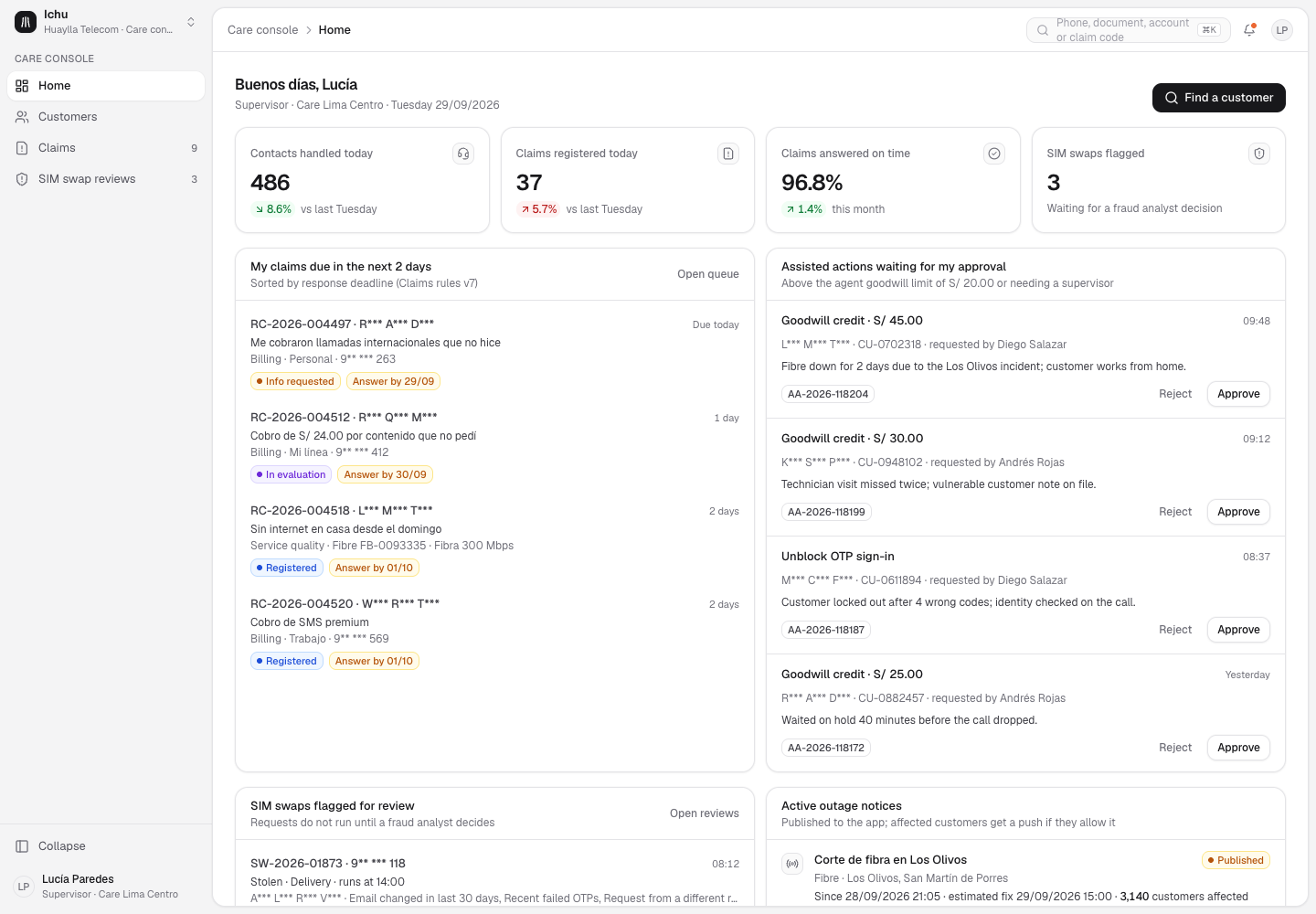
Ichu - Customer Self-Care App and Care Console with SIM Swap Controls
Designed a self-care app and care agent console for a Lima mobile and home fibre operator, and built the care console as a clickable demo: a masked customer 360 with audited assisted actions, a claims queue and workspace run against regulatory deadlines, and SIM swap reviews scored by weighted fraud signals.
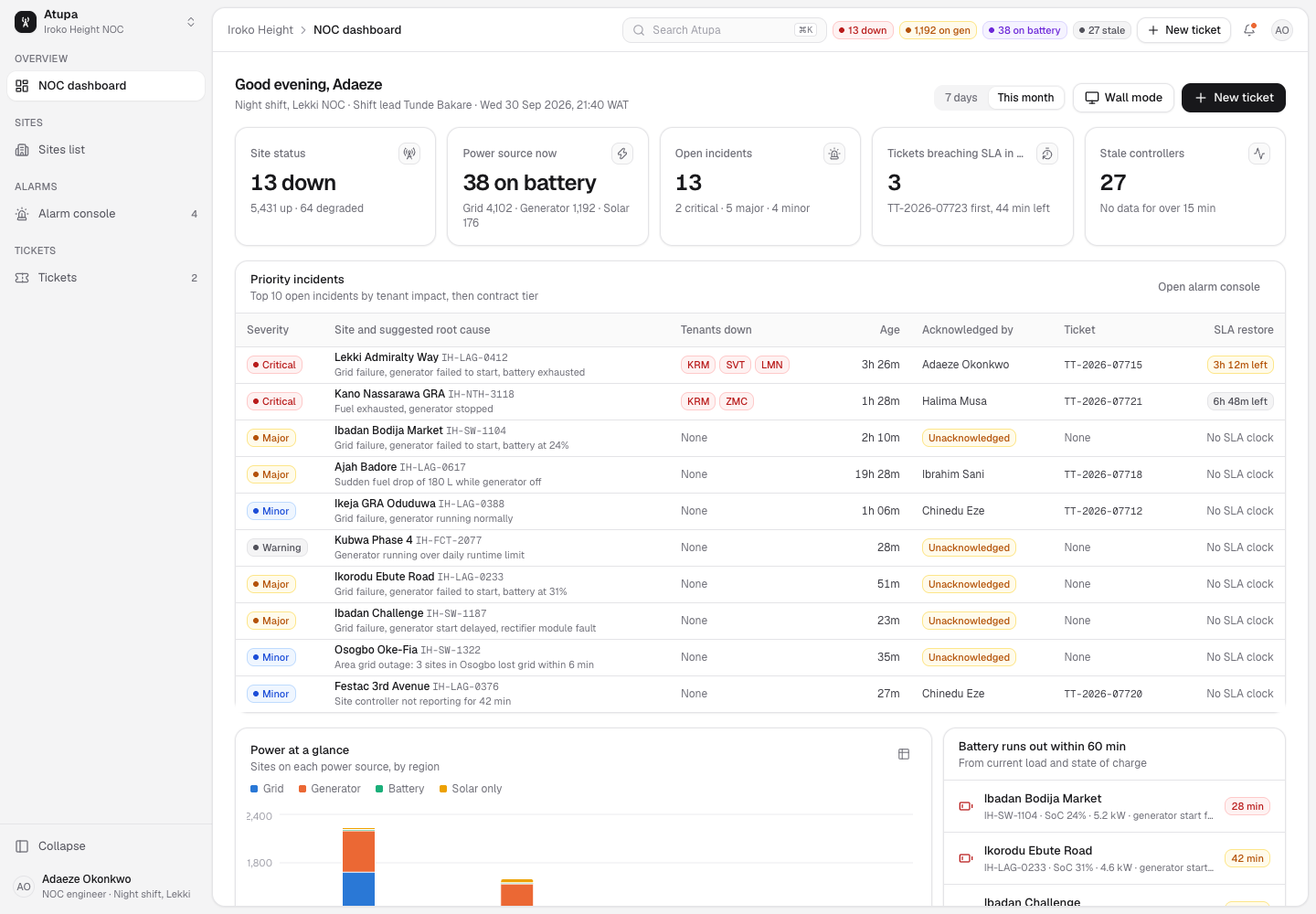
Atupa - NOC Console for Tower Site Power, Alarms and Tenant SLAs
Designed and built a clickable network operations centre console for a Lagos tower company with about 5,500 sites: live site power and battery autonomy, an alarm console that groups alarms into incidents with a suggested root cause, trouble tickets with a separate SLA clock for each mobile operator, and penalty exposure per tenant.
Enterprise Software Engineering - Human + AI
Contact Us
© 2026 - Copyright. All Rights reserved Oceanlab
Location
Global Headquarters
21 Merchant Road, 3rd Floor, Singapore 058267
Main corporate office and leadership operations
North America Office
548 Market Street, PMB 12345, San Francisco, CA 94104
Client operations and business development
India Office
402 Shivalik Shilp II, SG Highway, Ahmedabad 380015
Engineering and delivery center

Enterprise Software Engineering - Human + AI
Contact Us
Locations
Global Headquarters
21 Merchant Road, 3rd Floor, Singapore 058267
Main corporate office and leadership operations
North America Office
548 Market Street, PMB 12345, San Francisco, CA 94104
Client operations and business development
India Office
402 Shivalik Shilp II, SG Highway, Ahmedabad 380015
Engineering and delivery center
© 2026 - Copyright. All Rights reserved Oceanlab