Eşik - Admissions Portal from Application to Enrolment Handoff
Admissions Portal for a Private University in Istanbul
Designed and built a clickable admissions portal for a foundation university in Istanbul: programme queues with eligibility checks, an application record with verified documents and tests, a scoring workspace that asks for a conflict-of-interest declaration first, and offer tracking with conditions and reply deadlines.
Most of our work is under NDA. Per agreement, we can share the work but not the company details - all names and identifying information shown here have been changed.
Impact
Dashboard, programme queues, application detail with 9 tabs, the scoring workspace and offers with the conditions panel. Every one of the 28 demo applications opens its own record.
A reviewer sees no applicant detail until they declare no conflict. Declaring one removes them from the application, and photos, dates of birth and support needs stay hidden while scoring.
Academic record 35%, subject preparation 25%, motivation 20% and references 20%, with level descriptors per criterion. Interview programmes rebalance to add the interview at 20%.
12 programmes in 5 faculties, 20 offers across every reply status, 5 recruitment agents, 10 staff users and an 8-step funnel for the Fall 2027 intake.
The Problem
Çamlıtepe's admissions office ran on a web form, a shared inbox and one spreadsheet per faculty. International applicants emailed passports and transcripts as phone photos, agents sent batches of applications by WhatsApp, reviewers scored candidates in their own files with no record of conflicts of interest, and offer conditions were chased from memory. Decisions for international applicants took 4 to 7 weeks, and strong candidates accepted faster universities first.
Our Solution
Eşik takes an application from submission to enrolment handoff in one place. Officers work queues by programme with checklist progress and eligibility checks, reviewers score against the programme rubric after declaring any conflict, and every offer is tracked with its conditions, reply deadline and deposit until the student enrols.
The Challenge: Fair Decisions Across Many Routes
A Turkish foundation university admits students through several routes with different rules: central ÖSYM placement for most domestic undergraduates, direct admission for postgraduates and international students under YÖK principles, and agents recruiting abroad. Each route needs its own documents, checks and decisions.
Not Every Student Is the University's Decision
Most domestic undergraduates are placed centrally by ÖSYM, scholarship level included. For them the portal only handles confirmation, documents, payment and enrolment, while postgraduate and international applicants need a full review against university-set minimums.
Documents From Everywhere
Transcripts on different grading scales, passports, IB and A-level results, ALES, IELTS, TOEFL and Duolingo scores arrive from applicants, agents and referees. Each has to be checked against the issuer or test provider, and suspected forgeries need a named owner.
Scoring Without a Record
Reviewers kept their own files, so nobody could show who scored an application, against what criteria, or whether they knew the applicant. Fair admissions needs every score tied to a reviewer and their conflict declaration.
Personal Data Under KVKK
Applicant data is processed under Law No. 6698. Health and accessibility information is optional, collected with its own consent and never shown to reviewers, identity numbers must stay masked, and transfers abroad to agents or test providers need a recorded legal basis.
Our Approach: From Admissions Rules to a Clickable Portal
Spec and Rules Research
Mapped 13 roles from admissions officer and faculty reviewer to agent and referee, 54 screens across staff, agent, applicant and referee portals, and the data model for applications, documents, tests, eligibility rules, rubrics, reviews, offers and conditions. Wrote down the rules the design follows: YÖK and senate admission rules, ÖSYM placement, MEB and YÖK recognition of foreign qualifications, KVKK and consent for commercial messages.
Clickable Demo on a Production UI Kit
Built 5 key screens on a production dashboard kit: the dashboard with intake KPIs, funnel, weekly applications by route and items needing attention, programme queues with stage pills and bulk actions, the application detail with document viewer and masked identifiers, the scoring workspace with its conflict declaration and live weighted total, and offers with conditions and reply deadlines. All actions run on local state.
What a Production Build Adds
e-Devlet login and barcoded document checks, ÖSYM placement imports, iyzico and Flywire payments, IELTS, ETS and Duolingo score verification, Onfido or Veriff identity checks, Turnitin similarity, Zoom or Teams interviews and handoff to the student information system. Staff auth by role, an append-only audit log, the remaining staff screens and the agent, applicant and referee portals in Turkish and English.
Why It Works: People Decide, the Portal Checks
Checks Support, Never Reject
Each eligibility rule shows the applicant's value, the requirement and met, not met or needs review, with the officer's note on borderline cases. No application is rejected automatically, and the rules live in configuration because YÖK and senate rules change.
Reviewers See What Matters
The scoring workspace opens only after a conflict declaration and shows education, tests, statement, references and interview notes. Photos, dates of birth and support needs are hidden, and a submitted score locks until an officer reopens it.
One Record per Applicant
Header actions, a stage rail with dates and 9 tabs keep checklist, documents with extracted fields, test verification, references, reviews, offer and messages together. Passport and national ID numbers stay masked, and every reveal is logged.
Offers Tracked to the Deadline
Each offer shows its type, conditions met, scholarship, reply deadline countdown and deposit. A conditional offer converts to unconditional only when every condition is met, and extending a deadline or withdrawing an offer needs a reason.
Related case studies
View all: Higher ed & corporate learning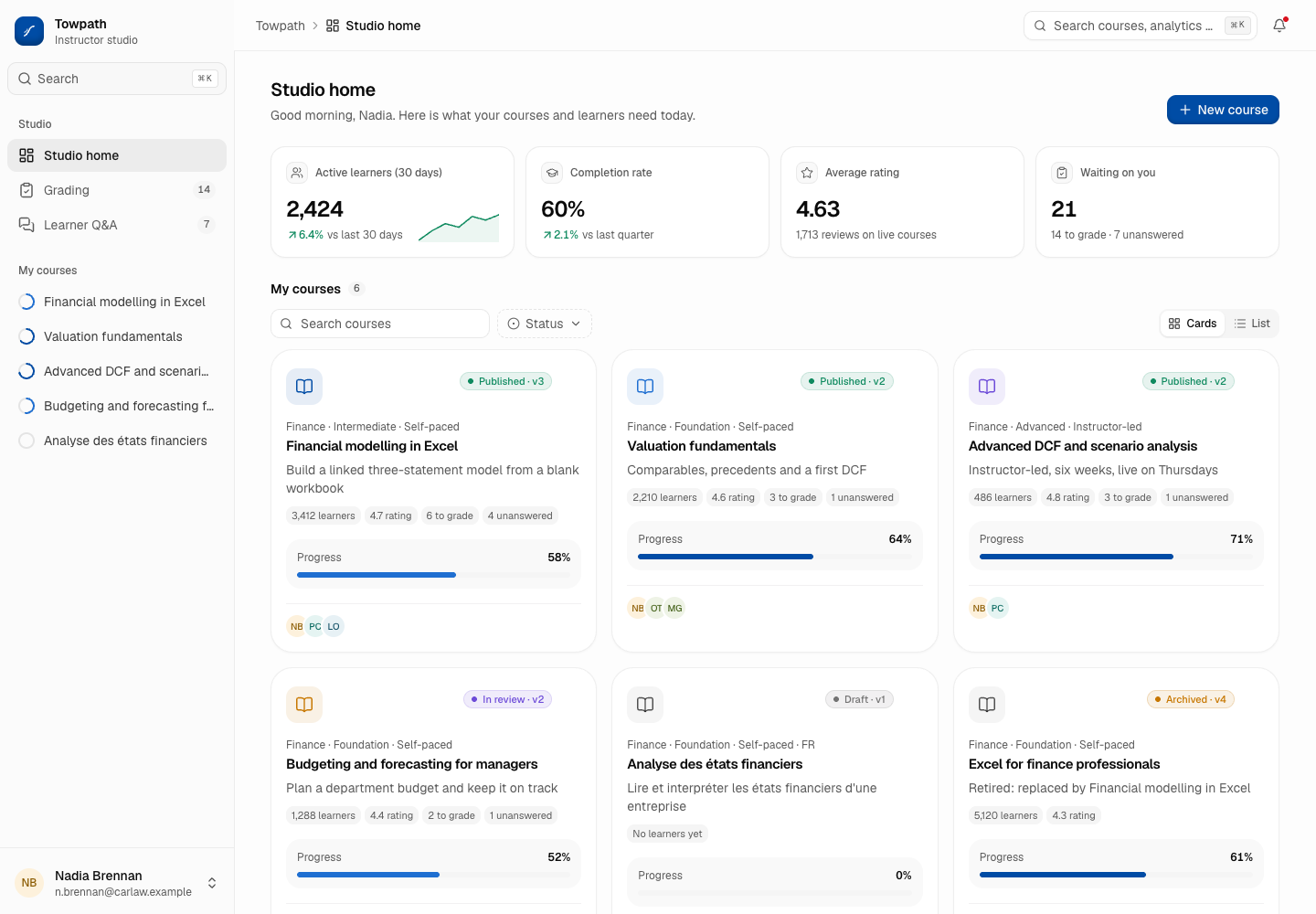
Towpath - Course Platform (LMS) for Professional Learning
Designed and built a clickable instructor studio for a Toronto provider of online finance, data and project management courses: course building with an accessibility gate before review, course analytics on aggregates only, a grading queue against a business-day target and learner Q&A across every course.
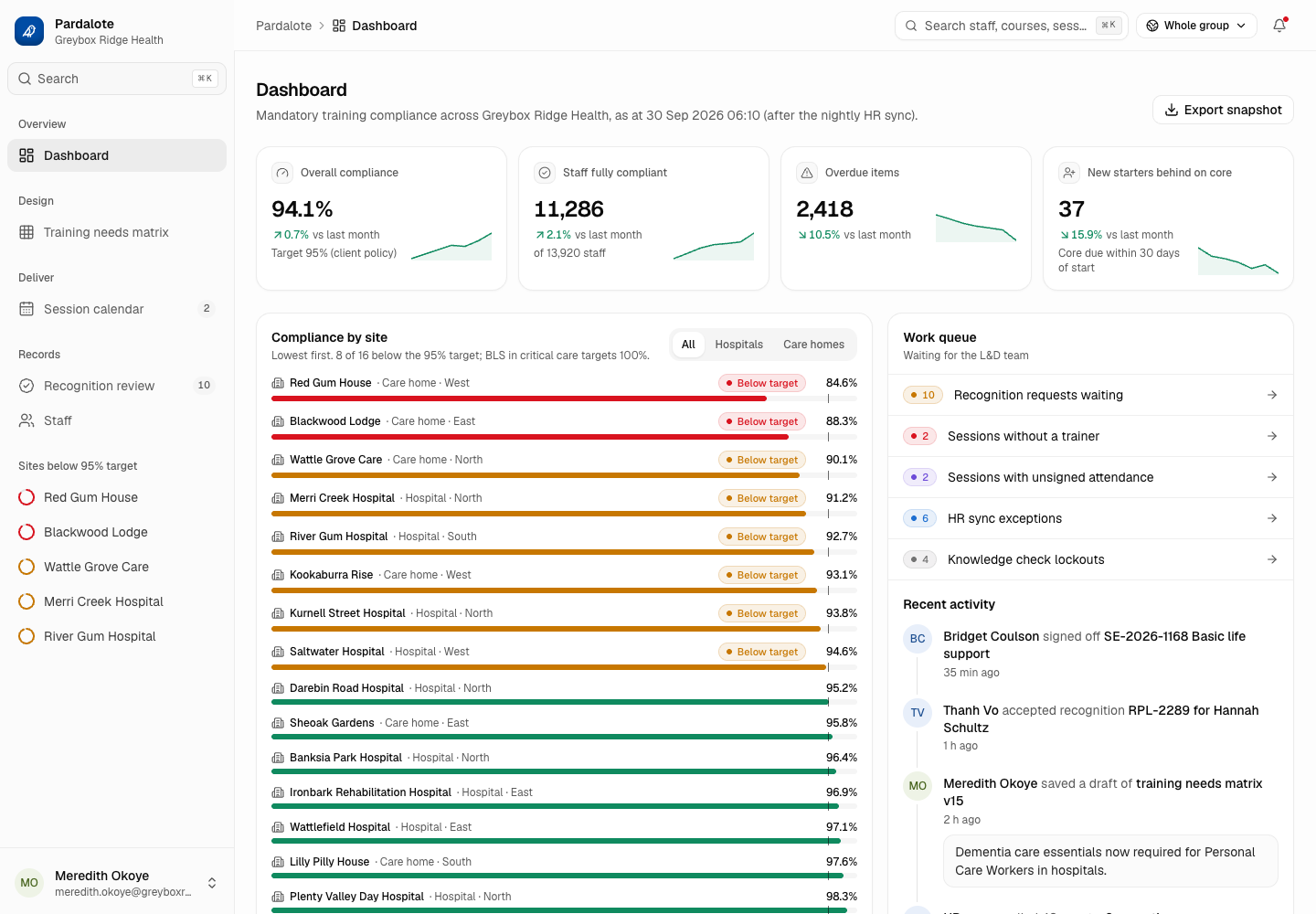
Pardalote - Mandatory Training Platform with Role-Based Requirements and Audit-Ready Evidence
Designed and built a clickable L&D console for a Melbourne hospital and aged care group with about 14,000 staff: a training needs matrix that decides who must do what, live compliance by site and course, a session calendar for face-to-face practicals, recognition of prior learning and a staff record that shows why every requirement exists.
Enterprise Software Engineering - Human + AI
Contact Us
© 2026 - Copyright. All Rights reserved Oceanlab
Location
Global Headquarters
21 Merchant Road, 3rd Floor, Singapore 058267
Main corporate office and leadership operations
North America Office
548 Market Street, PMB 12345, San Francisco, CA 94104
Client operations and business development
India Office
402 Shivalik Shilp II, SG Highway, Ahmedabad 380015
Engineering and delivery center

Enterprise Software Engineering - Human + AI
Contact Us
Locations
Global Headquarters
21 Merchant Road, 3rd Floor, Singapore 058267
Main corporate office and leadership operations
North America Office
548 Market Street, PMB 12345, San Francisco, CA 94104
Client operations and business development
India Office
402 Shivalik Shilp II, SG Highway, Ahmedabad 380015
Engineering and delivery center
© 2026 - Copyright. All Rights reserved Oceanlab