Transom - Property Management Platform and Tenant Portal for Chicago Apartments
Property Management Platform for a Chicago Apartment Manager
Designed and built a clickable property management platform for a Chicago manager of about 4,200 apartments: a dashboard of occupancy, collections and open repairs, arrears worked through the same steps for every resident, security deposits tracked under Chicago and Illinois rules, and work orders with SLA clocks, entry permission and owner approval limits.
Most of our work is under NDA. Per agreement, we can share the work but not the company details - all names and identifying information shown here have been changed.
Impact
Dashboard, arrears and payment plans, security deposits, the work order board and work order detail. Each of the 24 demo work orders opens its own detail page.
Emergencies attended within 4 hours, urgent jobs within 24 hours and routine jobs within 5 business days (client policy). No heat, no water, gas smell, flooding, no power and lockout reports are marked emergency automatically.
Reminder at 6 days past due, call at 12, demand for rent drafted at 60 and referral to counsel at 90 (client policy). The schedule pauses while a payment plan runs, and skipping a step needs a reason.
14 buildings for 7 owners, 30 residents, 18 arrears cases, 26 security deposits held, 24 work orders and 8 vendors, on a fixed demo clock of 30 September 2026.
The Problem
Wentmoor grew by taking on buildings from smaller managers, and each one arrived with its own spreadsheet rent roll. Rent came in as paper checks, money orders, three payment apps and housing authority payments that a bookkeeper matched by hand every week. Repairs arrived by phone, text and email, so nobody knew how many were open or how long a no-heat call had waited. Chicago deposits lived in a workbook, the yearly interest run took two people most of a month, and owners kept asking where their money was.
Our Solution
Transom covers the manager's side of every tenancy: owners, buildings, units, leases, rent, deposits, arrears, maintenance, owner statements and distributions, with a mobile-first portal for residents. The demo shows the daily core: a dashboard that tells each role what to act on, arrears worked through one configured schedule, deposits tracked against the rule set of each building, and work orders with SLA clocks, entry permission and owner approval.
The Challenge: Running 4,200 Apartments by Chicago's Rules
Most Chicago rentals fall under the Residential Landlord and Tenant Ordinance, buildings outside the city follow Illinois law, and fair housing law applies to every decision. The rules change from building to building, and the penalties for getting deposits wrong are significant.
Rent Arriving Every Way
Checks, money orders, payment apps, card and bank payments and Chicago Housing Authority payments all land in different places. Where the Housing Authority pays part of the rent, one lease needs a split ledger, and every receipt still has to match the right charge.
Deposits Under Two Rule Sets
Under the RLTO, deposits are generally held in an insured Illinois account apart from the landlord's money, with a receipt, yearly interest at the rate the City publishes, and deadlines for itemised deductions and return. Buildings outside Chicago follow the Illinois Security Deposit Return Act and, where it applies, the Security Deposit Interest Act.
Repairs Nobody Could Count
Chicago sets minimum indoor temperatures in the heating season, so a no-heat call cannot wait in a voicemail box. The RLTO also generally requires advance notice before entering a unit outside emergencies, and repairs over an owner's limit need that owner's approval.
Arrears Handled the Same for Everyone
Federal, Illinois and Chicago law prohibit discrimination in housing, and Illinois and Chicago generally protect source of income, including vouchers. Every resident has to move through the same follow-up steps, and eviction starts with a written demand handled by counsel, outside the product.
Our Approach: From Landlord-Tenant Rules to a Clickable Platform
Spec and Rules Research
Mapped 10 user roles from property manager and technician to resident and vendor, and 55 screens: 42 for staff, a vendor job page reached by magic link and 12 resident portal screens. Modelled owners, buildings, units, leases, ledgers, deposits, work orders and trust balances, and wrote down the rules the design follows: the RLTO, Illinois deposit acts, Fair Notice periods, fair housing law, lead paint and bed bug disclosures, trust accounts under the Real Estate License Act, Nacha autopay rules and Illinois PIPA.
Clickable Demo on a Production UI Kit
Built 5 key screens on a production dashboard kit: the dashboard with KPIs, collections curve, maintenance load and role-based My work; arrears with aging buckets, a resident panel and payment plan offers; security deposits with held, interest due and returns tabs and an itemised deposit statement; the work order board and table with bulk reassign; and work order detail with visits, costs and entry notices. All actions run on local state.
What a Production Build Adds
Stripe card and ACH payments with autopay, Plaid bank verification, Stripe Connect or bank ACH files for owner distributions, DocuSign, Twilio and SendGrid, QuickBooks Online or Sage Intacct, S3 storage and Google Maps lookup. The remaining screens, including owner statements, the technician phone view and the resident portal, staff auth by role, a tamper-evident audit log, and counsel's sign-off on every legal value before go-live.
Why It Works: The Rules Are on the Screen
Legal Values Come From Counsel, Not Code
Transom ships no statutory rates. The deposit screen shows the year's RLTO interest rate with who entered it, when and the source document, and only the compliance lead can set it. Each deposit shows its rule set, Chicago RLTO or Illinois, and the account that holds it.
One Path Through Arrears
Every resident in arrears shows a stage and the next step due under the configured schedule. Housing assistance pending and payment plans are flagged, the schedule pauses while a plan runs, skipping a step needs a reason, and the path stops at referral to counsel.
Emergencies Cannot Hide
Emergency keywords mark a request at once, and every card on the board shows the time left against its SLA. The dashboard lists any emergency not dispatched within 30 minutes (client policy), and the sidebar badge counts unassigned emergencies on every page.
Guardrails on Owners' Money
A repair estimate over the owner's approval limit waits for that owner, vendors with an expired insurance certificate cannot be dispatched, and billing a resident for damage needs a reason. Every work order records the resident's entry permission or the notice sent.
Related case studies
View all: Real estate & PropTech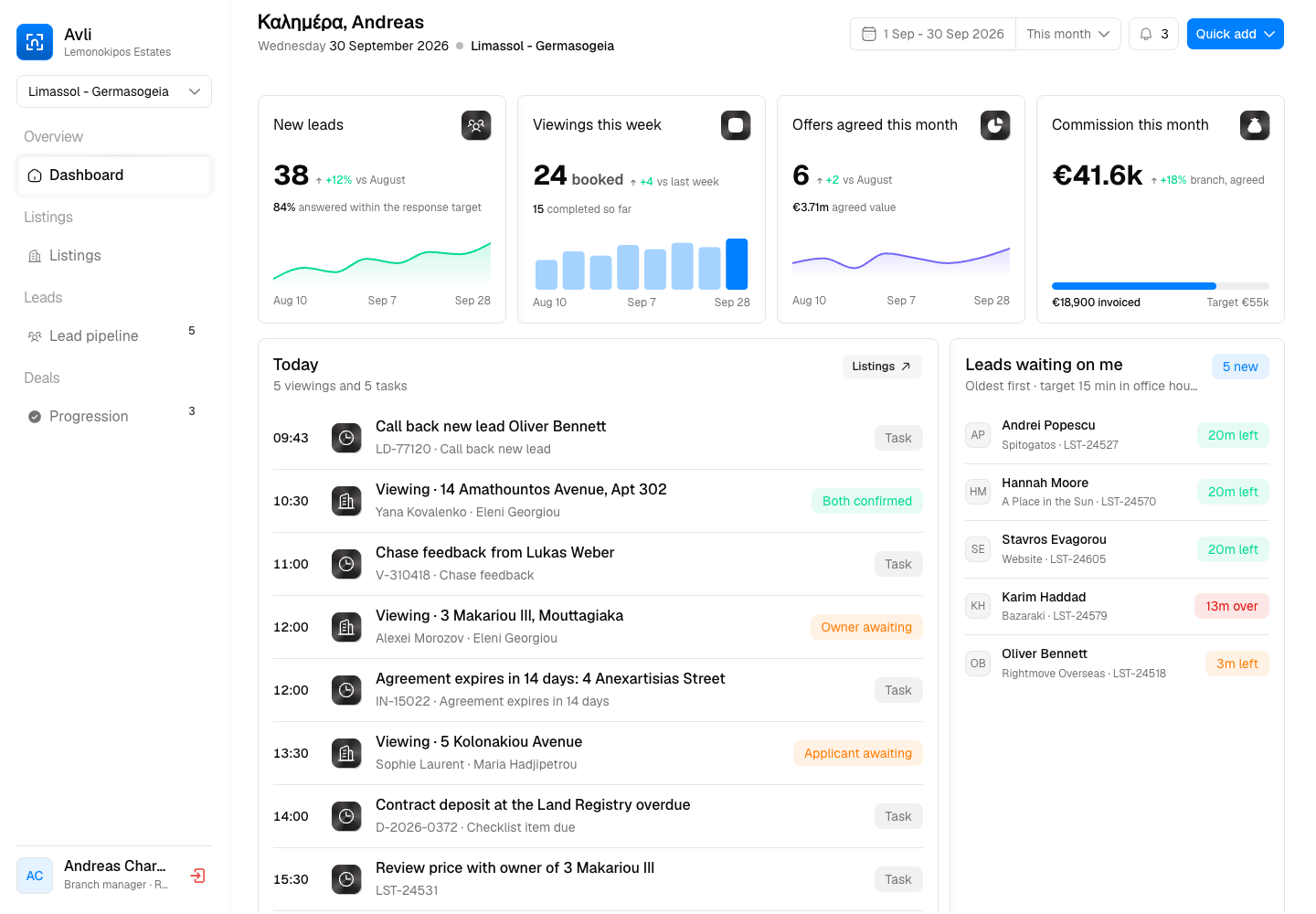
Avli - Listings and Agent CRM for a Cypriot Estate Agency
Designed and built a clickable listings and agent CRM for a Cypriot sales and lettings agency with 22 branches and about 180 agents: listings with EPC and agency agreement checks, portal syndication, a lead pipeline with response timers, offers that wait for AML clearance, and a progression checklist from reservation to transfer of title.
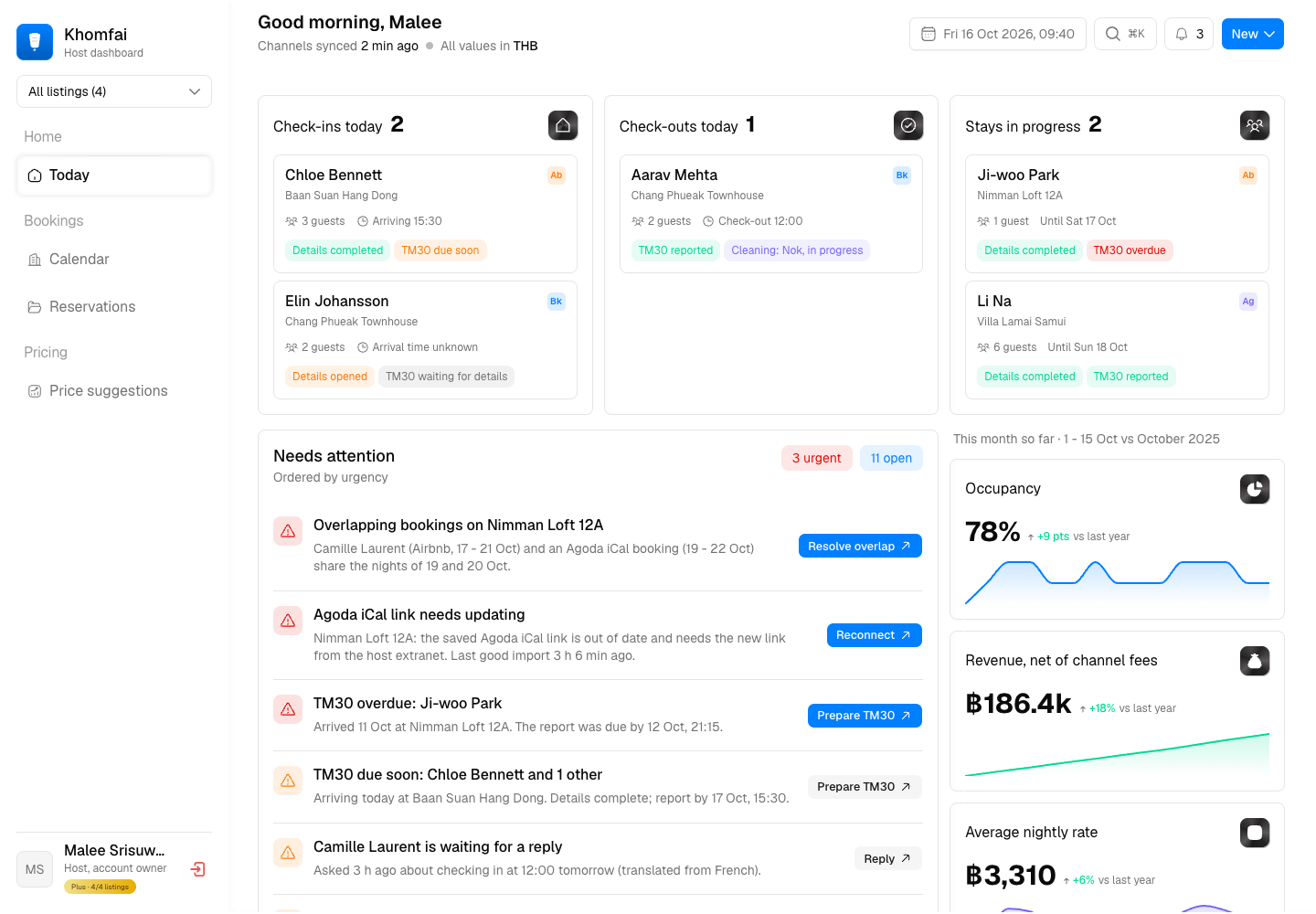
Khomfai - Short-Let Host Dashboard for Small Hosts in Thailand
Designed and built a clickable host dashboard for a Chiang Mai SaaS start-up whose customers run 1 to 10 short-let listings themselves: one calendar across Airbnb, Booking.com, Agoda and Vrbo, a Today screen ordered by urgency, foreign guest reporting (TM30) tracked per guest, and nightly price suggestions that stay inside the host's own limits.
Enterprise Software Engineering - Human + AI
Contact Us
© 2026 - Copyright. All Rights reserved Oceanlab
Location
Global Headquarters
21 Merchant Road, 3rd Floor, Singapore 058267
Main corporate office and leadership operations
North America Office
548 Market Street, PMB 12345, San Francisco, CA 94104
Client operations and business development
India Office
402 Shivalik Shilp II, SG Highway, Ahmedabad 380015
Engineering and delivery center

Enterprise Software Engineering - Human + AI
Contact Us
Locations
Global Headquarters
21 Merchant Road, 3rd Floor, Singapore 058267
Main corporate office and leadership operations
North America Office
548 Market Street, PMB 12345, San Francisco, CA 94104
Client operations and business development
India Office
402 Shivalik Shilp II, SG Highway, Ahmedabad 380015
Engineering and delivery center
© 2026 - Copyright. All Rights reserved Oceanlab