Tongkang - Audit Workpaper Platform from Acceptance to Locked Archive
Audit File Platform for a Singapore Accounting Firm
Designed and built a clickable audit workpaper platform for a mid-tier Singapore public accounting corporation: a firm dashboard of engagements, hours and review notes, an engagement overview with materiality and blockers, a binder indexed A to W, and workpapers with tick marks, cross-references, review notes and dated sign-offs.
Most of our work is under NDA. Per agreement, we can share the work but not the company details - all names and identifying information shown here have been changed.
Impact
Dashboard, engagements list, engagement overview, binder and workpaper. The Tampines Precision FY2026 file carries a hand-written confirmation grid, bank reconciliation and review note threads.
Preparer, reviewer and partner chips on every workpaper. Sign-offs are dated now, reviewer sign-off is refused while review notes are open, and editing a signed workpaper marks it changed after review.
From A Completion to W Going concern, each with an objective, procedures by assertion and a conclusion, plus a legend of 7 tick marks and cross-references in and out.
22 clients including 3 SGX-listed entities, 15 staff users, every status from acceptance to archived, and 14 review notes on the Tampines Precision FY2026 file.
The Problem
Sennett Quay ran its audits on a shared drive of Excel and Word templates, with review notes kept as comments in each file and client requests sent by email. Seniors re-typed the trial balance into leadsheets for every client, samples were picked with a spreadsheet random function nobody could re-perform, and managers could not see open review notes without opening every file. ACRA's practice monitoring inspection then raised findings on sampling documentation and on sign-offs dated after the report.
Our Solution
Tongkang carries each engagement from client acceptance and independence through planning, materiality, fieldwork, review notes, engagement quality review and the report check to an archived file that locks when the assembly period ends. Every procedure, sign-off and change is recorded with who did it and when, so a file cannot be changed quietly after it is archived.
The Challenge: An Audit File an Inspector Can Trust
Sennett Quay is a fictional firm of about 140 staff auditing around 450 private companies a year and a small portfolio of SGX-listed entities. Each file has to show, years later, who did the work, who reviewed it and when, under the Singapore Standards on Auditing and ACRA's inspections.
Sign-offs Nobody Could Date
SSA 230 expects the file to show who prepared and reviewed each workpaper and when. In shared spreadsheets a sign-off was a typed name and date, a later edit left no trace, and the inspection found sign-offs dated after the report.
Samples That Could Not Be Re-performed
SSA 530 expects the sample to be documented so it can be re-performed. A spreadsheet random function gives different items every time it recalculates, and the population was not always agreed to the leadsheet before items were picked.
Review Notes Scattered Across Files
Notes lived as comments inside each workpaper. Managers and partners could not see what was still open, by whom or for how long, and nothing stopped a file moving on while notes raised by the partner were unanswered.
Quality Rules Around Every Engagement
SSQM 1 and 2 require acceptance and continuance checks, independence confirmations from every team member and an engagement quality review for listed entities. After the report the file must be assembled within 60 days, then any change is a documented amendment.
Our Approach: From Audit Standards to a Clickable Binder
Spec and Rules Research
Mapped 9 roles, from audit associate and engagement partner to quality and risk and the client's finance contact, 40 screens including a client document portal, and the data model for engagements, materiality, risks, trial balances, workpapers, sign-offs, samples, review notes, adjustments and archive amendments. Wrote down the rules the design follows: the SSAs, SSQM 1 and 2, the Accountants Act 2004, the ACRA Code, the small company audit exemption under the Companies Act 1967 and the PDPA.
Clickable Demo on a Production UI Kit
Built 5 key screens on a production dashboard kit: the dashboard with KPIs, budget vs actual hours and a My work list for each role, the engagements list with status tabs and assembly days left, the engagement overview with progress rail, materiality box, area progress and blockers, the binder with filters and a quick view panel, and the workpaper with its working, tick marks, review notes and sign-offs. All actions run on local state.
What a Production Build Adds
Integration with ACRA BizFile+, trial balance import from Xero, QuickBooks Online and SAP Business One, Confirmation.com, World-Check screening, Microsoft Entra ID sign-in, Docusign and storage in a Singapore region. A hash-chained audit trail, server-dated sign-offs, and the remaining screens: acceptance and independence, materiality, risk assessment, trial balance mapping, sampling, adjustments, completion, EQR, report check, archive and the client portal.
Why It Works: Every Sign-off on the Record
Sign-offs That Cannot Be Backdated
Preparer, reviewer and partner chips show who signed and when, dated at the moment of signing. A reviewer cannot sign while notes on the workpaper are open, and an edit after sign-off keeps the sign-offs but flags the workpaper changed after review until it is re-signed.
The Binder Works Like the Paper One
Workpapers sit in sections A to W with references such as D-110, status dots and filters for my workpapers, awaiting my review, with open notes and changed after review. Cross-references link the working to the leadsheet and to other workpapers.
Blockers Before Status Changes
The overview lists what stops the next status, such as an unconfirmed independence or open notes, and Change status refuses with those reasons. Materiality shows its benchmark, percentage, version and partner approval.
Each Role Sees Its Own Work
My work changes for manager, senior, associate, partner and EQR: workpapers waiting for review, notes answered and ready to clear, areas waiting for partner sign-off. Hours turn amber above 90% of budget and red above 100%.
Related case studies
View all: Accounting & tax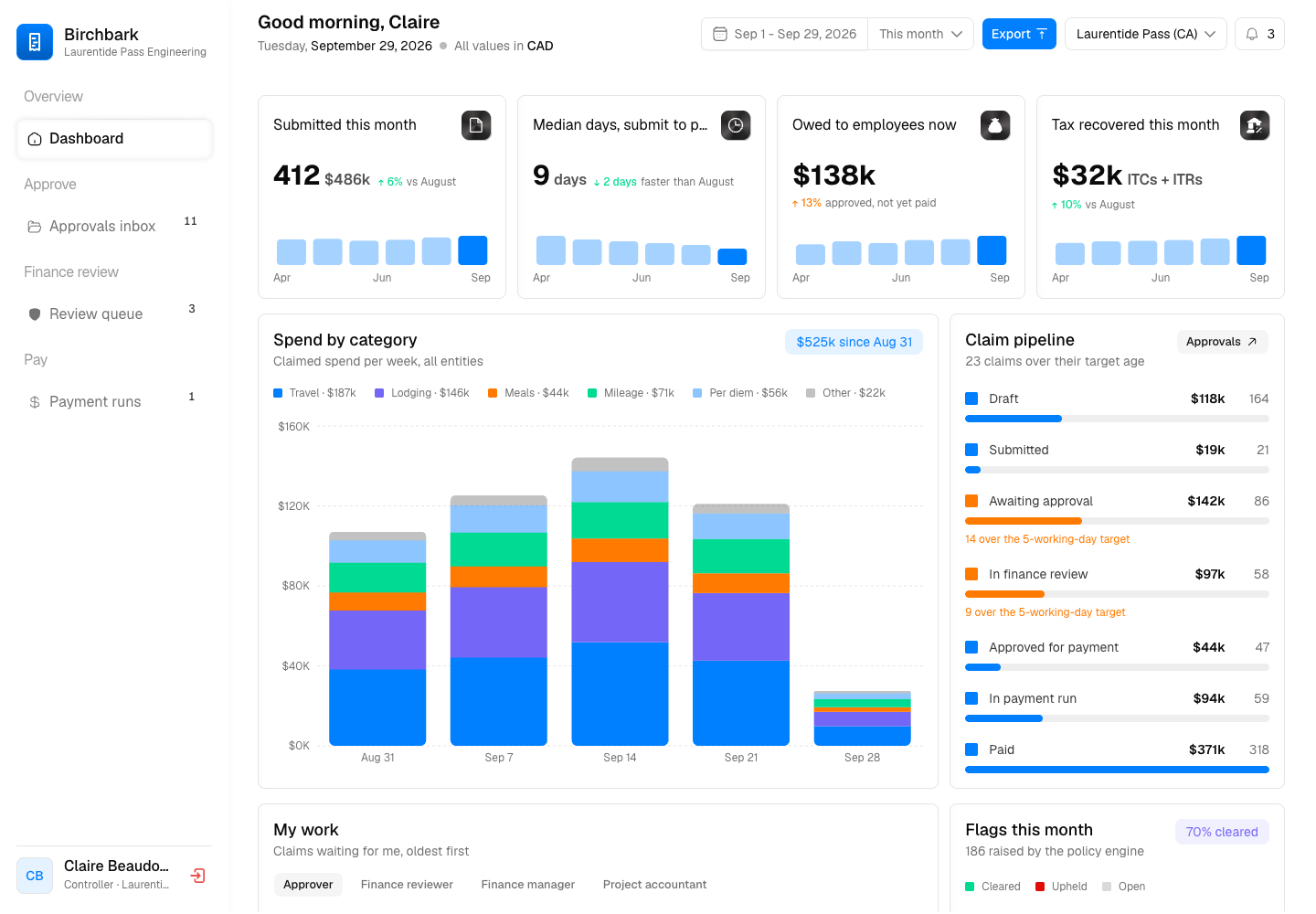
Birchbark - Expense Management with GST/HST and QST Recovery Built In
Designed and built a clickable expense management platform for a Canadian consulting engineering firm: approvers decide claims line by line with policy flags, finance audits flagged and sampled claims, GST/HST and QST are read from each receipt for input tax credits, and approved claims are reimbursed in EFT payment runs.
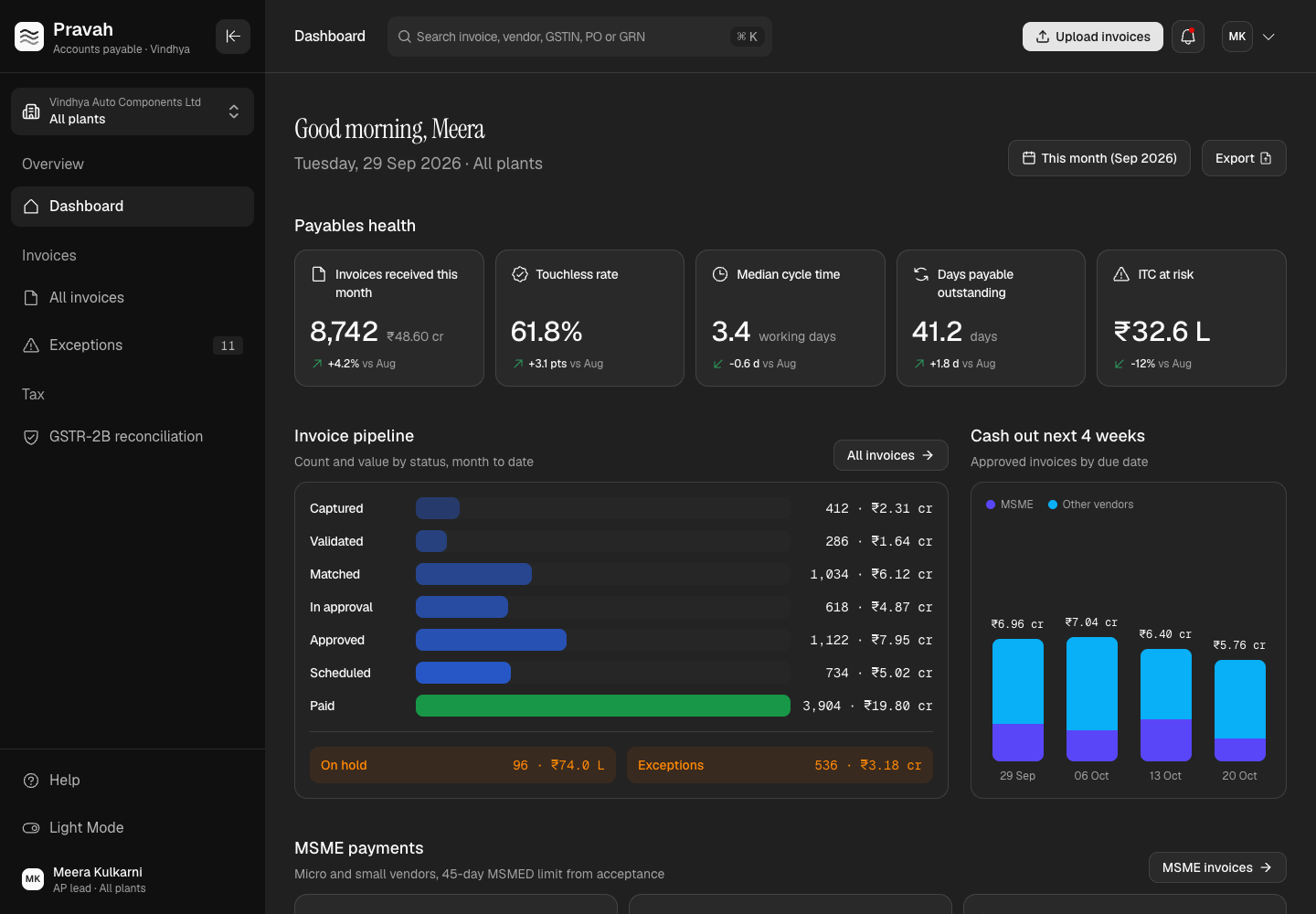
Pravah - Accounts Payable Automation with GST, TDS and MSME Rules Built In
Designed and built a clickable accounts payable platform for an Indian auto components maker with four plants and a GSTIN in each state: invoice capture with field confidence, three-way matching against POs and goods receipts, GST and TDS per invoice, MSME due dates from the acceptance date, an exceptions queue and GSTR-2B reconciliation.
Enterprise Software Engineering - Human + AI
Contact Us
© 2026 - Copyright. All Rights reserved Oceanlab
Location
Global Headquarters
21 Merchant Road, 3rd Floor, Singapore 058267
Main corporate office and leadership operations
North America Office
548 Market Street, PMB 12345, San Francisco, CA 94104
Client operations and business development
India Office
402 Shivalik Shilp II, SG Highway, Ahmedabad 380015
Engineering and delivery center

Enterprise Software Engineering - Human + AI
Contact Us
Locations
Global Headquarters
21 Merchant Road, 3rd Floor, Singapore 058267
Main corporate office and leadership operations
North America Office
548 Market Street, PMB 12345, San Francisco, CA 94104
Client operations and business development
India Office
402 Shivalik Shilp II, SG Highway, Ahmedabad 380015
Engineering and delivery center
© 2026 - Copyright. All Rights reserved Oceanlab