Tomoshibi - Trial Recruitment and eConsent Platform for a Japanese SMO
Recruitment and Informed Consent for Industry-Sponsored Trials in Japan
Designed and built a clickable recruitment and eConsent platform for a Japanese site management organisation: a pre-screen leads pipeline with contact SLAs, a consent status view against the current IRB-approved version, and a participant consent record with every signature, quiz result and question a monitor needs to see.
Most of our work is under NDA. Per agreement, we can share the work but not the company details - all names and identifying information shown here have been changed.
Impact
Dashboard, leads pipeline with board and table views, lead detail, consent status with a version matrix, and the participant consent record. Every one of the 29 leads and 29 participants opens its own page.
Self, legally acceptable representative, impartial witness, and guardian consent with child assent. Each participant's timeline shows the signatures its route needs, then the investigator's.
Lead cards turn amber after 1 working day without contact and red after 2, and the sidebar badge turns red when any lead is past the SLA.
5 studies at 6 partner sites, 9 consent document versions with IRB approval dates, 5 pre-screen questionnaires with eligibility rules, 7 campaigns, 29 leads and 12 staff users.
The Problem
Mizunagi's CRCs found patients through hospital posters, a phone line and ad agencies whose leads arrived as spreadsheets by email, and nobody could say which channel produced enrolled participants. About two thirds of phone enquiries failed obvious criteria. Consent was on paper, the investigator signed later in the day, and when the IRB approved an amended document, CRCs checked binders by hand to find who needed re-consent.
Our Solution
Tomoshibi follows a patient from a pre-screen questionnaire to a signed consent. Recruitment coordinators work every lead against a contact SLA with the rule that decided each answer, and CRCs and investigators see each participant's consent position against the current IRB-approved version, with a full timeline of what was read, asked and signed.
The Challenge: Consent That Holds Up at Monitoring
Industry-sponsored trials in Japan run under the PMD Act and J-GCP. Every consent has to use the IRB-approved document, be explained by a delegated investigator, carry dated signatures and end with a copy in the participant's hands, and monitors check all of it.
Recruitment Without a Funnel
Leads came from posters, a phone line, patient associations and agency spreadsheets. With no shared pipeline, nobody could tell which channel produced consented participants rather than calls, and sponsors asked for recruitment data the SMO could not produce.
Health Data Before the First Call
Under APPI, medical history is special care-required personal information. The person's prior consent is generally needed before any health answer is stored, and it cannot be shared on an opt-out basis, so identifiable lead data never reaches sponsors.
Paper Consent Monitors Kept Flagging
A CRC read a 20 to 40 page explanatory document aloud and the investigator signed later. Monitors regularly found missing dates, superseded versions signed after an approval date and copies never handed to the participant.
Re-Consent Found by Hand
When new safety information leads to a revised document, J-GCP generally requires renewed written consent. Each new IRB-approved version meant CRCs searching binders for who had signed what, while participants kept coming in for visits.
Our Approach: From J-GCP Rules to a Clickable Platform
Spec and Rules Research
Mapped 10 roles from recruitment coordinator, CRC and investigator to sponsor viewer, patient and legally acceptable representative, 44 screens across the staff console, public recruitment and participant eConsent, and the data model for studies, sites, consent versions, IRB approvals, pre-screens, leads, sessions, signatures and an append-only audit trail. Wrote down the rules: the PMD Act and J-GCP, MHLW guidance on electronic consent, APPI, the Japanese ER/ES guideline and the Act on Electronic Signatures.
Clickable Demo on a Production UI Kit
Built 5 key staff screens on a production dashboard kit: the dashboard with enrolment pace per study and a My work panel by role, the leads pipeline with a quick view and click-to-reveal contact details, lead detail with call logging and closing, consent status with a participant by version matrix, and the participant consent record with an investigator signature panel. A study switcher filters the dashboard, leads and consent screens, and all actions run on local state.
What a Production Build Adds
The participant eConsent screens on tablet and phone, the public trial finder and pre-screen, and the remaining staff screens for campaigns, documents, re-consent, questions, compliance and reports. Integrations with eKYC (such as TRUSTDOCK), CloudSign or DocuSign with a certified timestamp, Twilio, SendGrid and LINE messaging, private video hosting, and hosting in AWS Tokyo. Computerised system validation evidence and SOPs with the client's QA before go-live.
Why It Works: The Consent Story in One Place
Every Answer Shows Its Rule
A lead's pre-screen answers each show the rule that decided them, such as an age range or an exclusion, so a coordinator sees why a lead is likely eligible or needs review before the first call. A lead entered by staff cannot be saved without the verbal APPI consent box ticked.
Contact Details Stay Masked
Phone, email and kana are hidden until a coordinator clicks Reveal, and every reveal is logged. A lead submitted on someone's behalf shows the relationship and a reminder that the person must still take part in consent.
Signed Version Against Current Version
Consent status puts the version each participant signed next to the current approved one, with participant and investigator signing times and how the copy was delivered. Anyone whose version needs re-consent shows as re-consent due, and the dashboard flags those with a visit in the next 7 days.
A Timeline a Monitor Can Read
Each consent record lists identity confirmation, minutes per section, videos watched, quiz attempts against the pass mark, questions and who answered them, each signature and the CRC explanation, against the document's IRB approval date and hash. The investigator signs in a panel that shows the signature meaning and asks for the password again.
Related case studies
View all: Pharma & life sciences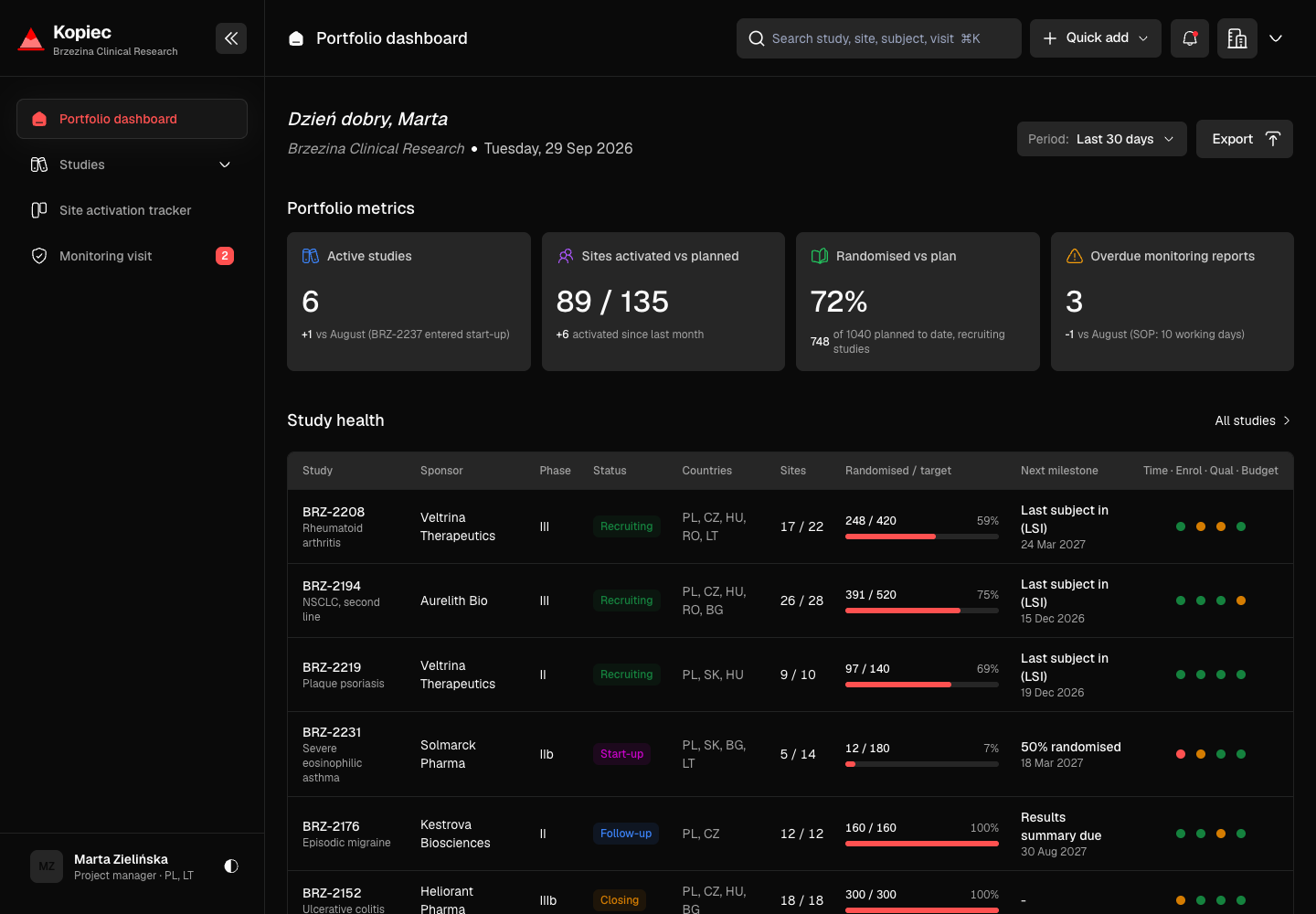
Kopiec - Clinical Trial Management System for Sites, Visits and Milestones
Designed and built a clickable clinical trial management system for a Warsaw contract research organisation running phase II and III trials in seven countries: a portfolio dashboard with CTIS notification deadlines, study timelines planned against actual, an 11-step site activation tracker and monitoring visit reports signed with a stated meaning.
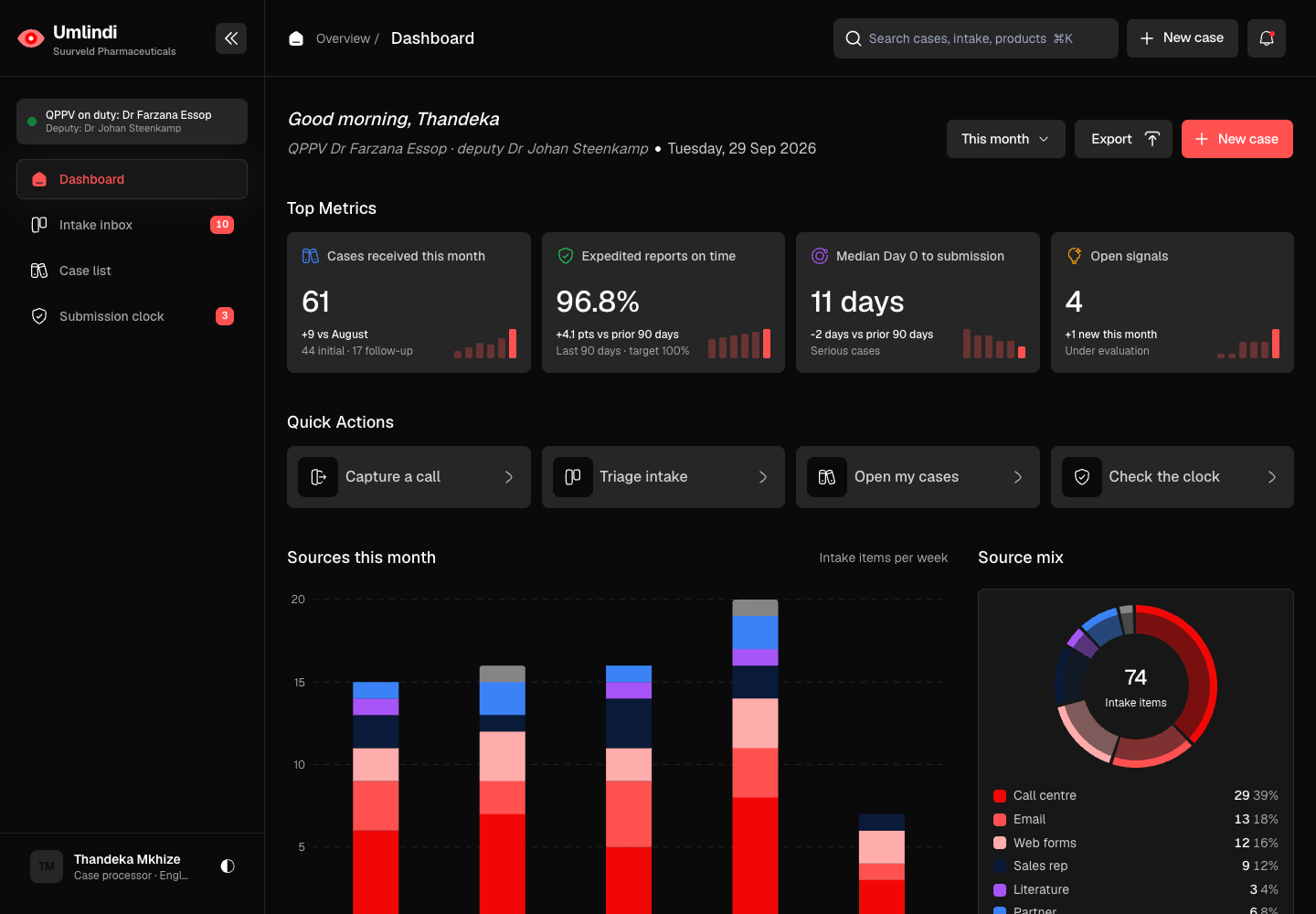
Umlindi - Pharmacovigilance Safety Database with Regulator Clocks
Designed and built a clickable safety database for a South African generic medicines company: one intake inbox for calls, emails, web forms, rep and partner reports, case processing with MedDRA coding and WHO-UMC causality, medical review sign-off, and a submission clock that counts every SAHPRA and partner deadline from Day 0.
Enterprise Software Engineering - Human + AI
Contact Us
© 2026 - Copyright. All Rights reserved Oceanlab
Location
Global Headquarters
21 Merchant Road, 3rd Floor, Singapore 058267
Main corporate office and leadership operations
North America Office
548 Market Street, PMB 12345, San Francisco, CA 94104
Client operations and business development
India Office
402 Shivalik Shilp II, SG Highway, Ahmedabad 380015
Engineering and delivery center

Enterprise Software Engineering - Human + AI
Contact Us
Locations
Global Headquarters
21 Merchant Road, 3rd Floor, Singapore 058267
Main corporate office and leadership operations
North America Office
548 Market Street, PMB 12345, San Francisco, CA 94104
Client operations and business development
India Office
402 Shivalik Shilp II, SG Highway, Ahmedabad 380015
Engineering and delivery center
© 2026 - Copyright. All Rights reserved Oceanlab