Tavor - Member Portal for an Israeli Health Fund with Family Proxy Access
Patient Portal for an Israeli Health Fund
Designed and built a clickable member portal for an Israeli health fund: one login for a member and the children and parents they look after, referrals and tofes 17 commitments with an honest status, and test results with plain-language explanations, held results and teen confidentiality built in.
Most of our work is under NDA. Per agreement, we can share the work but not the company details - all names and identifying information shown here have been changed.
Impact
Home, referrals and commitments, referral or commitment detail, test results and result detail, plus the 4-step tofes 17 request panel and the result trend panel. All 22 referral and commitment records open their own detail page.
The member acts for herself, her daughter of 8 (full access by household link), her son of 15 (limited teen access) and her father of 79 (durable power of attorney). The top bar turns violet and reads "Viewing as" when acting for someone else.
Submitted, in review, more info needed, approved, partly approved, declined, expired and cancelled. A pending request is never shown as approved, and only services on the fund's auto-approval list come back Approved at once.
Across 4 family members: 2 held for clinician review, 4 from hospitals via the information exchange and 1 teen confidential result that a parent never sees. Also 13 referrals, 9 commitments, 8 appointments and 11 home alerts.
The Problem
Tamar's members reached the fund through a 2016-era website, a separate appointments app, a call centre and paper forms at the clinic desk. A mother of three logged in once per child, a tofes 17 meant a clinic visit and a two-day wait, and the call centre took about 22,000 calls a week, a third of them asking whether a commitment was approved or where a result was. Arabic- and Russian-speaking members got Hebrew-only screens, and staff could open any member's record without leaving a reason.
Our Solution
Tavor is one member app for Tamar's roughly 640,000 members, on iOS, Android and the web, in Hebrew, Arabic, Russian and English. Members book care, follow referrals and commitments, read results with plain-language explanations, renew prescriptions, message their care team, pay co-payments, claim from their supplementary plan and act for their family from the same login, while a staff console runs message triage, proxy approvals and audited support lookups.
The Challenge: A Family's Health Records Under Israeli Law
An Israeli health fund provides the state's basket of services under the National Health Insurance Law, and its member portal has to follow the rules on medical information, privacy, guardianship and accessibility while serving members in four languages.
Acting for the Right Person
Parents are generally the natural guardians of their minor children, but Tamar's policy limits parental access from 14 to 17 with a confidential teen area and ends it at 18. Access to another adult needs their consent, a guardianship order or a durable power of attorney checked by a proxy officer.
"Is It Paid For?" Asked by Phone
Care outside the fund's own facilities generally needs a financial commitment (tofes 17) before the service. Members could not see where a request stood, so a third of call centre traffic was status questions, and a pending request must never look approved.
Results That Must Be Discussed First
The Patient's Rights Act gives patients the right to the information in their record, with a narrow exception where a physician believes it could seriously harm them. Results needed a held state with a release date and a record of why, and hospital results arrive through the national information exchange.
Sensitive Data, Four Languages
Medical data is sensitive under the Privacy Protection Law, strengthened by Amendment 13 from August 2025, and a fund's member database generally sits at the high security level of the 2017 Data Security Regulations. Hebrew and Arabic read right to left, and the service must meet SI 5568 accessibility.
Our Approach: From Health Fund Rules to a Clickable Portal
Spec and Rules Research
Mapped 11 user roles and 45 screens: 2 public, 27 member and 16 staff console screens, with 5 panels and about 18 modals. Defined the data model for members, proxy grants and requests, appointments, referrals, commitments, results, prescriptions, messages, charges, supplementary claims and the access audit, and wrote down the rules the design follows: national health insurance, co-payments and chronic ceilings, tofes 17, supplementary plans, the Patient's Rights Act, privacy and data security, guardianship and accessibility.
Clickable Demo on a Production UI Kit
Built 5 key screens on a production dashboard kit: Home with family chips, alerts ordered clinical first and the next appointment with check-in, referrals and commitments with days to expiry and a family view, commitment detail with a status timeline, missing-document uploads, cancel, share and appeal, a 4-step tofes 17 request, and test results with reference range bars, trends and held rows. Content is in English; the language switch lists all four languages but does not translate or mirror the layout in this demo.
What a Production Build Adds
Integration with Tamar's clinical record system through a FHIR R4 facade, the national health information exchange, government identity login, SMS codes and push, tokenised card payments, Masav refunds, receipt reading for claims and a translation workflow. The remaining member screens, full right-to-left Hebrew and Arabic, WCAG 2.1 AA in all four languages, and the staff console with message triage, proxy approvals, support lookup with a recorded reason, break glass and a hash-chained access audit.
Why It Works: The Right Person, the Right Status
Always Clear Who You Are Acting For
Family chips on Home show new items per person, and switching to someone else turns the whole top bar violet with "Viewing as Yosef" and his access level, so a parent never books or requests for the wrong child.
Status You Can Trust
Each commitment shows its timeline, amount covered, your share and validity. When the fund needs more information, the missing documents are listed with an upload button, and uploading moves the request back to In review rather than to Approved.
Results With Context, or Not Yet
Every value has a reference range bar, a flag and a trend, next to the doctor's note and a plain-language explanation with its clinical review date. Held results show only the expected release date and never their values, and hospital results are labelled with their source.
Privacy by Omission
A teen's confidential results are filtered out for a parent entirely, with no row and no count. An "Urgent? Call 101" link sits on every page, because messages and the portal are not for emergencies.
Related case studies
View all: Telehealth & patient apps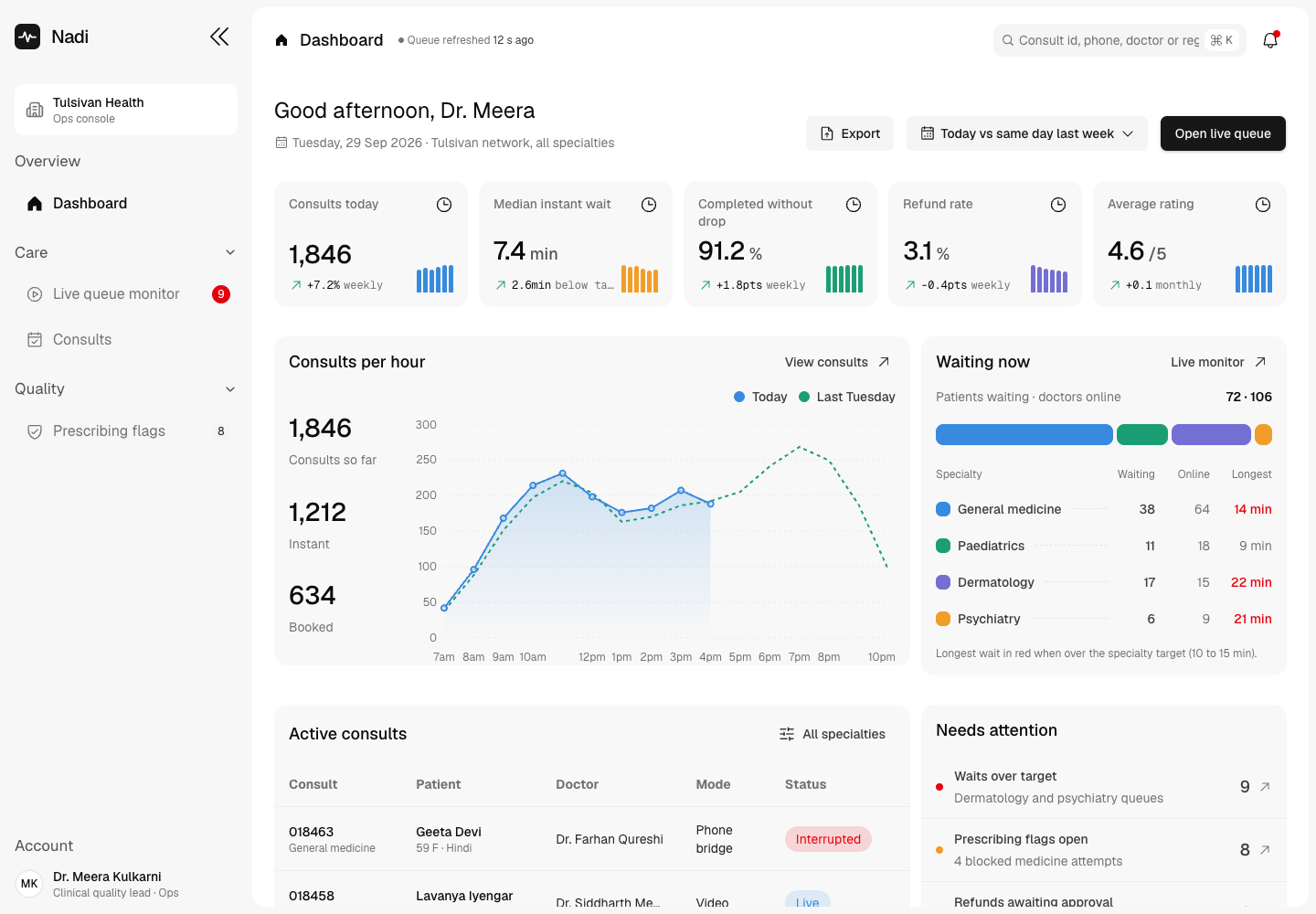
Nadi - Video Consult Platform with Guideline-Aware Prescribing
Designed and built a clickable ops console for an Indian telemedicine provider's video consult platform: a live queue across four specialties, every consult with its guideline evidence and signed e-prescription, refunds within role limits, and prescribing flags raised when a doctor tries a medicine the Telemedicine Practice Guidelines do not allow.
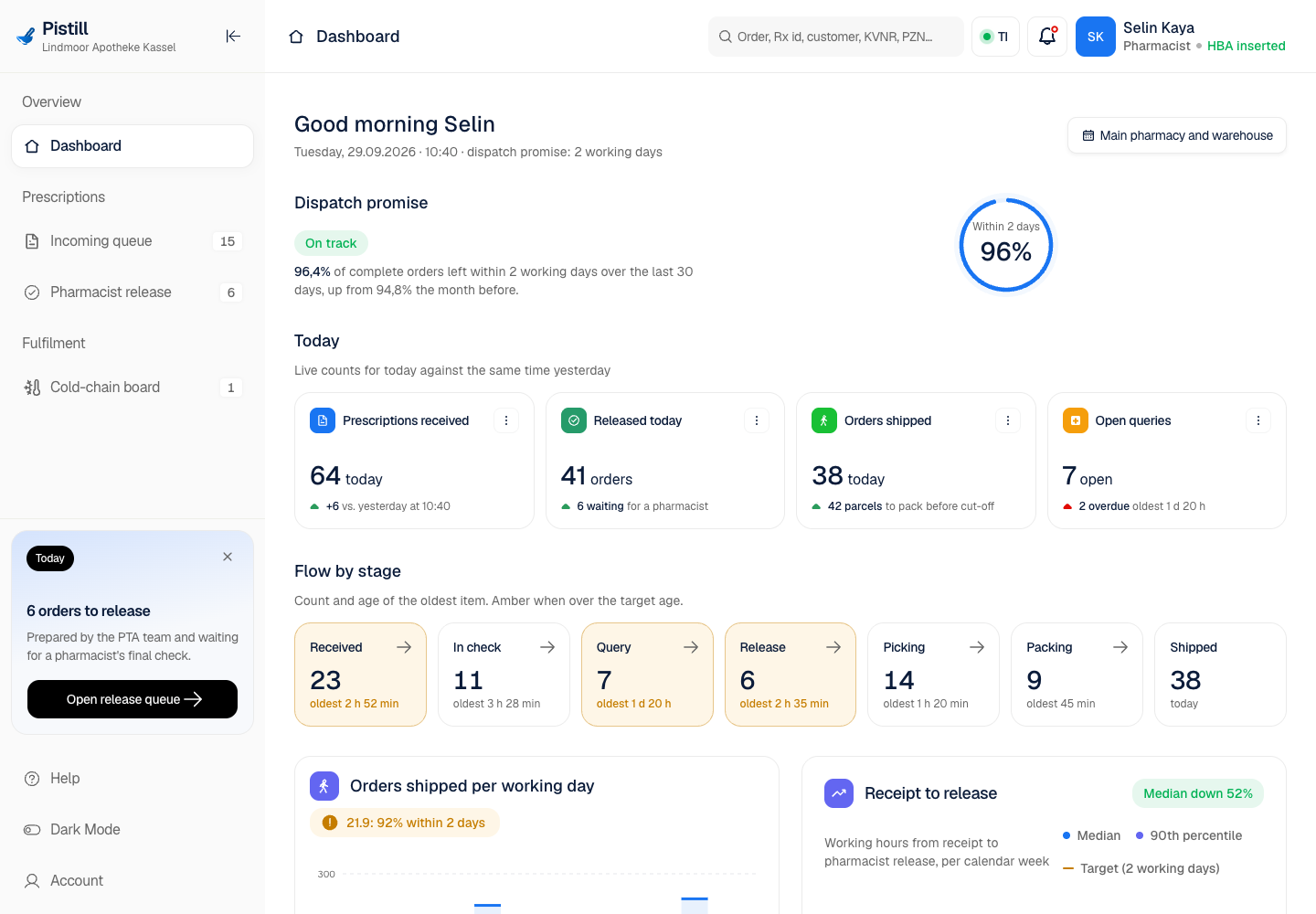
Pistill - E-Rezept Redemption, Pharmacist Release and Home Delivery Console
Designed and built a clickable pharmacy operations console for a pharmacist-owned group in northern Hesse with a mail-order permit: one queue for E-Rezepte from every channel, a validation workbench with substitution and co-payment rules, a pharmacist release step, and a cold-chain board for fridge medicines.
Enterprise Software Engineering - Human + AI
Contact Us
© 2026 - Copyright. All Rights reserved Oceanlab
Location
Global Headquarters
21 Merchant Road, 3rd Floor, Singapore 058267
Main corporate office and leadership operations
North America Office
548 Market Street, PMB 12345, San Francisco, CA 94104
Client operations and business development
India Office
402 Shivalik Shilp II, SG Highway, Ahmedabad 380015
Engineering and delivery center

Enterprise Software Engineering - Human + AI
Contact Us
Locations
Global Headquarters
21 Merchant Road, 3rd Floor, Singapore 058267
Main corporate office and leadership operations
North America Office
548 Market Street, PMB 12345, San Francisco, CA 94104
Client operations and business development
India Office
402 Shivalik Shilp II, SG Highway, Ahmedabad 380015
Engineering and delivery center
© 2026 - Copyright. All Rights reserved Oceanlab