Taquara - Offline-First Point of Sale with SIFEN E-Invoicing
Point of Sale for a Paraguayan Hardware Chain
Designed and built a clickable till and back office for a chain of 9 hardware and home stores in Gran Asunción: a tablet till that keeps selling when the internet drops, sells cable by the metre and nails by the kilo, records every approval, and issues electronic invoices through Paraguay's SIFEN system.
Most of our work is under NDA. Per agreement, we can share the work but not the company details - all names and identifying information shown here have been changed.
Impact
Dashboard, the till Sale screen with its Payment and Sale complete steps, transactions, transaction detail and the SIFEN e-invoice console. Every one of the 30 demo transactions opens its own detail page.
Queued on till, sent, approved, approved with observations, rejected, cancellation requested and cancelled, each with its CDC, SIFEN response and KuDE. Number ranges per point of issue flag gaps in the sequence.
Cashier, supervisor and store manager limits from the approval policy, checked on the till so approvals work offline. In the demo an 8% trade discount carries the supervisor's PIN approval on the line.
Sales, a return, an exchange, a void, a no-sale and a layaway deposit across 9 stores and 46 registers, with 26 products sold by unit, kilo, metre and square metre, 10 customers and 18 e-invoices.
The Problem
Yvyrá's 9 stores ran a desktop till program with a local database that synced to head office overnight by file copy. When a store's connection or the nightly job failed, head office saw nothing. Prices were keyed in store by store, cable was sold by guessing the metres on a paper slip, discounts were typed as new prices with no record of who allowed them, and the old program could not produce SIFEN electronic invoices, so the trade desk retyped every line into a separate tool.
Our Solution
Taquara gives Yvyrá one point of sale across 46 registers: a tablet till that sells offline with PIN login, barcode scanning, weighed and cut-to-length items, manager approvals and split tender, and issues tickets or SIFEN electronic invoices, plus a web back office where head office sees every transaction, approval and e-invoice status across the chain.
The Challenge: Selling When the Internet Drops
A hardware store sells screws by the unit, cable by the metre and cement by the bag, to households and to builders who need a proper invoice. In Paraguay every one of those invoices is an electronic document that has to reach the tax authority, even from a till that has lost its connection.
Electronic Invoices From the Till
Each factura electrónica is an XML document signed with the company's certificate, identified by a long control code (the CDC), numbered by establishment, point of issue and sequence under the timbrado, and sent to SIFEN. The buyer's RUC check digit has to be right before payment, and rejections must be fixed in time.
Offline Without Losing Control
Stores keep trading through outages, so the till must hold prices, users, limits and number ranges locally, queue every sale and document, and stop new sales before the offline time could break the SIFEN transmission window. Store credit is capped offline because other stores' use cannot be checked.
Goods Sold by Weight and Length
Nails and fertiliser are weighed on scales that need INTN verification, cable and chain are cut to length in fixed steps, and in-store labels carry the weight or price inside GS1 restricted-circulation barcodes. Each needs its own path at the counter.
Discounts and Cash Nobody Could Explain
Cashiers gave discounts by typing a new price, drawer opens left no trace, and cash-up was a spreadsheet nobody reconciled against sales. Every override, void, return and cash movement now has to record who did it, who approved it and why.
Our Approach: From Paraguayan Selling Rules to a Clickable Till
Spec and Rules Research
Mapped 10 roles from cashier to auditor, 43 screens (15 till screens, 27 back-office screens and a public receipt page) and the data model for stores, registers, devices, products, price batches, promotions, shifts, cash movements, transactions, approvals, electronic documents, number ranges, store credit, quotes, layaways and the till's sync outbox. Wrote down the rules the design follows: SIFEN e-invoicing, IVA by tax category, RUC and cédula buyer identification, Law 6534/2020 and Law 7593/2025 on personal data, Law 1334/98 on consumer protection, PCI DSS P2PE card terminals, INTN scale verification and GS1 in-store barcodes.
Clickable Demo on a Production UI Kit
Built 5 key screens on a production dashboard kit: the dashboard with KPIs against the same weekday last week, sales by hour, tender mix and needs attention; the till Sale screen with connection chip, queue count, weighed, cut and promo lines, line editor with discount limit check, product search with stock at other stores, payment by ticket or factura with RUC check and split tender, and sale complete with the e-invoice number; transactions with offline and approval filters; transaction detail with till and server times, approvers, masked card data and SIFEN history; and the e-invoice console with number ranges. The till is shown inside the back-office shell, and all actions run on local state.
What a Production Build Adds
The offline till app on Android tablets managed through Android Enterprise, with its local store and sync outbox. SIFEN web services or an integrated provider, a signing certificate from an accredited provider, semi-integrated card terminals through an acquirer such as Bancard or Bepsa, QR payments, RUC lookup, ESC/POS receipt printers, serial or USB scales, receipt email and a daily accounting export. PIN login and role permissions, a full audit log, and the remaining screens: returns, quotes and layaways, shifts and cash, Z-reports, catalogue, price changes, promotions, devices, settings and the public receipt.
Why It Works: Every Sale Accounted For, Online or Not
Offline Is a Normal State
The till top bar shows the connection, the number of items queued and the state of the printer and scale. Approval limits are checked on the device, and in the back office every sale shows its time on the till and the time the server received it, with a filter for sales recorded offline.
Every Exception Has a Name
Overrides, discounts, voids and no-sales each record who asked, who approved with their PIN and why. Transaction detail shows the approver on the line itself, and a filter lists every transaction with an override or approval.
E-Invoice Problems Surface Early
The dashboard and the e-invoice console count rejected and unsent documents, name the register that has been offline longest and show SIFEN's message on each row, so finance can correct and reissue before the transmission window closes. Card data stays masked: the till only sees the brand, last four digits and approval code.
Built for a Busy Counter
Quick keys cover items without barcodes such as loose nails and key cutting, cut-to-length lines follow each product's minimum and step, weighed lines read the scale, and totals show IVA as included, the way Paraguayan prices are displayed.
Related case studies
View all: Retail & POS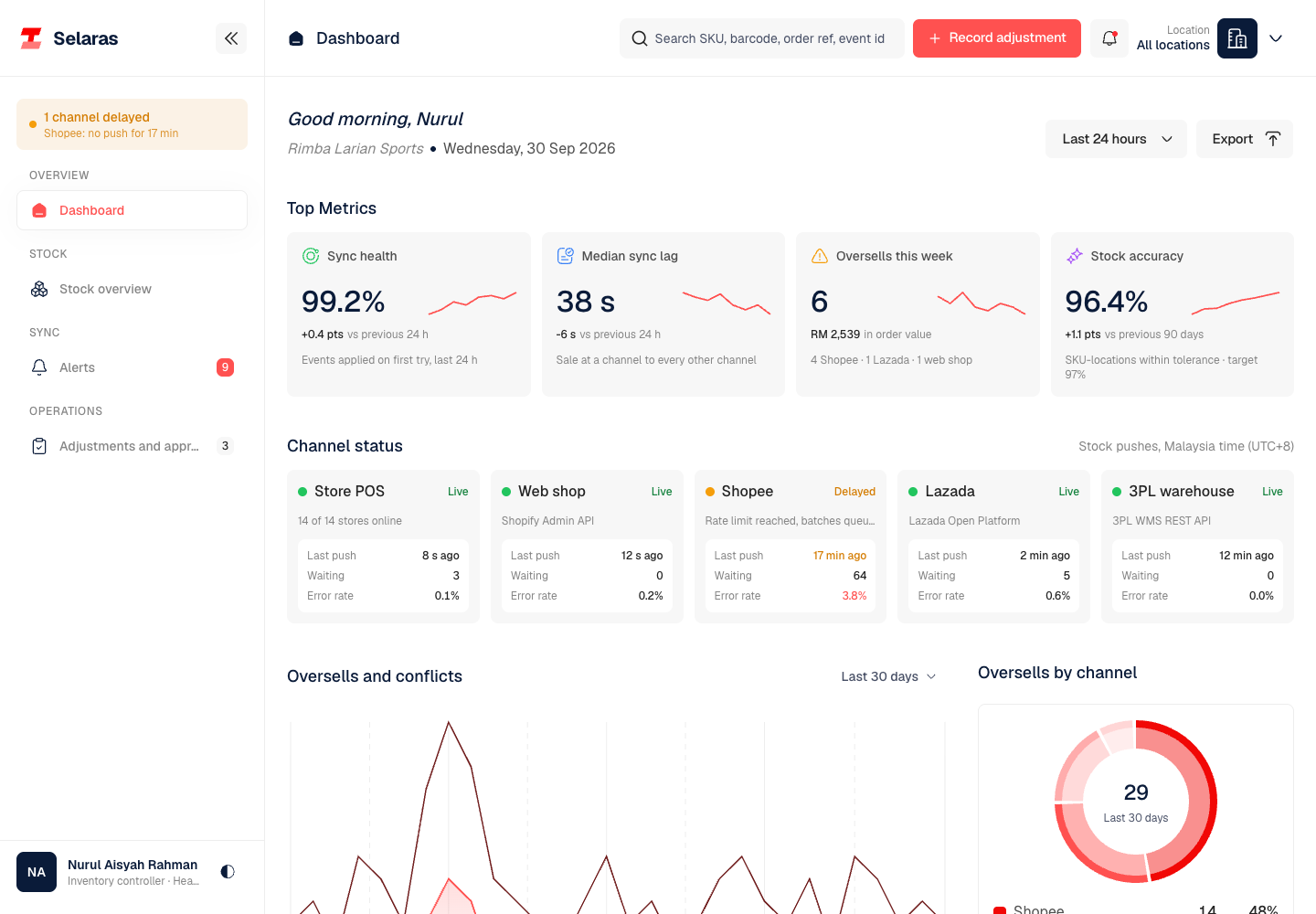
Selaras - Omnichannel Inventory Sync Hub with One Stock Ledger
Designed and built a clickable inventory sync hub for a Kuala Lumpur sporting goods retailer with 14 stores, a 3PL warehouse, a web shop and two marketplaces: one stock ledger for every variant at every location, an explained available-to-promise number per channel, oversell and conflict alerts, and stock adjustments with four-eyes approval.
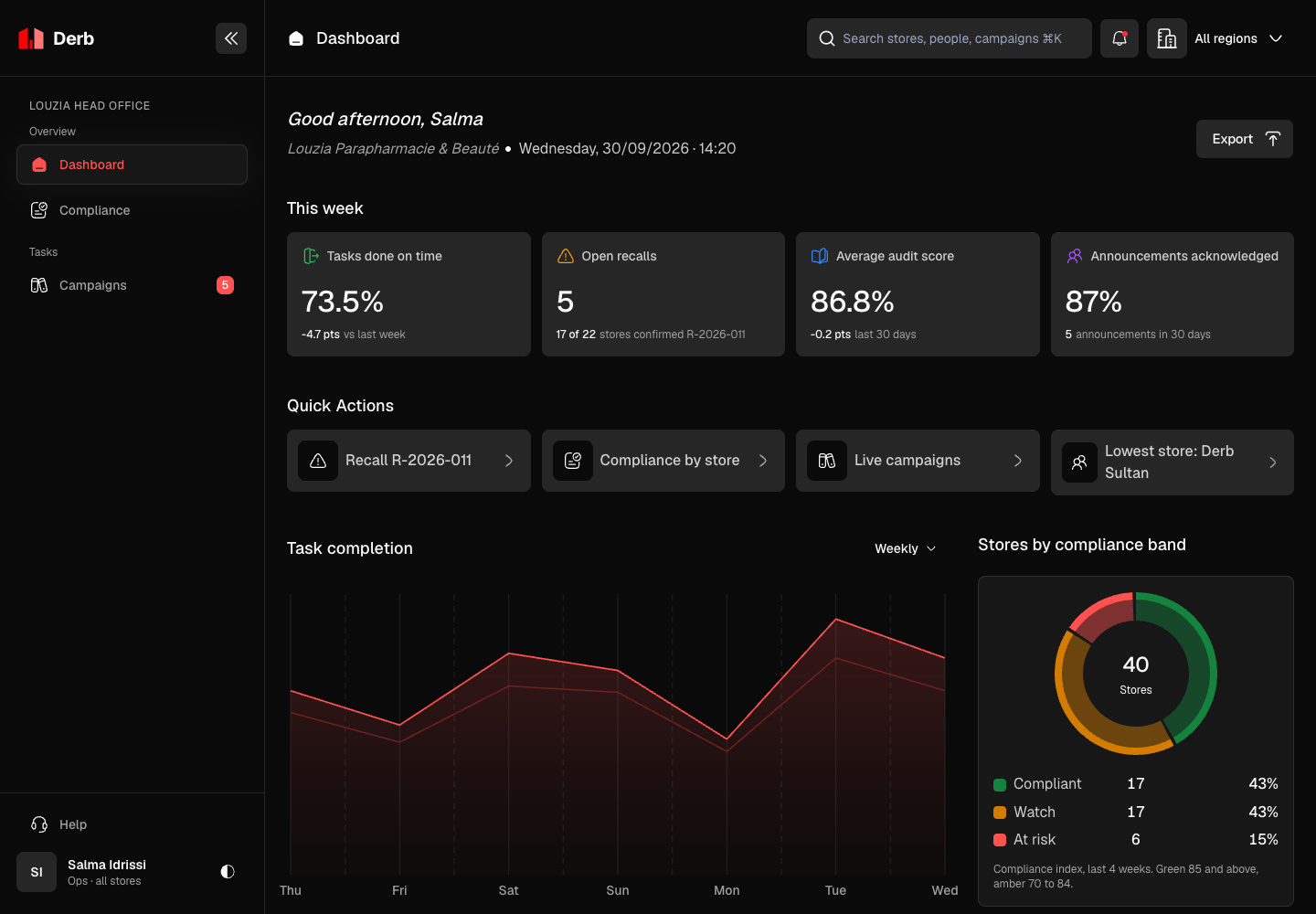
Derb - Store Staff App and Head Office Console for a Parapharmacy Chain
Designed and built a clickable head office console for a chain of 40 parapharmacy and beauty stores in Morocco: send task campaigns in French and Arabic, track every store to the last photo, run product recalls against a deadline, and see which stores are compliant this week and why.
Enterprise Software Engineering - Human + AI
Contact Us
© 2026 - Copyright. All Rights reserved Oceanlab
Location
Global Headquarters
21 Merchant Road, 3rd Floor, Singapore 058267
Main corporate office and leadership operations
North America Office
548 Market Street, PMB 12345, San Francisco, CA 94104
Client operations and business development
India Office
402 Shivalik Shilp II, SG Highway, Ahmedabad 380015
Engineering and delivery center

Enterprise Software Engineering - Human + AI
Contact Us
Locations
Global Headquarters
21 Merchant Road, 3rd Floor, Singapore 058267
Main corporate office and leadership operations
North America Office
548 Market Street, PMB 12345, San Francisco, CA 94104
Client operations and business development
India Office
402 Shivalik Shilp II, SG Highway, Ahmedabad 380015
Engineering and delivery center
© 2026 - Copyright. All Rights reserved Oceanlab