Stacks - Vertical Farm Operations Platform with Human-Approved Climate Control
Operations Platform for a Dubai Vertical Farm
Designed and built a clickable operations platform for an indoor vertical farm in Dubai growing leafy greens, herbs and microgreens across 3 warehouses: room health against recipe bands, a farm map down to every rack and tray, setpoint suggestions that a head grower must approve, and a lot trace from seed lot to customer.
Most of our work is under NDA. Per agreement, we can share the work but not the company details - all names and identifying information shown here have been changed.
Impact
Dashboard, farm map, room detail with rack elevation, setpoint suggestions and traceability. Every one of the 15 rooms opens its own detail page with climate, nutrients, trays, alarms, tasks, cleaning and energy.
Setpoint suggestions from alarm patterns, recipe mismatches, energy saving and health flags expire after 6 hours. Only a head grower for that room's warehouse can approve, edit or reject, and controller write-back stays off.
Supplier and seed lot, batches, trays and racks, water tests and nutrient batches, harvest lot, packs, orders, deliveries and customers. 3 traceable lots, one on QA hold after a failed wash water test.
3 warehouses with 15 rooms, 8,520 tray slots and about 12,000 m² of growing area, 11 varieties with recipes and shelf lives, 7 alarms, 10 tasks, 9 staff and 7 customers.
The Problem
Bayt Khudra ran each of its 3 warehouses on its own. Recipes lived in a crop scientist's spreadsheet, each climate computer had its own screens and alarm emails, growers wrote tray moves on whiteboards and sales took standing orders by WhatsApp. Seeding followed last week's harvest instead of next month's orders, tracing one clamshell back to its seed lot took a day, and nobody knew the electricity cost per kilogram of any crop.
Our Solution
Stacks puts the whole farm on one platform: every room's climate and nutrients against its recipe band, every rack and tray on a floor plan, supply against orders for the next 14 days, setpoint suggestions that change nothing until a head grower approves them, and a lot trace that runs from supplier and seed lot to each delivery and customer.
The Challenge: Growing to Orders Indoors
A vertical farm controls light, climate and nutrients for every tier, so it can grow to a plan. That only pays off when recipes, rooms, trays, sensors, orders and food safety records are joined up, across three warehouses and a crew working the racks.
Seeding From Last Week, Not Next Month
Seeding was planned from last week's harvest rather than the orders due when the crop would be ready, so the farm swung between dumping surplus rocket and shorting a supermarket on basil.
Every Warehouse on Its Own Screens
Each warehouse's climate computer had its own screens and alarm emails, fertigation and room sensors reported separately, and tray moves lived on whiteboards. No one could see all 15 rooms, or which trays sat in a drifting one.
A Day to Trace One Clamshell
Food businesses in Dubai are expected to keep hygiene, traceability and recall records. When a restaurant reported a quality issue, tracing a pack back to its seed lot, water test and rack meant a day of digging through separate records.
Automation That Must Stay Accountable
Readings can suggest better setpoints and images can flag tipburn, but a wrong change to humidity or EC damages a whole room of crop. Every change needs a named grower, a reason and a record, and energy per kilogram was not measured at all.
Our Approach: From Grow Rules to a Clickable Platform
Spec and Rules Research
Mapped 11 user roles from farm manager and head grower to driver and customer buyer, 48 screens across staff, mobile, customer portal and a public pack page, and the data model for rooms, racks, slots, trays, versioned recipes, batches, readings, alarms, setpoint suggestions, health flags, harvest lots, water tests, packs, orders and deliveries. Wrote down the rules the design follows: the UAE PDPL, Dubai Municipality food safety and licensing, one step back and one step forward traceability, Arabic labelling under GCC and UAE standards, regulated produce claims, UAE VAT and human approval for every climate change.
Clickable Demo on a Production UI Kit
Built 5 key screens on a production dashboard kit: the dashboard with 5 KPIs, room health, supply against demand and role-based work lists, the farm map with rooms drawn to relative size, room detail with 24-hour climate against the recipe band and a rack elevation of every tray, setpoint suggestions with the data behind each one, and traceability with a mock recall clock. Moves, approvals, holds and blocks all run on local state.
What a Production Build Adds
Integration with the climate computers (such as Priva or Hoogendoorn), Aranet sensors, fertigation, Signify lighting, electricity sub-meters, Zebra RFID readers and label printers, a crop image model on AWS SageMaker, Zoho Books, Onfleet, TrueCommerce EDI, Twilio and SendGrid. Staff auth by role and warehouse, an audit trail of who changed what, and the remaining screens: trays, batches, recipe editor, seeding plan, crop health, harvests, water testing, packing with bilingual labels, dispatch, reports, the grower and driver app and the customer portal.
Why It Works: The Grower Stays in Charge
Room Health at a Glance
Every room is green, amber or red by a fixed rule: red for an active critical alarm, amber for any metric outside its recipe band or data older than 10 minutes. Each reading shows its band and its source, from climate computer to wireless sensor.
Suggestions, Never Autopilot
Each setpoint suggestion states its reason in plain language, charts the data window against the recipe band and lists affected trays, batches and the expected effect. Editing the value needs a note, rejecting needs a reason, and the grower applies the change in the climate computer.
Tray Moves That Check Themselves
The rack elevation shows every tray coloured by crop with AI flags marked. Moving trays is refused into a blocked room, into a room type that does not match the next recipe stage, or when the destination lacks free slots.
Recall Readiness on One Screen
A lot trace shows packs affected, customers affected and kg still in stock or delivered. A mock recall runs a clock that stops when the list is exported, against a 2-hour target, and exporting customer contacts is logged.
Related case studies
View all: Agriculture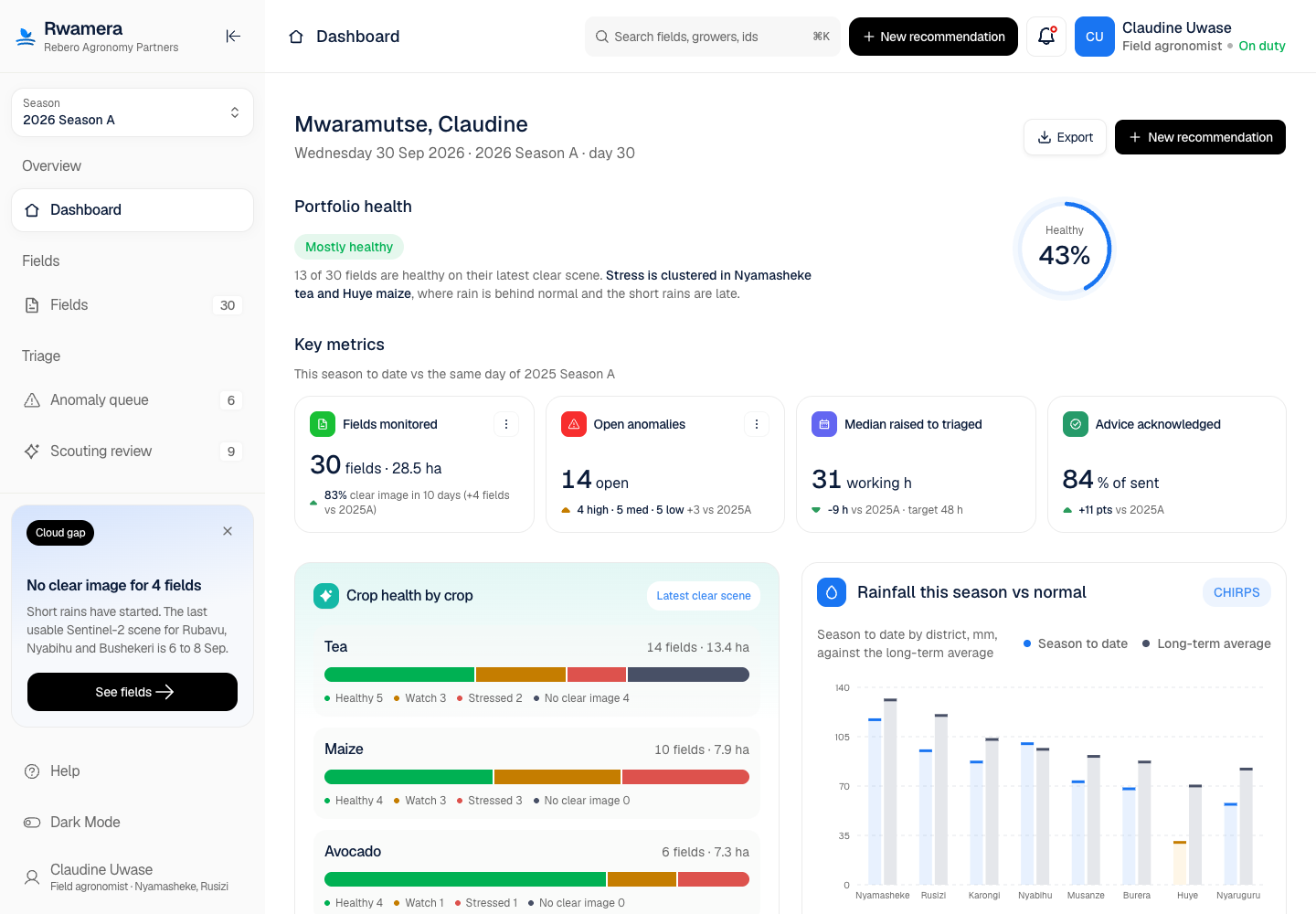
Rwamera - Satellite Crop Monitoring with Cloud-Aware Field Maps and Agronomist Triage
Designed and built a clickable crop monitoring console for a Kigali agronomy advisory firm serving tea, maize and avocado growers: satellite index maps per field with cloud masked out, a queue of stress anomalies to triage, scouting photos with an advisory-only AI suggestion, and advice that cannot name an unregistered pesticide or reach a grower without senior approval.
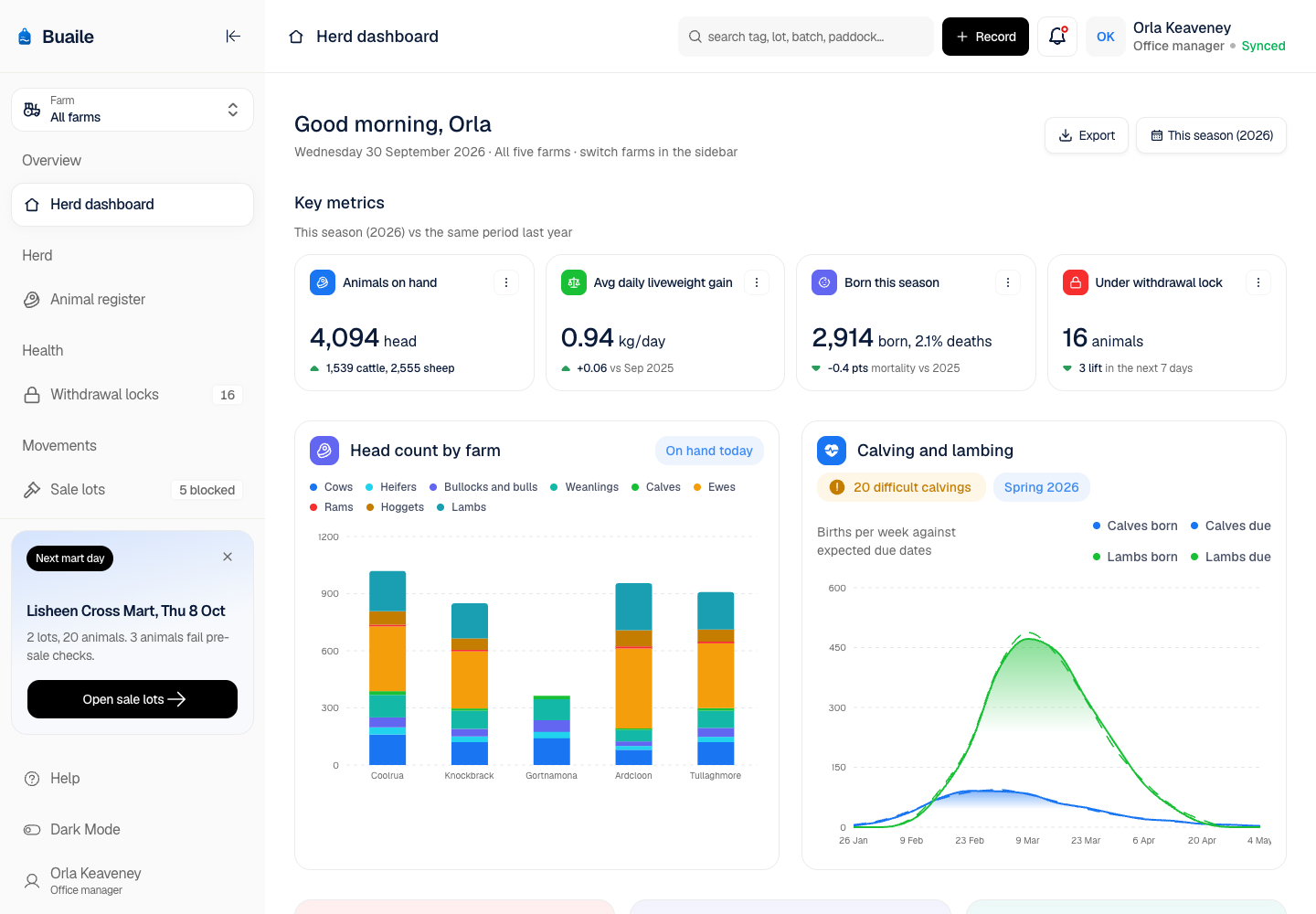
Buaile - Livestock Tracking Platform with Medicine Withdrawal Locks
Designed and built a clickable farm office console for a group of five suckler beef and sheep farms in County Galway: one animal register for every herd and flock, withdrawal locks that block the sale of treated animals, AIM notification status on every birth and movement, and sale lots that cannot go to the mart until every pre-sale check passes.
Enterprise Software Engineering - Human + AI
Contact Us
© 2026 - Copyright. All Rights reserved Oceanlab
Location
Global Headquarters
21 Merchant Road, 3rd Floor, Singapore 058267
Main corporate office and leadership operations
North America Office
548 Market Street, PMB 12345, San Francisco, CA 94104
Client operations and business development
India Office
402 Shivalik Shilp II, SG Highway, Ahmedabad 380015
Engineering and delivery center

Enterprise Software Engineering - Human + AI
Contact Us
Locations
Global Headquarters
21 Merchant Road, 3rd Floor, Singapore 058267
Main corporate office and leadership operations
North America Office
548 Market Street, PMB 12345, San Francisco, CA 94104
Client operations and business development
India Office
402 Shivalik Shilp II, SG Highway, Ahmedabad 380015
Engineering and delivery center
© 2026 - Copyright. All Rights reserved Oceanlab