Soup Rota - Volunteer Rota and Kitchen Operations Platform for Free Hot-Meal Kitchens
Kitchen Rota and Food Safety Platform for a Philadelphia Meal Network
Designed and built a clickable kitchen coordinator workspace for a network of 12 free hot-meal kitchens in Philadelphia, most of them in churches, a mosque and a synagogue: a rota with minimum staffing per role, shift rosters with check-in and no-shows, food safety checklists and temperature logs, and meal counts kept as anonymous tallies.
Most of our work is under NDA. Per agreement, we can share the work but not the company details - all names and identifying information shown here have been changed.
Impact
Kitchen today, rota builder, shift roster, food safety today and meal service. Every one of the 20 demo shifts over two weeks opens its own roster.
Each service shows filled, minimum and maximum per role: green when met, amber when one short, red when two or more short or with no cook. A lapsed food handler certificate blocks cook shifts.
Four tally buttons (hot meal, grab-and-go plate, second helping, child's meal) with undo. No guest names, IDs or reasons are ever asked, and correcting a closed count needs a reason.
30 volunteers (3 under 18), 20 shifts across a published and a draft week, 7 temperature points, 7 checklist runs, 5 donated food lots, 4 cover requests and 16 past meal services.
The Problem
Each of Wingohocking's 12 kitchens kept its own rota: a paper sheet on a church noticeboard, a group chat, a spreadsheet or a coordinator's memory. A supper could run with one cook and no dishwasher because three people dropped out by text and nobody saw it in time, fridge logs on clipboards went missing before inspections, donated trays arrived with no record of source or use-by, and the grants manager spent a week each quarter phoning kitchens to add up meals and volunteer hours.
Our Solution
Soup Rota gives each kitchen coordinator one workspace for the day's service and the weeks ahead: build and publish the rota with minimum staffing per role, see who has checked in and who has not, fill gaps with cover requests, run food safety checklists and readings against the kitchen's own targets, and count meals as anonymous tallies that roll up into funder reports.
The Challenge: Volunteers, Food Safety and Dignity in One Kitchen
About 900 volunteers serve some 3,500 free hot meals a week across church halls, a mosque, a synagogue and secular sites. Every service has to be staffed, safe and welcoming, with people who come when they can and guests who must never be asked who they are.
Gaps Nobody Saw in Time
Volunteers dropped out by text, and a supper needs a shift lead, three cooks, five servers and two dishwashers. Coordinators found out a service was short only when people failed to arrive.
Rules That Differ by Role and Age
Cooks need a valid food handler certificate, drivers must be 21 or over, volunteers aged 14 to 17 need a guardian's consent, and roles with direct contact with children can need Pennsylvania clearances under the Child Protective Services Law.
Food Safety Records That Went Missing
The FDA Food Code is adopted locally, so each kitchen follows its own temperature and cooling targets. Readings, cooling logs and corrective actions were kept on clipboards that disappeared before a health inspection.
Counting Meals Without Recording Guests
Funders want meals served and volunteer hours, but guests are never registered. Counts had to be anonymous, quick to take during a busy service, and still reliable enough to report.
Our Approach: From Kitchen Rules to a Clickable Workspace
Spec and Rules Research
Mapped 9 roles from volunteer and shift lead to screening officer and grants manager, 49 screens across the volunteer app, public pages, kitchen workspace and network admin console, and the data model for volunteers, shifts, bookings, cover requests, checklists, readings, cooling logs, food lots and meal tallies. Wrote down the rules the design follows: the FDA Food Code as adopted locally, FALCPA and the FASTER Act, the Good Samaritan food donation laws, Pennsylvania clearances, TCPA consent for SMS and Pennsylvania's breach notification law.
Clickable Demo on a Production UI Kit
Built 5 key screens of the kitchen coordinator workspace on a production dashboard kit: Kitchen today with services, food safety due and use-first lots, the rota builder with a published and a draft week, the shift roster with check-in, no-shows, waitlist and cover requests, food safety today with checklist runs, temperature points and cooling logs, and meal service with the tally and its history. All actions run on local state.
What a Production Build Adds
The volunteer app with QR check-in and hours certificates, kitchen displays, the network admin console and funder reports. Integrations with Twilio for SMS, Postmark or SendGrid email, push notifications, Sterling Volunteers or Checkr background checks, SensorPush or Monnit fridge sensors, MealConnect donations, Google Maps and S3 file storage, plus staff auth by role and an audit log.
Why It Works: Built for a Busy Service
Gaps Show Before the Doors Open
Every rota cell reads like "Cook 1/3/4" and is coloured by staffing status, and the week shows how many services are below minimum. Volunteers only see published weeks, so a coordinator can draft ahead without confusing anyone.
Eligibility Explains Itself
The rota's volunteer panel lists who can fill a role and, for everyone else, why not: an expired food handler certificate, a certificate under review, or a role limited to drivers aged 21 and over with a license on file.
The Kitchen Sets the Targets
Temperature targets come from each kitchen's food safety lead, and Soup Rota records readings against them instead of hard-coding any limit as law. An out-of-range reading cannot be saved without a corrective action.
Dignity in the Data
There is no guest record anywhere in the product. The meal screen reminds volunteers not to record names or descriptions, child's meals are counted by appearance and never asked, and volunteer screening is held as a status, not a full report.
Related case studies
View all: Faith & community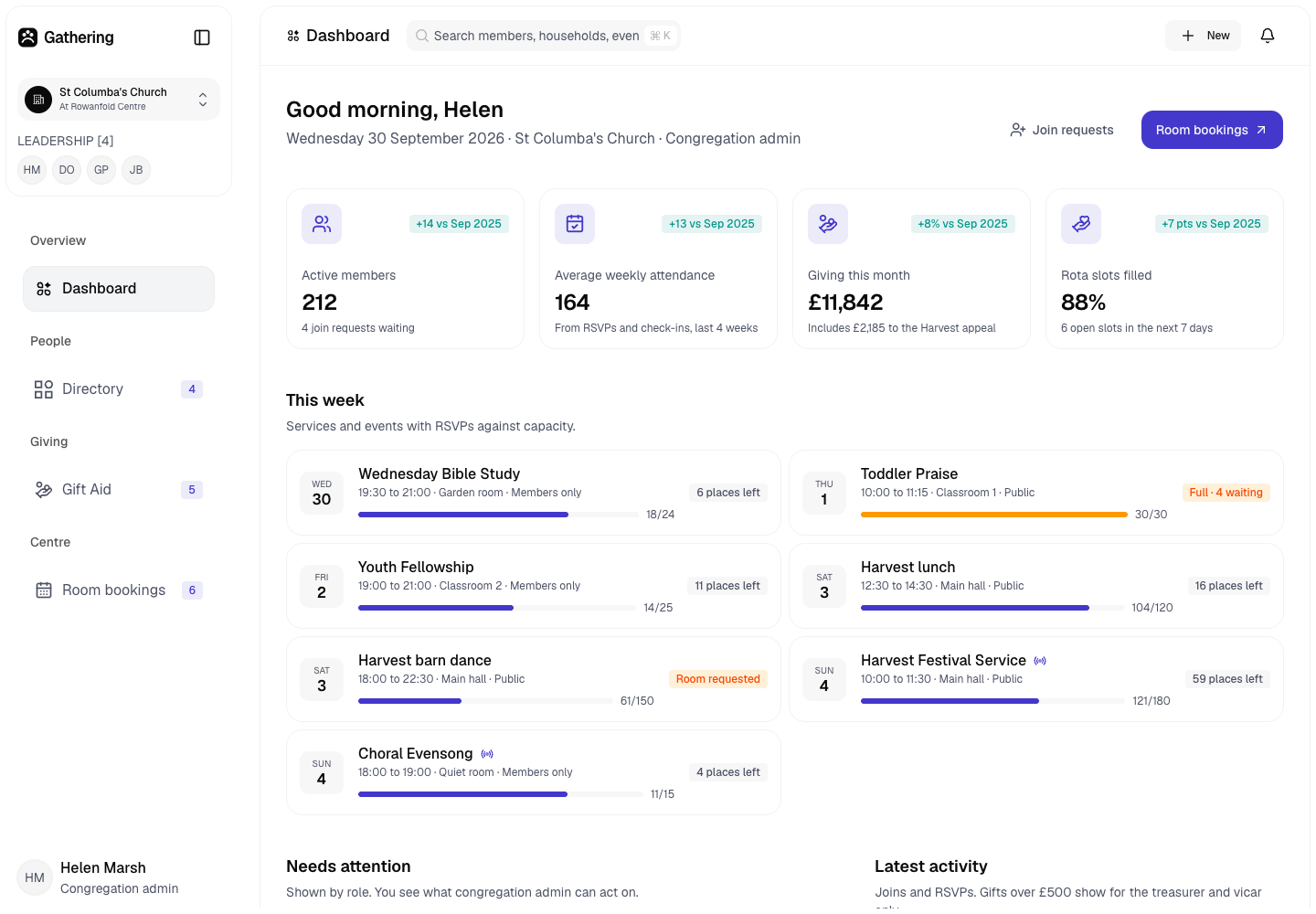
Gathering - Multi-Faith Congregation App for Events, Rotas, Rooms and Giving
Designed and built a clickable leaders' console for a Birmingham interfaith charity whose church, mosque, gurdwara and synagogue share one community centre: a member directory with privacy built in, role-based member records, one room calendar for the whole building and Gift Aid claims prepared for HMRC Charities Online - with each congregation's member data walled off from the others.
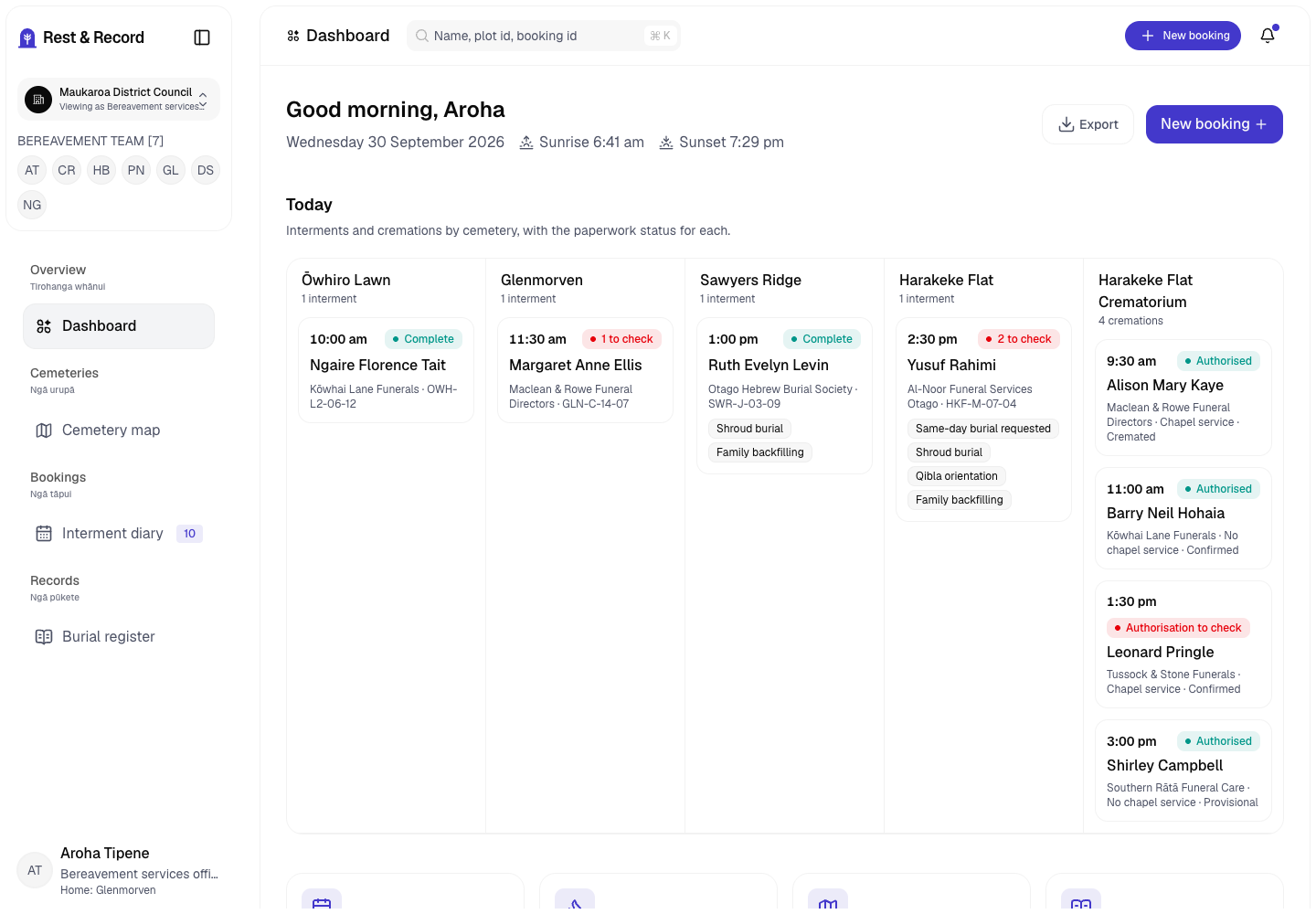
Rest & Record - Cemetery and Crematorium Records for a New Zealand Council
Designed and built a clickable cemetery and crematorium records system for a New Zealand council running 7 cemeteries and a crematorium: a daily view of interments and cremations, a booking diary with paperwork checks, a plot map with faith and cultural section rules, and a burial register that finds every spelling of a name from the 1850s to today.
Enterprise Software Engineering - Human + AI
Contact Us
© 2026 - Copyright. All Rights reserved Oceanlab
Location
Global Headquarters
21 Merchant Road, 3rd Floor, Singapore 058267
Main corporate office and leadership operations
North America Office
548 Market Street, PMB 12345, San Francisco, CA 94104
Client operations and business development
India Office
402 Shivalik Shilp II, SG Highway, Ahmedabad 380015
Engineering and delivery center

Enterprise Software Engineering - Human + AI
Contact Us
Locations
Global Headquarters
21 Merchant Road, 3rd Floor, Singapore 058267
Main corporate office and leadership operations
North America Office
548 Market Street, PMB 12345, San Francisco, CA 94104
Client operations and business development
India Office
402 Shivalik Shilp II, SG Highway, Ahmedabad 380015
Engineering and delivery center
© 2026 - Copyright. All Rights reserved Oceanlab