Rest & Record - Cemetery and Crematorium Records for a New Zealand Council
Burial Records System for a Council Bereavement Team
Designed and built a clickable cemetery and crematorium records system for a New Zealand council running 7 cemeteries and a crematorium: a daily view of interments and cremations, a booking diary with paperwork checks, a plot map with faith and cultural section rules, and a burial register that finds every spelling of a name from the 1850s to today.
Most of our work is under NDA. Per agreement, we can share the work but not the company details - all names and identifying information shown here have been changed.
Impact
Dashboard, interment diary, interment booking detail, burial register and cemetery map. Every one of the 22 demo bookings opens its own booking page, and all 7 cemeteries have a plot map.
Mark as completed stays disabled until the booking is confirmed, every required document is marked checked and the sexton has confirmed the plot location and depth on site.
Similar-name matching in the burial register means a search for McKay also finds Mackay, MacKay and M'Kay, across born-digital records and transcriptions from the historic registers.
7 cemeteries with 25 mapped sections covering 9 faith and cultural purposes, 22 interment bookings, 4 cremations today, 30 register records and 8 funeral directors.
The Problem
Maukaroa's cemetery records lived in four places: bound registers in a strongroom, some water-damaged, a 20-year-old desktop database only two staff could use, paper plot maps with pencilled reservations, and a shared calendar for funeral directors' phone bookings. Sextons walked sections to check a plot was free, funeral directors rang up to three times to confirm a slot, and families researching ancestors waited weeks for someone to leaf through the registers.
Our Solution
Rest & Record brings plots, bookings and the burial register into one system for the bereavement team. Staff see today's interments and cremations with their paperwork status, book into each cemetery's slots, check documents against the booking, find any plot on a map with its section's faith and memorial rules, and search every burial record by name, however it was spelt.
The Challenge: Records That Families Depend On
A council bereavement team answers to grieving families, funeral directors, faith communities and the law at once, with records that go back more than 170 years and must never be lost or overwritten.
One Plot, Several Lives
A grave can take one, two or three interments plus ashes on top, depending on the depth set at the first burial. Whether a family plot has room for one more could not be answered without a site visit.
Faith and Cultural Requirements
Sections serve Catholic, Anglican, Presbyterian, Jewish, Muslim, Chinese, Māori, Services and natural burial needs, with rules on orientation, shrouds, same-day burial and family backfilling. A same-day Muslim burial request on a Saturday depended on who answered the phone.
Paperwork the Council Records, Not Decides
Burials and cremations need certificates and authorisations under the Burial and Cremation Act 1964 and the cremation regulations, which are under review. The system has to record what was received and who checked it, without encoding legal steps that may change.
Historic Registers as Public Records
Handwritten registers back to the 1850s are public records under the Public Records Act 2005, so nothing can be deleted and every correction is a new version. Names are spelt many ways, and recent burials need care before they appear in a public search.
Our Approach: From Cemetery Rules to a Clickable System
Spec and Rules Research
Mapped 12 user roles, from sextons and crematorium operators to funeral directors, stonemasons and the public, and 41 screens across staff, funeral director portal and public grave search. Defined the data model for cemeteries, sections, plots, rights of burial, register entries, bookings, documents, cremations, permits and exhumations. Wrote down the rules the design follows: the Burial and Cremation Act 1964, the Privacy Act 2020, the Public Records Act 2005 and the Heritage New Zealand Pouhere Taonga Act 2014, with every fee, slot and privacy window kept as editable council policy.
Clickable Demo on a Production UI Kit
Built 5 key screens on a production dashboard kit: the dashboard with today's interments and cremations, KPIs and capacity by cemetery, the interment diary with week and list views, the booking detail with paperwork, digging, fees and activity tabs, the burial register with similar-name search and suppression from public search, and the cemetery map with section rules and a plot quick view. Checking a document or confirming a site check updates the diary, dashboard and sidebar badge as you click.
What a Production Build Adds
Esri ArcGIS maps with LINZ aerial imagery, Windcave or Stripe payments, TechnologyOne finance, the council's records management system, Transkribus handwriting recognition for the historic registers, and Microsoft 365 and Twilio messaging. Staff auth by role, a tamper-evident audit log kept as a public record, and the remaining screens: crematorium and ashes, register workbench, permits, exhumations, invoices, settings, the funeral director portal and the public Find a grave pages.
Why It Works: Careful by Design
Today in One View
The dashboard lays out each cemetery's interments and the crematorium's cremations for the day, with a paperwork or authorisation chip on every card and labels such as Same-day burial requested or Qibla orientation, so nothing is missed for a family.
Section Rules Beside the Plot
The map colours plots by status, marks graves with room for another interment, and shows the selected section's depths, ashes allowance, memorial rules and faith requirements text, written with each community and set by the council.
Paperwork Seen, Not Judged
Each document shows who uploaded it, who checked it and when, and can be rejected with a reason. A banner makes clear that staff record the paperwork was seen, while the legal requirements sit with the Act and the funeral director.
Respectful Words and Privacy
Screens say Interment of Margaret Anne Ellis, not a job number, and status colours stay muted. Records of people who died in the last 12 months show as limited in public search, and suppressing a record needs a reason.
Related case studies
View all: Faith & community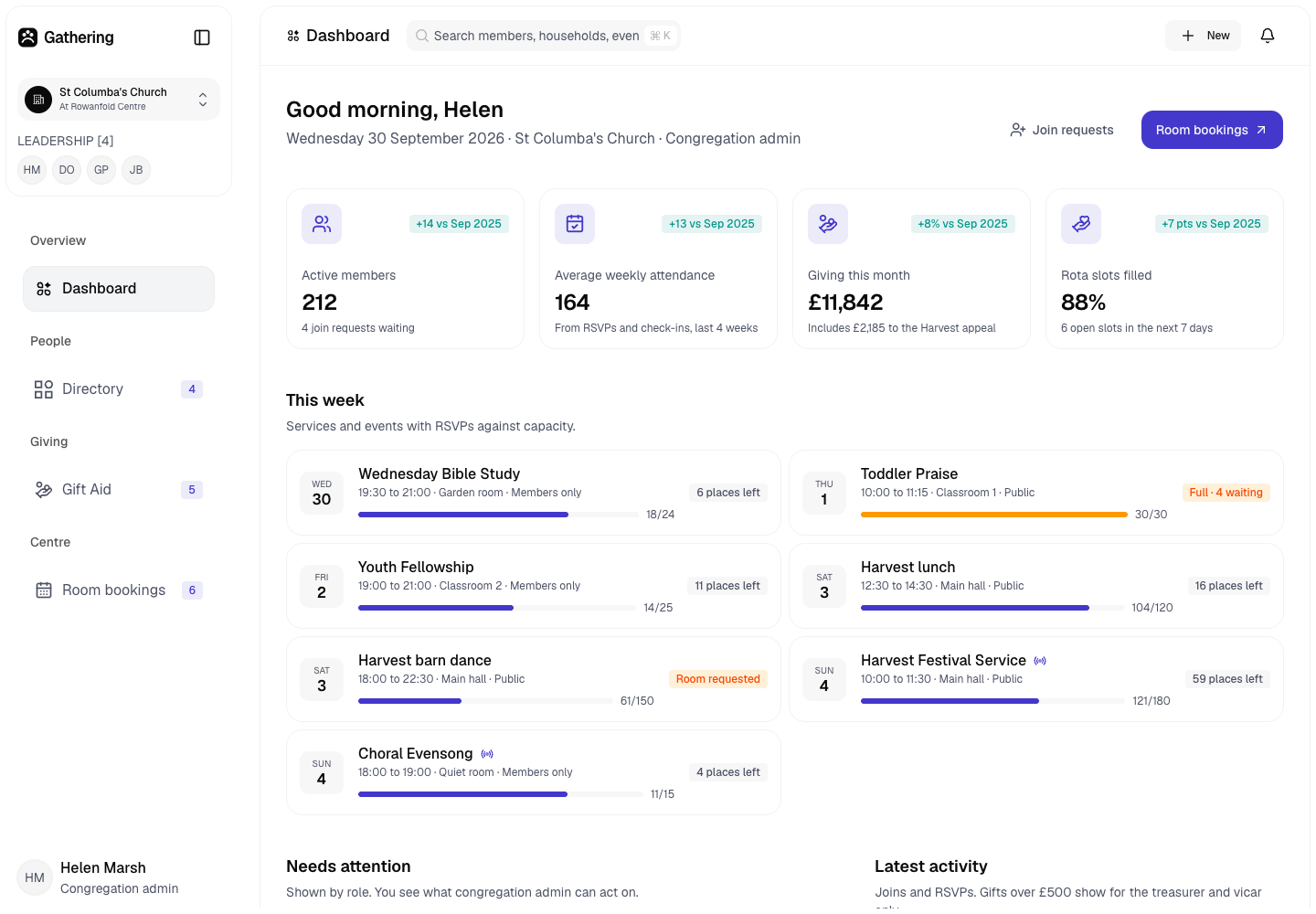
Gathering - Multi-Faith Congregation App for Events, Rotas, Rooms and Giving
Designed and built a clickable leaders' console for a Birmingham interfaith charity whose church, mosque, gurdwara and synagogue share one community centre: a member directory with privacy built in, role-based member records, one room calendar for the whole building and Gift Aid claims prepared for HMRC Charities Online - with each congregation's member data walled off from the others.
Soup Rota - Volunteer Rota and Kitchen Operations Platform for Free Hot-Meal Kitchens
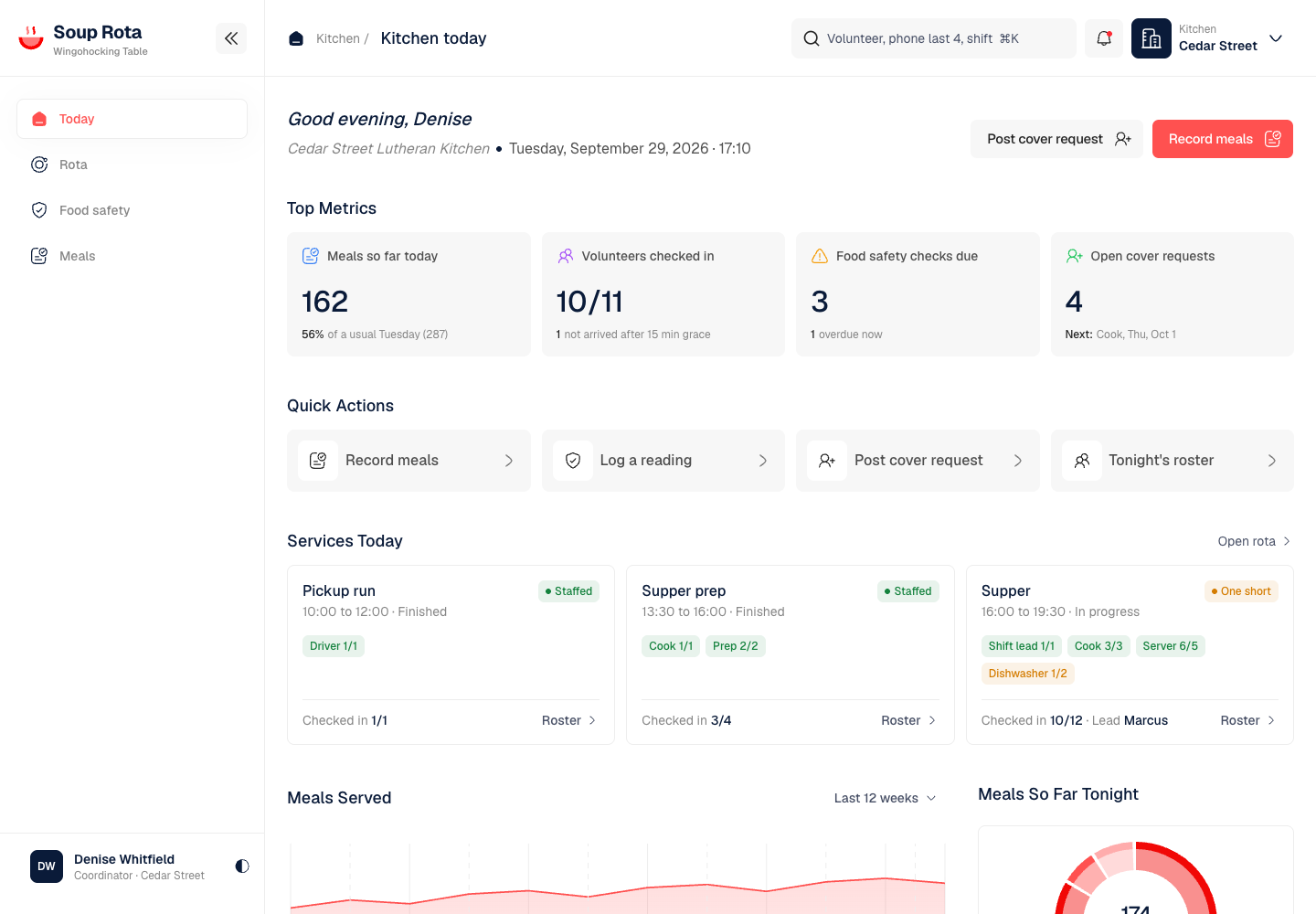
Designed and built a clickable kitchen coordinator workspace for a network of 12 free hot-meal kitchens in Philadelphia, most of them in churches, a mosque and a synagogue: a rota with minimum staffing per role, shift rosters with check-in and no-shows, food safety checklists and temperature logs, and meal counts kept as anonymous tallies.
Enterprise Software Engineering - Human + AI
Contact Us
© 2026 - Copyright. All Rights reserved Oceanlab
Location
Global Headquarters
21 Merchant Road, 3rd Floor, Singapore 058267
Main corporate office and leadership operations
North America Office
548 Market Street, PMB 12345, San Francisco, CA 94104
Client operations and business development
India Office
402 Shivalik Shilp II, SG Highway, Ahmedabad 380015
Engineering and delivery center

Enterprise Software Engineering - Human + AI
Contact Us
Locations
Global Headquarters
21 Merchant Road, 3rd Floor, Singapore 058267
Main corporate office and leadership operations
North America Office
548 Market Street, PMB 12345, San Francisco, CA 94104
Client operations and business development
India Office
402 Shivalik Shilp II, SG Highway, Ahmedabad 380015
Engineering and delivery center
© 2026 - Copyright. All Rights reserved Oceanlab