Reel Call - Film Festival Submissions and Programming Platform with Protected Screeners
Submissions and Selection Platform for a Sarajevo Film Festival
Designed and built a clickable submissions and programming console for a Sarajevo short film and documentary festival: a pipeline for every entry, a full submission record with weighted committee scores, fair screener assignment that skips conflicts of interest, and a shortlist board that turns votes into a final selection signed off by the festival director.
Most of our work is under NDA. Per agreement, we can share the work but not the company details - all names and identifying information shown here have been changed.
Impact
Dashboard, submissions pipeline with board and table views, submission detail with 6 tabs, screener assignment with an auto-assign preview, and the shortlist and selection board. Each of the 34 sample submissions opens its own detail page.
2 completed views in round one and 3 once shortlisted (client policy). Auto-assign matches category, then language, then the lowest runtime load, and always skips a screener who declared a conflict.
Direction 30%, story and structure 25%, craft 20%, originality 15% and fit with the festival 10%, with the average and spread per criterion on every submission's Reviews tab.
34 submissions from 26 countries across 5 categories, 14 screening committee members, 7 staff users and 5 shortlist vote rounds, inside edition-wide totals of 5,912 submissions.
The Problem
Vrelo took entries through a third-party submissions site, exported them to a spreadsheet and shared it with about 60 preselectors, who watched private video links whose passwords sat in the same sheet. One link was forwarded on and a festival film reached a piracy site before its world premiere. Nobody could see which films had fewer than two viewers, scores lived in 60 personal tabs, conflicts were declared by email and the programme was built on a printed wall chart.
Our Solution
Reel Call follows a film from submission to selection in one console. The programming team sees every entry in a pipeline, opens a single record with eligibility, fees, screener status, committee scores and discussion, gives every film enough viewers while keeping screener loads fair, and runs shortlist votes per section until the festival director signs off the final selection.
The Challenge: 6,000 Films, 180 Slots
Vrelo receives about 6,000 submissions a year and screens 180 films over 8 days across five Sarajevo venues. Every entry has to be checked, watched by enough people, scored fairly and protected from leaks before a small team can pick the programme.
Screeners That Leak
Private links and shared passwords let a film travel beyond the committee. No player can fully stop screen recording, so screeners need to be streamed only, with DRM and a per-viewer watermark that traces a leaked copy back to the account that played it.
Coverage and Fair Workloads
With about 60 paid and volunteer preselectors covering different categories and languages, some films were watched by no one and some screeners carried far more runtime than others, with nobody able to see either until it was too late.
Conflicts and Confidential Data
A preselector may have worked on a film or know its makers, so conflicts must block scoring and voting. Diversity answers are optional, kept apart from the entry and never shown during selection, and personal data falls under Bosnia and Herzegovina's 2025 data protection law and, for EU entrants, possibly the GDPR.
Eligibility, Fees and Premieres
Each category has its own runtime range and premiere rule, fees step up from early to regular to late deadlines in EUR with the BAM equivalent, and filmmakers from low and lower-middle income countries on the World Bank list get the fee waived automatically.
Our Approach: From Festival Rules to a Clickable Console
Spec and Rules Research
Mapped 14 roles across the programmer console, the screening committee and jury app, the filmmaker portal and public pages, 43 screens and the data model for editions, versioned categories and fee rules, submissions, screeners, playback sessions, conflicts, assignments, scores, vote rounds and selection decisions. Wrote down the rules the design follows: data protection in Bosnia and Herzegovina and the GDPR, copyright and screening rights, screener protection, premiere status, DCP and ProRes delivery, fees and waivers, and a full audit trail.
Clickable Demo on a Production UI Kit
Built 5 key screens of the programmer console on a production dashboard kit: the dashboard with KPIs against the same day last edition, submissions by week with deadline markers and preselection coverage per category; the pipeline with status columns, filters and a quick view; submission detail with checklist, credits, screener, reviews, discussion and activity; screener assignment with load, capacity and auto-assign; and the shortlist board with vote rounds and Lock section. All actions run on local state.
What a Production Build Adds
Video ingest and streaming (such as Mux), DRM licences through castLabs or EZDRM, per-viewer forensic watermarking, MASV or Aspera for DCP delivery, card payments for fees, Postmark email, the World Bank income list for automatic waivers and a one-off FilmFreeway import. Staff and committee sign-in with a second factor, an audit log of every play, score, conflict, decision and waiver, and the remaining screens: committee and jury app, filmmaker portal, programme builder, guests, accreditation and reports.
Why It Works: Every Film Seen, Every Decision Traced
Coverage Gaps Show First
The dashboard shows each category's films with 0, 1, 2 and 3 or more completed views, and the assignment screen lists every film short of its minimum with the views it still needs. Pipeline cards show views against the minimum and flag broken or external screeners.
Fair Load, No Conflicts
The screener load table shows assigned and completed films, runtime, overdue work and capacity left this week. Auto-assign previews every proposal with its reason, lists the screeners it skipped for a conflict, and changes nothing until the programmer confirms it.
One Record Per Submission
A single page holds the progress rail, the eligibility checklist with the terms version accepted, the fee with any waiver, the protected screener marked stream only and watermarked, per-criterion scores and a discussion thread that is never shown to the submitter.
Selection With a Sign-Off
Each section column tracks films against its target, runtime against programme time and countries represented, with yes, no and abstain votes on every card. A section is final only when the festival director signs it off and it is locked.
Related case studies
View all: Music, film & fashion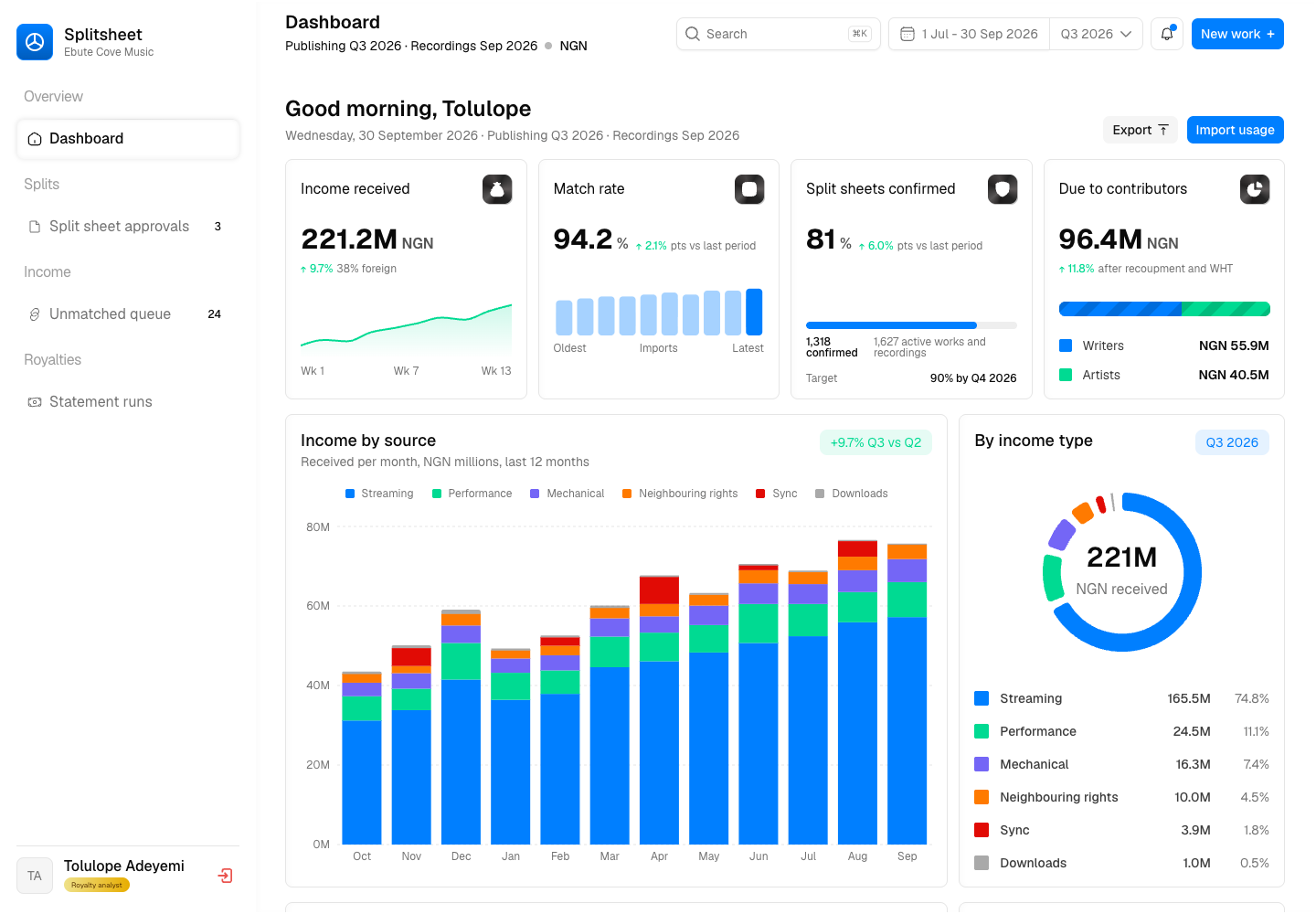
Splitsheet - Split Sheets, Usage Matching and Reproducible Royalty Statements
Designed and built a clickable royalty and splits console for a Lagos music publisher and label: split sheets that every writer confirms before approval, an unmatched usage queue sorted by value, and statement runs that store their inputs and show the calculation behind every naira.
Call Sheet - Production Office Platform for Call Sheets, Read Receipts and Turnaround
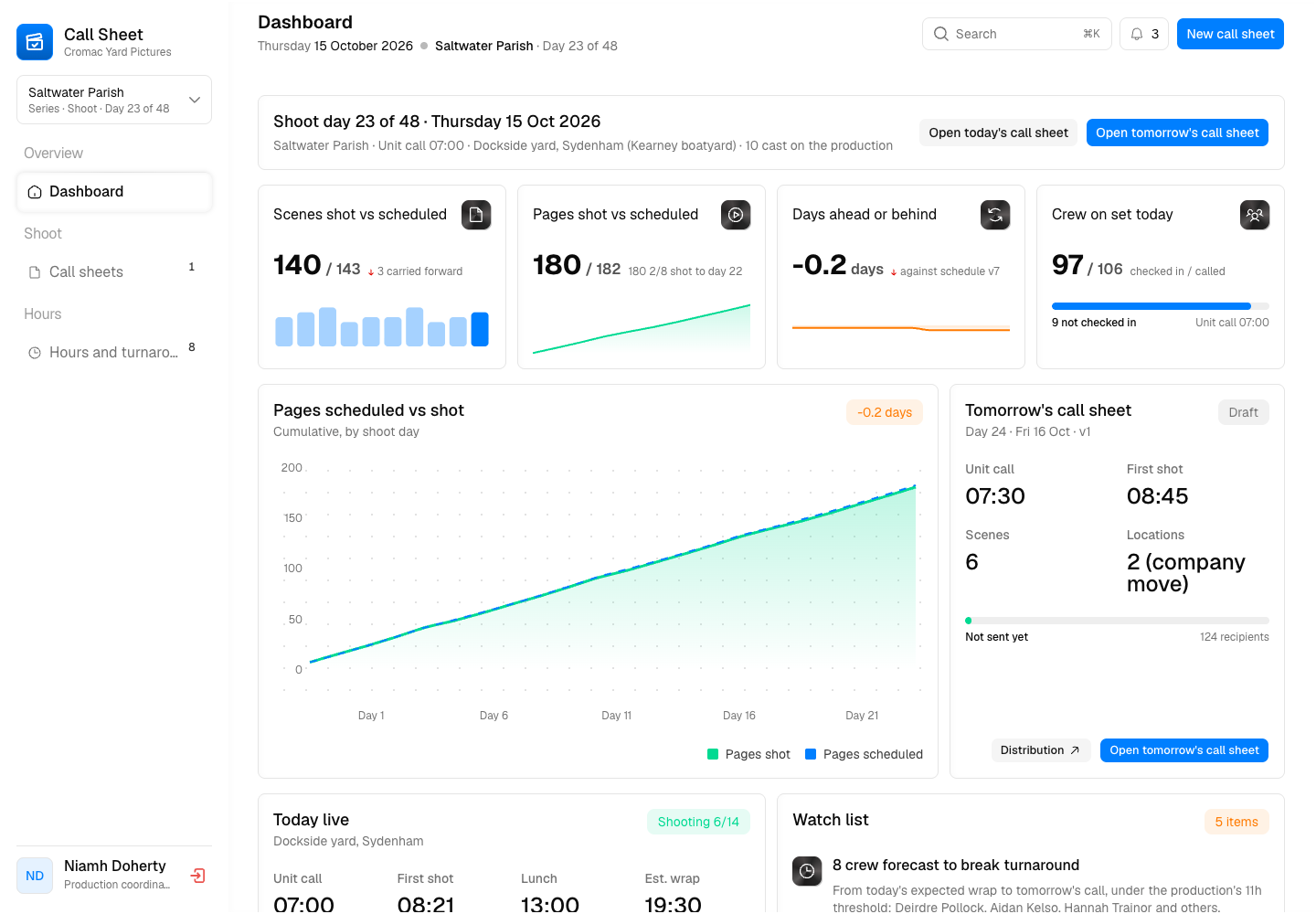
Designed and built a clickable production office platform for an independent Belfast film and TV company: daily call sheets built from the schedule and checked before approval, distribution with a read receipt for every recipient, and crew hours and turnaround tracked against the production's own working terms.
Enterprise Software Engineering - Human + AI
Contact Us
© 2026 - Copyright. All Rights reserved Oceanlab
Location
Global Headquarters
21 Merchant Road, 3rd Floor, Singapore 058267
Main corporate office and leadership operations
North America Office
548 Market Street, PMB 12345, San Francisco, CA 94104
Client operations and business development
India Office
402 Shivalik Shilp II, SG Highway, Ahmedabad 380015
Engineering and delivery center

Enterprise Software Engineering - Human + AI
Contact Us
Locations
Global Headquarters
21 Merchant Road, 3rd Floor, Singapore 058267
Main corporate office and leadership operations
North America Office
548 Market Street, PMB 12345, San Francisco, CA 94104
Client operations and business development
India Office
402 Shivalik Shilp II, SG Highway, Ahmedabad 380015
Engineering and delivery center
© 2026 - Copyright. All Rights reserved Oceanlab