Rakpart - Multi-Client Warehouse Management System with Lot Trace and Recall
Warehouse Management for a Budapest 3PL
Designed and built a clickable warehouse management system for a Budapest third-party logistics provider running two multi-client warehouses: a dashboard driven by carrier cut-offs, outbound orders with FEFO allocation by lot, QC holds, and a lot trace that shows every consignee a batch went to.
Most of our work is under NDA. Per agreement, we can share the work but not the company details - all names and identifying information shown here have been changed.
Impact
Dashboard, outbound orders, order detail, QC holds and lot trace and recall. The warehouse switcher (BUD1 Csepel, BUD2 Gyál or all sites) drives every list and number.
Each order line shows its lot, expiry, days left and the minimum remaining shelf life, set per client from 120 to 270 days and 180 days for retail pallet orders, with re-allocation to a longer-dated lot.
A lot shows what was received, what is on hand by status, every order it shipped on and what came back. Open recall moves the remaining stock to recall status, and trace exports are logged.
2 sites, 10 clients, 23 SKUs with lot, expiry, serial and dangerous goods flags, 15 lots, 16 QC holds, 18 dock appointments and 14 staff users.
The Problem
Nyírfalva grew from one client to thirty on a single-client stock system, spreadsheets and paper pick lists. Stock was tracked by SKU, not by lot and location, so answering a cosmetics brand's recall question took two people three days. Short-dated serums shipped ahead of older stock, carrier labels were typed into four carrier websites, billing was estimated from monthly snapshots, and clients phoned every morning to ask what stock they had.
Our Solution
Rakpart runs everything inside Nyírfalva's two warehouses for around 30 consumer electronics and health and beauty brands. Staff see the day against each carrier's cut-off, allocate orders first expired, first out within each customer's shelf-life rule, work QC holds by age and trace any lot to the orders and consignees it shipped to, with consumer data masked unless their role allows it.
The Challenge: Thirty Clients Under One Roof
A contract warehouse holds other companies' goods under other companies' rules. Every client brings its own lots, shelf-life limits, carriers and customers, and EU and Hungarian law adds traceability, dangerous goods and data protection on top.
Stock Without Lots
The EU Cosmetics Regulation expects a batch number and the ability to say who was supplied, and the General Food Law expects one step back, one step forward for food supplements. With stock held by SKU only, a recall trace meant rebuilding it from delivery notes.
Shelf Life Set by Each Customer
Serums, creams and vitamins have to leave first expired, first out, but a retailer can refuse stock with under six months left. Each client sets its own minimum remaining shelf life, and the allocation has to respect it line by line.
Batteries and Aerosols in the Mix
Power banks, earbuds and speakers carry lithium batteries, and sunscreens and body mists are flammable aerosols. They fall under ADR for road transport and fire rules for storage, so they need flags, permitted zones and carrier services that accept them.
Customer Data and Staff Data
For consumer orders Nyírfalva is a processor for its clients under the GDPR, so names and addresses are shown only to those who need them. For its own staff, the Hungarian Labour Code and NAIH expect monitoring to be work-related, announced and proportionate.
Our Approach: From Warehouse Rules to a Clickable WMS
Spec and Rules Research
Mapped 13 roles from site manager to client portal user, 55 screens across the console, the client portal and the handheld RF app, and the data model for clients, SKUs, lots, locations, an append-only stock ledger, ASNs, QC holds, tasks, orders, waves, parcels, recalls, rate cards and audit entries. Wrote down the rules the design follows: GDPR and the Info Act, the Labour Code on monitoring, the Cosmetics Regulation, the General Food Law, the GPSR, FEFO and shelf-life policy, ADR flags and NAV invoicing.
Clickable Demo on a Production UI Kit
Built 5 key screens on a production dashboard kit: the dashboard with KPIs, carrier cut-offs, work backlog, dock timeline and needs-attention list, outbound orders with exception badges and a quick view, order detail with lots, parcels and events, QC holds with release, reject, ask client and split, and lot trace with the recall sheet. A demo role switch shows how consignee masking follows the role. All actions run on local state.
What a Production Build Adds
Integration with GLS, DPD, Magyar Posta, Foxpost and Packeta for labels and manifests, Zebra and Honeywell Android handhelds, ZPL label printers, GS1 GTIN and SSCC labels, Shopify, WooCommerce, UNAS and Shoprenter, EDIFACT orders and ASNs, Billingo or Számlázz.hu for NAV-reported invoices, Cubiscan and Entra ID sign-on. Plus a full audit log and the remaining screens: receiving, putaway, counts, adjustments, waves, packing, dispatch, returns, VAS, billing, the client portal and the RF app.
Why It Works: The Floor Sees the Rules
The Day Runs on Cut-Offs
Each carrier collection shows orders due, packed and loaded and a finish time projected from the current pick rate, amber when at risk and red when missed. The needs-attention list links straight to waiting trucks, ageing holds, expiring lots and failed labels.
Every Line Shows Its Lot
Order lines show the lot, expiry, days left, location and the customer's minimum shelf life, so FEFO is visible instead of assumed. Orders that break a rule, such as a service that does not accept a standalone lithium battery, are held with the reason.
Holds and Recalls Have an Owner
QC holds turn amber after 2 days and red after 5, and a rejection needs an action and a reason. A lot opens on one screen with its full shipping history, and the recall sheet records the lots, the reason and the client's reference.
Personal Data on a Need-to-See Basis
Consumer names are masked in orders and traces, and revealing them is logged and limited to permitted roles. B2C order lists show the city only, and the labour backlog is shown by process and team, never by named person.
Related case studies
View all: Logistics & supply chain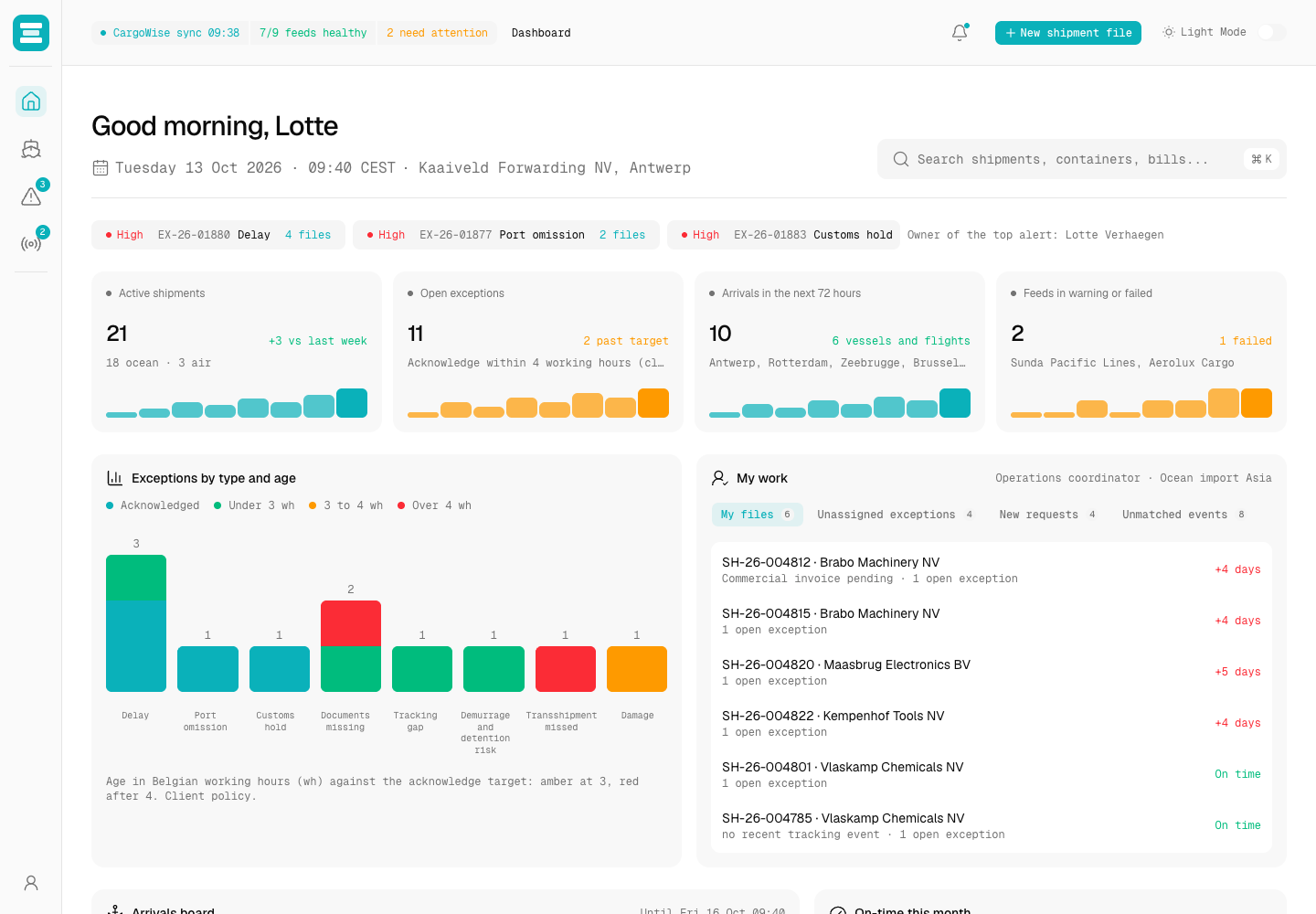
Dunnage - Shipment Tracking Portal and Ops Console for a Freight Forwarder
Designed a shipment tracking portal and operations console for an Antwerp freight forwarder moving ocean and air freight between Asia and Europe, and built the ops console as a clickable demo: shipment files with predicted and carrier ETAs, milestone timelines that show their sources, an exception queue against response targets and carrier data feed health.
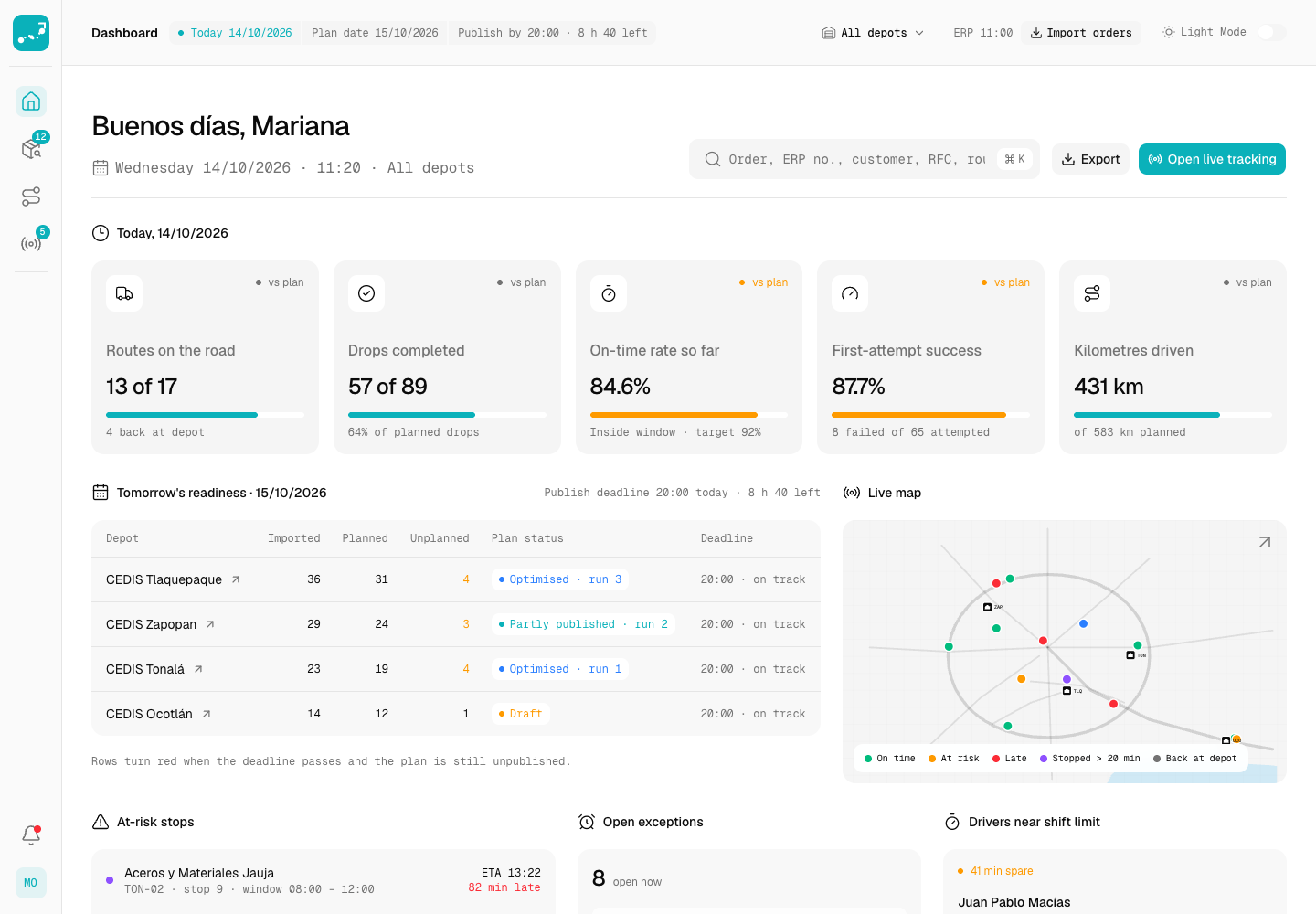
Recua - Dispatch and Route Optimisation Console for a Regional Distributor
Designed and built a clickable dispatch console for a Guadalajara distributor of building materials and beverages: import tomorrow's orders, plan routes for four depots on a map, route list and timeline, check every manual change against the fleet's limits, publish before the 20:00 deadline and watch the day live.
Enterprise Software Engineering - Human + AI
Contact Us
© 2026 - Copyright. All Rights reserved Oceanlab
Location
Global Headquarters
21 Merchant Road, 3rd Floor, Singapore 058267
Main corporate office and leadership operations
North America Office
548 Market Street, PMB 12345, San Francisco, CA 94104
Client operations and business development
India Office
402 Shivalik Shilp II, SG Highway, Ahmedabad 380015
Engineering and delivery center

Enterprise Software Engineering - Human + AI
Contact Us
Locations
Global Headquarters
21 Merchant Road, 3rd Floor, Singapore 058267
Main corporate office and leadership operations
North America Office
548 Market Street, PMB 12345, San Francisco, CA 94104
Client operations and business development
India Office
402 Shivalik Shilp II, SG Highway, Ahmedabad 380015
Engineering and delivery center
© 2026 - Copyright. All Rights reserved Oceanlab