Qissa - AI Video Editor for Arabic, French and English Social Clips
AI Video Editor for a Tunisian SaaS Start-up
Designed and built a clickable browser-based AI video editor for a Tunis start-up that sells to social media teams, agencies and creators: projects organised by client folder, an AI clip finder that scores the best short-form moments in a long recording, and cloned voices that can only be used with their owner's recorded consent.
Most of our work is under NDA. Per agreement, we can share the work but not the company details - all names and identifying information shown here have been changed.
Impact
Home, projects, project overview, clip finder and voices. Each of the 18 demo projects opens its own overview with source media, outputs, licences and activity.
The clip finder ranks moments from a 58:12 podcast episode with a score from 0 to 100, sub-scores for hook, standalone meaning, energy and trend fit, and flags such as "Starts mid-sentence".
Every cloned voice shows its owner, consent status, allowed uses, languages and expiry. 7 are usable today; pending, revoked and expired voices are marked as such.
7 client folders with their own brand kits, 7 members, projects in Tunisian Arabic, French and English, and 9 posts scheduled for the coming week.
The Problem
Kerkennah Pixel's early customers, mostly agencies in Tunis, Sfax and Casablanca, cut reels in a desktop editor, captioned in a second tool, translated captions by hand and sent clients 400 MB files over messaging apps for feedback. Arabic captions broke in most tools, a one-hour podcast took a junior editor most of a day to turn into five vertical clips, nobody tracked whether music was licensed for paid ads, and voice cloning tools kept no record of whose voice was used or whether they had agreed.
Our Solution
Qissa puts the whole path in one browser tab: upload a recording, find and score the best short-form moments, caption and brand them, and track every output from review to render and publishing. Arabic is treated as a first-class language, every stock asset carries its licence, and no cloned voice can be used without a recorded, scoped and revocable consent from its owner.
The Challenge: Fast Clips Without Losing Trust
Qissa has to turn long recordings into social clips quickly for teams working in Arabic, French and English, while keeping a record of every licence and every voice consent behind each export.
Arabic That Most Tools Break
Arabic captions came out with disconnected letters, punctuation on the wrong side and mixed French and Arabic lines scrambled. Tunisian Arabic mixed with French is also harder for speech-to-text than Modern Standard Arabic, so transcripts need correcting.
A Day of Work Per Episode
Finding five good vertical clips in a one-hour podcast meant watching the whole recording, then captioning, translating and reframing each clip in separate tools and chasing client feedback over messaging apps.
Voices Are Personal Data
A person's voice is protected as a personality right, and a voiceprint can count as biometric data under Tunisian data protection law. A voice may only be cloned with its owner's consent, scoped by use, language and expiry, and the owner can revoke it at any time.
Licences and AI Labels on Every Export
Stock music and footage carry terms for commercial use, paid ads and platforms. The EU AI Act sets transparency duties for synthetic audio and video, and social networks have their own labelling rules, so each export has to know what it contains.
Our Approach: From Media Rules to a Clickable Editor
Spec and Rules Research
Mapped 9 roles, from workspace owner and client reviewer to Kerkennah Pixel's trust and safety staff, and 40 screens across the workspace, public pages and an ops console. Defined the data model for media assets, word-timed transcripts, outputs and edit decisions, clip suggestions, caption sets, brand kits, licences, voices with append-only consent history, render jobs, posts and a credit ledger. Wrote down the rules the design follows: Tunisian Organic Law 2004-63 and the INPDP, GDPR for EU customers, EU AI Act transparency for synthetic media, personality rights over voice and likeness, music licences and platform publishing rules.
Clickable Demo on a Production UI Kit
Built 5 key screens on a production dashboard kit, seen from a fictional Tunis agency's workspace: home with what is waiting on you and the next 7 days of posts, projects by client folder with filters and bulk actions, the project overview with outputs, licence warnings and activity, the clip finder with scores, keep and discard, feedback and a clip preview panel, and voices with the consent request sheet and consent record. Tunisian Arabic transcripts and hook lines read right to left inside the English interface.
What a Production Build Adds
The transcript-based editor, captions and translation, voiceover and dubbing, media and stock library, reviews, render queue, publishing and settings, the public review, consent and verification pages, and the ops console. Integrations for speech-to-text, caption translation, an LLM for clip scoring, voice cloning, GPU rendering, media storage, content moderation, C2PA content credentials, the social networks' publishing APIs and Tunisian and international payments. A full right-to-left Arabic interface, an audit log of every voice clone, consent change and support access, and INPDP filings confirmed with Tunisian counsel.
Why It Works: Speed With a Record Behind It
Consent Before Any Cloned Voice
Every voice shows whose it is, what it may be used for, in which languages and until when. The consent record keeps the statement in the owner's own language, the voice-match score and the device it was recorded on, and voices that are pending, revoked or expired cannot be used.
Clip Scores That Explain Themselves
Each suggested clip shows its timecodes, speakers, hook line and four sub-scores, with flags such as "Starts mid-sentence" or "Contains music from source". The credit cost is shown before the clip finder runs, and larger runs ask for confirmation first.
Licences Travel With the Project
The project overview lists every music track, stock clip and synthetic voice used, with its licence and any warning, such as a track not cleared for paid ads. Output cards show review, render and publish status and flag any output with an AI-generated voice.
Arabic in Its Own Direction
Transcript lines and hook lines take the direction of their own language, so Tunisian Arabic reads right to left next to French and English lines. Language chips mark every project and output, and home surfaces problems like a render failed because a caption font has no Arabic glyphs.
Related case studies
View all: Media & creators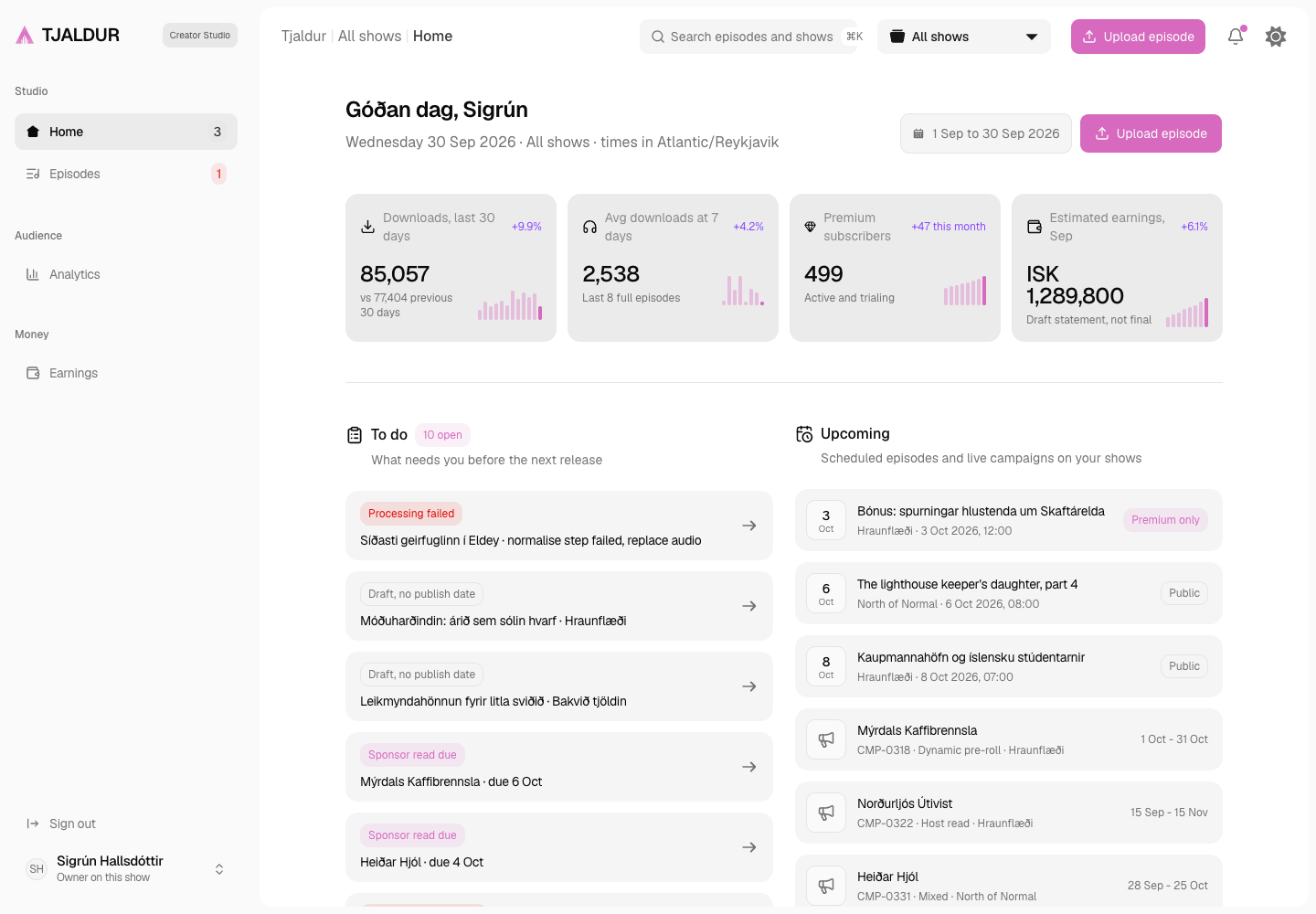
Tjaldur - Podcast Hosting, Dynamic Ads and Creator Payouts Platform
Designed and built a clickable creator studio for a Reykjavik network of independent podcasts: upload and process episodes, place mid-roll ad markers on the waveform, publish only when sponsor disclosure is in place, read downloads counted following IAB guidelines, and see earnings and payouts by source.
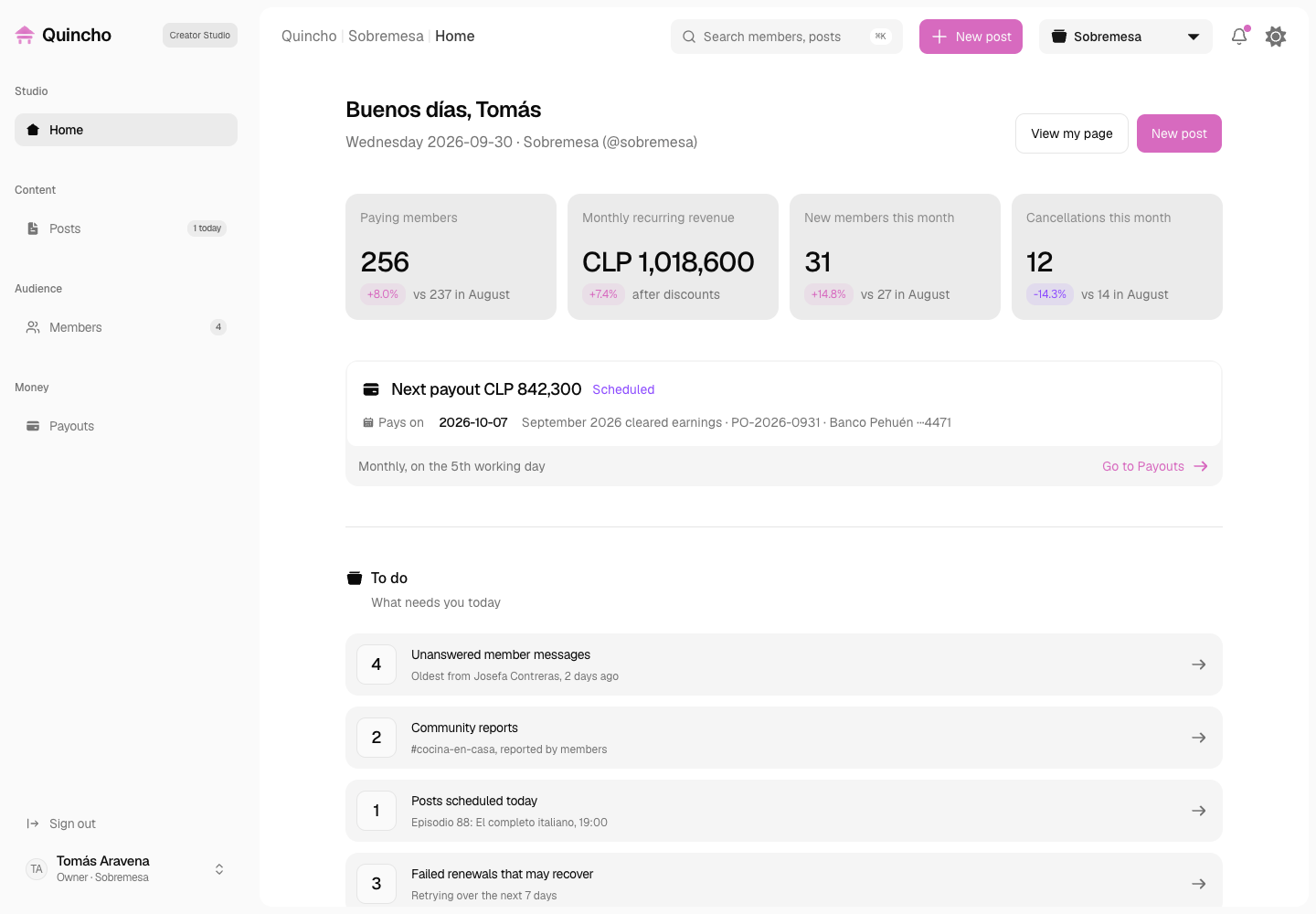
Quincho - Creator Membership Platform with Payments and Payouts in Pesos
Designed and built a clickable creator studio for a Santiago membership platform: tiered memberships priced in Chilean pesos, paywalled posts with access by tier, a member list that respects what each member agreed to share, and payouts that show every fee, refund and chargeback deducted.
Enterprise Software Engineering - Human + AI
Contact Us
© 2026 - Copyright. All Rights reserved Oceanlab
Location
Global Headquarters
21 Merchant Road, 3rd Floor, Singapore 058267
Main corporate office and leadership operations
North America Office
548 Market Street, PMB 12345, San Francisco, CA 94104
Client operations and business development
India Office
402 Shivalik Shilp II, SG Highway, Ahmedabad 380015
Engineering and delivery center

Enterprise Software Engineering - Human + AI
Contact Us
Locations
Global Headquarters
21 Merchant Road, 3rd Floor, Singapore 058267
Main corporate office and leadership operations
North America Office
548 Market Street, PMB 12345, San Francisco, CA 94104
Client operations and business development
India Office
402 Shivalik Shilp II, SG Highway, Ahmedabad 380015
Engineering and delivery center
© 2026 - Copyright. All Rights reserved Oceanlab