Nestkeeper - Home Maintenance Planner with Weather-Triggered Tasks and Leak Sensors
Home Maintenance App for a Minnesota Home Insurer
Designed and built a clickable home maintenance planner that a Minneapolis home insurer gives free to its homeowner policyholders: a seasonal plan tuned to the home and its climate, tasks fired by freeze warnings, an inventory of systems and appliances with warranties and recalls, and optional leak and freeze sensors - with home data kept away from underwriting.
Most of our work is under NDA. Per agreement, we can share the work but not the company details - all names and identifying information shown here have been changed.
Impact
Today, the seasonal plan, task detail, My home and Sensors, with item and alert detail as panels. Log a job, Snooze, Add my own task, Not applicable and Close valve all work on the demo data.
Fall, Winter, Spring and Summer for a 1978 Duluth house in IECC climate zone 7. Every task opens its own page with why it matters, numbered steps, safety notes, tools and parts, and when to call a pro.
No underwriting, rating or claims role and no data feed. The home health score is for the homeowner only, sensor data is never used to price insurance, and the discount programme is a separate opt-in switch, off by default.
2 homes, 17 systems and appliances, 17 logged jobs, 8 sensor devices, 4 alerts, 2 partner bookings and a product recall matched on model and serial range.
The Problem
Most of Basswood Mutual's costliest homeowner claims were preventable: burst pipes in January, water heaters that leaked for days, ice dams from blocked gutters and sump pumps that had not run since the spring before. Basswood mailed a seasonal checklist every autumn, but nobody could tell who read it, the advice was the same in Duluth as in Rochester, customers who did the work had nowhere to keep the receipts, and the first Basswood heard of a frozen pipe was the claim.
Our Solution
Nestkeeper gives each policyholder a maintenance plan built from their home's profile and climate region, with tasks that fire when the forecast turns, how-to guides that say when to call a pro, an inventory of systems and appliances with ages, warranties and recalls, and optional leak and freeze sensors with a shut-off valve. The data stays in Nestkeeper and is never used to price the customer's insurance unless they opt in.
The Challenge: Preventing Claims Without Watching Customers
Basswood wanted fewer water, freeze and roof claims across 300,000 homeowner policyholders. That meant advice specific to each home and each week's weather, from an insurer its customers did not want inside their house data.
One Checklist for a Whole State
Northern Minnesota freezes weeks before the south of the state, and a cabin on a well and septic system needs different care from a city house with a finished basement and a sump pump. A single mailed checklist could not fit either, or react to a hard freeze forecast for this Sunday.
Customers Feared Their Premiums
Customers said a maintenance app would be used to raise their rates. State insurance laws generally prohibit unfair discrimination and require rating factors to be filed, and regulators have issued guidance on insurers' use of external data, such as the NAIC model bulletin. Client policy is that Nestkeeper data never feeds underwriting, rating, renewal or claims unless the customer joins a named, filed programme.
Privacy Law With Exemptions
The Minnesota Consumer Data Privacy Act took effect on 2025-07-31 but generally exempts GLBA-covered data and insurance companies, while GLBA and Minnesota's Insurance Fair Information Reporting Act limit how an insurer uses policyholder data. Basswood chose to honour MCDPA-style rights for every user in every state, and anti-rebating rules on free services vary by state.
Alerts and Trades Without Overpromising
Sensor alerts are advisory, not an emergency service, and text reminders need prior consent under the TCPA. Partner trades may pay Basswood a referral fee, which the FTC Endorsement Guides say must be disclosed, the FTC rule on consumer reviews prohibits suppressed reviews, and Minnesota licenses plumbers, electricians and building contractors.
Our Approach: From Claims Data to a Homeowner's Plan
Spec and Rules Research
Mapped 11 user roles across the homeowner app, a property manager web view, two public pages and the staff console, 42 screens and the data model for homes, items, task templates, guides, home tasks, jobs, documents, weather triggers, sensor devices, alerts, partners, bookings, consents and access grants. Wrote down the rules the design follows: MCDPA, GLBA and Minnesota Statutes chapter 72A, rating and underwriting separation, value-added service rules, the FTC Endorsement Guides and consumer reviews rule, Minnesota trade licensing and the TCPA.
Clickable Demo on a Production UI Kit
Built 5 key screens of the homeowner app on a production dashboard kit: Today with the hard-freeze banner, sensor status, Due now and the home health score breakdown; the plan with Season and List views and a task quick view; task detail with the how-to guide and the home's own specs; My home with life bands, warranty and recall chips and an item panel; and Sensors with the device table, Close valve, a 7-day overnight lows chart and the alert panel. All actions run on local state.
What a Production Build Adds
Integration with National Weather Service forecasts, IECC climate zones and NOAA climate normals, address lookup, label text recognition, the CPSC recalls API, leak sensor partners such as Moen Flo, Phyn or YoLink, the partner trades marketplace, push, Twilio and email, sign-in linked to the policy through Auth0 or Okta, encrypted storage and Zendesk. Plus the remaining screens: onboarding, label scan, documents, history, the shareable home report, find a pro, household access, privacy settings, the property manager view and the 21-screen staff console with alert monitoring, partner vetting, aggregated analytics and an audit log.
Why It Works: Advice for This House, This Week
The Plan Fits the House and the Weather
The plan is tuned for Northern Minnesota, IECC climate zone 7, and built from the home profile: sump pump, finished basement, gas heat, three outdoor faucets. A hard freeze forecast puts a red banner on Today that links straight to the task to shut off the outdoor faucets.
Every Task Says Why and When to Stop
Each task shows the risk it reduces, numbered steps with safety notes, tools and parts, and facts from the home such as the 16x25x1 filter size or where the main shut-off is. When to call a pro lists the warning signs and finds a plumber near Duluth, with the paid-partner disclosure underneath.
The Inventory Warns Before Things Fail
Every system and appliance shows its age against a typical life band, a near-end-of-life chip, warranty status and any matched recall with its hazard and remedy. Key systems show 8 of 9 recorded, with a prompt to scan the missing water softener label.
Sensors That Do Not Overpromise
Sensors always state that Nestkeeper is not an emergency service. Monitored alerts show their on status and the alert team's hours of 7:00 - 22:00 Central, the main valve can be closed from the app, and each alert opens with what to do now and a timeline from raised to resolved.
Related case studies
View all: Home & family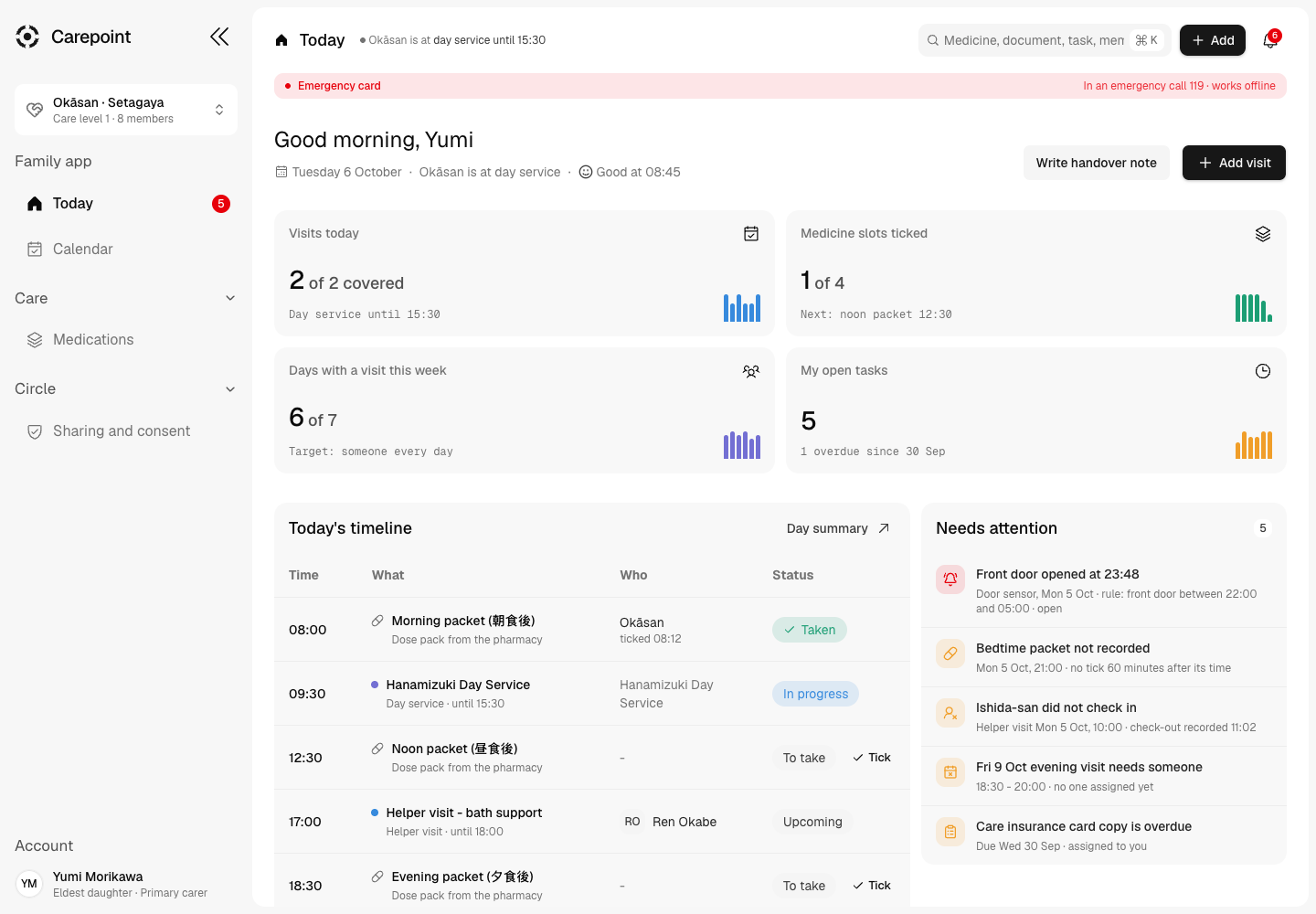
Carepoint - Family Care Coordination App Where the Parent Decides Who Sees What
Designed and built a clickable care coordination app for a Tokyo company's families caring for an elderly parent who still lives at home: one shared calendar of visits and appointments, medicine check-offs copied exactly from the pharmacy's label, handover notes between visits, and sharing choices that the parent sets and the app records.
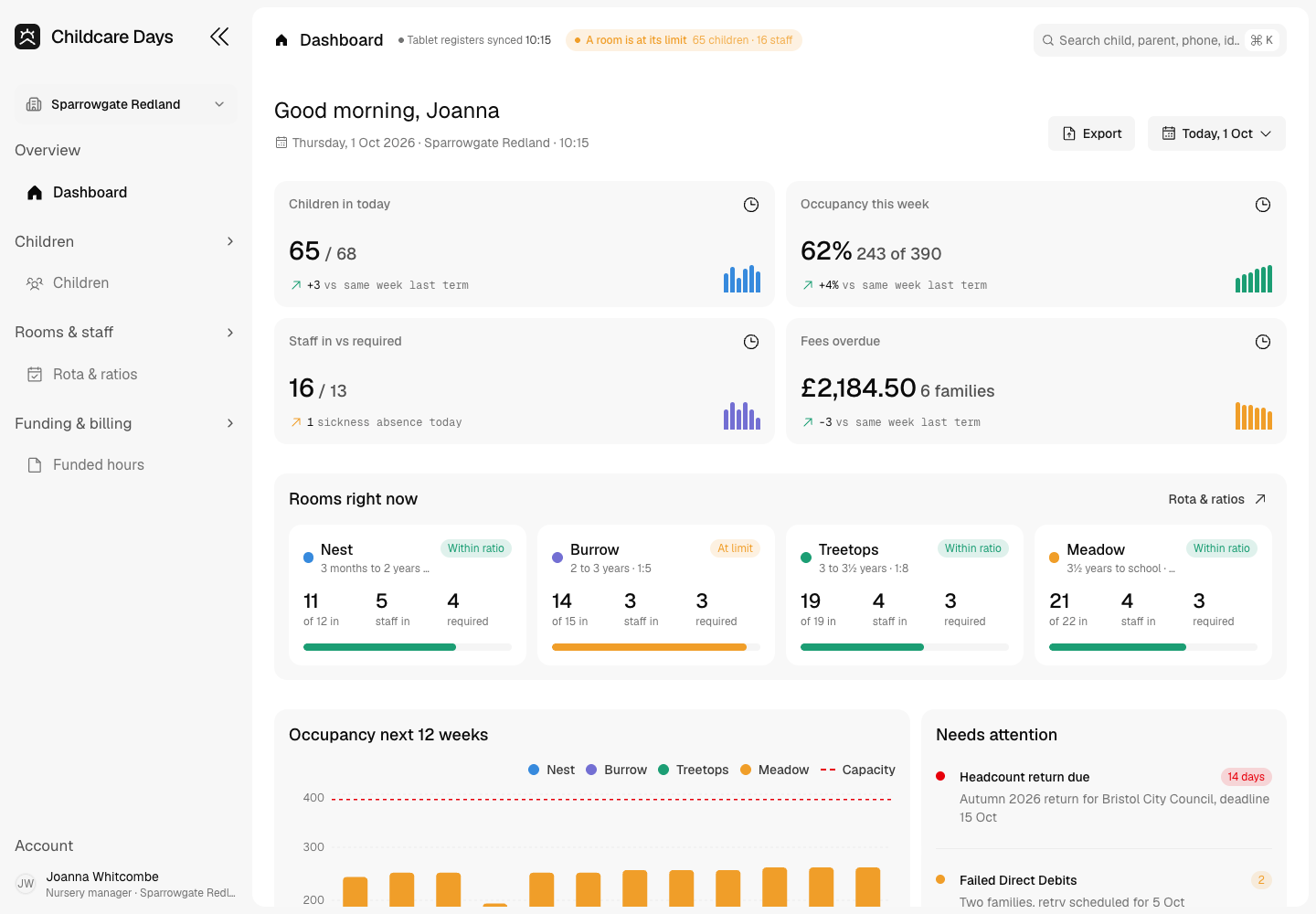
Childcare Days - Nursery Management Platform with Live Ratios and Funded Hours
Designed and built a clickable manager console for a group of 11 day nurseries in and around Bristol: today's rooms against the ratio rules, every child's record in one place, staffing by half hour, and the term's funded hours claim to the local authority.
Enterprise Software Engineering - Human + AI
Contact Us
© 2026 - Copyright. All Rights reserved Oceanlab
Location
Global Headquarters
21 Merchant Road, 3rd Floor, Singapore 058267
Main corporate office and leadership operations
North America Office
548 Market Street, PMB 12345, San Francisco, CA 94104
Client operations and business development
India Office
402 Shivalik Shilp II, SG Highway, Ahmedabad 380015
Engineering and delivery center

Enterprise Software Engineering - Human + AI
Contact Us
Locations
Global Headquarters
21 Merchant Road, 3rd Floor, Singapore 058267
Main corporate office and leadership operations
North America Office
548 Market Street, PMB 12345, San Francisco, CA 94104
Client operations and business development
India Office
402 Shivalik Shilp II, SG Highway, Ahmedabad 380015
Engineering and delivery center
© 2026 - Copyright. All Rights reserved Oceanlab