Carepoint - Family Care Coordination App Where the Parent Decides Who Sees What
Shared Care App for Japanese Families Caring for a Parent at Home
Designed and built a clickable care coordination app for a Tokyo company's families caring for an elderly parent who still lives at home: one shared calendar of visits and appointments, medicine check-offs copied exactly from the pharmacy's label, handover notes between visits, and sharing choices that the parent sets and the app records.
Most of our work is under NDA. Per agreement, we can share the work but not the company details - all names and identifying information shown here have been changed.
Impact
Today, the shared calendar, visit or appointment detail, medications and sharing and consent, plus the emergency card behind the red strip on every page. Each of the 32 demo visits and appointments opens its own detail page.
9 categories against family, home helpers and care manager, with 5 marked Sensitive. Only the parent changes it while she decides for herself; switching to a trusted person needs a second member to confirm.
10 current medicines copied from the label and medicine notebook, ticked in 4 daily slots that follow the pharmacy's dose packs. There are no dose, maximum or interaction fields, and a missed slot only points to the pharmacist or doctor.
A care circle across Tokyo, Osaka and Singapore with 32 visits and appointments over 3 weeks, 12 medicines, 14 tasks, 5 handover notes, 30 days of check-ins and 7 consents, one withdrawn.
The Problem
In Tsukimido's research with 40 caring families, the child living closest to the parent did most of the work and held most of the information: dose packs, the day-service schedule, the care manager's number and the insurance cards in a kitchen drawer. Siblings in other cities or abroad heard about a fall days later in a busy LINE group, home helpers left paper notes, nobody knew whether the evening medicine had been taken, and the parent was talked about rather than asked.
Our Solution
Carepoint puts one shared, permissioned record in the middle of the care circle. The Today page shows what needs attention, the calendar shows which days have someone visiting against the family's own target, medicines are ticked by slot exactly as the pharmacy packed them, and every category is shared only with the roles the parent chose, with each consent recorded in the words she was shown.
The Challenge: Shared Care Around a Parent Who Decides
A care circle mixes family, paid helpers and a professional care manager around one person's health information, under Japanese privacy law, the long-term care insurance system and the line between a reminder app and a medical device.
Health Information Needs the Parent's Consent
Under the APPI, medical history and health generally count as special care-required personal information. Acquiring it generally needs prior consent and it cannot go to third parties through the opt-out route, so the parent has to agree before anything about her health is recorded, and each role's access is a separate choice.
When the Parent Can No Longer Decide
The app must not judge anyone's mental capacity. The parent names trusted people in advance, the switch to them needs two circle members and is logged, and guardianship documents are stored but never treated as legal proof.
Reminders Without Medical Advice
Software meant to diagnose, treat or prevent disease can be regulated under the Pharmaceutical and Medical Device Act. Medication schedules are copied, never calculated, the app never suggests a dose or a catch-up, and check-ins record mood and needs rather than symptom scores.
Six Roles, One Record
A primary carer, siblings far away, the parent, paid helpers, an invited care manager and Tsukimido's own staff each need a different view. Helpers see only their own visits, staff cannot read care content without a time-limited grant, and hidden categories must say "Not shared with you" rather than look empty.
Our Approach: From Care Rules to a Clickable App
Spec and Rules Research
Mapped 6 user roles, 33 screens across onboarding, the family app, parent mode, helper mode, the care manager web view and the operations console, and the data model for circles, members, sharing policy versions, consents, trusted person arrangements, events, medicines, dose records, notes, check-ins, documents, expenses and alerts. Wrote down the rules the design follows: the APPI, long-term care insurance, the PMD Act boundary, the 119 emergency line, My Number cards and the Payment Services Act.
Clickable Demo on a Production UI Kit
Built 5 key screens on a production dashboard kit for one worked care circle: Today with needs attention, the timeline and this week's cover, the shared calendar in week, month and list views with "I'll go" for unassigned visits, visit and appointment detail with what to bring and helper check-ins, medications by slot with Tick taken and Mark skipped, and sharing and consent with the exact Japanese words of each consent. All actions run on local state.
What a Production Build Adds
Sign-in with Apple, Google, LINE or an email code, push and LINE notifications that carry no care content, App Store, Google Play and Stripe subscriptions, employer eligibility files, a private calendar feed, document text recognition, optional SwitchBot, Aqara and HealthKit sensors, and hosting in the AWS Tokyo region. The remaining screens, including large-text parent mode, helper visit mode, the care manager view and the operations console, an access log and audit trail, and review of consent wording by Japanese counsel.
Why It Works: The Parent Stays in Charge
Consent Kept in the Parent's Own Words
Each consent shows what it covered, the exact Japanese text shown with a translate toggle, who gave it, how and when. A withdrawn consent stays on the record, sharing history lists every policy version, and guardianship papers are marked "Stored, not verified by Carepoint".
What Needs Attention Comes First
Today lists only what needs someone: a medicine slot with no tick 60 minutes after its time, a helper who did not check in, a visit with no one assigned, an open door-sensor alert and an overdue task. Items open the visit, medicine or alert behind them.
Cover Against the Family's Own Target
The calendar's cover row shows how many days this week have a visit against the target the family set, such as someone every day. Unassigned visits show a dashed outline and "Needs someone", and anyone can claim one with "I'll go". Times show in Japan time, with siblings abroad seeing their own zone.
Medicines as the Pharmacy Gave Them
A banner on the medications page always says Carepoint reminds and records but gives no medical advice, with the pharmacy's number. Slots follow the pharmacy's dose packs, the 14-day strip shows taken, skipped and not recorded with no judgement, and the emergency card is one tap away on every page with the line to call 119.
Related case studies
View all: Home & family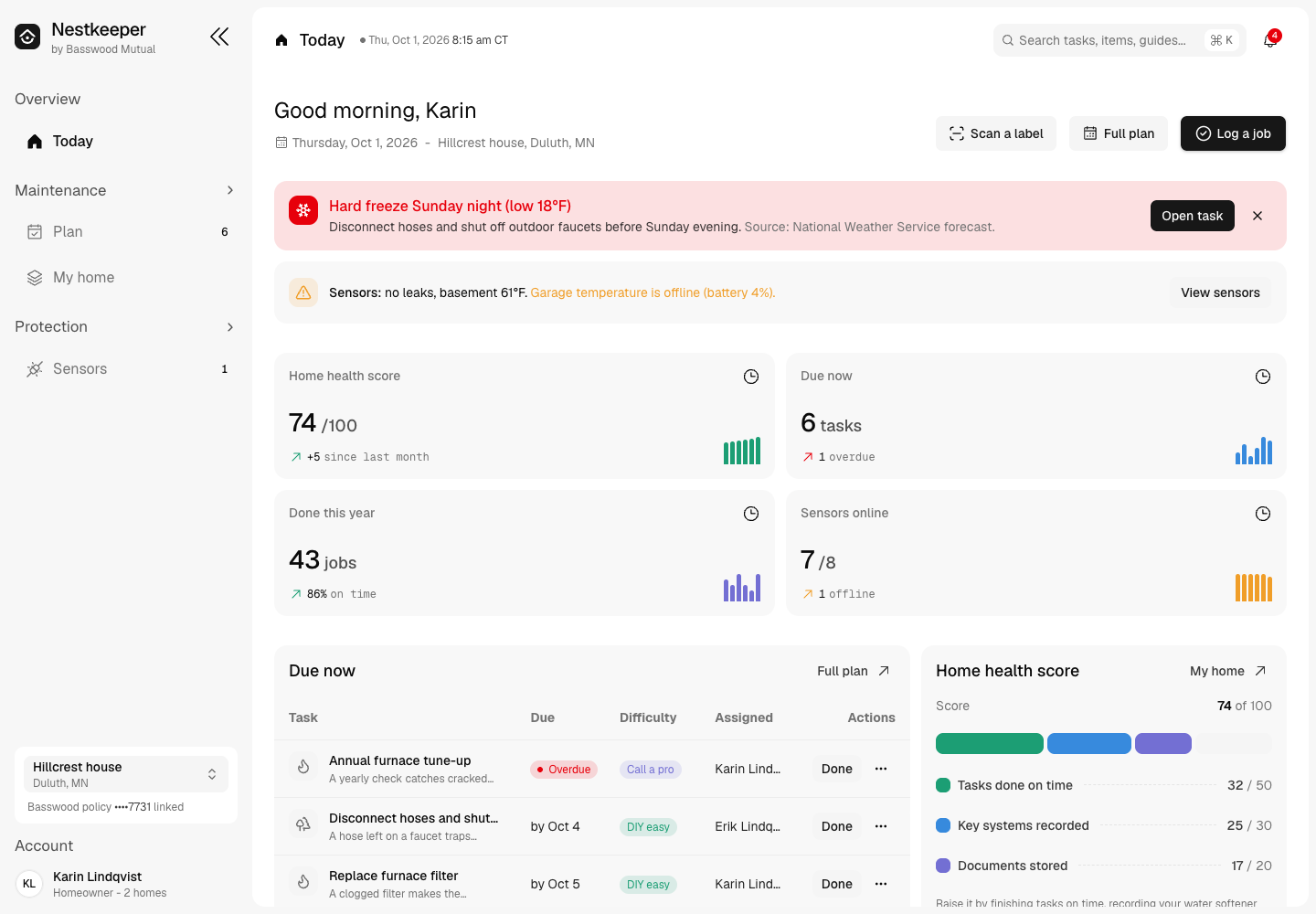
Nestkeeper - Home Maintenance Planner with Weather-Triggered Tasks and Leak Sensors
Designed and built a clickable home maintenance planner that a Minneapolis home insurer gives free to its homeowner policyholders: a seasonal plan tuned to the home and its climate, tasks fired by freeze warnings, an inventory of systems and appliances with warranties and recalls, and optional leak and freeze sensors - with home data kept away from underwriting.
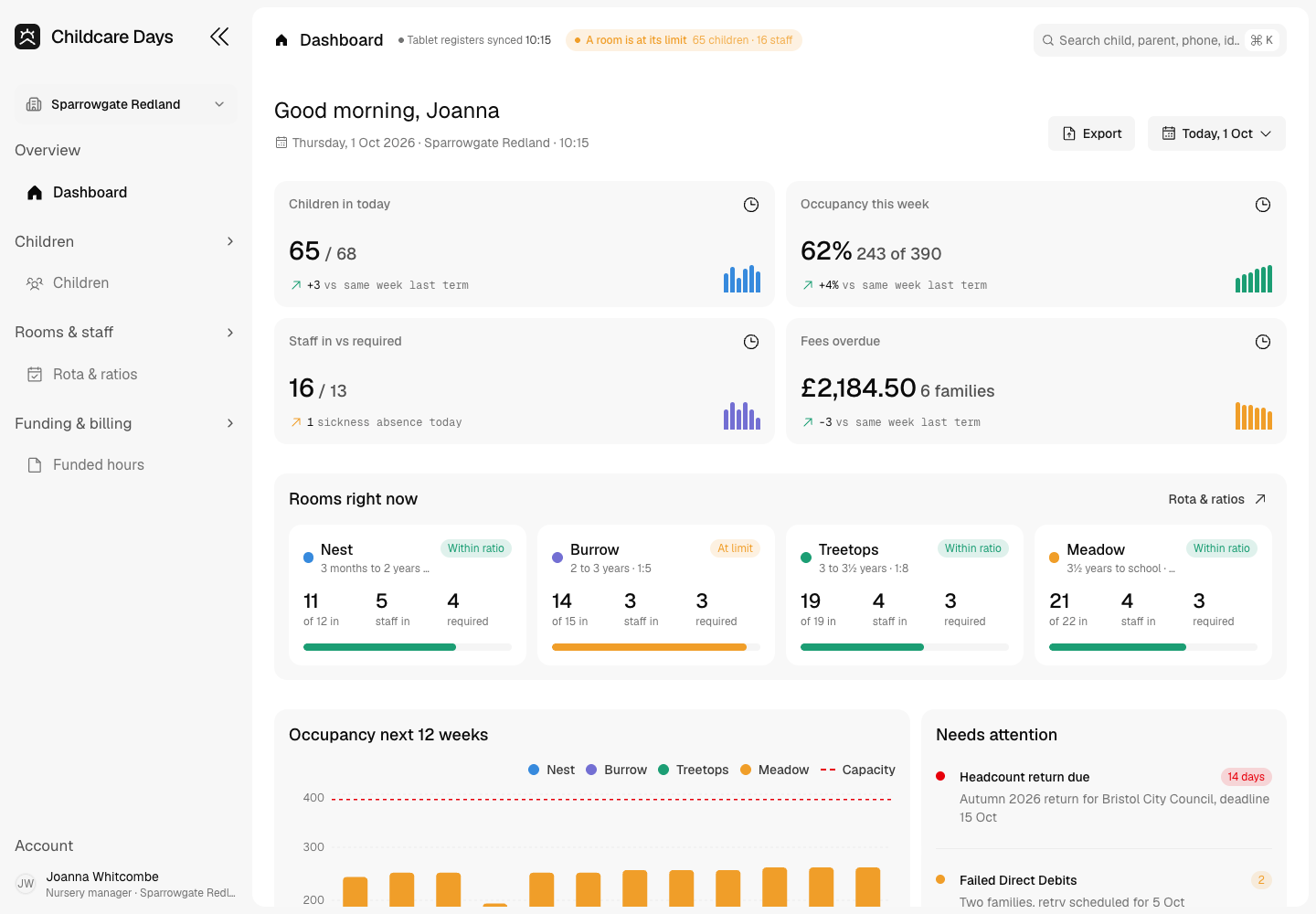
Childcare Days - Nursery Management Platform with Live Ratios and Funded Hours
Designed and built a clickable manager console for a group of 11 day nurseries in and around Bristol: today's rooms against the ratio rules, every child's record in one place, staffing by half hour, and the term's funded hours claim to the local authority.
Enterprise Software Engineering - Human + AI
Contact Us
© 2026 - Copyright. All Rights reserved Oceanlab
Location
Global Headquarters
21 Merchant Road, 3rd Floor, Singapore 058267
Main corporate office and leadership operations
North America Office
548 Market Street, PMB 12345, San Francisco, CA 94104
Client operations and business development
India Office
402 Shivalik Shilp II, SG Highway, Ahmedabad 380015
Engineering and delivery center

Enterprise Software Engineering - Human + AI
Contact Us
Locations
Global Headquarters
21 Merchant Road, 3rd Floor, Singapore 058267
Main corporate office and leadership operations
North America Office
548 Market Street, PMB 12345, San Francisco, CA 94104
Client operations and business development
India Office
402 Shivalik Shilp II, SG Highway, Ahmedabad 380015
Engineering and delivery center
© 2026 - Copyright. All Rights reserved Oceanlab