Jeoul - AI Used-Car Pricing Platform with Guardrails and Model Monitoring
AI Pricing Platform for a Korean Used-Car Buyer
Designed and built a clickable pricing platform for a Seoul used-car remarketing company: a pricing model gives every car the same starting estimate with comparable sales, a confidence level and the factors that moved the price, buyers set the final offer after inspection within guardrails, and analysts measure every model version against what the car actually sold for at auction.
Most of our work is under NDA. Per agreement, we can share the work but not the company details - all names and identifying information shown here have been changed.
Impact
Dashboard, appraisal queue, valuation workbench, override approvals and model monitoring. Each of the 24 demo appraisals opens its own workbench with vehicle, history, condition and comparables tabs.
Within 8% of the model-based offer, not more than 15% below the comparable median, not above the segment's 90th percentile hammer price, and no drop of more than 10% below the instant range without a senior buyer.
Model monitoring compares each region's signed error with the national figure and marks it pass, warn or fail, next to the rolling 4-week error against hammer prices and input drift by feature.
24 appraisals across 8 statuses, 16 trims from Hyundai, Kia, Genesis, BMW and Mercedes-Benz, 11 override requests, 11 staff users and 6 monitoring alerts.
The Problem
Saetbyeol's buyers priced every car from memory, two auction-result spreadsheets and phone calls to dealers. Two buyers could quote the same 2021 Hyundai Grandeur 6,000,000 KRW apart, sellers who got a low phone quote rarely booked an inspection, final offers often dropped sharply after inspection, and nobody could explain afterwards why a price was what it was.
Our Solution
Jeoul gives every car the same starting point: a gradient-boosted pricing model trained on Saetbyeol's own auction results and licensed market data, shown with comparable sales, an 80% interval, a confidence level and the factors behind the estimate. Buyers can still override, but only within their limit and the guardrails, with a reason, and with a second person approving anything beyond.
The Challenge: One Price Everyone Can Explain
Saetbyeol buys cars from private owners and sells them to licensed dealers through its own online auctions. A price has to be fast enough for a seller on a phone, firm enough to survive inspection, and explainable to the seller, the buyer and management afterwards.
Prices That Depended on the Buyer
With no shared starting point, the same car got different quotes from different buyers, and margin swung from a loss on some segments to windfalls on others. Management could not tell whether the pricing, the inspections or the market was to blame.
Offers That Fell Apart After Inspection
An optimistic range that drops sharply once the car is inspected loses the seller. The design has to show what changed after inspection, such as an undeclared repaint or worn tyres, and flag a drop of more than 10% below the instant range.
Automated Prices and Personal Data
The 2023 PIPA amendments give people rights around fully automated decisions, including an explanation and the right to object. Consent is collected item by item, resident registration numbers are never collected, and training data has to be pseudonymised.
Title, Mileage and Model Drift
Cars with a registered mortgage or seizure cannot be bought until cleared, and declared mileage has to be checked against licensed history data. The model itself can drift as the fuel and maker mix changes, and can run low in one region without anyone noticing.
Our Approach: From Pricing Rules to a Clickable Platform
Spec and Rules Research
Mapped 10 roles from seller and buyer to pricing analyst, data scientist, privacy officer and dealer, 36 screens across staff, seller and dealer portal, and the data model for vehicles, appraisals, valuations, comparable sales, inspections, final offers, overrides, guardrail rules, model versions, monitoring and auction lots. Wrote down the rules the design follows: PIPA consent and automated decision rights, pseudonymised training data, and the Motor Vehicle Management Act on auto auctions, check records and odometer tampering.
Clickable Demo on a Production UI Kit
Built 5 key staff screens on a production dashboard kit: the dashboard with the weekly funnel and post-inspection price gap, the appraisal queue with confidence and guardrail chips, the valuation workbench with the factor breakdown, comparables you can pin or exclude, the offer calculation and a Korean seller view preview, override approvals, and model monitoring with alerts, drift and regional fairness. All actions run on local state.
What a Production Build Adds
The gradient-boosted model trained and served in house, phone identity verification through NICE, KCB or PASS, licensed vehicle-data and KIDI CarHistory lookups, KakaoTalk AlimTalk notifications, e-signature of the purchase agreement and firm banking payouts. Staff auth by role, a full audit of every price shown, and the remaining screens: the 9 seller screens, the dealer portal, inspections, guardrail settings, model versions, experiments, auction lots and reports.
Why It Works: The Model Proposes, a Person Decides
Every Estimate Shows Its Reasons
The workbench shows the estimate with its 80% interval, the number of similar cars and the confidence level, then a factor breakdown from the segment baseline: mileage, owner changes, insurance claims, options and regional demand, each with its amount in KRW.
Overrides Within Limits
Each buyer has an override limit, 3% for most buyers and 6% for senior buyers. When a proposed offer goes beyond it, Send final offer turns into Request approval, and nobody can approve their own request.
Risks Flagged Before the Offer
Mileage history from licensed data sits next to the declared mileage with a gap flag, insurance claims and total loss or flood records are on their own tab, and a registered mortgage or seizure is flagged before a car can be bought.
The Model Is Watched Every Week
Monitoring tracks the median error against hammer prices with an alert line at 5.0%, how often the hammer lands inside the 80% interval, input drift per feature and fairness by region, and the override rate by buyer and segment as an early sign the model is off.
Related case studies
View all: Automotive dealers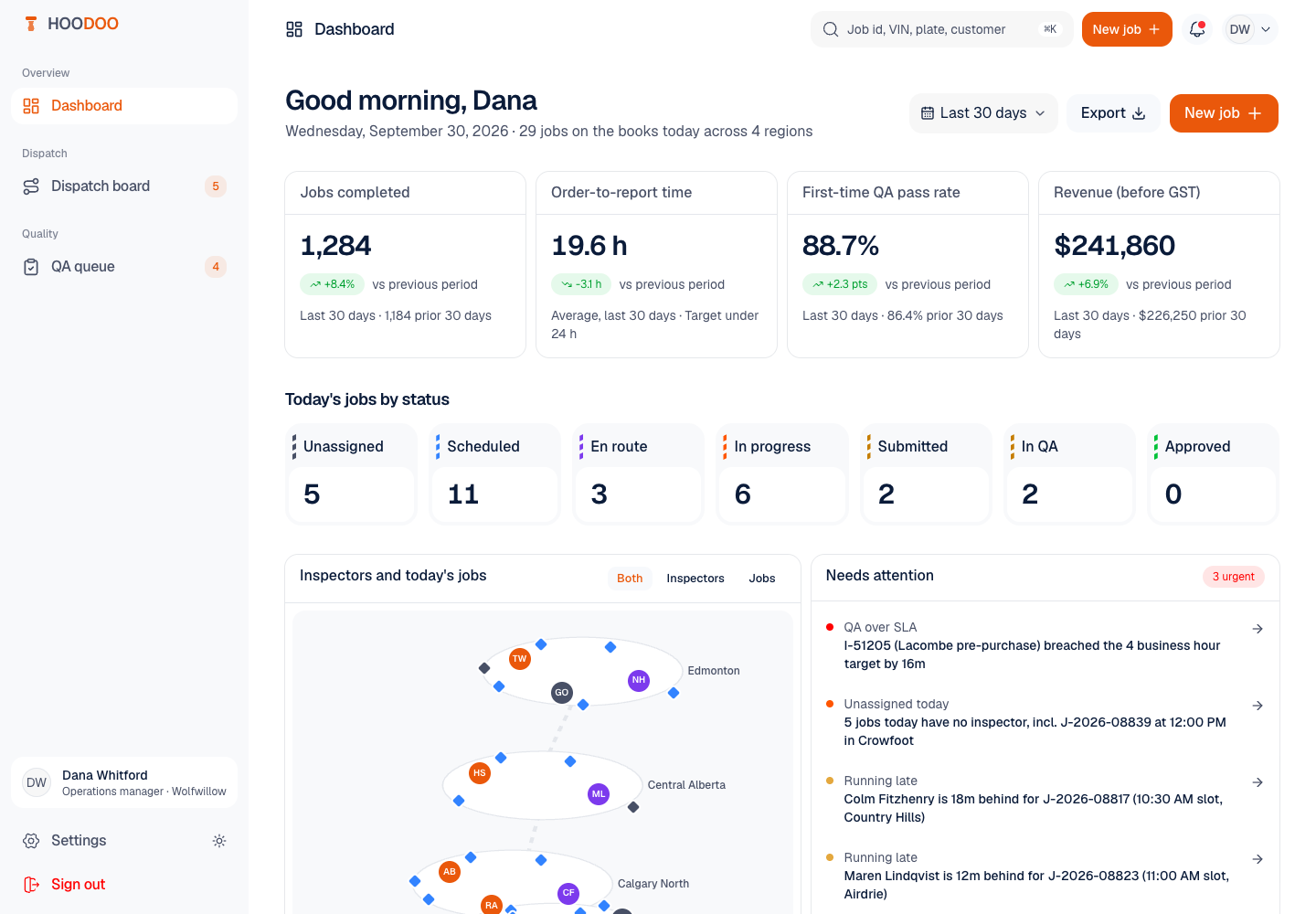
Hoodoo - Vehicle Inspection Platform with QA Review and Condition Reports
Designed and built a clickable operations and QA console for a Calgary company with about 70 mobile inspectors: a dispatch board that checks skills, certifications and job caps, a QA queue timed against a 4 business hour target, and a review workspace that turns an inspection into a graded condition report with repair estimates.
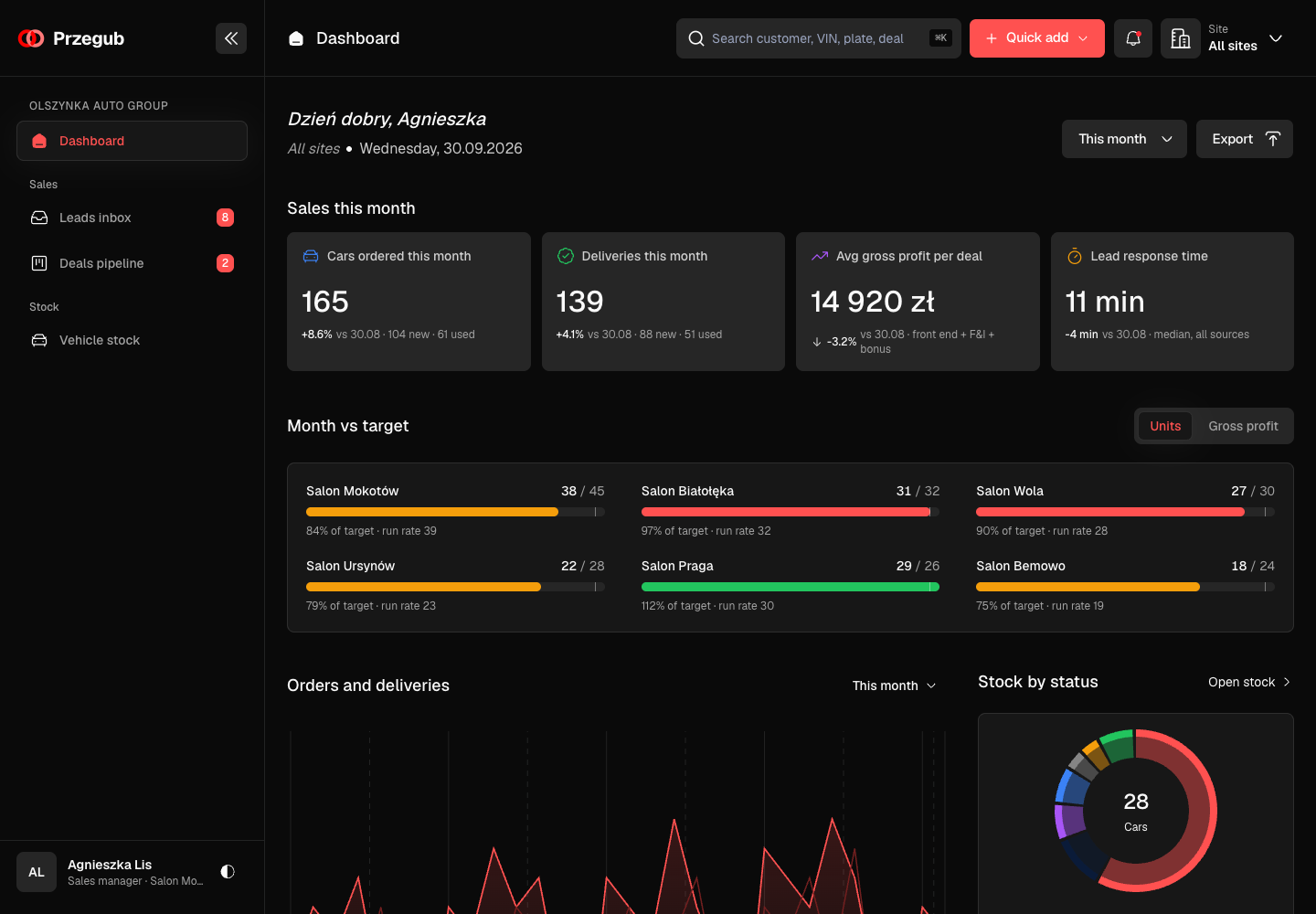
Przegub - Dealer Management System for a Multi-Brand Car Group
Designed and built a clickable dealer management system for a Warsaw car dealer group with 6 showrooms and 4 service centres: one lead inbox for every source, a deals pipeline and deal desk with discount limits and live gross profit, and group-wide vehicle stock with ageing bands and portal publishing.
Enterprise Software Engineering - Human + AI
Contact Us
© 2026 - Copyright. All Rights reserved Oceanlab
Location
Global Headquarters
21 Merchant Road, 3rd Floor, Singapore 058267
Main corporate office and leadership operations
North America Office
548 Market Street, PMB 12345, San Francisco, CA 94104
Client operations and business development
India Office
402 Shivalik Shilp II, SG Highway, Ahmedabad 380015
Engineering and delivery center

Enterprise Software Engineering - Human + AI
Contact Us
Locations
Global Headquarters
21 Merchant Road, 3rd Floor, Singapore 058267
Main corporate office and leadership operations
North America Office
548 Market Street, PMB 12345, San Francisco, CA 94104
Client operations and business development
India Office
402 Shivalik Shilp II, SG Highway, Ahmedabad 380015
Engineering and delivery center
© 2026 - Copyright. All Rights reserved Oceanlab