Haor - Grant Reporting Platform That Turns Field Data and Spend into Funder Reports
Grantee-Side Grant Reporting for a Bangladeshi NGO
Designed and built a clickable grant reporting platform for a Dhaka NGO running climate-resilience, WASH and adolescent education programmes in Sylhet and Khulna: one register for every grant's terms, budget and logframe, an inbox that checks field submissions before they count, and a report editor that builds each funder's report from live data.
Most of our work is under NDA. Per agreement, we can share the work but not the company details - all names and identifying information shown here have been changed.
Impact
Dashboard, grants register, grant detail with 6 tabs, submissions inbox, reports list and the report editor, plus the grant quick view, submission viewer and new report panels.
Duplicate participant, GPS outside the grant's area, synced 7 or more days late, missing consent and value out of range. Only validated submissions feed indicators and reports.
Every section done, every logframe indicator has a figure or an explanation, a variance note for each budget line over 10%, and all inserted evidence cleared for consent.
11 live grants from 7 funders in GBP, EUR, USD and BDT, 36 reports across every status, 24 field submissions from 6 forms and 15 staff users.
The Problem
Jolchhaya's grants team ran 11 grants from a folder of spreadsheets per donor. Paper attendance sheets took two to three weeks to reach Dhaka, where they were retyped into a different workbook for each funder. Budget vs actual per donor line was rebuilt by hand every quarter, shared costs were split differently in every report and photos sat on personal phones with no record of consent. Three reports were late in a year, and one quarterly payment was held for five weeks because a financial report did not reconcile.
Our Solution
Haor keeps every grant's terms, budget, logframe and reporting schedule in one register, checks field data before it counts towards an indicator, and builds each funder's report from live indicator, activity and budget data. Every report is tracked from first draft through internal sign-off, submission and funder feedback.
The Challenge: Many Funders, One Programme
A Bangladeshi NGO with foreign grants answers to each donor's own logframe, budget lines and calendar, and to the NGO Affairs Bureau as well, while its data starts on paper and phones in remote haor and coastal unions.
Every Funder Reports Differently
UK and EU funders use their own logframe formats, foundations bring custom templates and some partners still follow US government-funded award conventions. Each grant has its own reporting frequency, indicator wording and due-date rule, so the same field activity has to be reported several ways.
Foreign Funds Need Bureau Approval
Under the Foreign Donations (Voluntary Activities) Regulation Act 2016, each foreign-funded project generally needs NGO Affairs Bureau approval before funds are used, and the Bureau expects its own progress and completion reports alongside the donor's.
Restricted Money in Four Currencies
Grants arrive in GBP, EUR, USD or BDT, while the books are kept in taka on a July to June year. Spend is reported per donor budget line, and moving money beyond a donor's tolerance needs written approval, with each grant setting its own tolerance.
Field Data and Consent at a Distance
Field officers collect attendance and photos offline in Sunamganj and Satkhira. Duplicates, wrong locations and late syncs have to be caught before figures reach a report, and images need informed consent that can be withdrawn later.
Our Approach: From Donor Rules to a Clickable Platform
Spec and Rules Research
Mapped 9 staff roles from field officer to executive director, plus funder contacts with no login, and 37 screens across staff pages, an offline field app and a funder share page. Modelled grants, budget lines, logframes, reporting periods, submissions, participants, evidence and consent, and wrote down the rules the design follows: NGOAB approvals under the 2016 Act, donor logframes, restricted funds, currency and financial years, IATI publishing, safeguarding and data protection.
Clickable Demo on a Production UI Kit
Built 6 key screens on a production dashboard kit: the dashboard with deadlines, role-based work and burn rate by grant, the grants register with time vs spend meters and NGOAB status, grant detail with budget tolerance, logframe traffic lights, tranches and the reporting schedule, the submissions inbox with flags and validation, the reports list and the report editor with live data blocks and checks. All actions run on local state.
What a Production Build Adds
The offline field app and funder share page, integration with KoboToolbox, ODK Central or CommCare, an accounting ledger such as Tally Prime, QuickBooks Online or Xero, Bangladesh Bank reference rates, IATI Publisher and the IATI Validator, encrypted evidence storage, email and SMS deadline alerts. Staff auth by role and district, sign-off steps per report type, and a full audit log tracing every reported figure to its submissions or ledger entries.
Why It Works: Reports Built from Checked Data
Deadlines and Risks on One Screen
The dashboard lists the next deadlines for donor and NGOAB reports, amber inside 14 days and red inside 7 or overdue, and a needs attention list flags spending without a current NGOAB approval, budget lines over tolerance and photos without cleared consent.
Field Data Is Checked Before It Counts
Each submission shows its flags, answers, map point and the indicators it will feed. The M&E officer validates, queries or rejects it, photos stay blurred until consent is confirmed, and the report editor shows how many submissions are still waiting for the period.
Every Grant Keeps Its Own Terms
Tolerance, indirect cost rate, cost-share, rate method and reporting language are stored per grant. The budget tab shows each line within, near or over tolerance with a request reallocation action, and every amount is shown in grant currency and taka.
Only Cleared Evidence Reaches a Funder
The report editor follows the funder's template with guidance and word limits per section, pulls indicator, activity and budget tables live, and its evidence picker refuses any photo or story whose consent has not been cleared.
Related case studies
View all: Nonprofit & NGO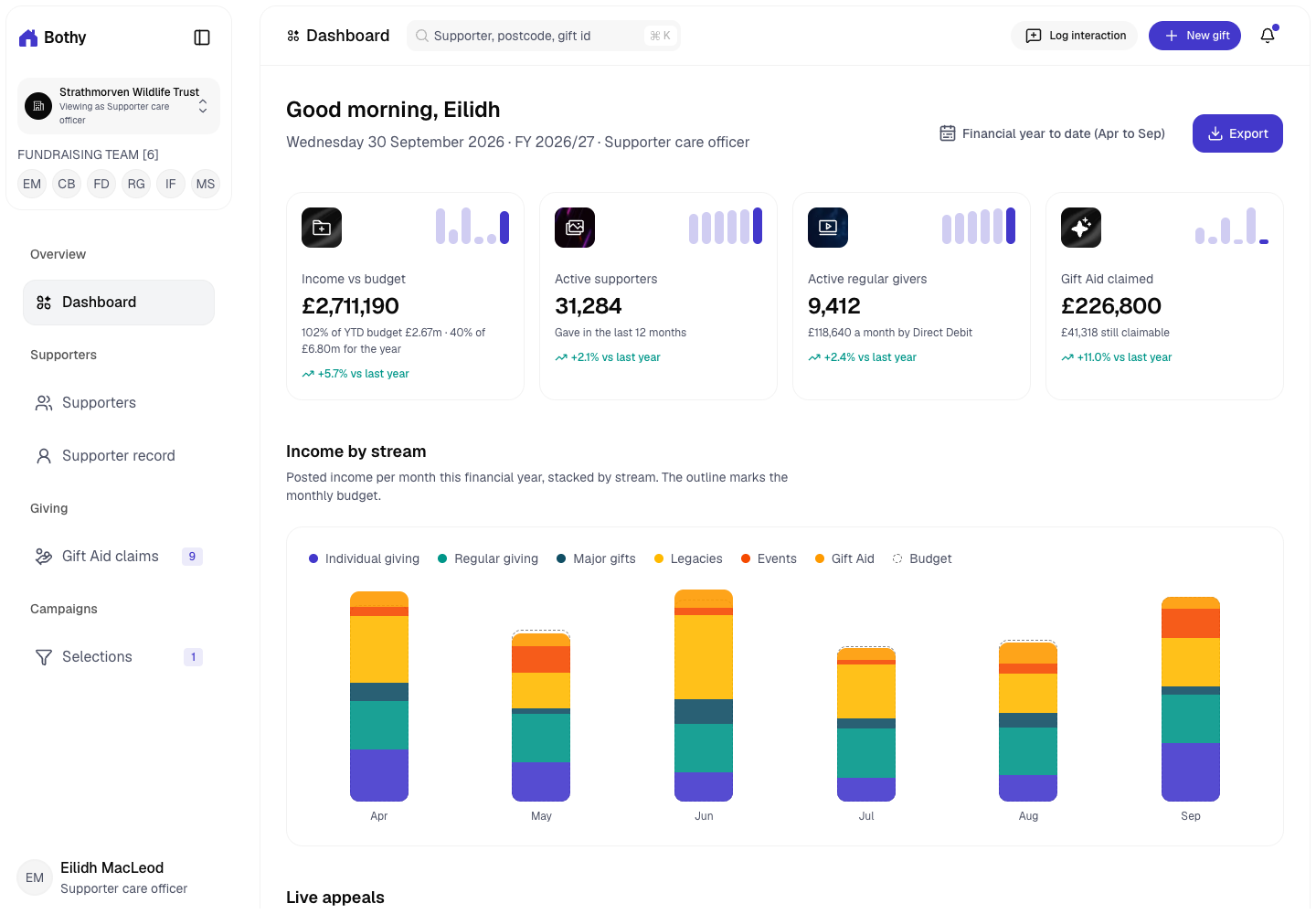
Bothy - Donor CRM with Consent, Gift Aid and Suppressions Built In
Designed and built a clickable donor CRM for a Perth-based wildlife charity registered with OSCR: supporter records that show what each person agreed to and how, Gift Aid claims that hold back gifts with a problem, and mailing selections that remove every suppression before a file goes out.
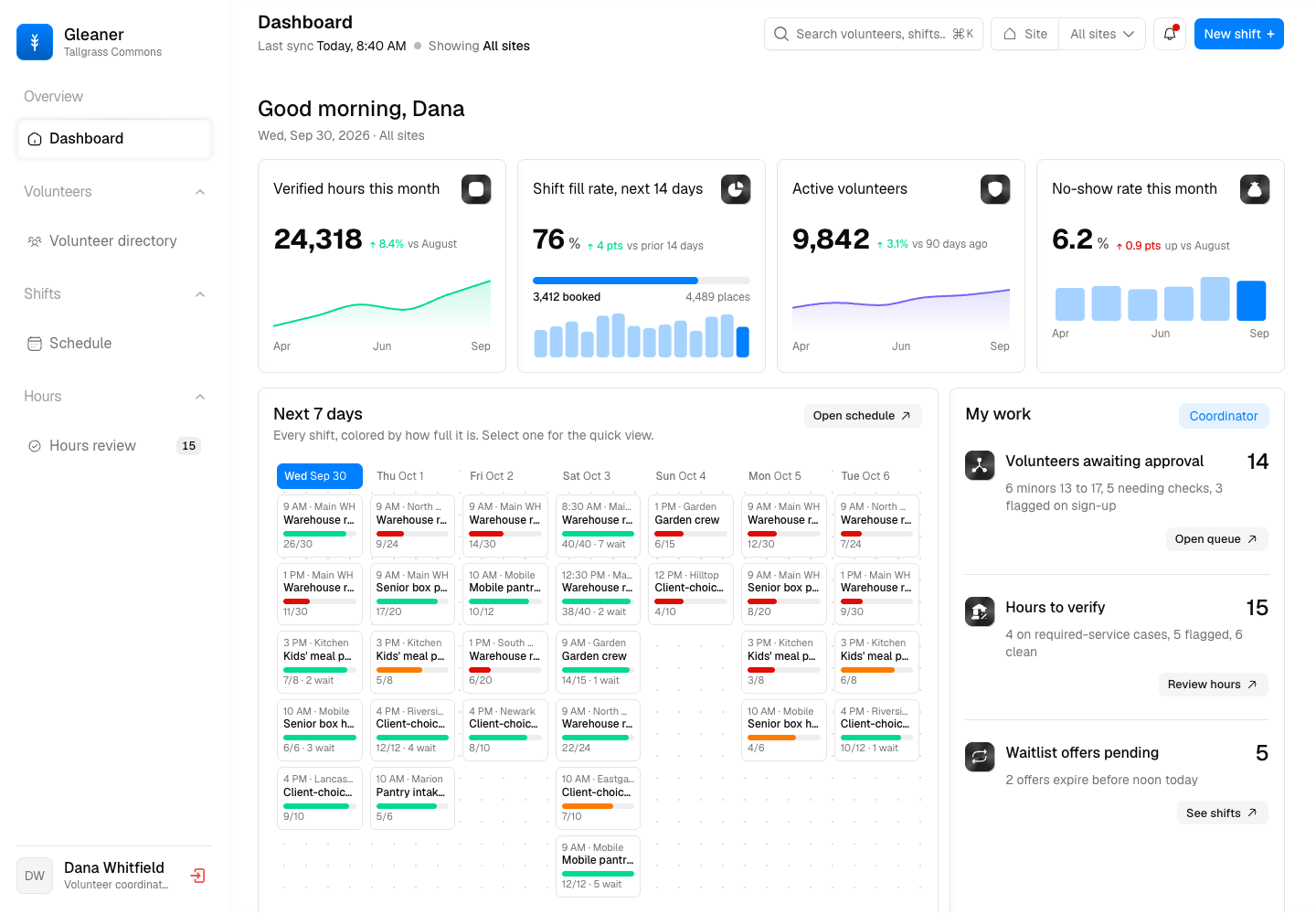
Gleaner - Volunteer Management Platform with Verified Hours and Screening Built In
Designed and built a clickable volunteer management platform for a regional food bank network in Ohio: shifts colored by how full they are, a volunteer directory and profile with readiness, screening and consent in one place, and an hours review queue that flags anything a person should check before it counts.
Enterprise Software Engineering - Human + AI
Contact Us
© 2026 - Copyright. All Rights reserved Oceanlab
Location
Global Headquarters
21 Merchant Road, 3rd Floor, Singapore 058267
Main corporate office and leadership operations
North America Office
548 Market Street, PMB 12345, San Francisco, CA 94104
Client operations and business development
India Office
402 Shivalik Shilp II, SG Highway, Ahmedabad 380015
Engineering and delivery center

Enterprise Software Engineering - Human + AI
Contact Us
Locations
Global Headquarters
21 Merchant Road, 3rd Floor, Singapore 058267
Main corporate office and leadership operations
North America Office
548 Market Street, PMB 12345, San Francisco, CA 94104
Client operations and business development
India Office
402 Shivalik Shilp II, SG Highway, Ahmedabad 380015
Engineering and delivery center
© 2026 - Copyright. All Rights reserved Oceanlab