Get-In - Touring Operations Platform for a Theatre Company on the Road
Touring Logistics for a Scottish Theatre Company
Designed and built a clickable touring operations platform for a Glasgow theatre and dance company that plays about 70 venues a year across the UK: a dashboard of what needs acting on this week, the tour's master schedule, a day sheet per day on the road with rest-gap checks, and box office settlements reconciled line by line against each deal.
Most of our work is under NDA. Per agreement, we can share the work but not the company details - all names and identifying information shown here have been changed.
Impact
Dashboard, tour detail with 5 tabs, day sheet, settlements and settlement detail. Every one of the 77 days on the autumn tour opens its own day sheet, with previous and next day links.
The day sheet lists each person's first call, finish and gap since the previous day's finish, and shows gaps below the company's 11 hour setting in red. The threshold is a company setting, not a hard-coded legal limit.
VAT, card charges, restoration levy, ticketing fees and marketing contribution are each allowed or not, with caps. The venue's statement is compared with the expected figures line by line, and deductions the deal does not allow show red.
3 tours, 22 venues across Scotland, England, Wales and Northern Ireland, 20 company members, 66 performances and 10 settlements on the current tour, with venue statements seeded with 3 kinds of mistake.
The Problem
Clydebrae's tours ran on a spreadsheet per show, a shared inbox and a ring binder in the company manager's bag. Venue tech specs were PDFs of different ages, advance sheets came back as scans or not at all, digs and call times went out on a WhatsApp group that scrolled away, and show reports arrived as Word files days later. Settlements were checked weeks after the date, and on the last tour three venues underpaid their split without anyone noticing until the year-end audit.
Our Solution
Get-In runs a tour from the first pencilled date to the last settlement. The office and touring managers see what needs acting on this week, the tour schedule shows advance, digs, risk and settlement status for every day, each day on the road has one published day sheet, and every venue statement is reconciled against the deal that was agreed.
The Challenge: One Company, Seventy Different Venues
Clydebrae tours 3 shows a year to venues from 150-seat village halls to 900-seat receiving houses, with a cast of 6 to 20, a crew of 8 and 2 trucks. Every venue has its own stage, get-in route, deal and paperwork, and the company has to arrive ready for each one.
Venue Facts Found Out on the Day
Tech specs were PDFs of different ages, so the production manager could find out at the get-in that a door was narrower than the set trucks. Rigging points need a working load limit taken from the venue's or manufacturer's documents under LOLER, never estimated.
Long Days and Short Nights
A late get-out followed by an early get-in can leave crew far short of a proper rest. The Working Time Regulations and the company's agreements set the rules, and drivers of trucks over 3.5 tonnes also fall under drivers' hours and tachograph rules.
Personal Data on the Road
Day sheets go to the whole company, but home addresses, emergency contacts and allergy, medical or access notes must not. Under UK GDPR, health data is a special category that needs an extra condition and a restricted place to live.
Settlements Nobody Could Reconcile
Deals are a guarantee, a split of net box office, or a guarantee against a split. Net receipts depend on exactly which deductions each contract allows, so a venue that deducts ticketing fees or overcharges card fees can underpay without anyone noticing.
Our Approach: From Touring Practice to a Clickable Platform
Spec and Rules Research
Mapped 12 roles across three faces (the company management web app, a phone-first company app for cast and crew, and a venue portal), 46 screens and the data model for tours, tour days, venues and specs, deals, performances, advances, bookings, per diems, load plans, driver days, risk assessments, show reports and settlements. Wrote down the rules the design follows: UK GDPR and the Data Protection Act 2018, the Working Time Regulations, Equity touring agreements, health and safety law and RIDDOR, LOLER for rigging, and drivers' hours rules.
Clickable Demo on a Production UI Kit
Built 5 key screens on a production dashboard kit: the dashboard with the this-week strip, 4 KPI cards against budget, ticket sales with break-even markers and the needs-attention list, the tour detail with schedule, company, budget, documents and activity tabs, the day sheet with timeline, call times and rest gaps, and settlements with line-by-line reconciliation and a dispute record. Actions such as publish, raise dispute and mark reconciled run on local state.
What a Production Build Adds
Integrations with Google Maps or Mapbox for routing, Spektrix, Ticketsolve or Tessitura for ticket data, DocuSign, Trainline for Business, Xero or QuickBooks, Wise Business, SumUp or Square, tachograph imports, and Twilio and Firebase notifications. Role-based staff access, magic links for venues, an audit log, and the remaining screens: routing, venues, deals, advances, people, travel and digs, expenses, trucks, safety, show reports, the company app and the venue portal.
Why It Works: Every Date Ready Before the Trucks Arrive
Status at a Glance for Every Date
The this-week strip and the tour schedule show each date green when the advance is returned, digs are booked and the risk addendum is signed, amber when one is missing, and red when a date inside 7 days is missing more than one.
One Published Day Sheet
Each day has a versioned day sheet with a timeline for every group, a track per truck, travel legs and venue essentials. Publishing bumps the version, the stage door code stays masked until shown, and digs addresses are shown to managers only.
Thresholds the Company Sets
Rest gaps, long legs and drivers' hours are flagged against limits the company configures from the regulations and its agreements. Get-In does not ship legal thresholds, and client policy such as the 48 hour risk sign-off is marked as client policy.
Settlements Checked Against the Deal
Expected figures are computed from the deal and ticket sales: allowed deductions only, the split or the guarantee, whichever is higher, merch commission and recharges. Each difference is shown line by line, and a dispute records the disputed lines and the message sent to the venue.
Related case studies
View all: Music, film & fashion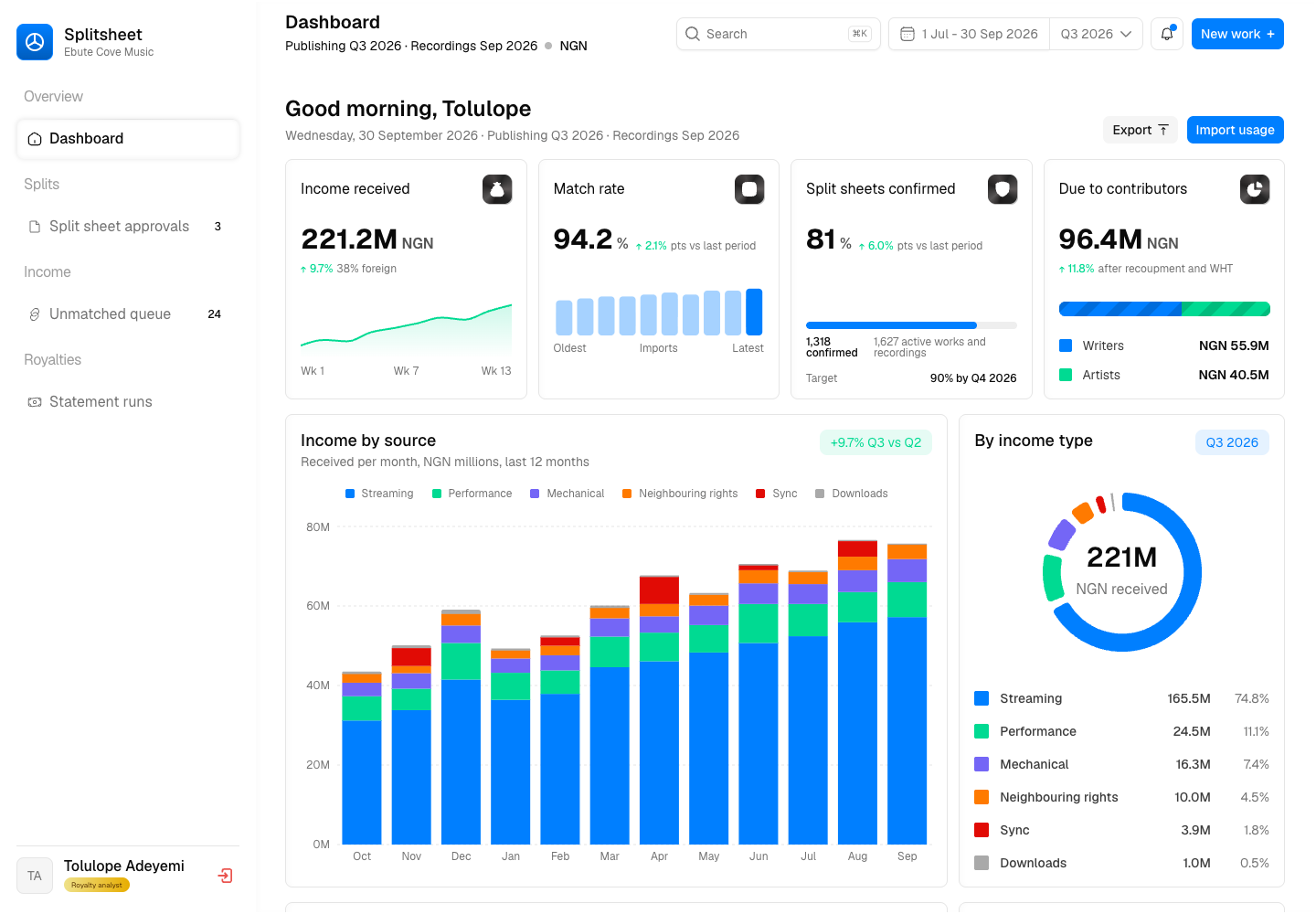
Splitsheet - Split Sheets, Usage Matching and Reproducible Royalty Statements
Designed and built a clickable royalty and splits console for a Lagos music publisher and label: split sheets that every writer confirms before approval, an unmatched usage queue sorted by value, and statement runs that store their inputs and show the calculation behind every naira.
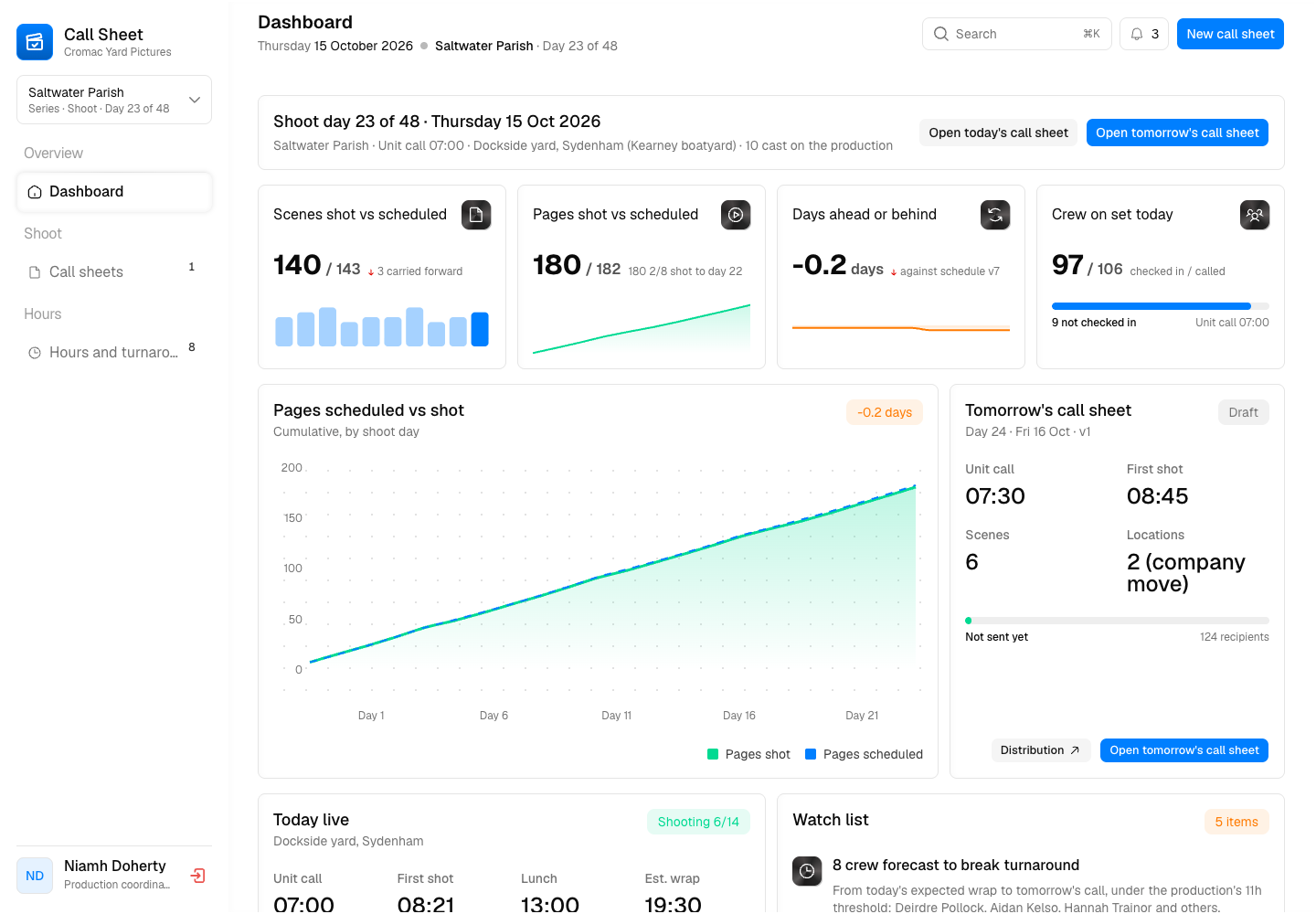
Call Sheet - Production Office Platform for Call Sheets, Read Receipts and Turnaround
Designed and built a clickable production office platform for an independent Belfast film and TV company: daily call sheets built from the schedule and checked before approval, distribution with a read receipt for every recipient, and crew hours and turnaround tracked against the production's own working terms.
Enterprise Software Engineering - Human + AI
Contact Us
© 2026 - Copyright. All Rights reserved Oceanlab
Location
Global Headquarters
21 Merchant Road, 3rd Floor, Singapore 058267
Main corporate office and leadership operations
North America Office
548 Market Street, PMB 12345, San Francisco, CA 94104
Client operations and business development
India Office
402 Shivalik Shilp II, SG Highway, Ahmedabad 380015
Engineering and delivery center

Enterprise Software Engineering - Human + AI
Contact Us
Locations
Global Headquarters
21 Merchant Road, 3rd Floor, Singapore 058267
Main corporate office and leadership operations
North America Office
548 Market Street, PMB 12345, San Francisco, CA 94104
Client operations and business development
India Office
402 Shivalik Shilp II, SG Highway, Ahmedabad 380015
Engineering and delivery center
© 2026 - Copyright. All Rights reserved Oceanlab