Brindle - Pet Health App with State-Scoped Vet Telehealth
Pet Health and Vet Telehealth for a US Subscription Service
Designed and built a clickable vet app and ops console for a US pet health company with about 140 licensed veterinarians: a consult queue that only offers cases the vet may take, a case view that decides triage, general advice or telemedicine from the pet's state, the vet's licenses and the VCPR, and vet onboarding that verifies every state license.
Most of our work is under NDA. Per agreement, we can share the work but not the company details - all names and identifying information shown here have been changed.
Impact
Ops dashboard, consult queue, case view, vet onboarding and vet detail. Every one of the 20 demo consults and 19 vets opens its own page.
Triage, General advice or Telemedicine, set from the pet's state, the vet's verified licenses and the VCPR. Assessment notes and prescribing stay disabled outside telemedicine.
Where a state allows a VCPR by telehealth (CA and AZ in the demo), the vet completes a 6-item video exam checklist first, and prescriptions are then checked against a 14-day supply limit. Controlled drugs are always blocked.
16 pets and owners in 9 states, 19 vets with their state licenses, 13 versioned state rules, 4 triage templates and a 6-week scope mix on the dashboard.
The Problem
Larkspur Hollow started as a chat line with a spreadsheet of vets. Owners emailed blurry photos of vaccine certificates, reminders went out from a mailing tool that did not know which pets had died, and vets had no history in front of them when a chat started. Nobody could show which state each vet was licensed in, or whether a vet had diagnosed a pet they had never examined, and a state board complaint in 2025 made the leadership team decide that scope had to be enforced by the product.
Our Solution
Brindle puts the pet's record, the owner's state, the vet's licenses and the VCPR status in one place, and decides what kind of consult is allowed before the vet types a word. Owners keep health records, get reminders and check symptoms; vets take consults from a scope-checked queue; and ops staff watch coverage and verify every license.
The Challenge: Vet Care Across 50 Rulebooks
In the US, what a vet may do in a remote consult depends on the state the pet is in, the vet's license there and whether a veterinarian-client-patient relationship (VCPR) exists. Those rules differ by state and are changing quickly.
Diagnosis Needs a VCPR
State practice acts generally require a VCPR before a vet can diagnose, treat or prescribe, and most require it to start with an in-person exam. California has allowed a VCPR by telehealth since January 2024 under AB 1399, with prescribing limits, while states such as Colorado still require an exam in person.
A License in the Pet's State
A vet practising telemedicine generally must be licensed where the animal is. With about 140 vets working from home across many states, every license has to be verified with the state board, tracked to expiry and stop counting the moment it lapses.
Triage Is Not Telemedicine
AVMA guidance treats teletriage and general advice as possible without a VCPR, while diagnosis and prescribing need one. Owners and vets both need to see which kind of consult this is, and what the vet can and cannot say.
Emergencies and Controlled Drugs
The app is not an emergency service, so emergency flags must send owners to the nearest hospital and poisoning cases to the ASPCA Animal Poison Control Center. Controlled drugs need a DEA registration on top of the state license, and the client chose not to prescribe them in the app at all.
Our Approach: From State Rules to a Clickable Vet App
Spec and Rules Research
Mapped 10 roles, from owners and household members to network vets, partner clinic vets, the medical director and credentialing staff, and 44 screens across the owner app, public pages, vet app and ops console. Modelled pets, records, reminders, symptom checks, vets, licenses, versioned state rules, VCPRs, stored scope decisions, consults and prescriptions, and wrote down the rules the design follows: state VCPR rules, 21 CFR 530.3, AVMA telehealth guidance, DEA registration, rabies certificates, state privacy law, TCPA and CAN-SPAM.
Clickable Demo on a Production UI Kit
Built the staff side's 5 key screens on a production dashboard kit: the ops dashboard with live staffing, coverage gaps and symptom checker outcomes, the consult queue with emergency pinning and wait colours, the three-column case view with scope box, SOAP notes, prescribing, referral and close consult, vet onboarding with stage checks, and vet detail with licenses, DEA, quality and activity. All actions run on local state.
What a Production Build Adds
The 20-screen owner app and public pages, video and chat (such as Daily and Stream Chat), Twilio and Postmark messaging, RevenueCat and Stripe billing, state board license lookups, Persona identity checks, microchip lookup, AWS Textract for certificates and Vetsource or Chewy Pharmacy for prescriptions. Staff auth by role, an append-only audit log of scope decisions and transcript views, and counsel sign-off on the rule table for all 50 states and DC.
Why It Works: Scope Decided by the Product
The Queue Only Offers Eligible Consults
Waiting consults are those the vet is licensed for, with the reason in a tooltip such as "Shown because you are licensed in OH". Emergencies are pinned with a red stripe, waits turn amber after 10 minutes and red after 20, and open work is capped at 3 chats and 1 video.
An Always-Visible Scope Box
The case view shows the scope, why ("Licensed in OH, no VCPR, OH requires an in-person exam"), what it means and the state rule version used. Quick replies are filtered to the scope, and a vet who disagrees can request a scope review from the medical director.
History in Front of the Vet
Every consult opens with the pet's summary, allergies, medications, vaccines with status, recent visits and past Brindle consults beside the chat, with the owner's symptom check answers pinned at the top of the conversation.
Licenses That Gate the Network
A vet advances through onboarding only when that stage's checks pass, such as all claimed licenses verified or all 6 training modules done. Each license shows its source, verifier and evidence, warns before expiry and stops counting at midnight on its expiry date.
Related case studies
View all: Veterinary & dental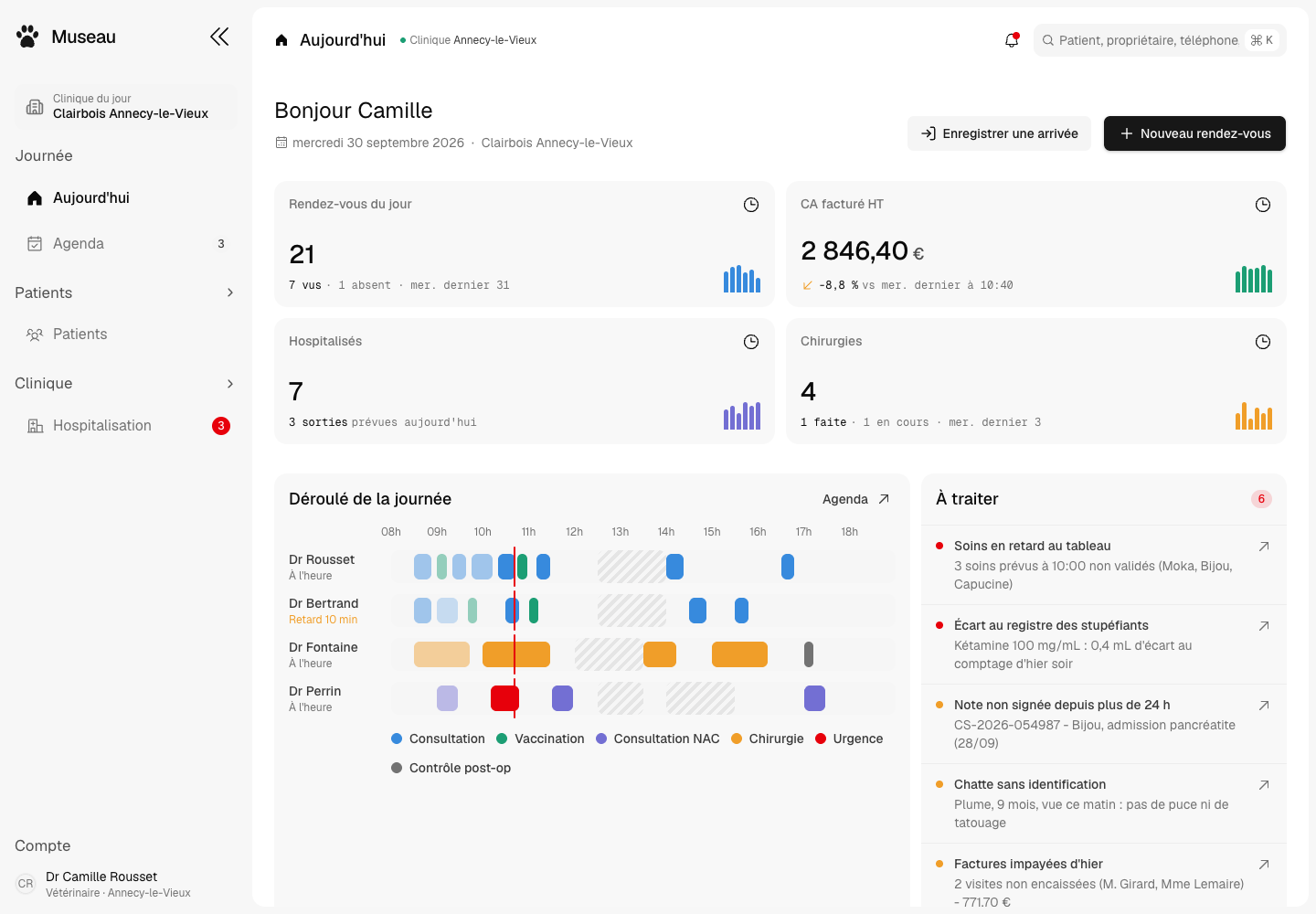
Museau - Practice Management for a 12-Clinic French Vet Group
Designed and built a clickable practice management system for a group of 12 companion-animal clinics in France: a dashboard of what needs handling today, the appointment book by vet and room, patient records shared across every clinic with I-CAD identification, and a 24-hour hospitalisation board where nurses tick off each treatment.
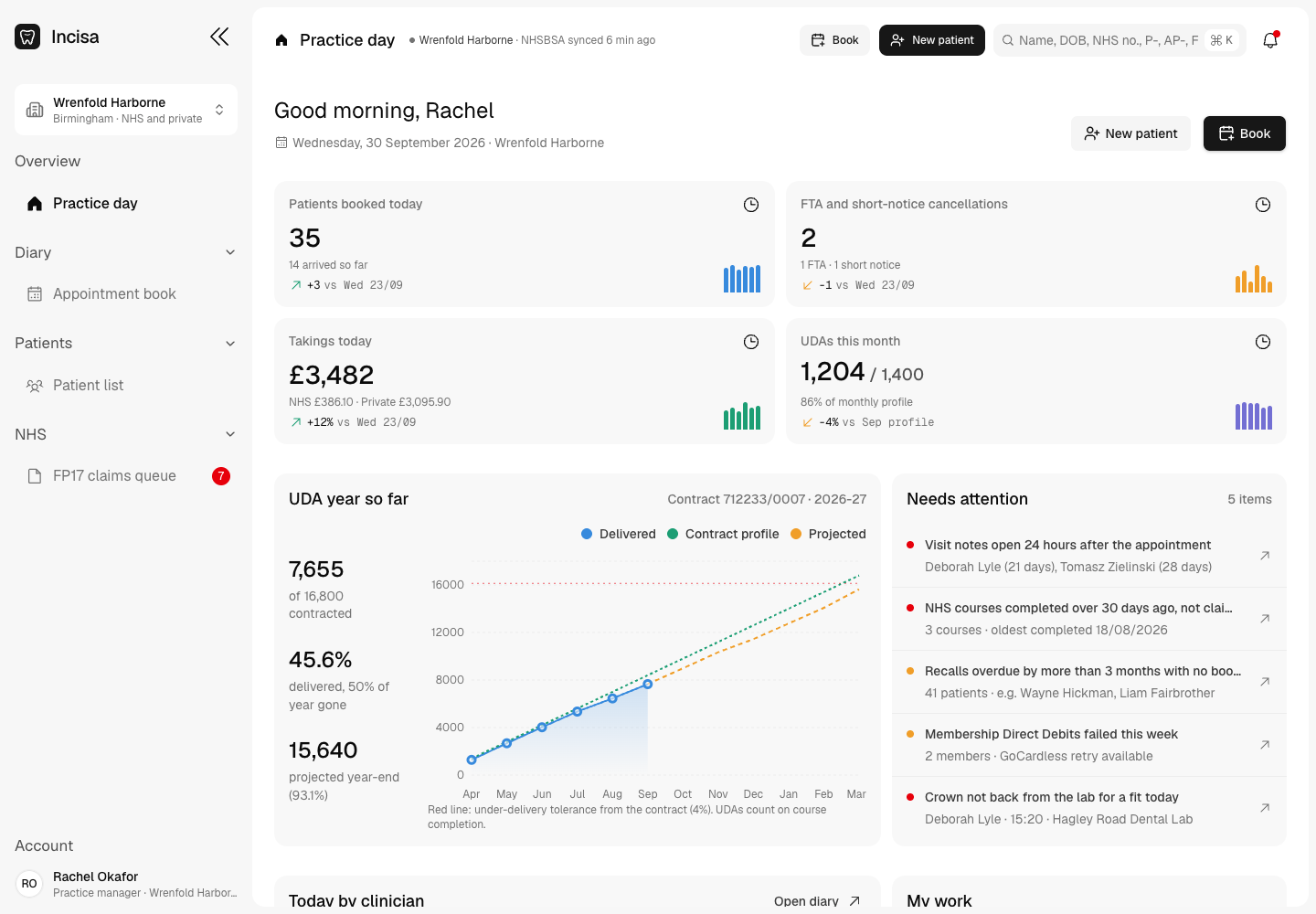
Incisa - Dental Practice Management for a Mixed NHS and Private Group
Designed and built a clickable practice management system for a group of 15 mixed NHS and private dental practices in England: the practice day with UDA delivery against the contract, the appointment book, patient records with a Palmer or FDI dental chart and NHS and private treatment plans, and an FP17 claims queue that catches errors before the NHSBSA does.
Enterprise Software Engineering - Human + AI
Contact Us
© 2026 - Copyright. All Rights reserved Oceanlab
Location
Global Headquarters
21 Merchant Road, 3rd Floor, Singapore 058267
Main corporate office and leadership operations
North America Office
548 Market Street, PMB 12345, San Francisco, CA 94104
Client operations and business development
India Office
402 Shivalik Shilp II, SG Highway, Ahmedabad 380015
Engineering and delivery center

Enterprise Software Engineering - Human + AI
Contact Us
Locations
Global Headquarters
21 Merchant Road, 3rd Floor, Singapore 058267
Main corporate office and leadership operations
North America Office
548 Market Street, PMB 12345, San Francisco, CA 94104
Client operations and business development
India Office
402 Shivalik Shilp II, SG Highway, Ahmedabad 380015
Engineering and delivery center
© 2026 - Copyright. All Rights reserved Oceanlab