Sailings - Island Ferry Booking and Disruption Operations Platform
Ferry Operations Console for an Azores Island Operator
Designed and built a clickable operations console for an Azores ferry operator running 5 ro-pax vessels on lifeline island routes: a live day timeline by vessel, a sailings board with load per deck, the master's decision recorded on every sailing, and a disruption workspace that rebooks affected travellers in priority order, medical and lifeline travel first.
Most of our work is under NDA. Per agreement, we can share the work but not the company details - all names and identifying information shown here have been changed.
Impact
Dashboard, sailings board, sailing detail with 6 tabs, disruptions list and disruption detail with its rebooking plan, call list and offer sheet with PT and EN preview.
Medical, lifeline, verified residents, perishable freight, vehicles by size fit, then booking time. Bookings with no space on a replacement sailing show the next possible one.
Go, delay or cancel is recorded with reason and detail by the master, or by the duty manager on the master's instruction, and both names are kept in the activity log.
5 vessels, 13 ports, 9 routes and 30 sailings over 3 days starting on a storm day, with 10 disruptions including a 512-traveller cancellation in mid-rebooking.
The Problem
Cagarro sold tickets through a 15-year-old reservation system built for a desk agent, not a phone. Islanders queued at the ticket office to prove residency for the resident fare, vehicle space was sold as one number per sailing so tall vans were turned away at the ramp, and when the master cancelled a sailing for weather the office phoned passengers from a printed list and rebooked them by hand, with no priority for islanders travelling to hospital appointments.
Our Solution
Sailings gives the duty operations team one console to run the day: every sailing with passenger and lane-metre load per deck, the master's decision and the status message in Portuguese and English, and a disruption workspace that matches each affected booking to a replacement sailing where the whole party and vehicle fit, sends offers by push, SMS and email, and tracks every outcome until the disruption closes.
The Challenge: Running Lifeline Routes Through Atlantic Weather
Cagarro links its hub at Ponta Delgada with 12 island ports on 9 routes, several of them lifeline services under a public service contract. Islanders depend on them for hospital, school, work and supplies, and the weather decides more sailings than the timetable does.
Cancellations Rebooked by Phone
A bad winter week meant thousands of calls from a printed list. Rebooking had no fixed order, so a traveller with a hospital appointment waited behind a day tripper, and nobody could see who had been reached and who had not.
Deck Space Sold as One Number
Vehicle space was a single count per sailing with no height or length. Cars filled the high-clearance main deck while tall vans and campers were refused at the ramp, and a replacement sailing could look free while having no room for a specific vehicle.
The Master Has the Final Say
Under maritime law the master decides whether a ship sails safely. Software can show forecasts and load, but it must never cancel a sailing on its own, and every decision has to record who made it, who recorded it and why.
Passenger Rights, Registers and Dangerous Goods
EU Regulation 1177/2010 sets information, re-routing and refund rights on cancellation. Directive 98/41/EC requires a count before departure and passenger registers on set routes. Hauliers declared dangerous goods on paper forms that the ramp team rarely saw in time.
Our Approach: From Ferry Rules to a Clickable Console
Spec and Rules Research
Mapped 14 roles from passenger and haulier to master, duty manager and public service contract auditor, 46 screens across passenger, port staff and operations apps, and the data model for sailings, decks and lanes, master's decisions, bookings, disruptions, freight, dangerous goods declarations and manifests. Wrote down the rules the design follows: GDPR and Law 58/2019, Regulation 1177/2010, Directive 98/41/EC, public service contracts under Regulation 3577/92, the IMDG Code, PSD2 strong authentication and AT-certified invoicing.
Clickable Demo on a Production UI Kit
Built the operations console on a production dashboard kit: the dashboard with KPIs, a vessel timeline with a live now line, capacity watch, weather watch and needs attention; the sailings board with load bars per deck; sailing detail with capacity, bookings, check-in, freight and dangerous goods, manifest and activity tabs; and the disruption workspace with its rebooking plan and call list. Recording a decision, publishing a status update, approving dangerous goods and sending offers all run on local state.
What a Production Build Adds
The mobile-first passenger and haulier apps and the port staff app for scanning, vehicle measuring, loading and headcount. Integrations with Adyen or Stripe, MB WAY and Multibanco, a certified invoicing provider, IPMA forecasts, AIS vessel positions, manifest submission through Portugal's maritime single window, Twilio messaging and wallet passes. Staff auth by role, a full audit log, and register, passenger rights and contract terms set as configuration with the client's lawyers and the maritime authority.
Why It Works: Everyone Sorted, Priority First
Rebooking Plans Itself, People Confirm It
The plan lists every affected booking in priority order with its proposed replacement sailing, which staff can adjust. Offers go out by push, SMS and email with delivery shown per channel, and travellers with no smartphone or no response move to a call list.
Load Per Deck, Not Per Sailing
Each sailing shows passengers and lane metres booked on every deck with its height limit and weight. Load bars turn amber at 85% and red at 95%, the dashboard watches sailings over 90%, and a lifeline reserve of lane metres is held for verified residents and freight.
Weather Informs, the Master Decides
The weather board and weather watch show wind, gusts and wave height per route for reference only. The decision sheet states that the master decides, and a duty manager recording an instruction is named alongside the master.
Built for Two Languages and Every Island
Status messages and rebooking offers are written and previewed in Portuguese and English, and each offer carries the client's hold policy. Sailings never calculates compensation: the options offered and the choice each traveller made are recorded for every disruption.
Related case studies
View all: Maritime & ports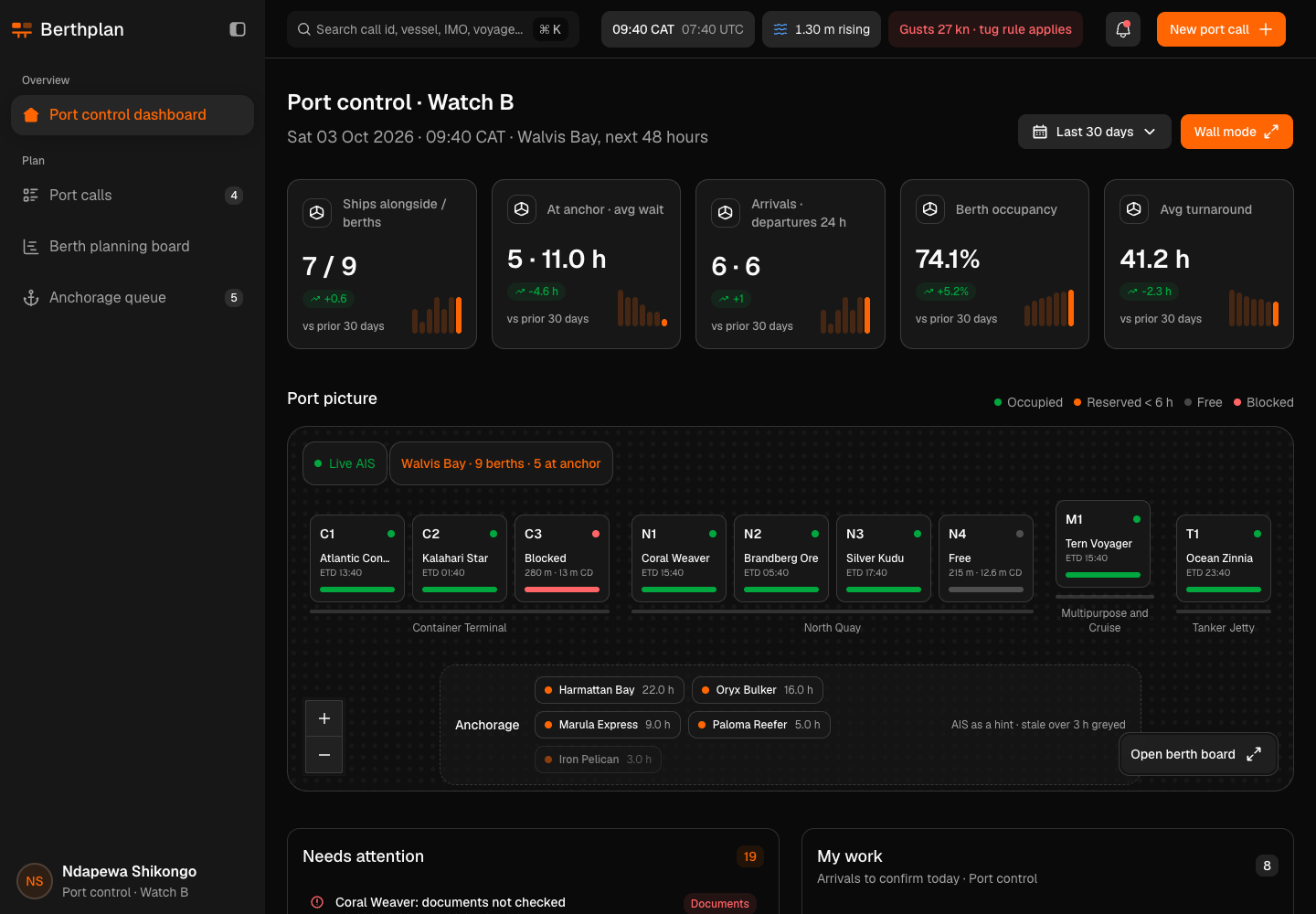
Berthplan - Port Call Planning Console with a Rule-Checked Berth Board
Designed and built a clickable port call planning console for a multipurpose port at Walvis Bay: every call from pre-arrival notification to departure, a berth planning board that refuses windows breaking length, draft, cargo or dangerous goods rules, and an anchorage queue that records why each ship is waiting.
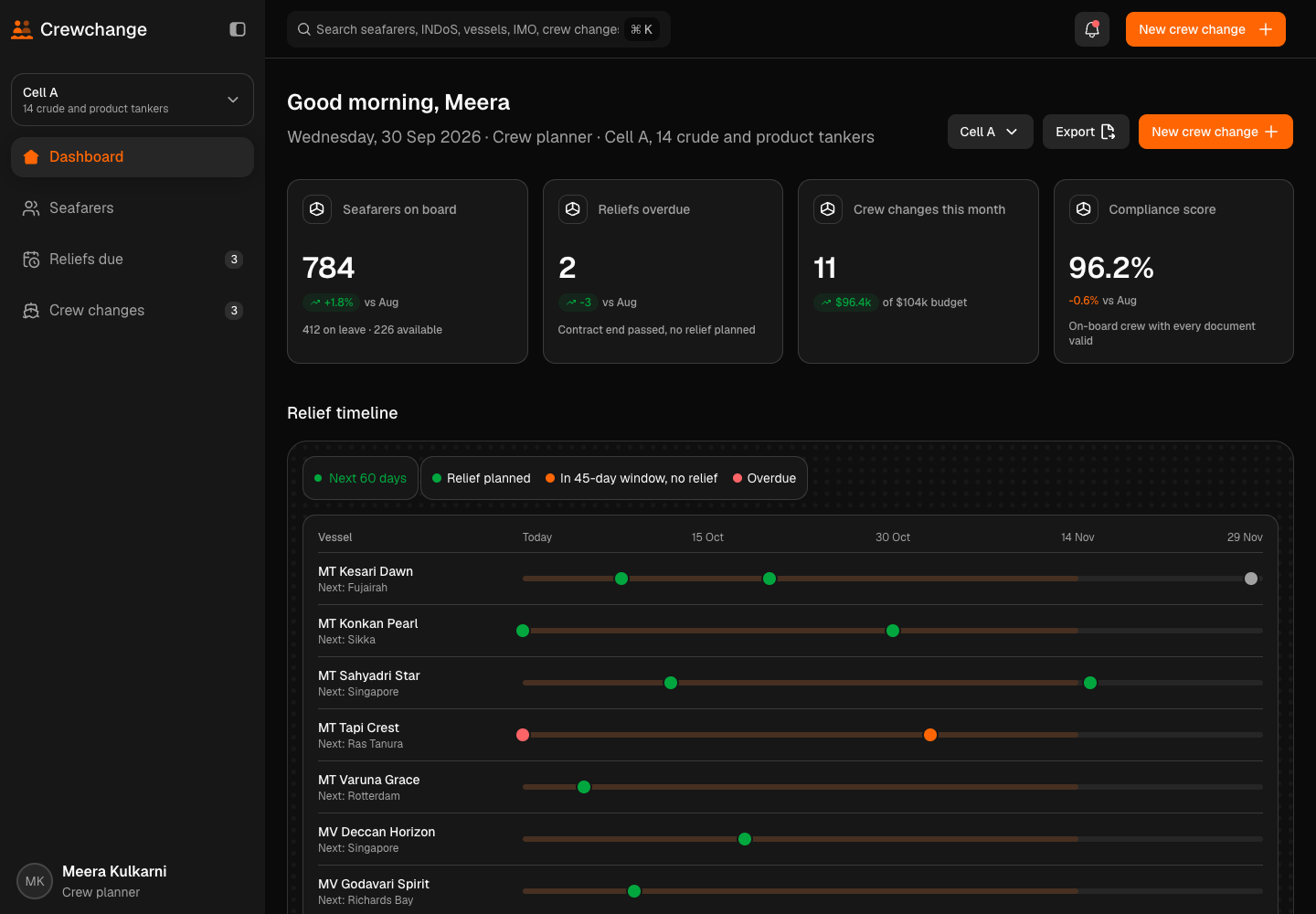
Crewchange - Crew Rotation Platform for Reliefs, Crew Changes and Certificates
Designed and built a clickable crewing platform for a Mumbai ship manager running 45 tankers and bulk carriers: a relief timeline per vessel, a seafarer register with document status, reliefs due with proposal and approval rules by rank, and crew changes planned at a port with readiness, travel, letters and a cost sheet against budget.
Enterprise Software Engineering - Human + AI
Contact Us
© 2026 - Copyright. All Rights reserved Oceanlab
Location
Global Headquarters
21 Merchant Road, 3rd Floor, Singapore 058267
Main corporate office and leadership operations
North America Office
548 Market Street, PMB 12345, San Francisco, CA 94104
Client operations and business development
India Office
402 Shivalik Shilp II, SG Highway, Ahmedabad 380015
Engineering and delivery center

Enterprise Software Engineering - Human + AI
Contact Us
Locations
Global Headquarters
21 Merchant Road, 3rd Floor, Singapore 058267
Main corporate office and leadership operations
North America Office
548 Market Street, PMB 12345, San Francisco, CA 94104
Client operations and business development
India Office
402 Shivalik Shilp II, SG Highway, Ahmedabad 380015
Engineering and delivery center
© 2026 - Copyright. All Rights reserved Oceanlab