Rojtar - Security Awareness and Phishing Simulation Platform for a Hospital Network
Phishing Training Staff Can Trust, for an Albanian Hospital Network
Designed and built a clickable security awareness platform for a private hospital network in Albania: phishing simulations that only run after employee representative review and management approval, sends held around critical clinical shifts, a triage queue for everything staff report, and department results that never single anyone out.
Most of our work is under NDA. Per agreement, we can share the work but not the company details - all names and identifying information shown here have been changed.
Impact
Dashboard, campaign list, campaign detail with 6 tabs, the reported messages queue with its message panel, and department results with a department panel.
Any group under 10 people is hidden or merged into "Other (small groups)" on every chart, table and export. In the demo, 3 of the 25 departments fall below the line.
No simulation lands during an ICU, emergency, theatre, labour ward or night shift, or within 2 hours after one. In the running campaign C-0031, 227 sends are held until after the shift.
25 departments across 3 hospitals and the outpatient clinics, 9 simulation templates, 22 reported messages (real and simulated) and 9 staff users in their programme roles.
The Problem
Lisbardhë's IT security team of four ran awareness training as a yearly slide deck that nurses and doctors clicked through at the end of a night shift, if at all. A trial of an off-the-shelf simulation tool sent a fake "salary adjustment" email to the emergency department at 03:00, a ward list of "people who failed" was forwarded around, and the nurses' union asked the medical director to stop it. Real phishing kept arriving, staff did not know how to report it, and the board could not tell whether things were getting better.
Our Solution
Rojtar makes the programme something staff can trust: simulations planned and approved in advance, never sent during critical shifts, landing pages that teach instead of shame, a triage queue for every message staff report, and results aggregated by department so the board sees progress without anyone being named.
The Challenge: Testing Staff Without Losing Their Trust
Lisbardhë runs three hospitals in Tirana, Durrës and Elbasan and six outpatient clinics with about 2,100 staff. A phishing programme there has to respect patient safety, Albanian data protection and labour rules, and the people it is meant to protect.
Patient Safety Comes First
A practice email that reaches an emergency nurse at 03:00 is a distraction from patients. Sends have to avoid critical shifts, the rest period after them, blackout windows such as clinical system go-lives, and any major incident.
Results Are Staff Personal Data
Under Albania's Law No. 124/2024, simulation results are personal data. They need a lawful basis, a privacy notice, pseudonymised individual events, a retention period and a DPIA, and they cannot be used for discipline unless policy says so after DPO review.
Employee Representatives Must Agree
After the failed trial, Lisbardhë's own policy is that the programme plan and every campaign are reviewed by an employee representative and approved by management before any email is sent. A raised concern has to stop a campaign until it is answered.
Real Threats in the Same Inbox
Real phishing aimed at the hospital's Microsoft 365 accounts arrives alongside the practice emails. Every report has to be sorted into simulation, known bad or unknown, and real threats triaged fast, with evidence of staff awareness for the cyber security law.
Our Approach: From Hospital Rules to a Clickable Platform
Spec and Rules Research
Mapped 10 roles from programme lead and campaign operator to employee representative, DPO, security analyst, department head, board member and learner, 36 screens (31 staff, 4 learner and 1 public teachable-moment page) and the data model for campaigns, templates, deliveries, approvals, reported messages, support plans, roster blocks and suppressed aggregate cells. Wrote down the rules the design follows: Law No. 124/2024 on personal data protection, Law No. 25/2024 on cyber security, employee consultation under the Labour Code, no impersonation of public bodies, no patient data and no captured credentials.
Clickable Demo on a Production UI Kit
Built 5 key screens on a production dashboard kit: the dashboard with a Shqip greeting, 4 KPI cards, campaigns in flight and a needs-attention list, the campaign list with status and approval, campaign detail with the live delivery strip, funnel, held-for-shift waves, suppressed department table and approval record, the reported messages queue with SPF, DKIM and DMARC results and triage verdicts, and department results with a quarterly heatmap. Pause all simulations, verdicts, notes and drafts all run on local state.
What a Production Build Adds
Integration with Microsoft Entra ID for directory and sign-in, Microsoft 365 and Defender advanced delivery for simulation allowlisting, the Outlook Report button, the HRIS, the hospital rostering system, SCORM or xAPI training packages, video hosting, push and SMS reminders, and forwarding of real threats to the security team's log search. A tamper-evident audit log, role-based access to individual data, and the remaining screens: courses, templates, landing pages, send calendar, approvals, supportive follow-up, board reports, settings and the mobile learner app.
Why It Works: Safe for Patients, Fair to Staff
Nothing Sends Without Approval
Every campaign shows its approval state next to its status, and campaign detail keeps the full record: who reviewed, who approved, conditions and the plan version. An employee representative's concern blocks the campaign, and the dashboard lists it until the programme lead responds.
The Roster Decides When
Each wave shows how many sends are held for a critical shift, on leave, already reached in the last 30 days or paused by a support plan. A late roster import holds sends to that hospital's clinical staff, and one switch pauses every simulation with a red banner on every page.
Aggregate by Default
Campaign and department pages show rates by group with the group size beside them, and groups under 10 show "Small group" or merge into "Other (small groups)". The lock label says "Aggregate only", and individual clicks never appear on these pages.
Reports Get a Fast, Clear Answer
Reported messages are matched to simulations automatically, so analysts focus on real ones. The panel shows sender authentication, links and attachment hashes without opening files, and Remove from all mailboxes hands the purge to the security team's Microsoft 365 process.
Related case studies
View all: Cybersecurity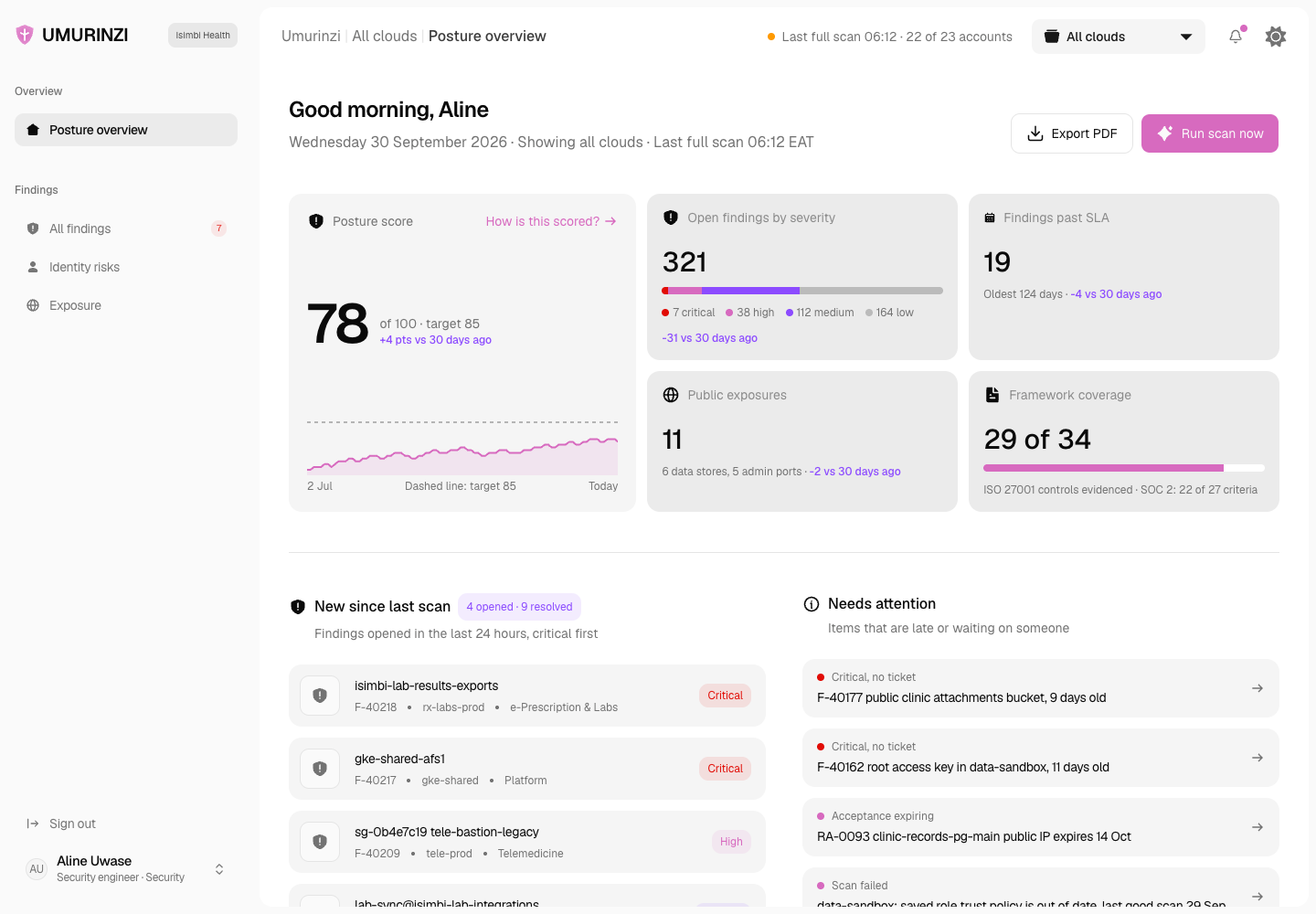
Umurinzi - Cloud Security Posture and Control Mapping Dashboard
Designed and built a clickable cloud security posture dashboard for a Kigali healthtech on AWS and Google Cloud: one findings queue checked against the CIS Benchmarks, identity risks and internet exposure in one view, every check mapped to ISO 27001 and SOC 2 controls, and a residency check for Rwandan patient data.
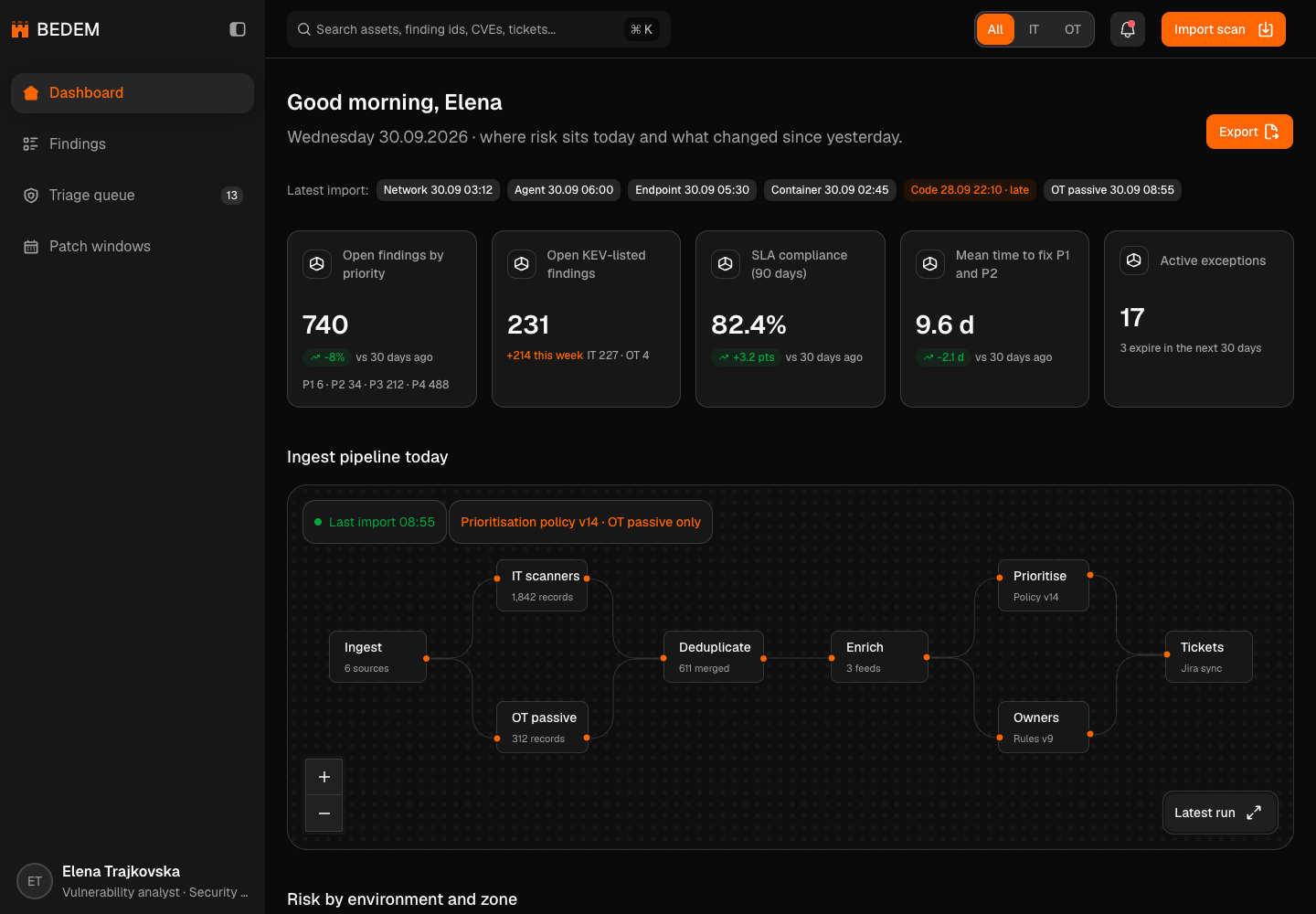
Bedem - Vulnerability Management Across Corporate IT and Substation OT
Designed and built a clickable vulnerability management platform for a Skopje electricity distribution operator: scanner findings merged into one list, ranked by real-world risk, triaged to owner teams with SLA dates, and OT fixes planned into maintenance outages - with substations assessed passively, never scanned.
Enterprise Software Engineering - Human + AI
Contact Us
© 2026 - Copyright. All Rights reserved Oceanlab
Location
Global Headquarters
21 Merchant Road, 3rd Floor, Singapore 058267
Main corporate office and leadership operations
North America Office
548 Market Street, PMB 12345, San Francisco, CA 94104
Client operations and business development
India Office
402 Shivalik Shilp II, SG Highway, Ahmedabad 380015
Engineering and delivery center

Enterprise Software Engineering - Human + AI
Contact Us
Locations
Global Headquarters
21 Merchant Road, 3rd Floor, Singapore 058267
Main corporate office and leadership operations
North America Office
548 Market Street, PMB 12345, San Francisco, CA 94104
Client operations and business development
India Office
402 Shivalik Shilp II, SG Highway, Ahmedabad 380015
Engineering and delivery center
© 2026 - Copyright. All Rights reserved Oceanlab